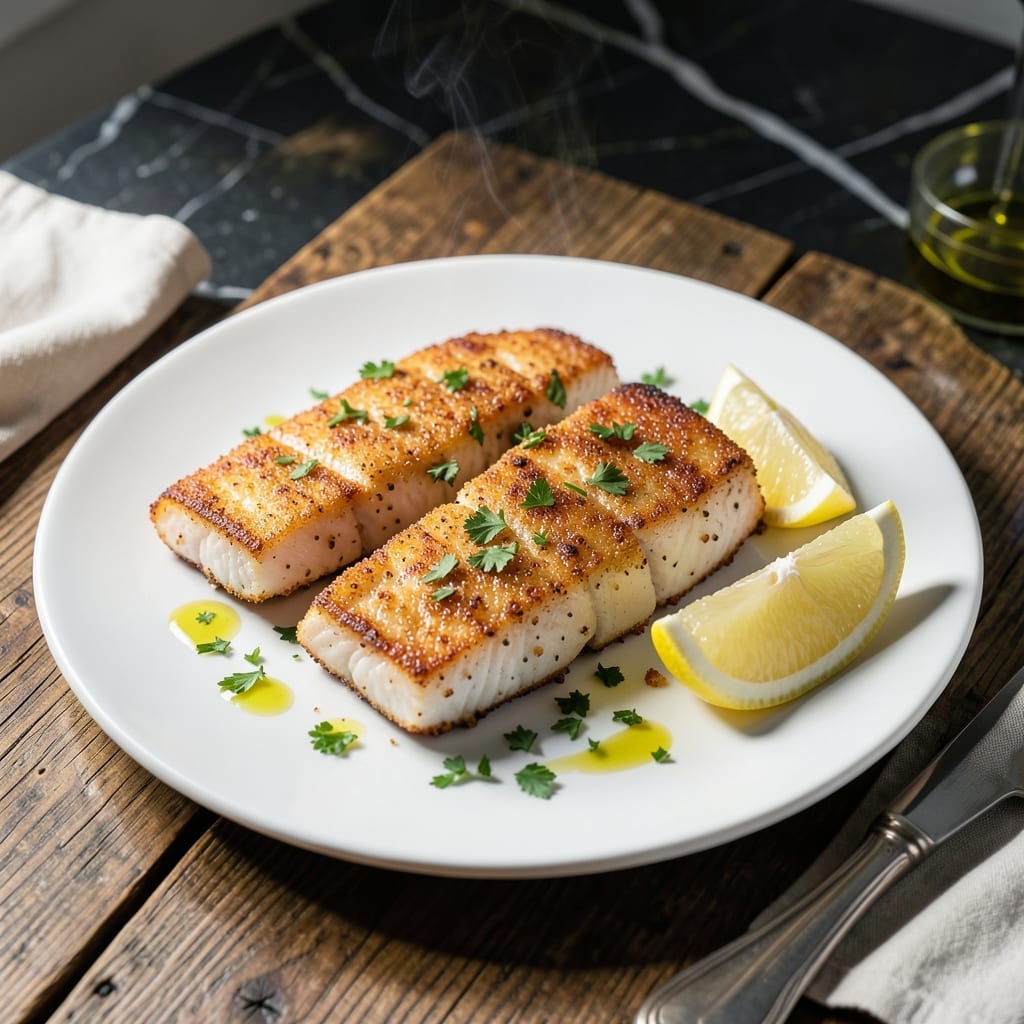
This Alaska pollock recipe delivers a crispy golden crust with mild, flaky fish inside. A simple breading and pan-frying method ensures perfect texture.
I’ve refined this technique to highlight the fish’s natural sweetness while creating a satisfying crunch. Ready in 15 minutes, it’s ideal for a quick, impressive meal.
Ingredients for Alaska Pollock Fillet
Mild pollock gets a crispy upgrade with pantry staples and a quick pan-fry.
| Ingredient | Amount | Notes |
|---|---|---|
| Alaska Pollock Fillets 🐟 | 1 ½ lb | Skinless, boneless, patted dry |
| All-Purpose Flour 🌾 | ¾ cup | For initial dredging |
| Large Egg 🥚 | 1 whole | Beaten for binding |
| Panko Breadcrumbs 🍞 | 1 ½ cups | For crispy coating |
| Cornstarch 🌾 | 2 tbsp | Mixed with flour for crunch |
| Garlic Powder 🧄 | 1 tsp | For seasoning breading |
| Onion Powder 🧅 | 1 tsp | For depth of flavor |
| Paprika 🌶️ | 1 tsp | Smoked or sweet variety |
| Salt 🧂 | 1 tsp | Kosher or sea salt preferred |
| Black Pepper 🌶️ | ½ tsp | Freshly ground for best flavor |
| Vegetable Oil 🫒 | 1 cup | High smoke point for frying |
| Lemon Wedges 🍋 | 4 pieces | For serving and brightness |
| Fresh Parsley 🌿 | ¼ cup | Chopped, for garnish |
[recipe_ingredient_scaler]
The pollock quality is paramount. Wild-caught Alaska pollock from Whole Foods or Trader Joe’s offers the best texture and mild flavor. Ensure fillets are uniform in thickness for even cooking—aim for 1-inch thickness. Skinless, boneless fillets are ideal, but if skin-on is available, remove it yourself for better breading adherence. The panko is non-negotiable for that golden crunch—Kikkoman brand is widely available and reliable.
No panko on hand? Crushed saltine crackers or cornflakes work as substitutes, though texture may vary. For a gluten-free version, crushed rice cereal or almond flour can replace the all-purpose flour and panko. The cornstarch can be omitted, but it’s the secret to extra crispiness. If using fresh garlic, mince 2 cloves and mix into the egg wash for added flavor. The oil must have a high smoke point—peanut or canola oil are solid alternatives.
Store pollock in the coldest part of your refrigerator and use within 2 days of purchase. Cooked fillets keep for 3-4 days in an airtight container. For best results, reheat in a 350°F oven to maintain crispiness. Freezing raw pollock is possible for up to 3 months, but thaw overnight in the fridge before cooking.
Why You’ll Love This Recipe
- 20-Minute Dinner: I can get this from fridge to table faster than takeout arrives. Just dip, coat, and pan-fry the fillets.
- Crispy Perfection: That panko-cornstarch combo gives the most satisfying crunch with flaky fish inside. Honestly, it’s my new comfort food.
- Kid-Approved Meal: Even my picky nephew cleans his plate when I serve these. Works for weeknights, game days, or lazy Sundays.
- Budget Stretcher: Pollock fillets are affordable, and a little goes a long way. I’ll be real—it’s my go-to for feeding a crowd without breaking the bank.
Step-by-Step Instructions for Alaska Pollock Fillets
Master the technique for achieving a perfectly crispy coating while keeping the fish moist and tender.
Step 1: Prepare the Seasoned Breading Stations
In a shallow dish, combine the 0.75 cup All-Purpose Flour, 2 tbsp Cornstarch, 1 tsp Salt, 0.5 tsp Black Pepper, 1 tsp Garlic Powder, 1 tsp Onion Powder, and 1 tsp Paprika. Whisk until evenly distributed. This flour mixture creates the base layer that helps the breading adhere properly.
In a second shallow dish, beat the 1 whole Large Egg until fully combined. In a third dish, place the 1.5 cups Panko Breadcrumbs. The three-station setup ensures each fillet gets evenly coated without cross-contamination.
Step 2: Dredge and Bread the Pollock Fillets
Pat the 1.5 lb Alaska Pollock Fillets completely dry with paper towels. This crucial step removes excess moisture that would prevent the breading from sticking. Season both sides lightly with additional Salt if desired.
Working with one fillet at a time, dredge it in the seasoned flour mixture, pressing gently to adhere. Shake off any excess, then dip it in the beaten egg, allowing any excess to drip off. Finally, press the fillet into the Panko Breadcrumbs, coating all sides completely. Place on a wire rack to rest for 5 minutes while you heat the oil.
Step 3: Pan-Fry to Golden Perfection
Heat the 1 cup Vegetable Oil in a large, heavy-bottomed skillet over medium-high heat until it reaches 350-375°F. To test the temperature, drop in a pinch of Panko Breadcrumbs—it should sizzle immediately and float to the surface.
Carefully place the breaded fillets in the hot oil, working in batches if necessary to avoid crowding the pan. Cook for 3-4 minutes per side until the coating is golden brown and crispy. The fish is done when it flakes easily with a fork and reaches an internal temperature of 145°F. Transfer to a paper towel-lined plate to drain excess oil.
Step 4: Serve Immediately with Fresh Garnishes
Arrange the crispy fillets on a serving platter while still hot. The Panko coating should be uniformly golden and audibly crisp when touched. Garnish with the 0.25 cup Fresh Parsley, chopped finely to release its aromatic oils.
Serve immediately with the 4 pieces Lemon Wedges on the side. The acidity from the lemon cuts through the richness of the fried coating, while the parsley adds a fresh, herbal note. For best results, consume within 10 minutes of cooking to maintain the optimal crispy texture.
Pro Tips For Making Alaska Pollock Fillet
- Pat Fillets Dry: Use paper towels to thoroughly dry the pollock fillets before dredging—I learned this the hard way after my first few batches turned out soggy instead of crispy.
- Chill Before Frying: Let the breaded fillets rest in the fridge for 15 minutes before frying; this helps the coating stick and prevents it from sliding off mid-cook.
- Use Cornstarch in Flour: Mix 1 tablespoon of cornstarch into the all-purpose flour for dredging—it makes the crust lighter and crispier, like my favorite restaurant version.
- Skip Overcrowding: Fry only 2-3 fillets at a time in the pan; I used to cram them all in and ended up with steamed, sad fish instead of golden, crispy perfection.
Health Benefits of These Flavors
Lean Protein Power
Alaska pollock packs 20 grams of protein per 3-ounce serving while staying remarkably low in fat. This lean profile makes it ideal for active lifestyles—perfect after my coastal motorcycle rides when I need to refuel without feeling weighed down. 💪
Heart-Healthy Choice
With only 1 gram of saturated fat per serving, this fish supports cardiovascular health. The omega-3 fatty acids in pollock help reduce inflammation, which I appreciate as someone who spends long hours by the smoke pit.
Vitamin Rich
Pollock is loaded with vitamin B12 and selenium, supporting energy metabolism and immune function. A single serving provides over 50% of your daily B12 needs—great for maintaining stamina during those long BBQ competitions.
Low Calorie Option
At just 90 calories per 3-ounce serving, this fish lets you enjoy that crispy coating without guilt. I often pair it with a simple salad to keep the meal light yet satisfying. The mild flavor makes it versatile for various healthy preparations.
Bone Health Boost
Pollock contains phosphorus and calcium, essential for maintaining strong bones. As someone who’s always on the move, I value foods that support my active lifestyle. The wild-caught variety from Alaska waters tends to have higher nutrient density.
Regular consumption can contribute to your daily nutrient needs while keeping meals flavorful and exciting. 🥗
Nutrition Facts
Frequently Asked Questions
Can I bake instead of pan-frying?
Yes! Bake at 400°F for 12-15 minutes, flipping halfway. Use a wire rack on a baking sheet for crispiness. The texture will be slightly different but still delicious.
Why is my breading falling off?
This usually happens if the fillets aren’t dry enough before breading. Pat them thoroughly with paper towels first. Also, let breaded fillets rest for 5 minutes before frying.
Can I use regular breadcrumbs?
Panko is ideal for extra crunch, but regular breadcrumbs work in a pinch. You may need to press harder to make the coating stick. Add 1 tbsp cornstarch to help.
What oil works best for frying?
Use oils with a high smoke point like vegetable, canola, or peanut oil. Avoid olive oil as it can burn at 350-375°F. Maintain consistent heat for even cooking.

Trained in classic French technique but raised on slow-cooked ribs and spicy rubs, she blends culinary skill with smoke and soul.
- Recipe for Crock Pot Swiss Steak: Slow-Cooked Beef With Mushroom Gravy - October 3, 2026
- Recipe for Kabsa Rice: Spiced Middle Eastern Feast in One Pot - October 3, 2026
- Hamburger Stir Fry Recipe Healthy: Lean Protein and Veggie-Packed Dinner - October 3, 2026