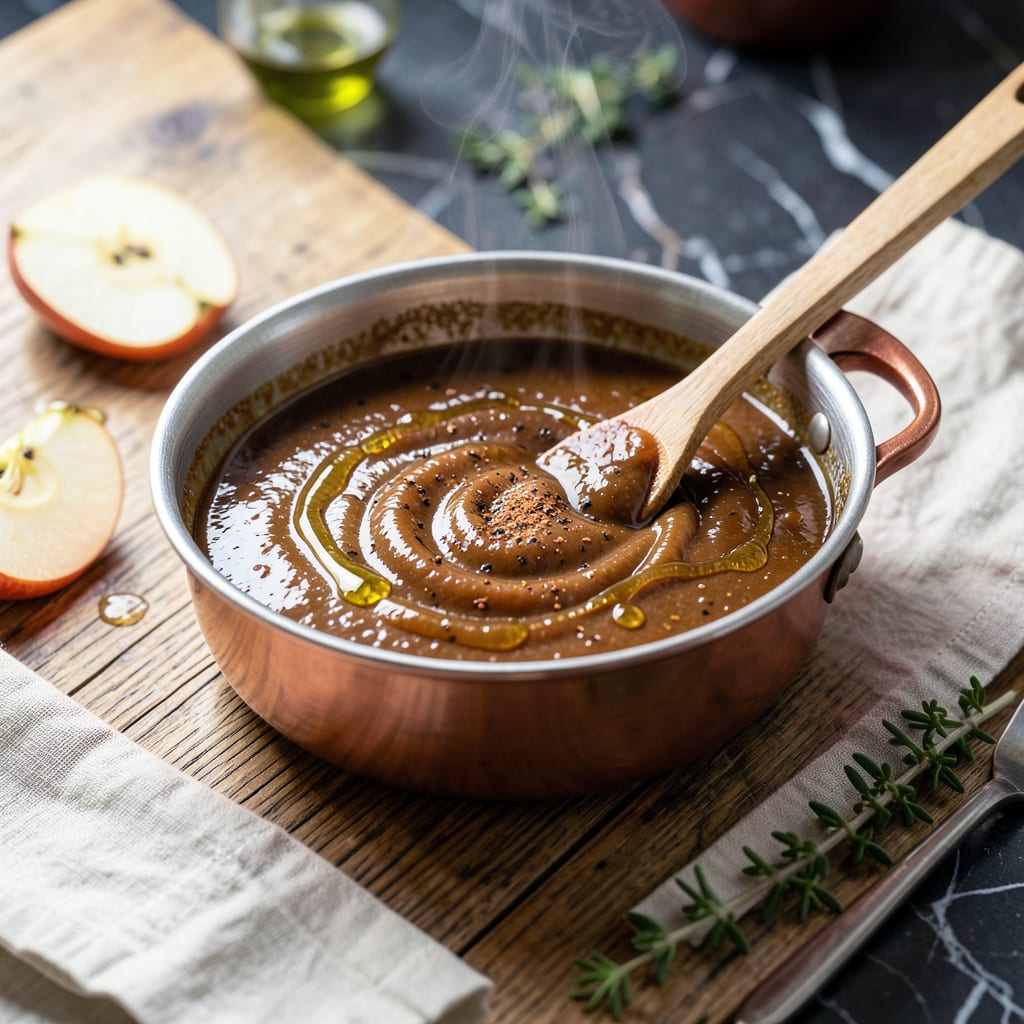
This sauce bridges the gap between classic BBQ and fruit-forward complexity. I developed it after years of experimenting with smoke and sweet profiles at competitions.
The apple base adds natural sweetness that balances the smoky depth, creating a versatile condiment perfect for ribs, chicken, or as a dipping sauce. It stores beautifully for up to two weeks.
Ingredients for Apple Bbq Sauce
Ten ingredients for a sauce that’s sweet, smoky, and seriously versatile.
| Ingredient | Amount | Notes |
|---|---|---|
| Apple Cider Vinegar 🍏 | ½ cup | Raw, unfiltered preferred |
| Unsweetened Applesauce 🍎 | 1 ½ cups | Smooth, no added sugar |
| Tomato Paste 🍅 | 2 tbsp | Double-concentrated preferred |
| Molasses 🫙 | 2 tbsp | Dark or blackstrap variety |
| Maple Syrup 🍁 | ¼ cup | Grade A or B works |
| Smoked Paprika 🌶️ | 1 tbsp | Sweet or hot variety |
| Garlic Powder 🧄 | 1 tsp | Freshly ground if possible |
| Onion Powder 🧅 | 1 tsp | Fine grain preferred |
| Liquid Smoke 🔥 | ½ tsp | Hickory flavor recommended |
| Sea Salt 🧂 | 1 tsp | Fine grain preferred |
[recipe_ingredient_scaler]
The applesauce is doing heavy lifting here—Mott’s or Muselman’s have the right texture (no chunks). Molasses adds that deep, almost bitter edge that cuts through sweetness. Whole Foods bulk bins are great for smoked paprika and spices (buy small, use fresh). Liquid smoke can be hit-or-miss—Wright’s is the only brand I trust for consistent hickory flavor without that chemical aftertaste.
Out of applesauce? Blended baked apples work in a pinch (peel and core first). No molasses? Brown sugar plus a splash of blackstrap gets you close. Want more heat? Swap smoked paprika for chipotle powder. The maple syrup can be agave or date syrup—just avoid honey to keep it vegan. Tomato paste from a tube (like Amore) means no waste, no can to store.
Sauce keeps 2 weeks in the fridge in a sealed jar. Freeze extras in ice cube trays for 6 months—perfect single-serving portions. Thin with water if too thick after chilling (it’ll thicken up as it cools).
Why You’ll Love This Recipe
- One Pot Wonder: I just dump everything in a saucepan—no chopping, no fuss. Honestly, it’s ready before the oven even preheats for the ribs.
- Sweet & Tangy Balance: The molasses and maple syrup play off the apple cider vinegar so well. That first taste had me going back for “just one more” spoonful.
- Meat’s Best Friend: Slather it on pulled pork, chicken, or even meatballs. I’ll be real: it’s my secret weapon for making weeknight dinners feel special.
- Keeps Like a Champ: A batch lasts me two weeks in the fridge, and the flavor only gets deeper. Between us, I’ve been known to double it just to have extra on hand.
Step-by-Step Instructions for Apple BBQ Sauce
This method delivers rich, complex flavors with minimal effort on your part.
Step 1: Combine the Wet Base Ingredients
In a medium saucepan, whisk together the 1.5 cups Unsweetened Applesauce, 0.5 cup Apple Cider Vinegar, 2 tbsp Tomato Paste, 2 tbsp Molasses, and 0.25 cup Maple Syrup until smooth. The applesauce should fully incorporate with the other liquids, creating a uniform base.
Place the saucepan over medium heat and bring to a gentle simmer. You’ll notice small bubbles forming around the edges first—that’s your signal that it’s heating evenly. Stir occasionally to prevent sticking, especially at the bottom where the sugars can catch.
Step 2: Add the Spices and Seasonings
Once simmering, stir in the 1 tbsp Smoked Paprika, 1 tsp Garlic Powder, 1 tsp Onion Powder, 0.5 tsp Liquid Smoke, and 1 tsp Sea Salt. The smoked paprika will deepen the color immediately, turning the mixture a rich amber.
The liquid smoke adds that essential BBQ depth, but don’t overdo it—0.5 tsp is the perfect amount. Taste now and imagine how the flavors will concentrate as it reduces. The sea salt balances the sweetness, so don’t skip it even if you’re watching sodium elsewhere.
Step 3: Simmer and Reduce to Desired Consistency
Reduce heat to medium-low and let the sauce simmer uncovered for 20-25 minutes. You’re aiming for a thickness where it coats the back of a spoon but still drizzles slowly. Stir every 5 minutes to prevent scorching.
As it reduces, the sauce will darken significantly and develop a glossy sheen. The applesauce will break down further, creating that perfect smooth texture. If it thickens too quickly, reduce the heat slightly—you want a slow, steady reduction for the best flavor development.
Step 4: Cool and Adjust Seasoning
Remove the saucepan from heat and let the sauce cool to room temperature, about 30 minutes. This resting period allows the flavors to meld completely. The sauce will thicken slightly more as it cools.
Give it a final taste and adjust if needed, though with these exact measurements, it should be perfectly balanced—sweet from the applesauce and maple syrup, tangy from the vinegar, with a deep smoky backbone. Transfer to an airtight container once cooled completely.
Pro Tips For Making Apple Bbq Sauce
- Simmer Low and Slow: Keep the heat at medium-low and let it reduce for at least 20 minutes—rushing it with high heat will caramelize the sugars too fast and leave a bitter edge. I learned this the hard way after ruining a batch with burnt molasses.
- Balance the Sweetness: Taste before adding all the maple syrup, especially if your applesauce is naturally sweet. A squeeze of lemon or extra vinegar can fix an overly sweet batch.
- Skip the Metal Pot: The acid in apple cider vinegar and tomato paste can react with aluminum or copper, giving the sauce a metallic tang. Stick to stainless steel or enameled cast iron.
- Use Full-Strength Vinegar: Don’t water down the apple cider vinegar—its sharpness mellows as it cooks, but thinning it first makes the sauce taste flat. Sounds weird, but it works.
Common Mistakes When Making Perfect Results
Over-Sweetening the Sauce
Resist adding extra maple syrup or sugar—the 1.5 cups applesauce and 0.25 cup maple syrup already provide perfect sweetness. I learned this the hard way at a local BBQ competition when my sauce was too candied. The natural apple sweetness balances the smoky depth beautifully. 🔥
Skipping the Simmer Time
Don’t rush the 20-25 minute reduction. Shortcutting this step leaves your sauce thin and underdeveloped. The slow simmer is where the flavors concentrate and the tomato paste caramelizes slightly, adding complexity.
Using Low-Quality Liquid Smoke
Cheap liquid smoke can taste artificial. I only trust Wright’s hickory flavor—it delivers consistent, natural smokiness without that chemical bite. Stick to the 0.5 tsp measurement; more isn’t better with this ingredient.
Neglecting to Stir
With all those sugars, this sauce can scorch easily. Stir every 5 minutes during simmering, especially at the bottom of the pan. I use a flat wooden spoon to reach the edges where sticking is most likely to occur.
Adjusting Seasoning While Hot
Taste testing straight from the pot won’t give you accurate results. Let it cool for at least 15 minutes first. The flavors change dramatically as it cools, and you’ll get a truer sense of the balance.
Improper Storage
Always use a clean, airtight container. I prefer glass jars for this sauce—they don’t absorb odors and let you see the beautiful color. It’ll keep in the fridge for up to 2 weeks, but honestly, it never lasts that long in my house. ✨
Nutrition Facts

Trained in classic French technique but raised on slow-cooked ribs and spicy rubs, she blends culinary skill with smoke and soul.
- Recipe for Crock Pot Swiss Steak: Slow-Cooked Beef With Mushroom Gravy - October 3, 2026
- Recipe for Kabsa Rice: Spiced Middle Eastern Feast in One Pot - October 3, 2026
- Hamburger Stir Fry Recipe Healthy: Lean Protein and Veggie-Packed Dinner - October 3, 2026