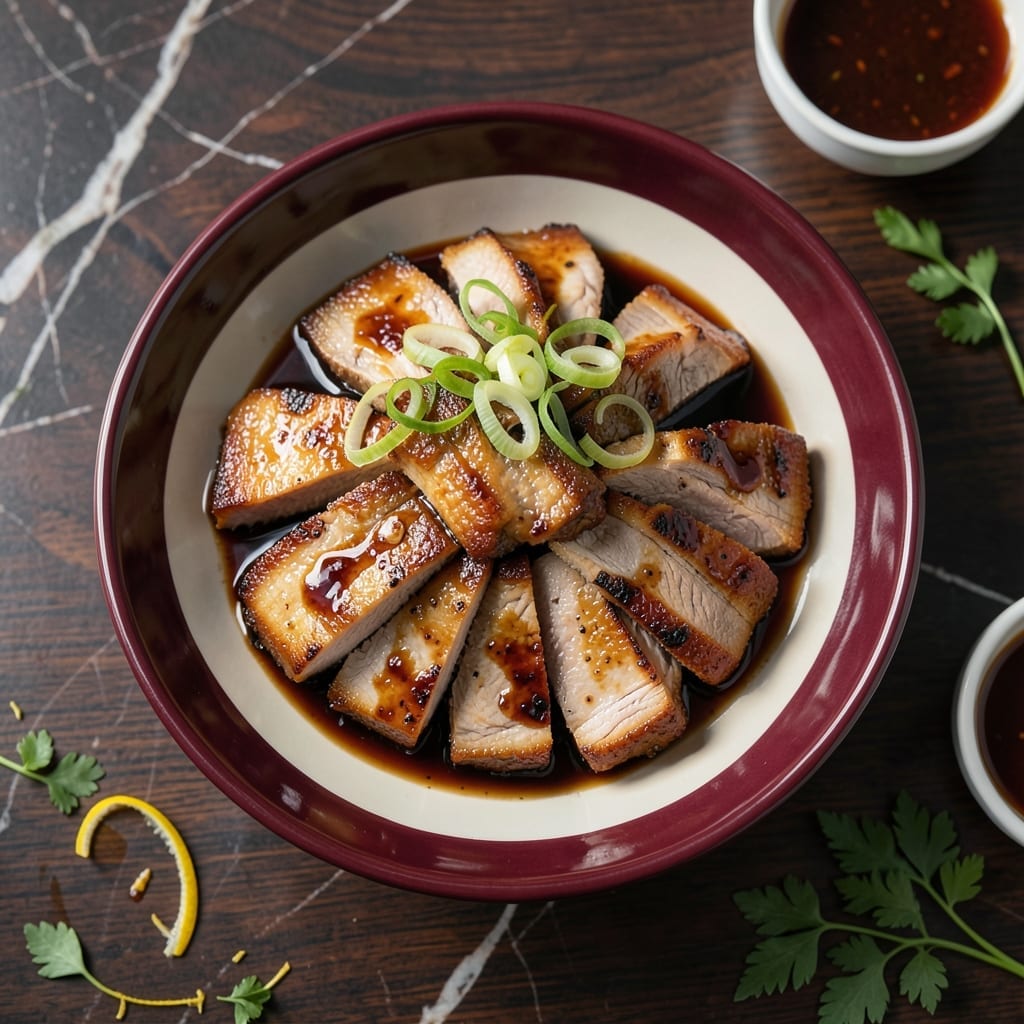
This recipe captures the true essence of authentic Chinese barbecue pork with its signature red glaze and tender texture.
I’ve refined traditional Char Siu methods to achieve that perfect balance of sweet and savory flavors at home.
Ingredients for Authentic Chinese Barbecue Pork
Traditional ingredients for that iconic red glaze and tender, flavorful pork at home.
| Ingredient | Amount | Notes |
|---|---|---|
| Pork Shoulder 🥩 | 2 lb | Boneless, cut into 2-inch strips |
| Hoisin Sauce 🍯 | ½ cup | High-quality for authentic flavor |
| Honey 🍯 | ¼ cup | For sweetness and glaze |
| Soy Sauce 🫒 | 3 tbsp | Low-sodium preferred for balance |
| Chinese Five-Spice Powder 🌿 | 2 tsp | Essential for authentic Char Siu |
| Shaoxing Wine 🥃 | 2 tbsp | Or substitute dry sherry |
| Garlic Cloves 🧄 | 4 cloves | Minced finely for even flavor |
| Ginger 🌿 | 1 tbsp | Freshly grated for zing |
| Red Fermented Bean Curd 🧀 | 1 piece | Mashed, for color and umami |
| Brown Sugar 🧈 | 2 tbsp | Light or dark for depth |
| Oyster Sauce 🫒 | 1 tbsp | Optional but recommended for depth |
| Sesame Oil 🫒 | 1 tsp | Toasted, for aroma |
| Red Food Coloring 🎨 | ½ tsp | Optional for signature red hue |
[recipe_ingredient_scaler]
The pork shoulder is non-negotiable for authentic texture—boneless is easier to slice, but bone-in adds flavor. Asian markets will have the best selection, but Costco or Whole Foods work in a pinch. Look for good marbling (about 20-30% fat) for juiciness. For the hoisin and oyster sauces, Lee Kum Kee or Koon Chun are trusted brands. The red fermented bean curd is key for the signature color and umami—find it in the refrigerated section of Asian grocers.
No Shaoxing wine? Dry sherry at a 1:1 ratio works well. Missing red fermented bean curd? Miso paste plus a pinch of red food coloring gets you close. For a vegetarian twist, swap the pork for firm tofu or king oyster mushrooms. The honey can be replaced with agave or maple syrup if needed. If you’re avoiding food coloring, a bit of beet juice adds natural redness (though less vibrant).
Marinate the pork for at least 12 hours—overnight is ideal. The glaze keeps in the fridge for 1 week, or freeze the marinated pork for up to 3 months. Leftovers reheat beautifully, perfect for fried rice or bao the next day.
Why You’ll Love This Recipe
- Set and Forget: I just mix the hoisin, honey, and five-spice with the pork, pop it in the oven, and let it do its thing.
- Sticky Sweet Magic: The glaze caramelizes into this ridiculously good sweet-savory crust that clings to every bite.
- Feeds the Week: I make a big batch—it’s perfect in stir-fries, rice bowls, or just straight out of the fridge for a snack.
- Budget-Friendly Feast: Pork shoulder is cheap, and one batch gives me multiple meals without breaking the bank.
Step-by-Step Instructions for Chinese Barbecue Pork
Master the traditional technique that delivers perfectly caramelized char siu with authentic flavor.
Step 1: Prepare the Marinade Base
In a mixing bowl, combine the 0.5 cup Hoisin Sauce, 0.25 cup Honey, 3 tbsp Soy Sauce, 2 tbsp Shaoxing Wine, and 2 tbsp Brown Sugar. Whisk until the mixture is smooth and the brown sugar fully dissolves.
Add the 2 tsp Chinese Five-Spice Powder, 1 tbsp Oyster Sauce, and 1 tsp Sesame Oil. The five-spice is non-negotiable for authentic flavor—it provides the warm, aromatic backbone that defines char siu. Stir thoroughly to incorporate all the spices evenly.
Step 2: Incorporate Aromatics and Color
Mash the 1 piece Red Fermented Bean Curd into the marinade until it forms a smooth paste. This ingredient adds a subtle umami depth and helps achieve the traditional red hue. Stir in the 4 cloves Garlic Cloves (minced) and 1 tbsp Ginger (freshly grated).
For the signature color, add the 0.5 tsp Red Food Coloring and mix well. The marinade should now be a deep reddish-brown with a glossy consistency. Let it sit for 10 minutes to allow the flavors to meld before using.
Step 3: Marinate the Pork
Place the 2 lb Pork Shoulder (cut into 2-inch strips) in a large resealable bag or shallow dish. Pour the marinade over the pork, ensuring each piece is fully coated. Massage the marinade into the meat for 1-2 minutes to help it penetrate.
Seal or cover and refrigerate for at least 4 hours, but ideally overnight. The longer marinating time allows the pork to absorb the complex flavors fully. Turn the pork occasionally if possible to ensure even coverage.
Step 4: Roast to Perfection
Preheat your oven to 375°F. Line a baking sheet with foil and place a wire rack on top. Arrange the marinated pork strips on the rack, leaving space between each piece for even cooking. Reserve any leftover marinade for basting.
Roast for 25 minutes, then flip the pork and baste with the reserved marinade. Roast for another 20-25 minutes, basting once more halfway through, until the pork reaches an internal temperature of 195°F and the edges are deeply caramelized.
For extra authenticity, broil for 2-3 minutes at the end to achieve a slightly charred finish. Watch closely to prevent burning.
Step 5: Rest and Slice
Transfer the pork to a cutting board and let it rest for 10 minutes. This allows the juices to redistribute, ensuring each slice remains moist and flavorful. The pork should have a glossy, sticky exterior with a rich red-brown color.
Slice the pork into ¼-inch thick pieces against the grain. Serve immediately with steamed rice or noodles, or use as an ingredient in other dishes. The result should be tender, slightly sweet, and deeply savory with a hint of spice from the five-spice powder.
Pro Tips For Making Authentic Chinese Barbecue Pork
- Score the Fat: Cut 1/4-inch deep crosshatches into the pork shoulder’s fat cap before marinating—this lets the hoisin and five-spice penetrate deeper and crisp up better under the broiler.
- Marinate Overnight: I learned this the hard way—less than 12 hours in the fridge and the pork just doesn’t absorb enough of that soy-honey-hoisin mix to taste truly authentic.
- Skip the Boiling: Resist the urge to parboil the pork first; it washes away flavor and makes the texture mealy instead of sticky-tender.
- Baste Often: Every 5 minutes under the broiler, brush on more marinade—sounds tedious, but it builds those glossy, caramelized layers that define good char siu.
Regional Styles of This Recipe
Cantonese Classic
This is the style most Westerners know and love, with its sweet glaze and tender texture. I learned the traditional method uses honey and maltose for that signature sticky sheen. The pork is typically roasted over charcoal in open pits, giving it a subtle smoky note that’s hard to replicate at home.
Sichuan Spicy Version
For those who love heat, the Sichuan approach adds chili oil and Sichuan peppercorns to the marinade. The result is a fiery, numbing version that still maintains the sweet-savory balance. I’ve found adding 1 tsp chili crisp to your glaze gives an authentic kick without overwhelming the dish.
Shandong Style
This northern version focuses more on the savory elements, using more soy sauce and less sugar in the marinade. The pork often has a deeper, almost mahogany color from extended roasting. I remember tasting this at a street market in Jinan—it was less sweet but incredibly rich.
Hainanese Adaptation
In Hainan, they incorporate coconut milk into the marinade for a tropical twist. The pork becomes exceptionally tender with a subtle coconut aroma. I’ve recreated this at home by adding ¼ cup coconut milk to the standard marinade with excellent results.
Fujian Sweet Glaze
This coastal version uses extra brown sugar and pineapple juice in the glaze, creating a sweeter, fruitier profile. The pork often has a darker, more caramelized exterior. I was surprised how well this pairs with seafood dishes from the region.
Each regional style offers a unique take while maintaining the dish’s core identity. 🔥
Nutrition Facts
Frequently Asked Questions
Can I use a different cut of pork?
Pork shoulder is ideal, but pork tenderloin works in a pinch. Avoid lean cuts like loin—they dry out. Shoulder’s fat keeps it juicy during roasting.
Why is my glaze not sticky enough?
Reduce leftover marinade on the stove for 5 minutes before basting. Add 1 tbsp maltose syrup or extra honey for extra shine. Baste frequently during roasting.
How do I get that classic red color without food coloring?
Use 1 tbsp beet juice or red fermented bean curd paste. The color won’t be as vibrant but stays natural. The bean curd also adds authentic umami.
Can I grill this instead of roasting?
Use indirect heat at 350°F and cook for 30-40 minutes. Rotate often and watch for burning. Charcoal adds a smoky depth similar to traditional pits.

Trained in classic French technique but raised on slow-cooked ribs and spicy rubs, she blends culinary skill with smoke and soul.
- Hamburgers in Sauce Recipe Crock Pot: Slow-Cooked Savory Delight - October 3, 2026
- Sanjeev Kapoor Egg Biryani Recipe: Fragrant Spiced Rice With Boiled Eggs - October 3, 2026
- Recipe for French Pork Spread Gorton: Savory Gallic Flavors in a Spreadable Delight - October 3, 2026