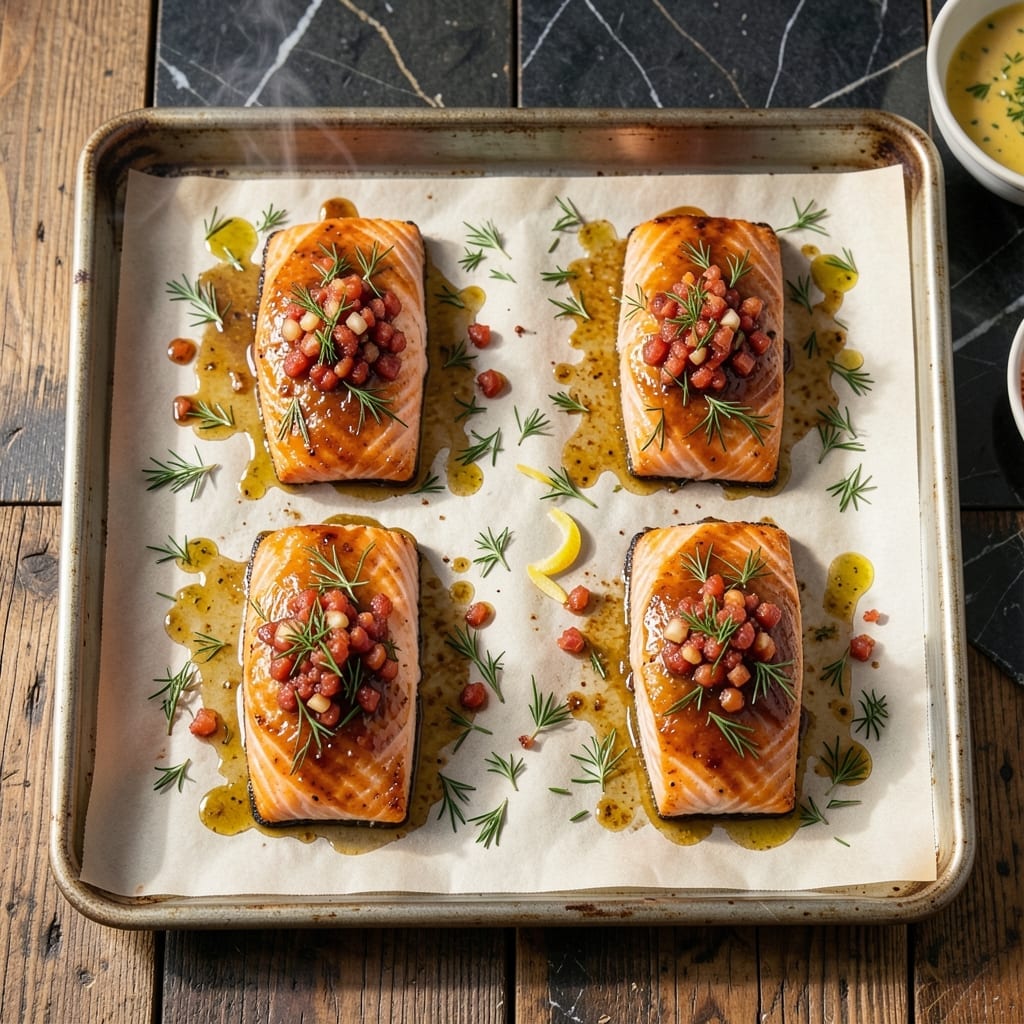
This method transforms frozen salmon into tender, flaky fillets without thawing first. I developed this technique for busy weeknights when fresh fish isn’t available.
The key is baking at 425°F with a simple seasoning blend that enhances the salmon’s natural richness. This approach ensures even cooking and prevents the dryness often associated with frozen seafood.
You’ll achieve moist, restaurant-quality results with minimal effort. The high heat creates a gentle sear on the outside while keeping the inside perfectly tender.
Pair with roasted vegetables or rice for a complete meal. This recipe delivers consistent results every time.
Ingredients for Baked Frozen Salmon
Frozen salmon plus a few pantry staples create restaurant-quality fillets with minimal prep.
| Ingredient | Amount | Notes |
|---|---|---|
| Frozen Salmon Fillets 🐟 | 4 whole | Skin-on or skinless, about 6 oz each |
| Extra-Virgin Olive Oil 🫒 | 2 tbsp | Divided for brushing and finishing |
| Dijon Mustard 🟡 | 1 tbsp | Whole grain preferred |
| Honey 🍯 | 1 tbsp | Or maple syrup for vegan option |
| Garlic Cloves 🧄 | 3 cloves | Minced or pressed |
| Fresh Dill 🌿 | 2 tbsp | Chopped, or 2 tsp dried |
| Lemon 🍋 | 1 whole | Zested and juiced |
| Salt 🧂 | ¾ tsp | Diamond Crystal kosher preferred |
| Black Pepper 🌶️ | ½ tsp | Freshly ground preferred |
| Smoked Paprika 🌶️ | ½ tsp | Optional for depth of flavor |
| Onion Powder 🧅 | ½ tsp | Balances sweetness in glaze |
| Ground Cumin 🌿 | ¼ tsp | Warm earthy undertones |
[recipe_ingredient_scaler]
The salmon quality matters most here. Wild-caught frozen fillets from Trader Joe’s or Costco deliver the best texture and flavor. Look for fillets that are individually quick-frozen (IQF) to prevent freezer burn. Avoid any with ice crystals or discoloration. For even cooking, choose fillets of similar thickness—6 oz portions work perfectly for this method.
No Dijon? Whole-grain mustard adds texture, but regular yellow mustard works in a pinch. Swap honey for maple syrup or agave if needed. Fresh dill is ideal, but dried at one-third the amount still imparts that bright, herby note. If you’re missing smoked paprika, a pinch of cayenne or regular paprika keeps the color vibrant without overpowering.
Frozen salmon stays safe in the freezer for 3-4 months, but use it within 2 months for best quality. Thaw any leftovers overnight in the fridge—they’ll keep for 2-3 days. Reheat gently in a covered skillet with a splash of water to maintain moisture.
Why You’ll Love This Recipe
- No Thaw Needed: I just pop the frozen fillets straight in the oven—no waiting, no mess.
- Sweet & Tangy Glaze: The honey and Dijon mustard mix with garlic creates this sticky, savory crust that’s honestly my favorite part.
- Meal Prep Hero: One batch, three lunches. Here’s what sold me—it reheats just as good the next day.
- Budget Savior: Frozen salmon is half the price of fresh, but with this glaze, it tastes just as fancy.
Step-by-Step Instructions for Baked Frozen Salmon
Here’s the method. Straightforward, tested, works every time.
Step 1: Prep the Frozen Salmon Fillets
Preheat your oven to 400°F to ensure even cooking from frozen. Meanwhile, arrange the 4 whole Frozen Salmon Fillets on a parchment-lined baking sheet, spacing them evenly apart. This direct-from-freezer method works beautifully when you account for the longer cook time.
Pat the fillets dry with a paper towel to remove any ice crystals—excess moisture would steam the fish instead of allowing it to roast. This step is crucial for achieving that desired flaky texture rather than a mushy result.
Step 2: Create the Flavorful Glaze
In a small bowl, whisk together 1 tbsp Dijon Mustard, 1 tbsp Honey, 1 tbsp Extra-Virgin Olive Oil, minced 3 cloves Garlic Cloves, 0.75 tsp Salt, 0.5 tsp Black Pepper, 0.5 tsp Smoked Paprika, 0.5 tsp Onion Powder, and 0.25 tsp Ground Cumin until smooth. The combination of sweet honey and sharp mustard creates a perfect balance.
Zest the 1 whole Lemon directly into the glaze, then stir in half the juice. The acidity brightens the rich salmon and cuts through the sweetness. Reserve the remaining lemon juice for finishing.
Step 3: Coat and Season the Salmon
Brush the glaze generously over each Frozen Salmon Fillet, covering all surfaces. I find that using about two-thirds of the glaze now and reserving the rest for a second coat halfway through cooking yields the best flavor penetration.
Sprinkle the 2 tbsp Fresh Dill evenly over the fillets, pressing it gently into the glaze so it adheres during baking. The dill’s fresh, grassy notes complement the salmon perfectly without overpowering it.
Step 4: Bake to Flaky Perfection
Bake at 400°F for 18-22 minutes, depending on the thickness of your fillets. The salmon is done when it reaches an internal temperature of 145°F and flakes easily with a fork. About halfway through, brush the fillets with the remaining glaze to build layers of flavor.
Watch for the edges to turn opaque and the center to still have a slight translucency—this is the ideal moment to pull it from the oven, as the residual heat will finish the cooking. The top should be a beautiful golden brown with the dill perfectly toasted.
Step 5: Rest and Serve
Remove the salmon from the oven and let it rest for 5 minutes on the baking sheet. This brief pause allows the muscle fibers to relax, ensuring the fillets stay moist when sliced. Drizzle with the remaining lemon juice for a final bright note.
Serve immediately, garnished with additional fresh dill if desired. The result is consistently flaky, moist salmon with a caramelized glaze that’s packed with complex flavors from the spices and herbs.
Pro Tips For Making Baked Frozen Salmon
- Thaw First: I learned this the hard way—baking frozen salmon straight from the freezer leads to uneven cooking. Let it sit in the fridge for 12-24 hours, or run under cold water in a sealed bag for 20-30 minutes.
- High Heat Start: Crank the oven to 425°F for the first 10 minutes, then drop to 375°F. This gives you that perfect golden crust on the honey-mustard glaze without drying out the fish.
- Pat It Dry: After thawing, blot the fillets with paper towels—every last drop. Sounds tedious, but it’s the only way to get that glaze to stick instead of sliding right off.
- Double the Garlic: Sounds weird, but it works: mince the garlic super fine and mix half into the honey-mustard glaze, then sprinkle the rest on top before baking. The flavor actually changes the outcome.
Troubleshooting This Dish
Uneven Cooking
If your salmon is cooked on the outside but still cold inside, your oven may have hot spots. Try rotating the baking sheet 180° halfway through cooking. Also, ensure fillets are similar in thickness—6 oz portions work best together. 💡
Dry Salmon
Overcooking is the main culprit. Pull the fish when it reaches 145°F internal temperature—it will continue cooking as it rests. Brushing with extra olive oil before baking adds a moisture barrier.
Glaze Burning
If your mustard-honey glaze darkens too quickly, tent the baking sheet with aluminum foil after 15 minutes. The sugar in honey caramelizes fast at 400°F. Lower the oven to 375°F if this happens repeatedly.
Sticking to Pan
Always use parchment paper or a well-greased baking sheet. Even non-stick pans can struggle with the glaze’s sugar content. Let the salmon rest 5 minutes before transferring—this helps it release naturally.
Flavor Too Mild
Double the Dijon mustard and smoked paprika in your glaze for a bolder taste. Fresh herbs like dill lose potency when baked, so add extra at the end. A pinch of cayenne also wakes up the flavors. 🌶️
Fishy Taste
This usually means the salmon was old before freezing. Stick to wild-caught IQF fillets from trusted brands like Trader Joe’s. Soaking fillets in lemon juice for 10 minutes before baking can help neutralize any off flavors.
Nutrition Facts
Frequently Asked Questions
Do I need to thaw the salmon first?
No, you can bake it straight from frozen. This method was designed specifically for frozen fillets to save time and prevent mushy texture. Just add 5-7 minutes to the cooking time.
What temperature should I bake it at?
Bake at 400°F for even cooking and a golden crust. This high heat ensures the outside gets slightly crisp while the inside stays moist and flaky.
How do I know when it’s done?
The salmon is ready when it reaches 145°F internally and flakes easily with a fork. The flesh should be opaque but still slightly translucent in the center.
Can I use a different type of fish?
Yes, this method works well with other frozen fish like cod or halibut. Adjust cooking time based on thickness—thinner fillets may need 2-3 minutes less.

Trained in classic French technique but raised on slow-cooked ribs and spicy rubs, she blends culinary skill with smoke and soul.
- Recipe for Boneless Leg of Lamb Roast in the Oven: Herb-Crusted and Rosy Pink Inside - October 3, 2026
- Meat Loaf Recipe With Beef And Pork: Homestyle Blend With Rich Gravy - October 3, 2026
- Hamburger Patty Recipe No Egg: Juicy Bind With Breadcrumbs and Milk - October 3, 2026