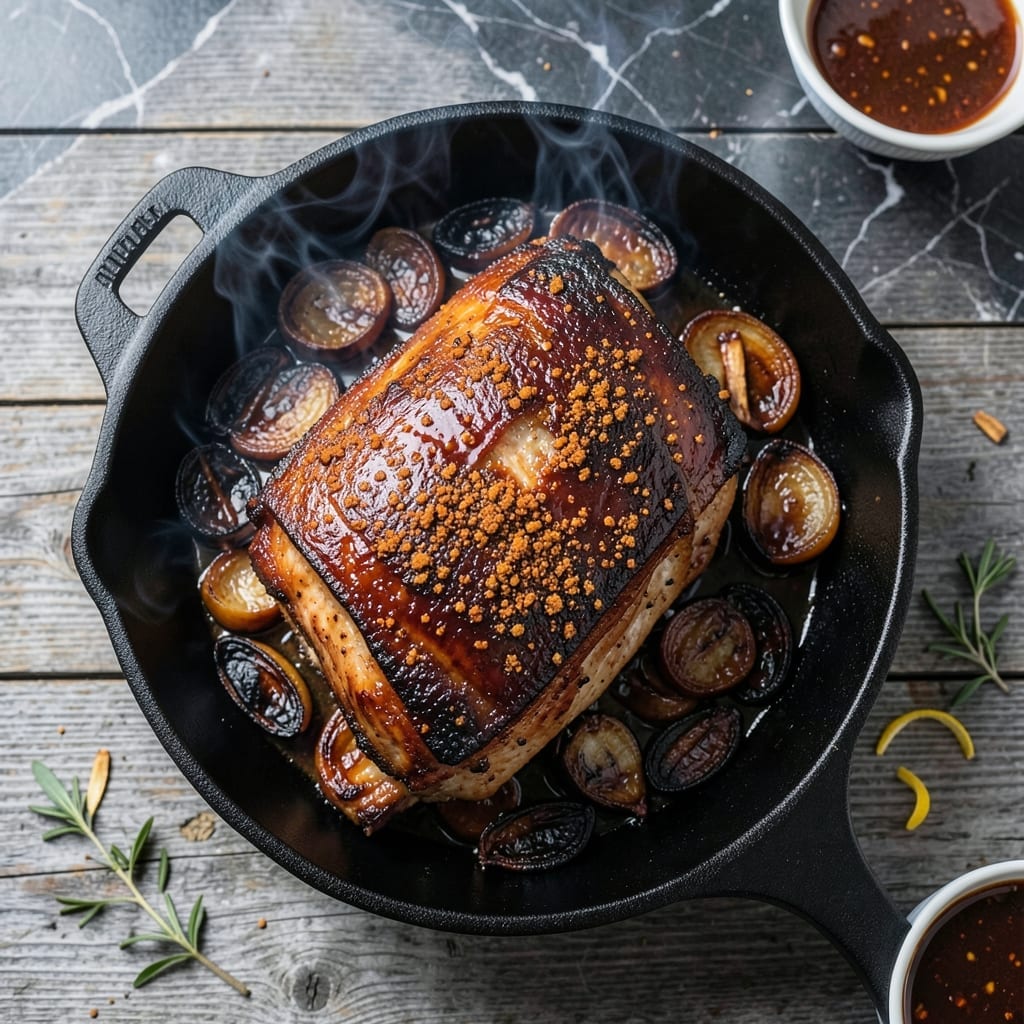
Getting my first whiff of hickory smoke at a family cookout hooked me for life. This roast delivers that same melt-in-your-mouth magic.
Low and slow is the only way to turn tough pork shoulder into tender, smoky perfection. My French training taught me the science behind the smoke.
Ingredients for Barbecue Boston Butt Roast
Pantry staples plus one star ingredient: the pork shoulder. Nothing else comes close.
| Ingredient | Amount | Notes |
|---|---|---|
| Pork Shoulder 🥩 | 4 lb | Boston butt cut, bone-in preferred |
| Hickory Wood Chips 🪵 | 2 cups | Soaked in water 1 hour |
| Brown Sugar 🍚 | ½ cup | Light or dark variety |
| Paprika 🌶️ | 2 tbsp | Smoked paprika preferred |
| Garlic Powder 🧄 | 1 tbsp | Fresh minced works too |
| Onion Powder 🧅 | 1 tbsp | Essential for dry rub depth |
| Salt 🧂 | 1 tbsp | Kosher or coarse sea salt |
| Black Pepper 🌶️ | 1 tbsp | Freshly ground preferred |
| Cayenne Pepper 🔥 | ½ tsp | Adjust for heat preference |
| Apple Cider Vinegar 🍏 | ½ cup | For tangy mop sauce |
| Barbecue Sauce 🍯 | 1 ½ cups | Quality store-bought or homemade |
| Mustard 🟡 | 2 tbsp | Yellow or Dijon variety |
| Worcestershire Sauce 🍶 | 1 tbsp | Adds umami depth |
[recipe_ingredient_scaler]
The pork shoulder is non-negotiable here—Boston butt is the cut you want (yes, it’s actually from the shoulder, not the rear). Costco has great quality at a good price, but your local butcher will have the best selection. Look for good marbling and a thick fat cap—that’s what keeps it moist during the long cook. Bone-in adds flavor, but boneless works in a pinch (just trim the fat cap to 1/4-inch).
No hickory chips? Apple or cherry wood gives a sweeter smoke. Swap brown sugar for raw turbinado if you want a crunchier bark. The barbecue sauce can be any style—Sweet Baby Ray’s or Stubb’s are solid choices. Out of apple cider vinegar? White vinegar with a teaspoon of sugar gets you close. The mustard in the rub might seem odd, but trust me, it’s the secret to a perfect crust.
Store the pork shoulder in the fridge for up to 3 days before cooking, or freeze for 6-12 months. Leftovers reheat beautifully—just add a splash of apple juice to keep them moist. Keeps in the fridge for 4-5 days (if it lasts that long).
Why You’ll Love This Recipe
- Set and Forget: Honestly, I just rub the pork shoulder with brown sugar and spices, toss it on the smoker with hickory chips, and let it do its thing for hours.
- Smoky Sweet Perfection: That combo of paprika, garlic powder, and brown sugar creates this sticky, caramelized bark that falls apart at the touch of a fork.
- Crowd Pleaser: I’ve served this at backyard parties and casual Sunday dinners—everyone from picky kids to barbecue snobs asks for seconds.
- Leftovers for Days: One Boston butt feeds my family for a week—pulled pork sandwiches, tacos, you name it. Between us, it tastes even better the next day.
Step-by-Step Instructions for Barbecue Boston Butt Roast
Here’s the method that turns tough pork shoulder into fall-apart tender perfection with smoky depth.
Step 1: Prepare the Pork Shoulder with Dry Rub
Pat the 4 lb Pork Shoulder dry with paper towels to help the rub adhere. In a bowl, mix the 0.5 cup Brown Sugar, 2 tbsp Paprika, 1 tbsp Garlic Powder, 1 tbsp Onion Powder, 1 tbsp Salt, 1 tbsp Black Pepper, and 0.5 tsp Cayenne Pepper until fully combined.
Rub this mixture generously over every surface of the pork, pressing it into the meat so it forms a thick, even crust. Let the seasoned shoulder sit at room temperature for 30 minutes while you prepare the smoker—this allows the spices to begin penetrating the meat.
Step 2: Set Up the Smoker with Wood Chips
Soak the 2 cups Hickory Wood Chips in water for at least 1 hour before smoking. Preheat your smoker to 225°F to 250°F using indirect heat. Once at temperature, drain the wood chips and add them to the smoker box or directly onto hot coals for consistent smoke.
When the smoker is ready and producing a steady stream of thin blue smoke (not white or billowing), place the pork shoulder fat-side up on the grill grates. Close the lid and resist opening it for at least 90 minutes to maintain steady heat and smoke absorption.
Step 3: Smoke Low and Slow with Mop Sauce
Smoke the pork for 4 to 5 hours, maintaining the temperature between 225°F and 250°F. Every 1 to 1.5 hours, spritz or mop the shoulder with a mixture of the 0.5 cup Apple Cider Vinegar, 2 tbsp Mustard, and 1 tbsp Worcestershire Sauce to keep the surface moist and add a tangy depth.
You’ll know it’s ready for the next step when the bark is dark mahogany and the internal temperature reaches 160°F to 165°F. This is when the collagen starts breaking down, but the meat hasn’t yet hit the stall.
Step 4: Wrap and Finish with Barbecue Sauce
At the stall (when the internal temperature plateaus), tightly wrap the pork shoulder in heavy-duty foil with ½ cup of the Barbecue Sauce. This “Texas crutch” method helps push through the stall while adding moisture and flavor. Return it to the smoker and continue cooking until the internal temperature reaches 200°F to 205°F.
This final stage usually takes another 2 to 3 hours. The pork is done when a probe or fork slides in with no resistance, like butter. Transfer the wrapped shoulder to a cooler or insulated container and let it rest for at least 1 hour to allow the juices to redistribute.
Step 5: Shred and Serve with Remaining Sauce
Unwrap the pork and discard any large fat cap pieces. Using two forks or meat claws, shred the shoulder into bite-sized pieces, mixing in the accumulated juices from the foil. Transfer to a serving dish and toss with the remaining 1 cup Barbecue Sauce for a glossy, flavorful finish.
Serve warm on buns with pickles and coleslaw, or as a main dish with classic sides. The bark should have a deep, smoky crust, while the inside stays juicy and tender with every bite.
Pro Tips For Making Barbecue Boston Butt Roast
- Low and Slow Wins: Cook at 225°F for at least 1.5 hours per pound—I learned this the hard way after pulling dry, tough meat from a rushed high-heat cook.
- Trim the Fat Cap: Leave about 1/4 inch of fat for flavor, but trim excess or it’ll pool grease in your smoker and make the bark soggy.
- Rest Before Pulling: Wrap the butt in foil and let it rest for 30-45 minutes after cooking; skip this and the juices will run all over your cutting board instead of staying in the meat.
- Boost the Bark: Mix your brown sugar, paprika, and garlic powder with a little mustard—sounds weird, but it works—to make the rub stick better and form a crust you’ll actually want to brag about.
Creative Variations of This Dish
Spicy Coffee Rub
Swap the brown sugar for ½ cup finely ground coffee and add 1 tbsp chili powder with an extra 1 tsp cayenne. The coffee deepens the smoke flavor while the heat builds gradually. I discovered this riding through coastal spice shops. 🌶️
Asian-Inspired Glaze
Replace barbecue sauce with a mix of ½ cup hoisin, ¼ cup soy sauce, 2 tbsp honey, and 1 tbsp grated ginger. Brush it on during the final hour for a sticky, umami-rich finish.
Apple Cider Braise
After wrapping, add 1 cup apple cider and 2 tbsp butter to the foil. This creates a sweet, tangy steam that tenderizes the meat beautifully—perfect for those crisp fall days.
Herb-Crusted Version
Mix 2 tbsp fresh rosemary and 2 tbsp fresh thyme into your dry rub. I forage these wild along the coast. The herbs add a bright, aromatic note that cuts through the richness.
Competition-Style Bark
Before wrapping, sprinkle with ¼ cup turbinado sugar and 1 tbsp cornstarch. This creates an extra-crispy bark that wows at local BBQ competitions. Let it caramelize for 30 minutes before wrapping.
Beer-Braised Pull
Use 12 oz dark beer (I prefer a stout) in the foil wrap instead of barbecue sauce. The maltiness pairs perfectly with the smoky pork. Simmer the remaining beer with the sauce for serving.
Nutrition Facts
Frequently Asked Questions
What’s the ideal internal temperature for pulling?
Remove it from the smoker when it hits 200°F to 205°F internally. The collagen fully breaks down at this range, making the meat tender enough to shred easily. Let it rest for at least 1 hour before pulling.
Can I use an oven instead of a smoker?
Yes! Set your oven to 275°F and use a roasting pan with a rack. Add a small pan of water for moisture and place wood chips in a foil packet on the lower rack for smoke flavor.
How do I avoid dry meat?
Spritz with apple cider vinegar every 1-1.5 hours and wrap in foil with sauce when the internal temp hits 160°F. This “Texas crutch” locks in moisture during the final cook.
Should I trim the fat cap before cooking?
Leave about ¼-inch of fat to protect the meat and add flavor. Trim any excess, as too much fat can prevent the rub from forming a good bark. The fat will render down during the long cook.

Trained in classic French technique but raised on slow-cooked ribs and spicy rubs, she blends culinary skill with smoke and soul.
- Indian Lamb Curry Recipe Pressure Cooker: Fragrant Spices in a Fraction of the Time - October 3, 2026
- Recipe for Oven Roasted: Golden Crisp Perfection Without the Fryer - October 3, 2026
- Recipe for Fried Pork Chops With Flour: Crispy Crust and Juicy Centers - October 3, 2026