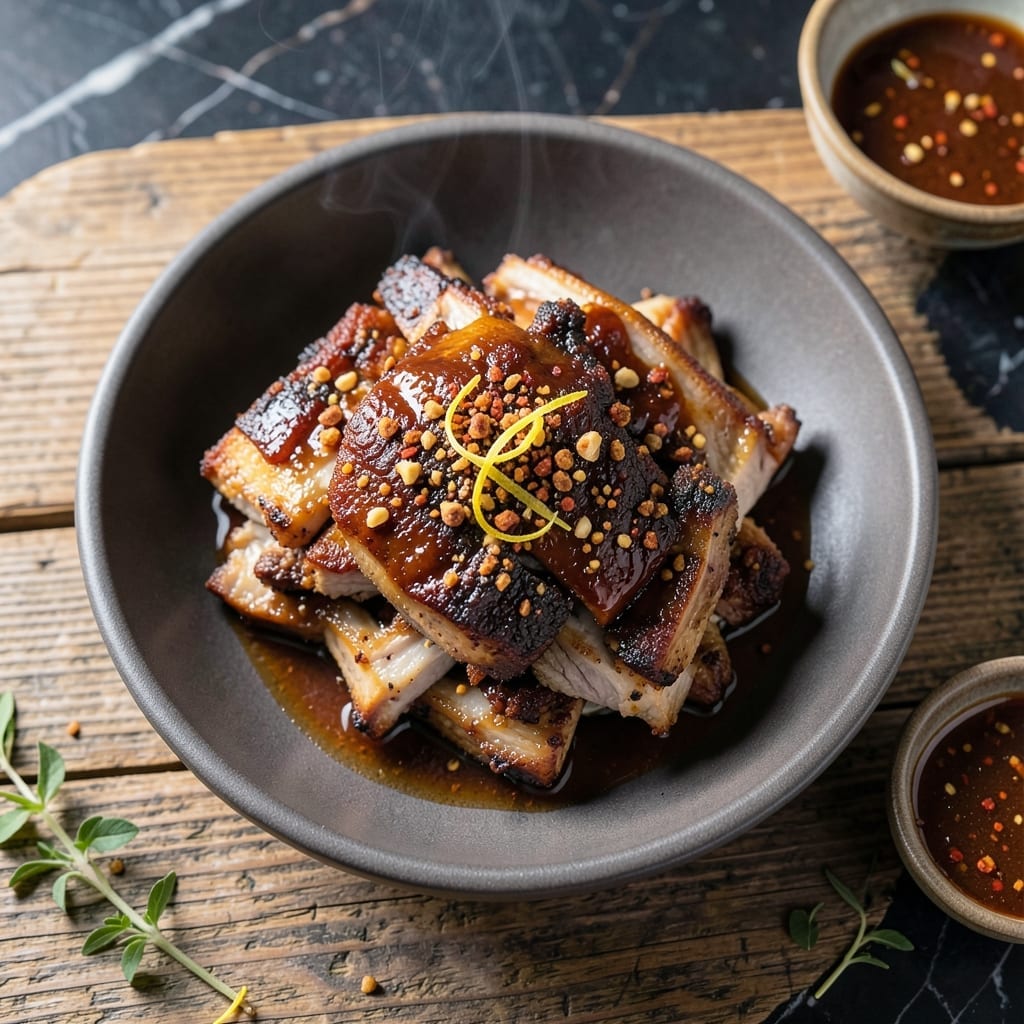
There’s nothing quite like the aroma of pork slowly smoking over hickory, transforming tough cuts into meltingly tender perfection. I’ve spent years refining this method, blending my French training with traditional pitmaster techniques.
The key lies in patience and precision—low heat, careful seasoning, and just the right amount of smoke. This approach ensures the meat develops a beautiful bark while staying juicy inside, never dry or stringy.
What emerges hours later is pork so tender it pulls apart with barely a touch, infused with deep smoky flavor. The rub creates a caramelized crust that gives way to succulent meat underneath.
Serve it on buns, over rice, or simply sliced with pickles and sauce. This is barbecue done right.
Ingredients for Barbecued Pork
Pantry staples and a pork shoulder. That is all you need for this.
| Ingredient | Amount | Notes |
|---|---|---|
| Pork Shoulder 🍖 | 4 lb | Bone-in for best flavor |
| Brown Sugar 🍚 | ½ cup | Light or dark works |
| Paprika 🌶️ | 2 tbsp | Smoked or sweet variety |
| Garlic Powder 🧄 | 1 tbsp | Not garlic salt |
| Onion Powder 🧅 | 1 tbsp | Fresh ground preferred |
| Salt 🧂 | 1 tbsp | Kosher or sea salt |
| Black Pepper 🌶️ | 1 tbsp | Freshly ground preferred |
| Cayenne Pepper 🔥 | ½ tsp | Adjust for heat preference |
| Apple Cider Vinegar 🍎 | ¼ cup | Balances sweetness in rub |
| Hickory Wood Chips 🪵 | 2 cups | Soaked in water 1 hour |
| Barbecue Sauce 🍯 | 1 ½ cups | For basting and serving |
| Yellow Mustard 🟡 | ¼ cup | Binder for dry rub |
[recipe_ingredient_scaler]
The pork shoulder is non-negotiable here. Bone-in gives the best flavor and keeps it juicy during the long smoke. Look for good marbling—Costco or Sam’s Club are great for bulk buys. Ask your butcher for a Boston butt if you want to get specific. The rub spices? Penzeys if you want to splurge, but the grocery store stuff works fine too (just check the dates).
No hickory chips? Apple or cherry wood gives a sweeter smoke. Out of apple cider vinegar? White vinegar in a pinch—just use a little less. The mustard is just a binder, so Dijon works too. Want to make your own sauce? Ketchup, vinegar, brown sugar, and spices—easy. Store-bought? Stubb’s or Sweet Baby Ray’s are solid picks.
Leftovers keep in the fridge for 4-5 days or freeze for 3 months. The pork actually tastes better the next day once all the flavors meld. I like to pull it, mix in extra sauce, and portion it out for sandwiches all week (that’s it—lunches sorted).
Why You’ll Love This Recipe
- Set It and Forget It: I just rub the pork shoulder with brown sugar and spices, then let the oven do the work.
- Smoky Sweet Magic: That combo of paprika, garlic and onion powders with the brown sugar gives it that sticky, finger-licking crust.
- Weekend to Weekday: It’s just as good shredded into tacos on Tuesday as it is fresh off the grill Sunday.
- Feeds the Freezer: One pork shoulder makes enough for tonight’s dinner and next week’s sandwiches. Honestly, it’s my secret to stress-free meals.
Step-by-Step Instructions for Slow-Smoked Barbecued Pork
Here’s how I pull off melt-in-your-mouth smoked pork that falls apart with a nudge.
Step 1: Apply a Flavor-Packed Dry Rub
In a bowl, mix the 0.5 cup brown sugar, 2 tbsp paprika, 1 tbsp garlic powder, 1 tbsp onion powder, 1 tbsp salt, 1 tbsp black pepper, and 0.5 tsp cayenne pepper until evenly combined. Pat the 4 lb pork shoulder dry with paper towels—this helps the rub stick better.
Rub the 0.25 cup yellow mustard all over the pork as a binder. Then, press the spice mixture into every surface of the pork, making sure it adheres well. The mustard won’t add flavor, but it creates the perfect base for the dry rub to cling to during the long smoke.
Step 2: Prepare the Smoker and Wood Chips
Soak the 2 cups hickory wood chips in water for at least 1 hour before you plan to start smoking. This prevents them from burning too quickly and ensures steady smoke. Fill your smoker’s water pan to maintain moisture in the cooking chamber.
Preheat your smoker to 225°F. Once it reaches temperature, add the soaked wood chips to the firebox or smoker box. You want thin, blue smoke—not thick white smoke, which can make the pork bitter. Place the pork shoulder directly on the grates, fat-side up.
Step 3: Smoke Low and Slow to Tenderness
Smoke the pork shoulder undisturbed at 225°F for 8-10 hours, or until the internal temperature reaches 195-200°F. Spritz the pork with the 0.25 cup apple cider vinegar every 60-90 minutes to keep the surface moist and add a tangy layer of flavor.
Resist the urge to peek or flip the pork. The fat cap will slowly render down, basting the meat and creating a beautiful bark on the outside. You’ll know it’s ready when a probe slides in with almost no resistance, like butter through warm toast.
Step 4: Baste and Rest for Maximum Juiciness
Once the pork reaches temperature, transfer it to a large piece of foil. Drizzle 1 cup of the barbecue sauce over the top and wrap it tightly. Return it to the smoker for another 30 minutes to let the sauce set and the pork continue tenderizing.
Remove the pork from the smoker and let it rest, still wrapped, for at least 30 minutes. This step is non-negotiable—it allows the juices to redistribute and the collagen to fully break down, ensuring every bite is tender and flavorful.
Step 5: Shred and Serve with Extra Sauce
Unwrap the pork and transfer it to a large cutting board. Using two forks, shred the pork into bite-sized pieces, discarding any large fat chunks. The meat should pull apart effortlessly, with a smoky, caramelized crust on the outside.
Toss the shredded pork with the remaining 0.5 cup barbecue sauce to coat it evenly. Serve immediately on buns, in tacos, or as a main dish with your favorite sides. The result is pork so tender it practically melts in your mouth.
Pro Tips For Making Barbecued Pork
- Low and Slow Wins: Cook the pork shoulder at 225°F for 6-8 hours—any hotter and the spices burn before the meat gets tender. I learned this the hard way after my first batch turned into a dry, charred brick.
- Rub It Right: Mix the brown sugar, paprika, garlic powder, and onion powder with a little oil before rubbing it into the meat—this makes the dry spices stick and forms a better crust.
- Skip the Rush: Resist the urge to pull the pork early just because it looks done. It needs to hit 195°F internally to shred properly; I used to serve chewy meat until I started using a meat thermometer.
- Rest Before Shredding: Let the pork rest for 15-20 minutes after cooking, tented with foil. Sounds weird, but it works: the juices redistribute, and you won’t lose half the moisture when you pull it apart.
Storing and Reheating This barbecued pork
Refrigerator Storage
Let your pork cool for no more than 2 hours before transferring to airtight containers. I use heavy-duty Ziploc bags or glass containers with locking lids. Store in the fridge at 40°F or below for up to 4-5 days. 🌡️
Freezer Storage
For longer storage, freeze portions in quart-size freezer bags, removing as much air as possible. Label with the date—this pork stays delicious for up to 3 months. I like to portion it into 1-pound blocks for easy grab-and-go meals.
Stovetop Reheating
Place pork in a skillet with ¼ cup water or broth over medium-low heat. Cover and warm for 8-10 minutes, stirring occasionally. Add a splash of barbecue sauce to refresh the flavor. This method keeps the meat juicy and tender.
Oven Reheating
Preheat oven to 300°F. Spread pork on a baking sheet, drizzle with 2 tbsp broth or sauce, and cover with foil. Heat for 15-20 minutes, then uncover and crisp under the broiler for 2-3 minutes if desired. ✨
Microwave Reheating
For quick meals, place pork in a microwave-safe dish with 1 tbsp water. Cover with a damp paper towel and heat on 70% power for 1-2 minutes. Stir, then continue in 30-second bursts until hot.
Pro Tip
I always make extra pork just for leftovers—it tastes even better the next day. The flavors meld together, and the texture stays perfect. Great for sandwiches, tacos, or loaded baked potatoes.
Nutrition Facts
Frequently Asked Questions
What cut of meat works best for this method?
Bone-in pork shoulder, also called Boston butt, is ideal. Its marbling and connective tissue break down beautifully during the long smoke, creating tender results. Avoid lean cuts like tenderloin—they dry out.
Can I use an oven instead of a smoker?
Yes, but you’ll miss the smoky flavor. Set your oven to 225°F and place a pan of water on the lower rack. Use liquid smoke in your rub for a similar taste. The cooking time remains the same.
How do I know when it’s done?
The pork is ready when its internal temperature reaches 195-200°F. A meat probe should slide in like butter with almost no resistance. Don’t rely on time alone—use a thermometer.
Why does the meat need to rest?
Resting for at least 30 minutes lets juices redistribute. Skipping this step causes the pork to dry out when you pull it apart, wasting all that flavor and moisture.

Trained in classic French technique but raised on slow-cooked ribs and spicy rubs, she blends culinary skill with smoke and soul.
- Hamburgers in Sauce Recipe Crock Pot: Slow-Cooked Savory Delight - October 3, 2026
- Sanjeev Kapoor Egg Biryani Recipe: Fragrant Spiced Rice With Boiled Eggs - October 3, 2026
- Recipe for French Pork Spread Gorton: Savory Gallic Flavors in a Spreadable Delight - October 3, 2026