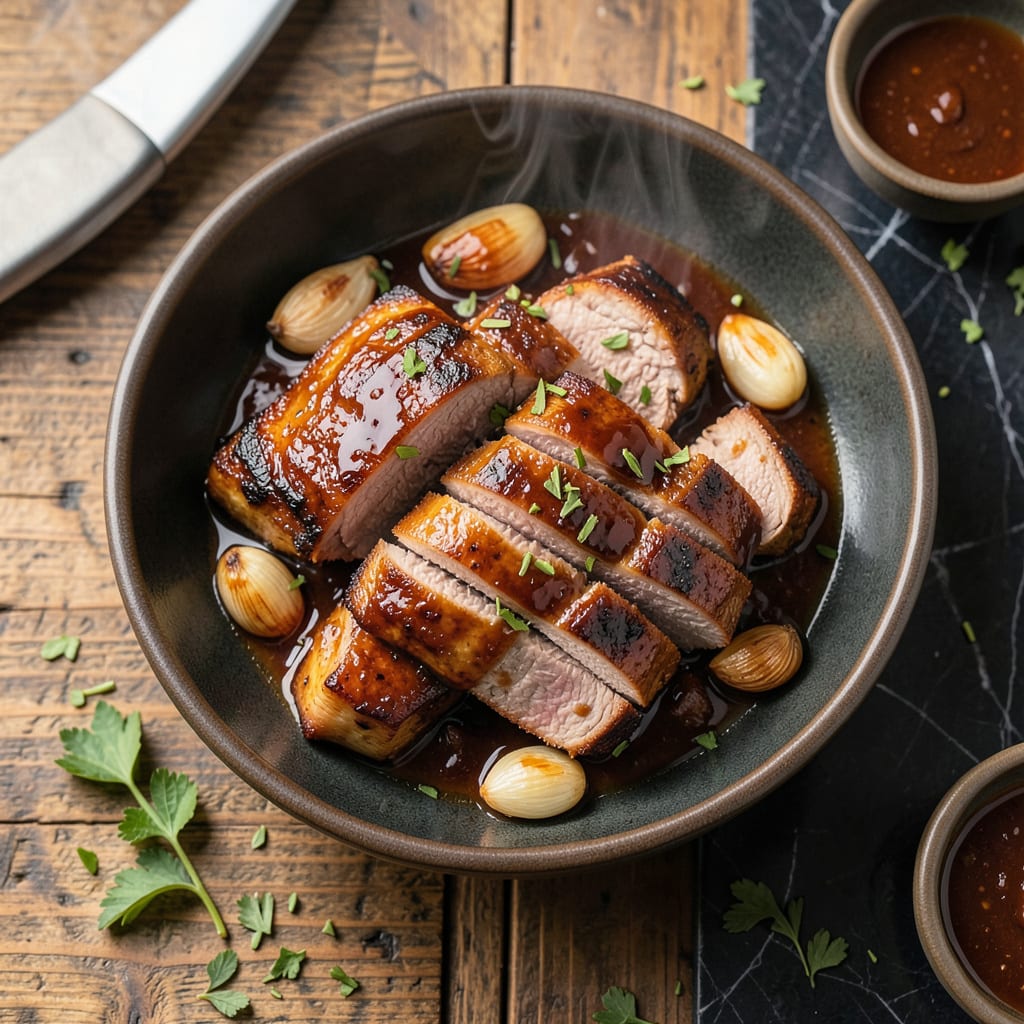
As a pitmaster, I swear by this method for achieving tender pork tenderloin every time. The apple cider vinegar glaze adds a tangy brightness that complements the smoky BBQ flavors perfectly.
This recipe transforms a simple cut into a juicy, flavorful centerpiece. The vinegar not only tenderizes but creates a caramelized crust that locks in moisture.
Ingredients for Bbq Pork Tenderloin
A few quality ingredients create this smoky, tangy, fall-apart tender centerpiece dish.
| Ingredient | Amount | Notes |
|---|---|---|
| Pork Tenderloin 🥩 | 1 ½ lb | Trimmed of silver skin |
| Apple Cider Vinegar 🍏 | ½ cup | Raw, unfiltered preferred |
| BBQ Sauce 🍯 | 1 cup | Smoky, low-sugar variety |
| Brown Sugar 🧈 | ¼ cup | Light or dark works |
| Olive Oil 🫒 | 2 tbsp | For searing pork |
| Garlic Cloves 🧄 | 3 cloves | Minced finely |
| Kosher Salt 🧂 | 1 ½ tsp | Diamond Crystal brand preferred |
| Black Pepper 🌶️ | 1 tsp | Freshly cracked black pepper |
| Smoked Paprika 🌶️ | 1 tsp | For depth of flavor |
| Onion Powder 🧅 | 1 tsp | Not onion salt |
| Dijon Mustard 🟡 | 1 tbsp | Smooth, not grainy |
| Honey 🍯 | 2 tbsp | For balancing acidity |
| Worcestershire Sauce 🍶 | 1 tbsp | Adds umami depth |
[recipe_ingredient_scaler]
The pork tenderloin quality is paramount. Look for a piece with even coloring and minimal fat—most supermarkets carry it pre-trimmed. I prefer whole, untouched tenderloins from a trusted butcher like Whole Foods or a local meat market, as they allow you to trim it exactly to your preference. The apple cider vinegar should be raw and unfiltered (like Bragg) for maximum tang and depth.
For the BBQ sauce, Stubb’s Original or Sweet Baby Ray’s work well if you’re short on time. No apple cider vinegar? White vinegar in a pinch, but reduce by one-fourth as it’s more potent. Brown sugar can be swapped for maple syrup (use one-third less). The honey balances the vinegar’s acidity—agave works as a vegan alternative (same quantity).
The glaze keeps for 3-4 days refrigerated in an airtight container. Pork tenderloin is best cooked fresh but can be marinated overnight. Leftovers reheat beautifully—slice and crisp in a skillet for 2-3 minutes per side.
Why You’ll Love This Recipe
- One Pan Marvel: I love that this comes together in a single dish—just sear, brush with sauce, and let the oven do the work.
- Sweet & Tangy Perfection: The brown sugar and apple cider vinegar create that sticky, finger-licking glaze I can’t resist.
- Crowd Pleaser: Honestly, this works for Sunday dinner or a casual backyard get-together—always disappears fast.
- Leftovers Win: Between us, the flavors taste even better the next day in sandwiches or tacos.
Step-by-Step Instructions for BBQ Pork Tenderloin
This method ensures maximum tenderness with a caramelized glaze that locks in moisture.
Step 1: Prepare and Season the Pork Tenderloin
Pat the 1.5 lb Pork Tenderloin dry with paper towels to ensure proper browning. Trim any remaining silver skin for uniform texture. In a small bowl, combine the 1.5 tsp Kosher Salt, 1 tsp Black Pepper, 1 tsp Smoked Paprika, and 1 tsp Onion Powder.
Rub this mixture evenly over the entire surface of the pork, pressing gently to adhere. This dry rub enhances the natural flavor and creates a foundation for the glaze. Let the seasoned tenderloin sit at room temperature for 15-20 minutes to allow the salt to penetrate the meat.
Step 2: Sear the Pork for Depth of Flavor
Heat the 2 tbsp Olive Oil in a large oven-safe skillet over medium-high heat until it shimmers. Add the pork tenderloin and sear on all sides for 2-3 minutes per side until a deep golden crust forms. The pork should release easily from the pan when it’s ready to turn.
This searing step develops a flavorful crust and creates the fond that will enhance the glaze. Remove the pork from the skillet and set it aside on a plate.
Step 3: Create the Apple Cider Vinegar Glaze
In the same skillet, reduce heat to medium and add the minced 3 cloves Garlic Cloves. Sauté for 30 seconds until fragrant. Pour in the 0.5 cup Apple Cider Vinegar, 1 cup BBQ Sauce, 0.25 cup Brown Sugar, 1 tbsp Dijon Mustard, 2 tbsp Honey, and 1 tbsp Worcestershire Sauce.
Stir to combine and bring to a gentle simmer. Cook for 3-4 minutes until the glaze thickens slightly and becomes syrupy. The mixture should coat the back of a spoon with a glossy sheen.
Step 4: Glaze and Finish the Pork Tenderloin
Return the seared pork tenderloin to the skillet with the glaze. Spoon the glaze over the pork to coat it evenly. Reduce heat to medium-low, cover the skillet, and let it cook for 10-12 minutes, turning the pork occasionally to ensure even coating.
The pork is done when an instant-read thermometer inserted into the thickest part reads 145°F. The glaze should be thick and sticky, with a deep, rich color. If the glaze thickens too much before the pork is cooked, add a splash of water to loosen it.
Remove the pork from the skillet and let it rest for 5-10 minutes before slicing. This resting period allows the juices to redistribute, ensuring the pork remains tender and juicy when served.
Pro Tips For Making Bbq Pork Tenderloin
- Sear First, Sauce Later: I learned this the hard way—sear the tenderloin in olive oil first to lock in juices, then add BBQ sauce in the last 10 minutes to prevent burning the sugars.
- Trim the Silver Skin: That tough membrane on the tenderloin won’t soften no matter how long you cook it, so take 2 minutes to trim it off before seasoning.
- Rest Before Slicing: Give it a solid 5-10 minutes under foil after cooking—sounds tedious, but it keeps the juices from running all over your cutting board.
- Deglaze with Vinegar: After searing, pour in 2 tablespoons of apple cider vinegar to scrape up those browned bits, then mix them into your BBQ sauce for extra depth.
Common Mistakes When Making This Recipe
Overcooking the Pork
Pork tenderloin is lean, so it dries out quickly. I pull mine at exactly 145°F internal temperature—any higher risks a dry, tough result. Use an instant-read thermometer like my trusted ThermoPro for precision. Remember, it continues cooking as it rests. 🌡️
Skipping the Sear
That initial sear isn’t just for color—it builds a flavor foundation for the glaze. Heat your 2 tbsp Olive Oil until shimmering, then sear the pork for 2-3 minutes per side until golden. This creates fond that deepens the sauce’s complexity.
Rushing the Glaze
The glaze needs 3-4 minutes to thicken properly. Don’t crank the heat—medium is ideal. If it reduces too fast, add a splash of water. The vinegar’s acidity needs time to mellow into that perfect tangy-sweet balance.
Not Letting It Rest
Resting for 5-10 minutes is non-negotiable. Slicing too soon lets precious juices escape, leaving dry meat. I tent mine loosely with foil to keep it warm while the glaze sets. The wait is torture, but worth it.
Using Cold Pork
Always let your 1.5 lb Pork Tenderloin sit at room temperature for 15-20 minutes before cooking. Cold meat seizes up in the pan, preventing even cooking. This small step ensures tender, juicy results every time.
Wrong Vinegar Choice
Raw, unfiltered Apple Cider Vinegar (like Bragg) has the depth this dish needs. Regular white vinegar lacks complexity and can taste harsh. If substituting, reduce the amount by 25% to avoid overpowering the glaze.
Nutrition Facts

Trained in classic French technique but raised on slow-cooked ribs and spicy rubs, she blends culinary skill with smoke and soul.
- Recipe for Cut Up Chicken: One-Pan Crispy Bites - October 3, 2026
- Recipe For Oven Baked Haddock: Buttery Crumbs With Zesty Lemon Topping - October 3, 2026
- Recipe For Fried Salmon Patties With Flour: Crispy Golden Crust With Flaky Centers - October 3, 2026