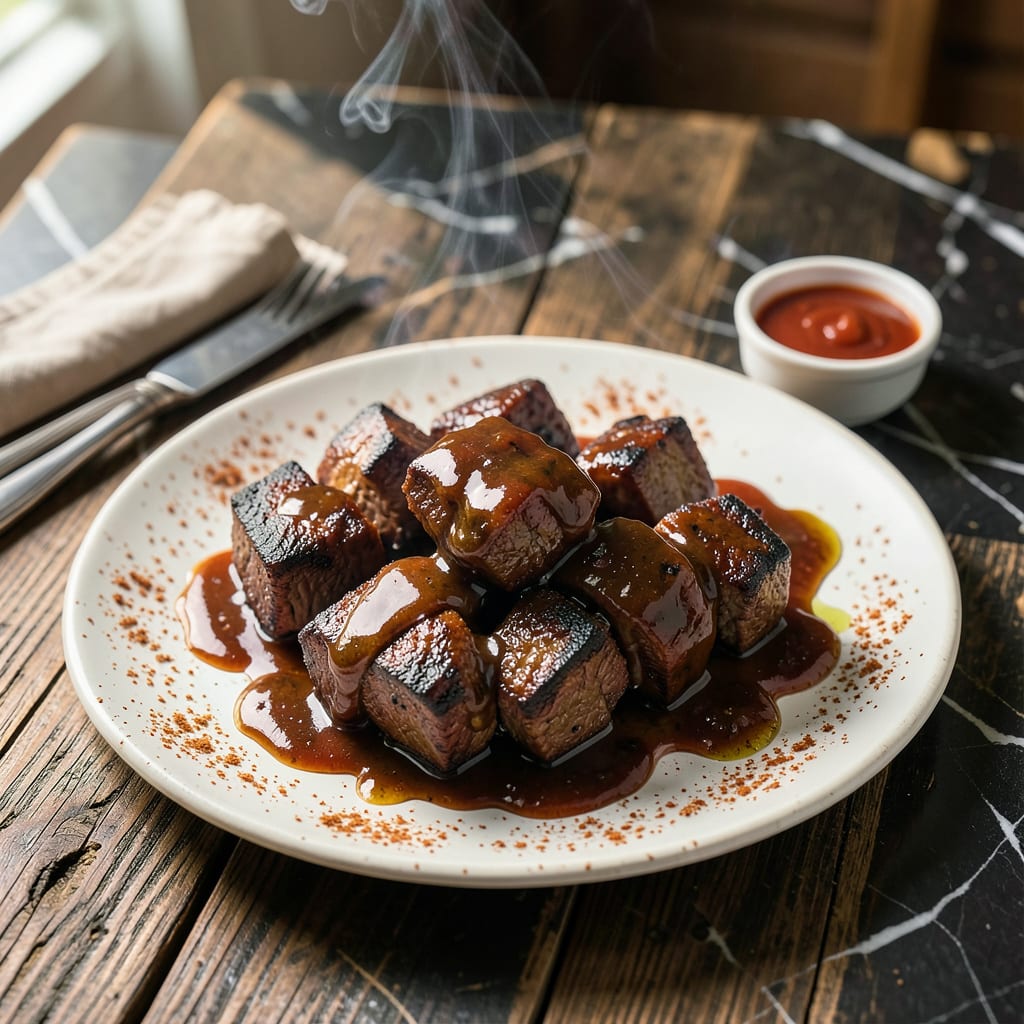
This BBQ sauce delivers the sticky, caramelized glaze that makes burnt ends legendary. A balanced blend of sweet, smoky, and tangy flavors creates that signature depth.
Simmered low and slow, this sauce thickens to coat every bite with rich, glossy perfection. It’s the finishing touch your smoked meats deserve.
Ingredients for Bbq Sauce Recipe for Burnt Ends
Eleven ingredients create that legendary sticky, smoky, tangy finish for your smoked meats.
| Ingredient | Amount | Notes |
|---|---|---|
| Ketchup 🍅 | 2 cups | High-quality for best flavor base |
| Apple Cider Vinegar 🍏 | ½ cup | Adds essential tangy brightness |
| Dark Brown Sugar 🍚 | ½ cup | Packed for rich caramel depth |
| Molasses 🍯 | ¼ cup | Blackstrap for intense flavor |
| Worcestershire Sauce 🫒 | 2 tbsp | Use vegetarian if preferred |
| Smoked Paprika 🌶️ | 1 tbsp | For authentic smoky depth |
| Garlic Powder 🧄 | 1 tbsp | Fresh minced works too |
| Onion Powder 🧅 | 1 tbsp | Balances sweetness perfectly |
| Dijon Mustard 🟡 | 1 tbsp | Adds subtle sharpness |
| Kosher Salt 🧂 | 1 tsp | Diamond Crystal preferred |
| Black Pepper 🌶️ | ½ tsp | Freshly ground for best results |
[recipeingredientscaler]
The ketchup base matters—Heinz or Hunt’s are solid choices, but avoid the cheap store brands (they’re watery). Dark brown sugar is non-negotiable for that caramelized depth; light brown just won’t cut it. Trader Joe’s has great organic molasses if you’re avoiding corn syrup. Smoked paprika from Penzeys or a bulk spice shop will give you that authentic pitmaster flavor without artificial smoke.
No molasses? Honey or maple syrup at a 1:1 ratio works in a pinch (though it’ll be sweeter). Swap apple cider vinegar for white vinegar plus a dash of sugar if that’s what you’ve got. The Worcestershire can be left out, but you’ll miss that umami depth—soy sauce plus a splash of lemon gets you 80% there. Fresh garlic and onion can replace the powders, but use half the amount.
This keeps for 1 week in the fridge, 3 months frozen (portion into ice cube trays for easy use). The flavors actually deepen after a day, so make it ahead if you can. Always stir before using—natural separation is normal.
Why You’ll Love This Recipe
- 5-Minute Mix: I dump everything in one pot—ketchup, vinegar, molasses—and it’s ready before the burnt ends even hit the smoker.
- Sticky Sweet Heat: That molasses and brown sugar combo gives it a deep, caramelized richness with just enough tang from the apple cider vinegar to cut through the fat.
- Smokehouse Staple: I use this sauce for burnt ends, ribs, even as a dipping sauce for fries. Honestly, it’s my secret weapon for anything that needs a smoky-sweet kick.
- Pantry Friendly: No fancy ingredients—just stuff I always have on hand, and it makes enough to keep a jar in the fridge for next week’s leftovers.
Step-by-Step Instructions for BBQ Sauce for Burnt Ends
This method delivers a glossy, caramelized sauce that clings beautifully to your creation.
Step 1: Combine the Liquid Base
In a medium saucepan, whisk together the 2 cups ketchup, 0.5 cup apple cider vinegar, and 0.5 cup dark brown sugar. I use a sturdy whisk to break up the brown sugar so it dissolves evenly without clumps.
The vinegar will create a slight fizz when it hits the ketchup—that’s normal. You want all the brown sugar fully incorporated before moving to the next step. This forms the sweet-tangy foundation that makes this dish special.
Step 2: Add Depth with Molasses and Seasonings
Stir in the 0.25 cup molasses, 2 tbsp Worcestershire sauce, 1 tbsp smoked paprika, 1 tbsp garlic powder, 1 tbsp onion powder, 1 tbsp Dijon mustard, 1 tsp kosher salt, and 0.5 tsp black pepper.
The molasses will make the mixture look darker and thicker immediately. I like to let it sit for 2 minutes off heat after adding the spices—this brief rest allows the flavors to begin melding before cooking.
Step 3: Simmer and Reduce
Place the saucepan over medium heat and bring to a gentle simmer. You’ll see small bubbles forming at the edges first, then spreading across the surface. Reduce heat to medium-low to maintain a steady, gentle simmer.
Cook for 15-20 minutes, stirring occasionally, until the sauce thickens enough to coat the back of a spoon. The color will deepen to a rich mahogany, and the aroma will become intensely smoky and sweet. Watch carefully—it can go from perfect to burnt quickly.
Step 4: Adjust and Finish
Remove from heat and let cool for 5 minutes. The sauce will thicken slightly more as it cools. Taste and adjust seasoning if needed—I sometimes add a pinch more salt if the sweetness feels too dominant.
For the best texture, I run an immersion blender through it for 10 seconds to ensure complete smoothness. This step is optional but recommended for that professional, glossy finish that makes your creation irresistible.
Pro Tips For Making Bbq Sauce Recipe For Burnt Ends
- Simmer Low and Slow: Cook the sauce on medium-low heat for at least 15-20 minutes—high heat burns the sugars in the molasses and brown sugar, leaving a bitter taste.
- Balance the Tang: I learned this the hard way—taste as you go and adjust the apple cider vinegar last, since its sharpness can overpower the ketchup and molasses if added too heavily upfront.
- Skip the Corn Syrup: Resist the urge to substitute light corn syrup for molasses; it lacks the deep, rich flavor that makes burnt ends sauce actually taste like BBQ.
- Rest Before Saucing: Give your burnt ends a 5-minute rest after pulling them apart before mixing in the sauce—this lets the meat absorb the flavors better instead of just sitting on top.
Pro Cooking Tips for bbq sauce recipe for burnt ends
Low and Slow Simmer
Patience is key—I maintain a gentle simmer at medium-low heat for 15-20 minutes, stirring every 3-4 minutes to prevent scorching. The sauce should reduce by about 25%, creating that perfect coating consistency for your burnt ends.
Temperature Control
I always use a heavy-bottomed saucepan, like my All-Clad, to distribute heat evenly. If your sauce starts bubbling too vigorously, immediately reduce heat—burnt sugar ruins the flavor. A candy thermometer helps monitor the 220-230°F range for ideal caramelization. 🌡️
Spice Bloom Technique
Before adding the spices, I toast the smoked paprika in the dry pan for 30 seconds to wake up its oils. This French technique, called blooming, intensifies the smoky notes. Just don’t let it smoke—that means it’s burning.
Flavor Balancing Act
Taste as you go—I often add an extra 1 tsp apple cider vinegar if the sauce needs brightness, or a pinch of cayenne for heat. Remember, the flavors will concentrate as it reduces, so go easy on adjustments early in the process.
Texture Perfection
For that silky finish, I blend with an immersion blender for 10-15 seconds. If you don’t have one, a regular blender works—just let it cool slightly first. The sauce should coat the back of a spoon but still drip slowly.
Rest Before Using
Let your sauce rest for at least 30 minutes after cooking. This allows the flavors to meld and the consistency to settle. I’ve found that overnight chilling deepens the caramelized notes beautifully. 💫
Nutrition Facts

Trained in classic French technique but raised on slow-cooked ribs and spicy rubs, she blends culinary skill with smoke and soul.
- Hamburgers in Sauce Recipe Crock Pot: Slow-Cooked Savory Delight - October 3, 2026
- Sanjeev Kapoor Egg Biryani Recipe: Fragrant Spiced Rice With Boiled Eggs - October 3, 2026
- Recipe for French Pork Spread Gorton: Savory Gallic Flavors in a Spreadable Delight - October 3, 2026