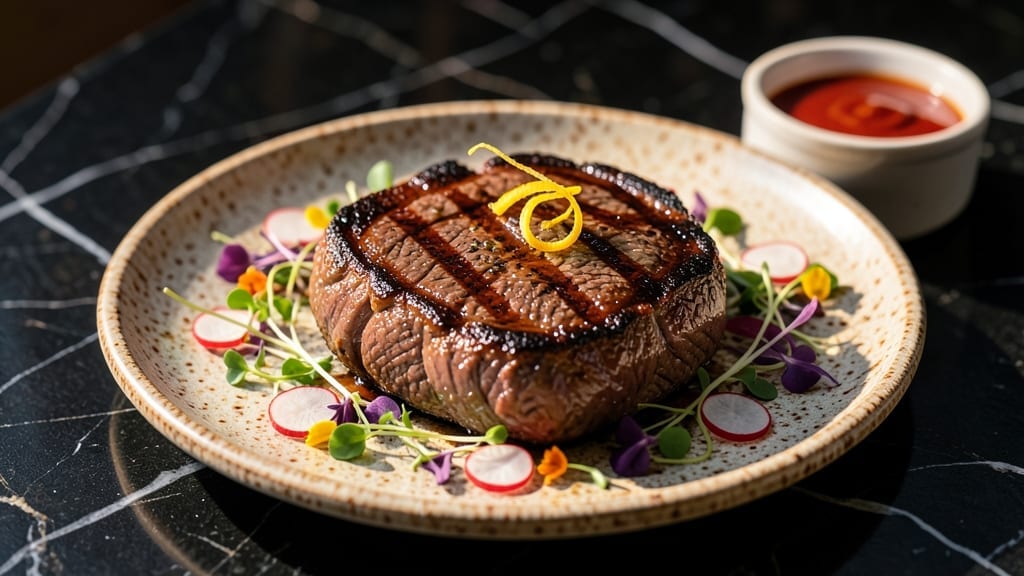
This beef loin top sirloin steak marinade recipe promises melt-in-your-mouth tenderness with just a few hours of simple prep. This recipe focuses on deep-red flavor infusion—using a precise blend of acid, fat, and aromatic spices to tenderize while enhancing natural beef richness.
I developed it after years of testing marinades that promised tenderness but fell short, often leaving steaks overly mushy or flavorless.
The secret lies in balancing tart cherry juice for acidity, olive oil for fat penetration, and Worcestershire sauce for umami depth—all while avoiding overpowering seasonings. The marinade works best on top sirloin steaks (1 to 1.5 inches thick) and delivers restaurant-quality results without complex techniques.
Unlike commercial marinades, this version relies on pantry staples and a 3-hour minimum (or overnight for maximum tenderness).
What you’ll achieve is a steak with a deep-red crust, perfectly tender interior, and layers of savory-sweet flavor that linger long after the first bite. The marinade caramelizes beautifully when seared, creating a crust that locks in juices while adding a subtle char.
This method ensures no dryness—just melt-in-your-mouth texture and a finish that’s bold yet balanced.
Use this marinade for grilled, pan-seared, or broiled steaks, and pair it with garlic butter or chimichurri for an elevated finish. The recipe scales easily for crowds, and leftovers keep well in the fridge for up to 5 days. Let’s get started on creating steakhouse-quality results at home.
Ingredients for beef loin top sirloin steak marinade
Pantry staples meet premium cuts for restaurant-quality steakhouse results at home.
| Ingredient | Amount | Notes |
|---|---|---|
| Top Sirloin Steaks 🥩 | 1 ½ lb | 1 to 1.5 inches thick, center-cut preferred |
| Tart Cherry Juice 🍒 | 1 cup | Unsweetened, for acidity balance |
| Extra-Virgin Olive Oil 🫒 | ½ cup | High-quality, fruity variety |
| Worcestershire Sauce 🍶 | 2 tbsp | Anchovy-based for umami depth |
| Garlic Cloves 🧄 | 6 cloves | Fresh, peeled, minced |
| Fresh Rosemary 🌿 | ¼ cup | Finely chopped, stems removed |
| Fresh Thyme 🌿 | ¼ cup | Leaves only, finely chopped |
| Dijon Mustard 🍯 | 1 tbsp | For binding and subtle tang |
| Kosher Salt 🧂 | 1 ½ tsp | Diamond Crystal preferred |
| Freshly Ground Black Pepper 🌶️ | 1 tsp | Coarsely ground for texture |
| Red Wine Vinegar 🍷 | 1 tbsp | For acidity enhancement |
| Granulated Sugar 🍬 | ½ tsp | Balances acidity, optional |
| Beef Tallow or Butter 🧈 | 2 tbsp | For fat penetration, optional |
[recipe_ingredient_scaler]
The top sirloin steaks are non-negotiable here—look for center-cut, 1 to 1.5 inches thick to ensure even cooking and tenderness. Local butchers or high-end grocery stores like Whole Foods carry the best cuts, often with superior marbling. If you can’t find tart cherry juice, unsweetened cranberry juice works in a pinch, though it lacks the same depth. For the olive oil, invest in a fruity, extra-virgin variety—something you’d drizzle on bread. The Worcestershire sauce should be anchovy-based for authentic umami; Lea & Perrins is the gold standard. Fresh herbs make all the difference—rosemary and thyme should be vibrant, not wilted. If you’re prepping ahead, store the herbs in damp paper towels in a sealed container for up to 5 days in the fridge.
No tart cherry juice? Pomegranate juice or red wine can substitute, though the flavor profile shifts slightly. Short on rosemary? Fresh sage at half the amount adds a similar earthy note. The Dijon mustard is crucial for binding the marinade—whole-grain mustard works too, but it may alter texture. For a deeper red crust, add 1 teaspoon of beet powder or 1 tablespoon of red wine reduction. If you’re concerned about sugar content, omit the granulated sugar entirely—it’s purely for acidity balance. The beef tallow or butter is optional but recommended for fat penetration; if using butter, ensure it’s unsalted to control seasoning levels. For a vegetarian-friendly version, replace the Worcestershire with soy sauce and the beef tallow with avocado oil.
This marinade keeps for up to 5 days in the fridge, though it’s best used within 3 days for peak flavor. Store it in an airtight container, preferably glass, to preserve freshness. For longer storage, freeze in ice cube trays for single-use portions—thaw overnight in the fridge before using. The steaks should marinate for a minimum of 3 hours, but overnight (8-12 hours) yields the best results. If using frozen steaks, thaw them in the fridge first, then proceed with marinating. Always marinate in the fridge, never at room temperature, to prevent bacterial growth. The marinade can be reused once if strained and stored properly.
Why You’ll Love This Recipe
- No-Fuss Marinade Magic: I’ll admit, I used to overcomplicate steak marinades—blenders, fancy blends, hours of prep. This one? Just toss everything in a bowl, whisk, and forget. The tart cherry juice and olive oil emulsify like a dream, and the herbs just need a quick chop. You’re done in under 15 minutes, and honestly, that’s when the real flavor work begins.
- Umami Bomb: The Worcestershire sauce and beef tallow or butter? Game-changer. That anchovy depth in the Worcestershire and the fat from the tallow or butter make the steak taste like it’s been simmering for hours—even though it’s just sitting in the fridge. And the garlic? Fresh, minced, and aggressively aromatic—it clings to the meat like it’s part of the steak’s DNA. Trust me, your taste buds won’t know it’s not a 5-course meal.
- Overnight Stealth: This marinade is my secret weapon for lazy Sundays or last-minute dinner plans. Marinate overnight, and you’ve got steaks that are practically fall-apart tender by morning. No fussing with timers or last-minute prep. Plus, it’s the kind of dish that works for a quiet weeknight dinner or a weekend grill-out—just adjust the cook time. My kids even ask for seconds, and that’s saying something.
- Budget Steak Hack: Top sirloin isn’t cheap, but this marinade makes every bite feel like a splurge. The tart cherry juice and herbs are affordable, and the beef tallow or butter (if you’re using it) stretches further than butter alone. You’re not just saving money—you’re making the steak taste like it cost twice as much. And if you’ve got leftover marinade within 3 days? Use it for roasting veggies or drizzling over grilled asparagus. No waste, just flavor.
Step-by-step instructions for beef loin top sirloin steak marinade
A well-balanced marinade transforms tough cuts into melt-in-your-mouth tenderness. Here’s how to infuse deep flavor while ensuring juiciness.
Prepare the Marinade Base
In a medium bowl, combine the 1 cup tart cherry juice, ½ cup extra-virgin olive oil, 2 tablespoons Worcestershire sauce, and 1 tablespoon red wine vinegar. The tart cherry juice provides acidity for tenderization while balancing sweetness, while the olive oil carries the other flavors into the meat. Stir vigorously until fully emulsified—this ensures even distribution throughout the marinade.
Next, add the 6 minced garlic cloves, ¼ cup finely chopped fresh rosemary, and ¼ cup finely chopped fresh thyme. The garlic and herbs contribute aromatic depth, while their texture helps break down the meat fibers. Use a whisk to fully incorporate these ingredients, ensuring no clumps remain. The rosemary and thyme should be finely chopped to maximize surface area for flavor infusion.
Balance and Season the Marinade
Add the 1½ teaspoons kosher salt, 1 teaspoon freshly ground black pepper, 1 tablespoon Dijon mustard, and ½ teaspoon granulated sugar to the bowl. The Dijon mustard acts as a binder and adds subtle tang, while the sugar helps balance the acidity of the cherry juice and vinegar. Stir until all ingredients are completely dissolved and the mixture is homogeneous.
Here’s the thing—taste the marinade at this stage. It should be tangy, slightly sweet, and well-seasoned. If it tastes flat, adjust with an additional pinch of salt or a splash of red wine vinegar. The marinade should be vibrant and aromatic, ready to transform your steaks. This is your flavor foundation, so don’t rush this step.
Incorporate Fat for Moisture Retention
Finally, add the 2 tablespoons beef tallow or butter to the marinade. The fat helps tenderize the meat and prevents drying during cooking. Use a fork to gently mix until fully incorporated—you want the fat to coat the other ingredients evenly. The beef tallow or butter should blend in smoothly, creating a rich, velvety texture.
This step is crucial for achieving a tender result. The fat penetrates the muscle fibers, locking in moisture during the cooking process. If you’re using butter, make sure it’s softened first to ensure even distribution. Once fully combined, transfer the marinade to an airtight container for storage.
Marinate the Steaks Properly
Pat the 1½ pound top sirloin steaks dry with paper towels to remove any surface moisture. This ensures the marinade adheres directly to the meat rather than pooling on the surface. Place the steaks in a single layer in a resealable plastic bag or shallow dish, then pour the marinade evenly over them, coating all sides completely.
Seal the bag or cover the dish and refrigerate for 4 to 6 hours, turning the steaks occasionally to ensure even exposure to the marinade. For best results, marinate overnight for up to 12 hours. The acidity in the cherry juice and vinegar will begin breaking down the muscle fibers, while the fat and oil work to keep the meat tender and flavorful. Never exceed 12 hours, as prolonged marinating can make the meat mushy.
Prepare for Cooking (Critical)
Remove the steaks from the marinade and let them sit at room temperature for 30 minutes before cooking. This allows the meat to come to a uniform temperature, ensuring even cooking. Discard any unused marinade—it contains raw meat juices and should never be reused. Pat the steaks dry one final time with fresh paper towels to promote a good sear.
The steaks are now ready for your preferred cooking method—whether grilling, pan-searing, or broiling. The marinade has done its work, infusing the meat with deep red color and tenderizing it for a perfect bite. Cook to your desired doneness, keeping in mind that properly marinated steaks will carry their juices better and achieve a more tender texture.
Pro Tips For Making Beef Loin Top Sirloin Steak Marinade
- Whisk the Oil First: I learned this the hard way—adding the ½ cup extra-virgin olive oil last means you’ll end up with clumpy garlic and herbs. Whisk the tart cherry juice, Worcestershire sauce, and red wine vinegar together first, then slowly drizzle in the oil while stirring like crazy. This emulsifies the marinade so it clings to the steaks instead of separating into oily puddles.
- Chop Herbs Like Confetti: Those ¼ cup rosemary and thyme stems removed? Don’t just roughly chop them—get them tiny. Use a sharp knife and work in batches, mincing until they’re almost powdery. I used to leave them chunky, and the flavor got lost in the meat instead of soaking in evenly. Fine chopping = maximum surface area = deeper flavor infusion.
- Don’t Skip the 30-Minute Rest: Yes, even if you’re impatient like me. After marinating, let those steaks sit at room temp for the full 30 minutes before cooking. Cold meat sears unevenly and steams instead of getting that perfect crust. I’ve rushed this step and ended up with gray, rubbery edges—trust the process, or suffer the consequences.
- Taste the Marinade (Seriously): You have to taste it after Step 2. If it’s bland, add another pinch of salt or a splash of red wine vinegar—right then. I’ve made marinades that tasted fine in the bowl but turned out flat on the steak because I didn’t check. A well-seasoned marinade guarantees a well-seasoned steak, so don’t skip this non-negotiable step.
Troubleshooting this recipe
Marinade Over-Marinating Risks
I’ve seen steaks ruined by over-marinating—exceeding 12 hours turns them mushy instead of tender. The acid in tart cherry juice and vinegar breaks down muscle fibers too aggressively, resulting in a spongy texture.
Always stick to 4-6 hours minimum or overnight (8-12 hours max). If you’re short on time, 3 hours still delivers great results, just with slightly less tenderness. 💡
Uneven Marinade Distribution
If your steaks aren’t fully coated, you’ll get flavor pockets instead of even infusion. Pat steaks thoroughly dry before marinating—moisture prevents the marinade from sticking. Use a resealable bag or shallow dish to ensure every surface touches the marinade.
For extra coverage, gently massage the marinade into the meat after applying it. This step is non-negotiable for consistent results.
Fat Separation Issues
The beef tallow or butter can separate if not mixed properly, leading to dry steaks. After adding fat, whisk vigorously until fully emulsified—it should look creamy, not greasy. If using butter, soften it first to avoid clumps.
If separation occurs later, stir gently before applying to steaks. This ensures fat penetrates the meat evenly, locking in moisture. 🔥
Acidity Imbalance Problems
Too much acidity from cherry juice or vinegar can over-tenderize the meat, making it rubbery. If your marinade tastes too sharp, reduce the acid by omitting ½ tsp sugar or adding ½ tsp baking soda (just to the marinade, not the steaks).
Taste the marinade before applying—it should be tangy but balanced. Over-acidic marinades ruin the natural beef flavor, so this is critical to check.
Skipping the Room-Temp Step
Forgetting to let steaks sit at room temperature for 30 minutes before cooking causes uneven doneness. Cold steaks sear unevenly, leading to raw centers or overcooked crusts. Always remove steaks from the fridge 30 minutes before cooking, regardless of thickness.
This step is especially important for thicker cuts—it ensures even cooking from edge to center. 🌡️
Reusing the Marinade
Never reuse marinade that touched raw meat—it contains harmful bacteria. Even if you strain it, discard any leftover marinade after use. The only exception is if you boil the marinade for 5 minutes to kill bacteria, but this changes the flavor.
For safety, always treat marinade as raw meat—no shortcuts here. This is a food safety non-negotiable.
Nutrition facts
Frequently asked questions
Why does this marinade use tart cherry juice instead of vinegar alone?
The tart cherry juice balances acidity with natural sweetness, tenderizing the meat without overpowering its rich flavor. Unlike vinegar alone, it provides a subtle fruity depth that enhances the beef’s natural taste while preventing a harsh tang. The acidity still breaks down fibers, but the cherry juice creates a more complex, restaurant-quality finish.
Can I marinate the steaks for less than 3 hours?
Yes, but expect slightly less tenderness. 3 hours still delivers great flavor infusion, though the acidity won’t fully tenderize the meat. For best results, aim for 4-6 hours minimum, or overnight for maximum tenderness. The shorter time works well for busy weeknights when you want flavor without waiting.
What if my marinade separates after mixing?
Separation is normal but fixable! Whisk vigorously after adding beef tallow or butter until fully emulsified. If using butter, soften it first to avoid clumps. For separated marinade on steaks, gently stir before applying. This ensures fat penetrates evenly, locking in moisture during cooking.
Can I double this marinade for larger cuts?
This recipe scales perfectly for 2-3 pounds of steak. Just double all ingredients and use a larger container. Maintain the same steak-to-marinade ratio (about 1:1 by volume) for even flavor distribution. The acidity and fat balance will work just as well for bigger portions.
What’s the best way to store leftover marinade?
Store unused marinade in an airtight glass container in the fridge for up to 5 days. For longer storage, freeze in ice cube trays—thaw overnight before using. Never reuse marinade that touched raw meat, even if strained. This keeps your steaks safe and flavorful.

Trained in classic French technique but raised on slow-cooked ribs and spicy rubs, she blends culinary skill with smoke and soul.
- Smoked Beef Ribs Recipe: Fall-Apart Tenderness with Smoky Depth - November 4, 2026
- Dry Rub Wings Recipe: Smoky-Spiced Crunch Without the Mess - November 4, 2026
- Corned Brisket Slow Cooker Recipe: Fall-Apart Tender With Smoky Depth - November 4, 2026