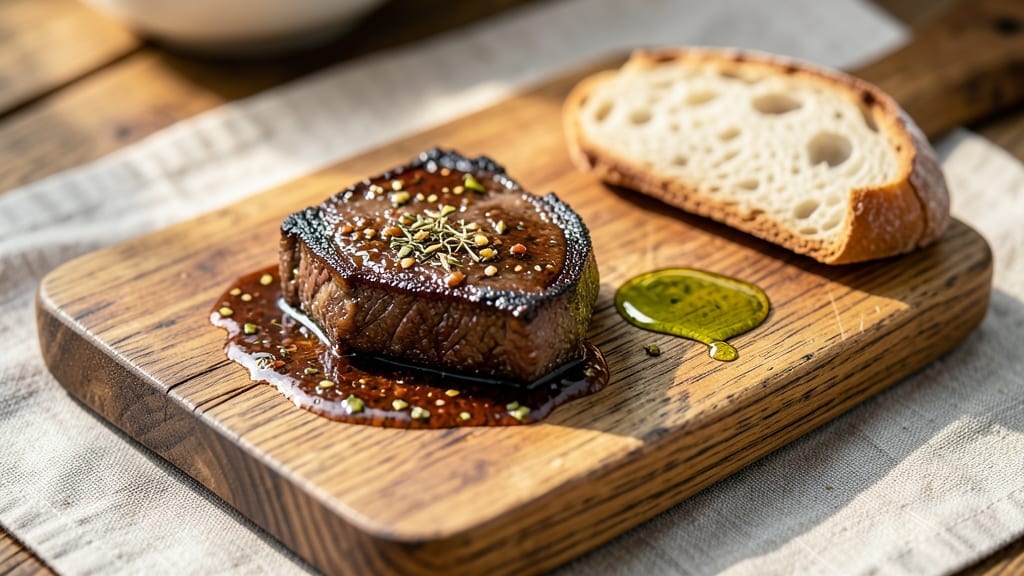
A beef short rib marinade transforms tough, fibrous meat into melt-in-your-mouth perfection in just hours. 🔥 The secret lies in a deep-red sauce blend of red wine, soy sauce, and aromatic spices that tenderizes while infusing rich, complex flavors.
I developed this marinade after years of perfecting French technique for slow-cooked ribs—now you can achieve restaurant-quality results at home.
What sets this marinade apart is its dual action: the acidity from wine and vinegar breaks down connective tissue, while the sugar in brown sugar caramelizes during cooking, adding depth.
The marinade works best when applied generously and allowed to work its magic for at least 4 hours, though overnight yields even more dramatic tenderness. No special equipment needed—just a bowl and patience.
By the time you pull those ribs from the marinade, you’ll have meat so tender it practically falls apart at the touch, with a deep red glaze that hints at the bold flavors inside.
The aroma alone will have everyone gathering around the table. This marinade elevates any cooking method—grilling, braising, or roasting—making it the foundation of an unforgettable meal.
The beauty of this marinade is its versatility—use it for short ribs, flank steak, or even pork shoulder. Once you try it, you’ll never settle for store-bought again. Let’s get started on creating your own deep-red masterpiece.
Ingredients for beef short rib marinade
Bold flavors and tenderizing magic in a single deep-red marinade blend.
| Ingredient | Amount | Notes |
|---|---|---|
| Dry Red Wine 🍷 | 1 cup | Bold variety like Cabernet Sauvignon |
| Balsamic Vinegar 🍶 | ½ cup | Aged for depth of flavor |
| Soy Sauce 🥢 | ½ cup | Use high-quality Japanese soy |
| Brown Sugar 🍚 | ½ cup | Light or dark, packed |
| Garlic Cloves 🧄 | 6 cloves | Freshly minced, aromatic |
| Shallots 🧅 | 2 whole | Minced, not too fine |
| Fresh Ginger 🌿 | 2 tbsp | Grated, fresh preferred |
| Olive Oil 🫒 | ¼ cup | Extra-virgin for richness |
| Worcestershire Sauce 🍯 | 1 tbsp | For umami depth |
| Black Peppercorns 🌶️ | 1 tsp | Freshly cracked |
| Sea Salt 🧂 | 1 ½ tsp | Kosher or fine grain |
| Beef Short Ribs 🥩 | 4 lb | Bone-in, 2-3 inches thick |
| Fresh Thyme Leaves 🌿 | ¼ cup | Stems removed, chopped |
[recipe_ingredient_scaler]
The red wine is non-negotiable here—Cabernet Sauvignon or Merlot from a good bottle (not cooking wine). Trader Joe’s or Total Wine carry solid options for under $10. If you’re using the last bit of a bottle, decant it into a clean jar first. The soy sauce should be Japanese-style like Kikkoman—it’s sweeter and adds depth. Brown sugar? Light or dark doesn’t matter, but pack it tightly into the measuring cup. The ribs? Bone-in, 2-3 inches thick—thicker cuts need more time but yield better results. Look for chuck or plate cuts at Costco or your butcher counter.
No red wine? Beef broth with a splash of balsamic works in a pinch, but the flavor won’t be as rich. Fresh ginger too strong? Ground ginger at half the amount (but it won’t have the same zing). Short on thyme? Fresh rosemary or oregano can substitute, but thyme’s earthy note is key. The Worcestershire sauce is where the umami magic happens—Lea & Perrins is the classic choice. If you’re avoiding soy, coconut aminos work in a 1:1 ratio. And for the love of meat, don’t skip the olive oil—it helps the marinade cling to the ribs.
This marinade keeps for 5 days in the fridge, but the ribs should go in within 4 hours for best results. If you’re prepping ahead, marinate overnight—it’s worth the wait. Store the marinade in a sealed jar, and the ribs in a separate container with parchment underneath (the acid can corrode aluminum). Leftovers? Freeze for up to 3 months, but thaw slowly in the fridge. The ribs? Cook low and slow—braise, grill, or roast until fork-tender.
Why You’ll Love This Recipe
- No-Fuss Marinade: I dump everything into a bowl, stir, and boom—done. No fancy prep, no chopping marathon. The brown sugar dissolves in seconds, the garlic and ginger infuse while I prep the ribs, and honestly? That’s all it takes to turn a tough cut into something restaurant-worthy.
- Wine-Infused Magic: That dry red wine and balsamic vinegar combo isn’t just fancy—it’s the secret. The acidity tenderizes the meat overnight while the soy sauce and Worcestershire give it that deep, savory pull you can’t get from store-bought. Trust me, the first bite will make you forget about sad, dry short ribs.
- Leftovers? No Problem: Cooked ribs? They’re even better the next day. Use the leftover marinade to glaze them for extra stickiness, or toss it into rice or noodles for a quick, rich side. And if you marinate extra ribs? Freeze them for up to three months—your future self will thank you.
- Budget’s Friend: Four pounds of beef short ribs might sound pricey, but this marinade stretches flavor like nothing else. The olive oil and thyme keep costs down while making the meat taste like it cost twice as much. Plus, the marinade itself is cheap—brown sugar and vinegar are pantry staples. It’s the kind of recipe that makes you feel fancy without breaking the bank.
Step-by-step instructions for beef short rib marinade
Here’s how to create a marinade that transforms tough short ribs into melt-in-your-mouth perfection.
👨🍳 Step 1: Build the Flavor Foundation
In a large bowl, combine the 1 cup dry red wine, ½ cup balsamic vinegar, ½ cup soy sauce, and ½ cup brown sugar. Stir until the sugar dissolves completely—this creates a syrupy base that clings beautifully to the ribs. Here’s the thing: the acidity from the wine and vinegar breaks down tough fibers while the sugar caramelizes slightly, adding depth.
Add the 6 minced garlic cloves, 2 minced shallots, and 2 tablespoons grated fresh ginger. Pulse the 1 teaspoon freshly cracked black peppercorns in a spice grinder until fine, then add to the bowl. The key here is to let the aromatics infuse fully—give it a good stir and let the mixture sit for 5 minutes while you prep the ribs. You’ll notice the colors deepen and the scent becomes irresistibly rich.
🍳 Step 2: Incorporate the Fat and Umami
Pour in the ¼ cup olive oil and 1 tablespoon Worcestershire sauce. Whisk vigorously for 1 minute until the oil emulsifies with the other ingredients—this ensures even coating. The olive oil carries the flavors deep into the meat fibers, while the Worcestershire adds that savory umami punch that makes this marinade special.
Add the 1½ teaspoons sea salt and ¼ cup chopped fresh thyme leaves, stirring to distribute evenly. Taste the marinade (yes, really!)—it should be tangy, sweet, and deeply savory. If it needs more salt, adjust now. The thyme adds an earthy brightness that pairs perfectly with the richness of the ribs. Let the marinade rest for 10 minutes while you prepare the beef.
🥘 Step 3: Coat and Marinate the Ribs
Pat the 4 pounds beef short ribs completely dry with paper towels—this is critical for the marinade to adhere properly. Place them in a large zip-top bag or shallow dish and pour the marinade over them. Here’s where it gets fun: use your hands to massage the marinade into every crevice, especially around the bone edges where flavor needs to penetrate.
Seal the bag (or cover the dish) and refrigerate for at least 4 hours, but I recommend overnight for maximum tenderness. The acidity and enzymes work their magic during this time, breaking down collagen and transforming tough meat into something silky. Flip the ribs halfway through if using a dish, or gently shake the bag if using a zip-top.
⏰ Step 4: Prep for Cooking (Don’t Skip This!)
Before cooking, remove the ribs from the marinade (reserve the marinade for basting later) and let them sit at room temperature for 30 minutes. This ensures even cooking. Here’s the crucial part: don’t rinse the ribs—those caramelized sugars and spices are your flavor insurance. If you’re braising, place the ribs bone-side down in a Dutch oven. If grilling, let them sit uncovered for 10 minutes before cooking to develop that perfect crust.
For braising, add the reserved marinade to the pot and bring to a simmer. For grilling, brush the ribs with the reserved marinade every 15 minutes during cooking. Either way, you’re setting up for ribs that are fall-apart tender with a deep, complex flavor profile that’ll have everyone asking for seconds.
Pro Tips For Making Beef Short Rib Marinade
- Whisk Like You Mean It: That 1-minute emulsification of the olive oil isn’t just busywork—it’s what makes the marinade cling like glue. I used to half-ass it, and the ribs ended up with patchy flavor. Grab that whisk and go full arm motion until the mixture looks like a single, glossy layer. The Worcestershire sauce will thank you later.
- Salt the Sugar First: Before you stir in the 1½ teaspoons sea salt, sprinkle half of it directly over the brown sugar while it’s still dry in the bowl. Let it sit for 2 minutes—this pre-dissolves the salt into the sugar crystals, so it distributes evenly instead of clumping. Trust me, your taste test will be smoother.
- Don’t Skimp on the 5-Minute Rest: After mixing the wine, vinegar, and soy sauce, walk away for those 5 minutes. I know, you’re eager, but letting the aromatics bloom is non-negotiable. The garlic and shallots release more flavor when they’re not immediately drowned in oil. It’s like letting a good steak rest—patience pays off.
- Thyme Stems Matter: When chopping the ¼ cup fresh thyme leaves, don’t toss the stems—chop those too, but keep them separate. Add the stems to the marinade while it simmers (if braising) or reserve them to infuse the reserved marinade when basting. They’re packed with flavor, and wasting them is like throwing out money.
Regional styles of these flavors
Southern Smokehouse Twist
In the heart of Texas, where smoke and slow cooking reign supreme, I add 1 tablespoon of smoked paprika and ½ teaspoon of cayenne pepper to the marinade for a subtle kick.
The smoked paprika carries that signature campfire aroma I remember from family cookouts, while the cayenne adds a gentle heat that lingers. I let the ribs marinate overnight in a plastic butcher paper-lined container—this lets the smoke flavors infuse deeper while keeping the ribs moist. The result?
Ribs with that unmistakable smoky sweetness that makes them irresistible. 🔥
French Provençal Elegance
My French technique training shines here when I swap the balsamic vinegar for white wine vinegar and add 2 sprigs of rosemary instead of thyme. The rosemary brings that classic Provençal brightness, while the vinegar keeps the acidity without overpowering.
I also reduce the brown sugar to ¼ cup to let the herbs shine. The marinade rests for 12 hours in a cool cellar-like space (or fridge) to develop those refined, herb-forward flavors. This version is perfect for a dinner party—elegant but still deeply flavorful. ✨
Asian-Inspired Umami Bomb
For a fusion twist, I replace the soy sauce with coconut aminos and add 1 tablespoon of grated ginger plus 1 tablespoon of sesame oil to the marinade. The coconut aminos give it that sweet, savory depth without the saltiness, while the sesame oil adds a nutty richness.
I marinate the ribs for 6 hours (no overnight needed) and finish by brushing them with a mix of hoisin sauce and honey before cooking. This version is bold, complex, and perfect for those who love Asian-inspired flavors. 💛
Coastal Foraged Herb Version
After my morning ride along the coast, I often forage wild herbs to elevate my marinades. For this version, I replace the thyme with ½ cup chopped wild oregano and 1 tablespoon of fresh dill I picked from the cliffs.
The oregano adds a slightly bitter, earthy note, while the dill brings a fresh, bright contrast. I marinate the ribs for 8 hours in a glass container to let the wild flavors meld. This version feels like a taste of the ocean—bright, fresh, and full of character. 🌿
Korean-Inspired Sweet Heat
For a Korean-inspired twist, I add 1 tablespoon of gochujang (Korean chili paste) and 1 tablespoon of honey to the marinade, reducing the brown sugar to ¼ cup. The gochujang brings a deep, fermented heat that pairs perfectly with the sweetness.
I marinate the ribs for 4 hours (the gochujang can be overpowering if left too long) and finish with a sprinkle of sesame seeds before cooking. This version is bold, sweet, and spicy—guaranteed to impress. 🌶️
Nutrition facts
Frequently asked questions
Why does this marinade need red wine instead of vinegar alone?
The red wine adds depth and complexity that plain vinegar can’t match. The alcohol helps tenderize the meat while the tannins create a rich, savory base that vinegar alone lacks. Plus, the wine’s natural sweetness balances the acidity, preventing an overly sharp flavor in your ribs.
Can I use this marinade for other meats besides short ribs?
This marinade works beautifully on beef chuck, flank steak, or even pork shoulder. The acidity and spices help break down connective tissue, making tough cuts tender. Just adjust cooking times based on the meat’s thickness—thinner cuts may not need as long of a marinade time.
What if I don’t have fresh thyme or garlic?
No problem! Substitute fresh thyme with dried thyme (use 1 tablespoon instead of ¼ cup chopped), and for garlic, use 2 teaspoons of garlic powder or 1 tablespoon of garlic paste. The flavor will still be rich, though fresh herbs always deliver the best results. The marinade’s depth comes from the wine and soy sauce, so these swaps won’t ruin it.
How do I know when the marinade is ready to use?
Let the marinade rest for 10 minutes after combining all ingredients—this lets the flavors meld. The visual clue is when the mixture looks syrupy and the aromatics release their scent. For the ribs, marinate for at least 4 hours, but the longer (up to 24 hours), the more tender and flavorful your meat will be.
Can I double this marinade for a larger batch?
Yes, but scale carefully! Double all ingredients to maintain balance. For 8 pounds of ribs, use 2 cups of each liquid component and adjust spices proportionally. Just be sure to use an appropriately sized container—you want the ribs to coat evenly without overcrowding.

Trained in classic French technique but raised on slow-cooked ribs and spicy rubs, she blends culinary skill with smoke and soul.
- Smoked Beef Ribs Recipe: Fall-Apart Tenderness with Smoky Depth - November 4, 2026
- Dry Rub Wings Recipe: Smoky-Spiced Crunch Without the Mess - November 4, 2026
- Corned Brisket Slow Cooker Recipe: Fall-Apart Tender With Smoky Depth - November 4, 2026