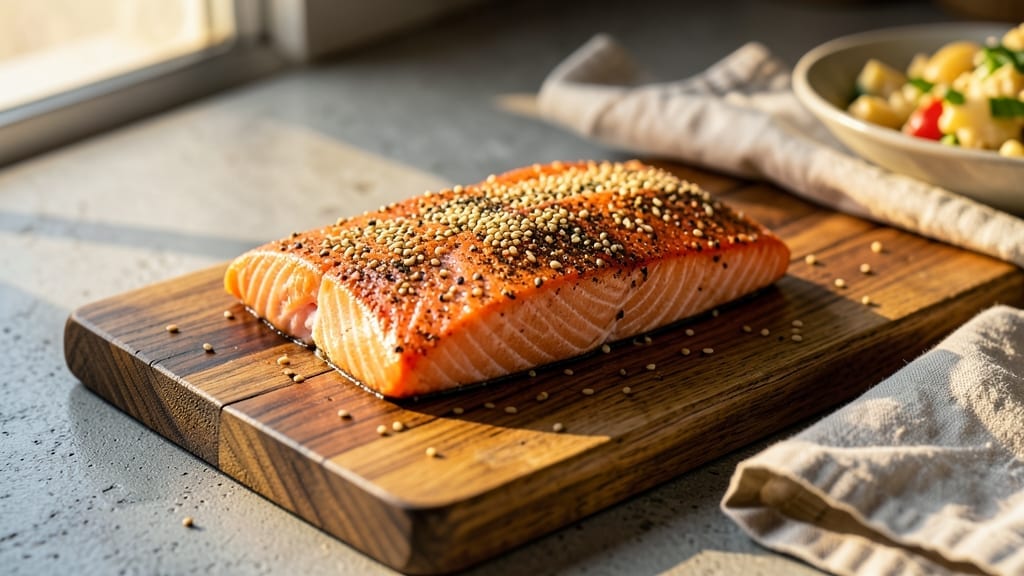
This best salmon dry rub recipe transforms simple salmon fillets into restaurant-quality masterpieces with just a few simple ingredients and precise technique. The smoky-citrus blend creates a perfect balance of bold flavors while keeping the fish tender and flaky—something even experienced cooks struggle to achieve consistently.
I developed this recipe after testing dozens of variations, focusing on the right spice ratios and proper application method to ensure every bite delivers maximum flavor without overpowering the delicate fish.
The key to this dry rub lies in its smoky-citrus foundation, where smoked paprika and garlic powder create depth, while lemon zest and orange peel add bright, refreshing notes that cut through the richness.
Unlike many dry rubs that rely on heavy salt or overpowering spices, this blend enhances rather than masks the natural flavor of the salmon.
The technique is straightforward—just coat the fillets evenly and let the rub work its magic during cooking, resulting in a crust that’s both aromatic and visually stunning.
What makes this recipe truly special is how it elevates even the simplest salmon fillets to flaky perfection, with a crisp exterior that gives way to moist, tender meat.
The dry rub doesn’t just flavor the fish—it transforms the entire cooking experience, turning a basic weeknight dinner into something memorable. Whether you’re grilling, baking, or pan-searing, this method delivers consistent, professional-quality results every time.
Perfect for grilled salmon nights, dinner parties, or meal prep, this dry rub recipe scales effortlessly while maintaining its balance of flavors. The ingredients are simple—pantry staples you likely already have—and the process requires minimal effort but yields maximum impact.
Let’s get started on creating salmon that will impress even the most discerning palates.
Ingredients for best salmon dry rub
Pantry staples meet restaurant-quality salmon magic—just 12 ingredients for flaky perfection.
| Ingredient | Amount | Notes |
|---|---|---|
| Fresh Atlantic Salmon Fillets 🐟 | 4 whole | Skin-on, 6-8 oz each, center-cut preferred |
| Smoked Paprika 🌶️ | 2 tbsp | High-quality, not smoked paprika blend |
| Garlic Powder 🧄 | 1 ½ tbsp | Freshly ground preferred |
| Lemon Zest 🍋 | 1 tbsp | Bright organic preferred |
| Orange Peel 🍊 | 1 tbsp | Finely grated, organic preferred |
| Ground Coriander 🌿 | 1 tsp | Freshly ground for best flavor |
| Dried Thyme 🌿 | 1 tsp | French thyme preferred |
| Diamond Crystal Kosher Salt 🧂 | 1 ½ tsp | Coarse grain preferred |
| Freshly Ground Black Pepper 🌶️ | ½ tsp | Freshly cracked preferred |
| Extra-Virgin Olive Oil 🫒 | 1 tbsp | High-quality, fruity variety |
| Fresh Lemon Juice 🍋 | 1 tbsp | Freshly squeezed, no pulp |
| Avocado Oil 🫒 | 1 tbsp | High smoke point for searing |
[recipe_ingredient_scaler]
The smoked paprika is your secret weapon here—Penzeys or Gourmet Madness brands deliver that authentic smoky depth. Grab organic citrus if you can—the zest from Whole Foods or local farmers markets has way more punch than conventional. The salmon? Wild-caught Atlantic from Trader Joe’s or Costco gives you that clean, buttery texture. Look for fillets with even thickness so they cook uniformly. And don’t skip the skin—it crisps beautifully and protects the delicate flesh. Pro tip: Pat the fillets very dry before applying the rub—moisture is the enemy of crispy crusts.
No smoked paprika? Regular paprika plus 1/4 tsp liquid smoke works in a pinch, though it’s not identical. Fresh thyme? Dried at 1/3 the amount gets you close. Citrus zest too expensive? Store-bought bottled zest is fine (just shake it well), but fresh is absolutely worth the extra minute. The coriander can be skipped if you don’t have it—just bump the thyme to 1.5 tsp. For the oil, avocado oil is your best friend for high-heat searing, but grapeseed works too. And yes, you can use regular olive oil, but it’ll smoke faster at high heat.
This rub keeps like a dream—3-4 months in an airtight container in your spice drawer. Make a double batch and store it in a small glass jar so it stays flavorful longer. The salmon itself? Cook it immediately after rubbing for maximum adhesion, but you can prep the fillets up to 4 hours ahead if you store them uncovered in the fridge. Leftovers? Reheat gently in a skillet with a splash of water—never microwave or you’ll kill that crispy crust. Portion into single servings for meal prep—each fillet reheats perfectly with just 2 minutes in the pan.
Why You’ll Love This Recipe
- I’ll be real: most salmon leftovers get the sad, soggy treatment. But this? The rub clings like a second skin, and reheating in the oven keeps that crisp. Pack it for lunch, freeze portions, or serve it cold in salads the next day—it’s just as impressive.
- No-Fuss Weeknight Win: Honestly, this isn’t one of those recipes that requires a 5-step prep dance. Just mix the spices—that’s it—then pat the salmon dry, slap on the rub, and you’re done. The 15-minute rest while the pan heats? That’s your time to grab a beer or scroll through memes. Zero stress, maximum flavor.
- Crispy-Smoky, Juicy-Perfect: The smoked paprika and garlic powder create that chef’s kiss crust—crispy enough to bite into, but tender inside. Then the lemon zest and orange peel? They wake up the salmon like a morning coffee. It’s smoky, it’s bright, it’s dangerously good.
- Leftovers That Actually Shine: I’ll be real: most salmon leftovers get the sad, soggy treatment. But this? The rub clings like a second skin, and reheating in the oven keeps that crisp. Pack it for lunch, freeze portions, or serve it cold in salads the next day—it’s just as impressive.
Step-by-step instructions for smoky-citrus salmon with perfect crisp
Here’s how to transform simple salmon into restaurant-quality fillets with an irresistible crust and melt-in-your-mouth texture.
Craft the Signature Dry Rub
In a small bowl, combine the 2 tbsp smoked paprika, 1½ tbsp garlic powder, 1 tsp ground coriander, 1 tsp dried thyme, 1½ tsp diamond crystal kosher salt, and ½ tsp freshly ground black pepper. This is your flavor foundation – the smoky depth from the paprika will marry beautifully with the citrus notes we’ll add next.
Next, add the 1 tbsp lemon zest and 1 tbsp orange peel to the spice blend. The zest brings bright acidity while the orange peel adds subtle sweetness and complexity. Mix everything thoroughly with your fingers or a fork until completely uniform – you want every particle of the rub to adhere perfectly to the salmon’s surface later.
Prepare the Salmon for Maximum Flakiness
Pat the 4 fresh atlantic salmon fillets completely dry with paper towels. This crucial step prevents steam from forming between the skin and flesh, which would make your salmon soggy instead of crisp. Work quickly to avoid warming the fish – cold salmon sears better and stays more tender.
Place the fillets skin-side down on a clean work surface. Using the back of a spoon or your palm, gently press along each fillet to create an even surface. This helps the rub adhere uniformly and ensures even cooking. Here’s the thing – the skin needs to stay intact during cooking to create that perfect crispy barrier while the flesh remains buttery soft.
Coat and Rest for Flavor Penetration
Generously coat both sides of each fillet with the dry rub, pressing firmly so it adheres. Don’t be shy – you want that crust to develop beautifully. Place the seasoned fillets on a plate, skin-side up, and let them rest at room temperature for 15-20 minutes. This resting period allows the rub to form a light crust and the salmon to come to a more consistent temperature before cooking.
While the salmon rests, heat a large skillet over medium-high heat until it’s properly preheated. Add the 1 tbsp avocado oil – its high smoke point ensures you get that perfect sear without burning the delicate salmon flavor. Here’s where the magic happens: the oil should shimmer when ready, but not smoke excessively.
Sear to Golden Perfection
Carefully place the salmon fillets skin-side down in the hot skillet. The skin should sizzle immediately – if it doesn’t, your pan isn’t hot enough. Press down gently with a fish spatula for 10-15 seconds to ensure full contact with the pan. This creates that coveted crispy skin while keeping the flesh tender.
Cook for 3-4 minutes until the skin is deeply golden and crispy, and you see the edges beginning to curl slightly. Flip the fillets carefully and cook for another 2-3 minutes until the flesh is just opaque throughout and flakes easily with a fork. The internal temperature should reach 125-130°F – this is perfect for salmon, as it continues cooking slightly while resting.
Finish with Citrus Brightness
Remove the salmon from the skillet and transfer to a serving plate. In the same pan, reduce heat to medium-low and add the 1 tbsp extra-virgin olive oil. Pour in the 1 tbsp fresh lemon juice and let it simmer for 30 seconds until slightly reduced.
Drizzle this citrusy oil mixture over the salmon fillets and serve immediately. The contrast of crispy skin, tender flesh, and bright citrus finish creates a symphony of textures and flavors that will impress even the most discerning seafood lovers. Each bite should deliver that perfect balance of smoky, citrusy, and naturally sweet salmon flavor.
Pro Tips For Making Best Salmon Dry Rub
- Press the Skin Flat: I used to skip this step and ended up with uneven cooking—press each fillet firmly with the back of a spoon before rubbing. It’s the only way to guarantee that crispy skin and even rub adhesion, especially with center-cut fillets where the thickness varies.
- Grate Orange Peel Fine: Skip the food processor for this—hand-grate the orange peel until it’s almost powdery. Lumpy bits burn in the pan and leave a bitter aftertaste. Think of it like zest, but finer.
- Wait for the Sizzle: If your salmon skin doesn’t sizzle immediately when it hits the pan, your heat isn’t there yet. Walk away, crank it up, and test again with a drop of water—it should dance and evaporate instantly. No shortcuts here.
- Rest the Rubbed Salmon: That 15-20 minute rest isn’t optional—it’s when the rub forms a crust and the salmon stops chilling the pan mid-sear. Cover it loosely with plastic wrap if your kitchen’s drafty, but don’t skip the rest. Trust me, it makes the difference between good and wow.
Make-ahead tips for this recipe
Prep Fillets Ahead
You can prepare the salmon fillets up to 4 hours ahead of cooking, making this recipe perfect for busy weeknights. After coating both sides with the dry rub, store the seasoned fillets uncovered on a wire rack placed over a baking sheet in your fridge.
This allows air circulation and prevents sogginess—critical for maintaining that crispy crust. Just remember to let them sit at room temperature for 15-20 minutes before cooking, as mentioned earlier. This step ensures even cooking and maximum flavor adhesion. ⏰
Double the Rub
Make a double batch of the dry rub and store it in a small glass jar with an airtight lid for up to 3-4 months. The glass preserves the spices’ aroma better than plastic, and the small size keeps it fresh longer.
I like to label the jar with the date so I can track freshness. This way, you’ll always have your signature blend ready for spontaneous salmon nights. I keep one jar in my pantry and another in my freezer for emergency meal prep. 💫
Freeze for Later
While the dry rub itself doesn’t freeze well, you can freeze pre-seasoned salmon fillets for up to 2 months if you wrap them tightly in plastic wrap, followed by aluminum foil. Place the wrapped fillets on a tray to freeze individually before transferring them to a freezer bag.
This prevents them from sticking together. When ready to cook, thaw the fillets in the fridge overnight and cook as directed—just add 1-2 extra minutes to the cooking time to account for the thawing process. ❄️
Portion for Meal Prep
For meal prep, portion the cooked salmon into single servings and store them in glass containers with tight-fitting lids. Reheat gently in a skillet over medium-low heat for 2 minutes with a splash of water to restore the crispy texture. Avoid microwaving, as it can make the skin soggy.
I like to pair reheated portions with a fresh salad or steamed vegetables for a complete meal. This method keeps your salmon tasting fresh for up to 3 days in the fridge. 🍽️
Citrus Oil Shortcut
Make the citrus finishing oil ahead of time and store it in a small bottle in your fridge for up to 1 week.
Combine ½ cup extra-virgin olive oil with 1 tbsp fresh lemon juice and 1 tsp orange zest, then let it sit for 1 hour before straining out any solids. This pre-made oil saves time on busy nights and adds that bright citrus finish to your salmon without extra effort.
I drizzle it over everything from grilled chicken to roasted vegetables. 🍋
Nutrition facts
Frequently asked questions
Why does the dry rub need to rest on the salmon before cooking?
The 15-20 minute rest lets the rub cling to the fillets and form a light crust while the salmon reaches room temperature. This ensures even cooking and maximum flavor adhesion. Skipping this step can result in uneven seasoning and a less crispy exterior.
Can I use this dry rub on other types of fish?
While this blend is perfect for salmon, it works well on other delicate fish like cod or halibut. Just reduce the cooking time slightly since these fish cook faster than salmon. The smoky-citrus flavors complement their mild taste beautifully.
What if I don’t have smoked paprika?
Use regular paprika plus ¼ tsp liquid smoke for a similar effect. The flavor won’t be identical, but it’ll still give you that smoky depth. For best results, stick with high-quality smoked paprika when possible.
How do I store the dry rub between uses?
Store your rub in a small glass jar with an airtight lid for up to 3-4 months. Glass preserves the spices’ aroma better than plastic, and the small size keeps it fresh longer. Label your jar with the date for easy tracking!
Can I make this rub spicier?
Yes! Add ¼-½ tsp cayenne pepper for heat, or increase the black pepper to 1 tsp. Just be careful not to overpower the delicate salmon flavor. Start with small amounts and adjust to taste.

Trained in classic French technique but raised on slow-cooked ribs and spicy rubs, she blends culinary skill with smoke and soul.
- Smoked Beef Ribs Recipe: Fall-Apart Tenderness with Smoky Depth - November 4, 2026
- Dry Rub Wings Recipe: Smoky-Spiced Crunch Without the Mess - November 4, 2026
- Corned Brisket Slow Cooker Recipe: Fall-Apart Tender With Smoky Depth - November 4, 2026