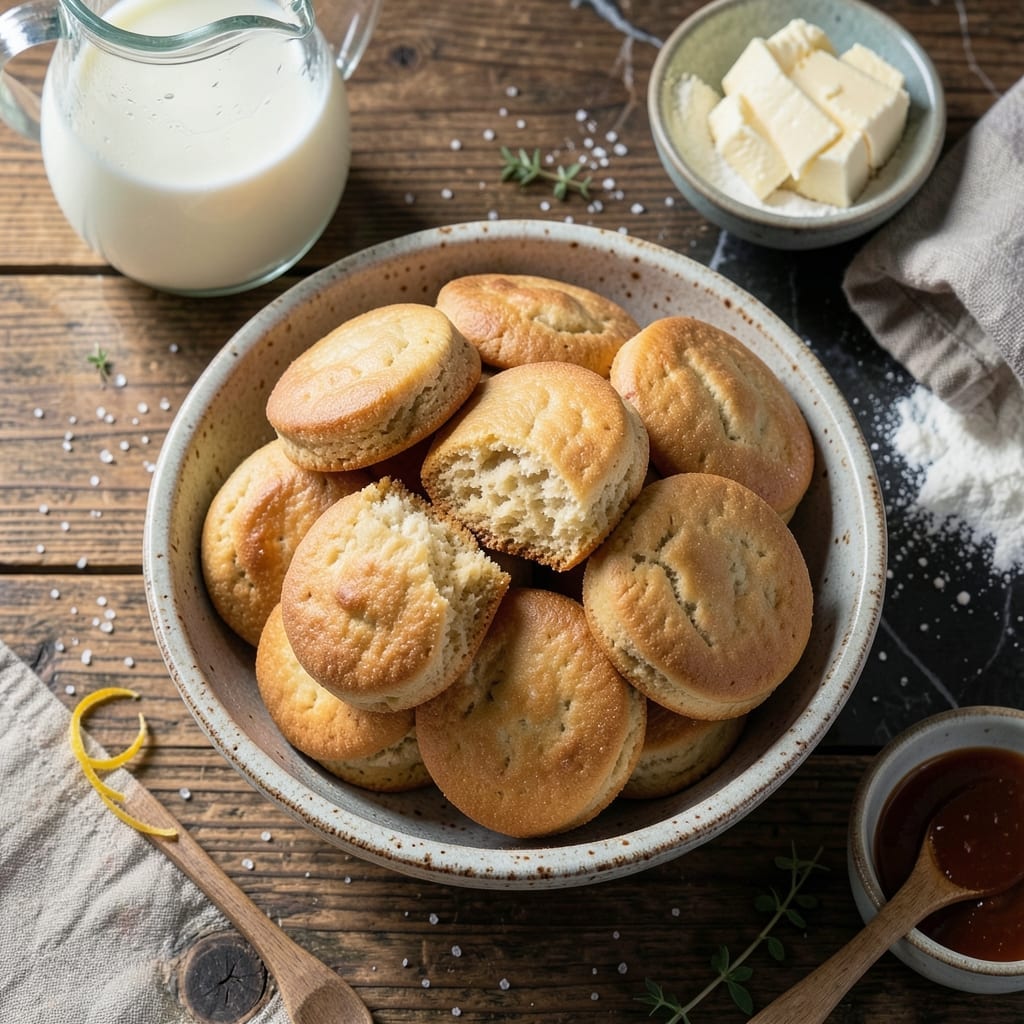
Flaky, buttery biscuits don’t require specialty flour or complicated techniques. This proven method uses basic pantry staples to create light, tender layers.
With just a few simple ingredients and proper handling, you’ll achieve bakery-quality results. The key is keeping the dough cold and working it minimally for perfect texture.
Ingredients for Biscuit Recipe with All Purpose Flour
Basic pantry staples create bakery-quality biscuits with perfect flaky layers every time.
| Ingredient | Amount | Notes |
|---|---|---|
| All-Purpose Flour 🌾 | 2 ½ cups | Plus extra for dusting |
| Baking Powder 🧂 | 1 tbsp | Aluminum-free preferred |
| Granulated Sugar 🍚 | 1 tsp | Balances the richness |
| Salt 🧂 | 1 tsp | Fine sea salt preferred |
| Unsalted Butter 🧈 | ¾ cup | Very cold, cubed |
| Whole Milk 🥛 | ¾ cup | Plus 1 tbsp for brushing |
| Heavy Cream 🥛 | ¼ cup | For extra tenderness |
| Baking Soda 🧂 | ¼ tsp | Activates with acid |
| Apple Cider Vinegar 🍎 | 1 tsp | Creates reaction with baking soda |
[recipe_ingredient_scaler]
The butter is critical here—use a high-fat European-style brand like Plugrá or Kerrygold for superior flakiness. Keep it ice-cold until the very last moment. All-purpose flour from King Arthur or Gold Medal delivers consistent results. The baking powder should be aluminum-free (check the label) to avoid any metallic aftertaste. Most supermarkets carry these in the baking aisle.
No heavy cream? Whole milk plus 1 tbsp melted butter per 1/4 cup substitution works. For a tangier biscuit, increase the vinegar to 1.5 tsp. If avoiding dairy, use coconut milk in the can (full-fat) for the cream, though the flavor profile will shift slightly. The milk for brushing can be skipped, but it adds a beautiful golden finish.
Biscuit dough can be made 1 day ahead and refrigerated. Baked biscuits are best eaten warm but will keep in an airtight container at room temperature for 2 days. Reheat wrapped in foil at 300°F for 10 minutes to restore freshness. Freeze unbaked dough for up to 1 month.
Why You’ll Love This Recipe
- One Bowl Wonder: I just dump, mix, and roll—no fancy tools, just my hands and a bowl.
- Buttery Layers: That cold butter folded into the flour? It bakes up flaky and rich every time.
- Breakfast to Dinner: Honestly, these work with jam at dawn or smothered in gravy at dinner.
- Pantry Staples: All-purpose flour, butter, and basics I already have. No last-minute grocery runs.
Step-by-Step Instructions for Biscuits With All Purpose Flour
Master the technique for flaky, tender layers using standard pantry staples.
Step 1: Combine Dry Ingredients and Create Buttermilk Substitute
In a large mixing bowl, whisk together the 2.5 cups All-Purpose Flour, 1 tbsp Baking Powder, 1 tsp Granulated Sugar, and 1 tsp Salt until evenly distributed. This ensures the leavening agents activate uniformly throughout the dough.
In a separate measuring cup, combine the 0.75 cup Whole Milk, 0.25 cup Heavy Cream, 0.25 tsp Baking Soda, and 1 tsp Apple Cider Vinegar. Stir gently and let sit for 2 minutes to create a buttermilk-like reaction that adds tenderness and lift to your biscuits.
Step 2: Cut in Cold Butter for Flaky Layers
Add the 0.75 cup Unsalted Butter, cubed and very cold, to the dry ingredients. Using a pastry cutter or your fingertips, work the butter into the flour mixture until the consistency resembles coarse crumbs with pea-sized butter pieces visible. This creates pockets that will melt during baking, producing those coveted flaky layers.
Be careful not to overwork the butter or let it warm up—cold butter is essential for that perfect rise and texture. If your kitchen is warm, chill the mixture in the refrigerator for 5 minutes between batches of butter incorporation to maintain the ideal temperature.
Step 3: Form and Fold the Dough
Create a well in the center of the flour-butter mixture and pour in the milk mixture. Using a wooden spoon, stir just until the dough begins to come together—it will look shaggy and slightly sticky. Overmixing develops gluten, which makes biscuits tough rather than tender.
Turn the dough onto a lightly floured surface (using some of the extra All-Purpose Flour) and gently pat it into a 1-inch thick rectangle. Fold the dough in half like a book, then pat out again to 1-inch thickness. Repeat this fold-and-pat process 2 more times to create distinct layers without overworking the dough.
Step 4: Cut and Prepare for Baking
Pat the dough to a final thickness of ¾ inch. Using a 2.5-inch biscuit cutter (or a glass of similar size), press straight down without twisting to cut out biscuits. Twisting seals the edges and prevents proper rising. Gather the scraps, gently re-pat, and cut additional biscuits until all dough is used.
Place the biscuits on a parchment-lined baking sheet so they touch slightly—this helps them rise upward rather than outward. Brush the tops with the additional 1 tbsp Whole Milk for a golden finish. Chill the shaped biscuits in the refrigerator for 15 minutes to firm up the butter before baking.
Step 5: Bake to Golden Perfection
Preheat your oven to 425°F. Bake the chilled biscuits for 15-18 minutes, rotating the pan halfway through for even browning. The biscuits are done when they’ve risen significantly and the tops are golden brown with a few deeper brown spots.
Remove from the oven and let cool on the baking sheet for 2 minutes, then transfer to a wire rack. Serve warm, when the layers are at their flakiest and the interior is tender and moist. The bottoms should be lightly browned but not overdone, indicating perfect heat distribution throughout.
Pro Tips For Making Biscuit Recipe With All Purpose Flour
- Chill the Butter: Cut your unsalted butter into small cubes and chill for 10 minutes before mixing—I learned this the hard way after my first few batches turned out flat and tough.
- Don’t Overwork Dough: Mix just until the flour is incorporated, even if it looks shaggy. After burning three batches, I finally figured out that overmixing develops gluten, making biscuits dense.
- Use Cold Liquid: If your recipe calls for milk or buttermilk, make sure it’s ice cold. My grandmother swore by this, and she was right: cold liquid keeps the butter from melting too soon.
- Bake Immediately: Get the biscuits in the oven as soon as they’re shaped—waiting even 10 minutes lets the baking powder lose its lift. Sounds weird, but it works.
Flavor Customization for biscuit recipe with all purpose flour
Herb-Infused Savory
Add 1 tbsp chopped fresh rosemary or thyme from my coastal foraging spots to the dry ingredients. The earthy notes pair beautifully with the buttery layers. I also sprinkle flaky sea salt on top before baking for extra crunch. 🌿
Cheesy Cheddar Twist
Fold in 1 cup shredded sharp cheddar (from my local butcher’s block) with the butter. The cheese melts into gooey pockets throughout. For extra kick, add ½ tsp smoked paprika to the flour mixture.
Sweet Breakfast Biscuits
Increase the sugar to 2 tbsp and add ½ cup chopped dried cranberries or chopped pecans. Brush with melted butter and sprinkle with cinnamon sugar after baking for a morning treat.
Garlic and Chive
Mix in 2 minced garlic cloves and 2 tbsp chopped fresh chives with the wet ingredients. The garlic mellows during baking while the chives add a fresh onion note perfect with soups. 💛
Spicy Kick
Add ½ tsp cayenne pepper or 1 tsp hot honey drizzle after baking. My local BBQ competition buddies love this variation with pulled pork. The heat balances the richness beautifully.
Honey Butter Glaze
Whisk 2 tbsp melted butter with 1 tbsp honey and brush over warm biscuits. This simple glaze adds sweetness and shine without overpowering the flaky texture.
Nutrition Facts
Frequently Asked Questions
Why is cold butter important?
Cold butter creates steam when baking, which makes flaky layers. If it melts too soon, you’ll lose that texture. Keep it cubed and chilled until the last moment.
Can I use a different fat instead of butter?
Yes, but butter gives the best flavor. For a substitute, use shortening or cold lard in the same amount. The texture will still be flaky but with a milder taste.
How do I prevent tough biscuits?
Handle the dough as little as possible. Overmixing develops gluten, which makes them dense. Fold gently and stop as soon as the dough comes together.
Can I make these ahead of time?
Shape the dough, then refrigerate for up to 1 day or freeze for 1 month. Bake straight from the fridge or freezer, adding a few extra minutes if frozen.

Trained in classic French technique but raised on slow-cooked ribs and spicy rubs, she blends culinary skill with smoke and soul.
- Recipe for French Pork Spread Gorton: Savory Gallic Flavors in a Spreadable Delight - October 3, 2026
- Recipe for Pan Fried: Golden Crust with Savory Depth - October 3, 2026
- Recipe For Fried Chicken In A Pressure Cooker: Crispy Golden Bites in Half the Time - October 3, 2026