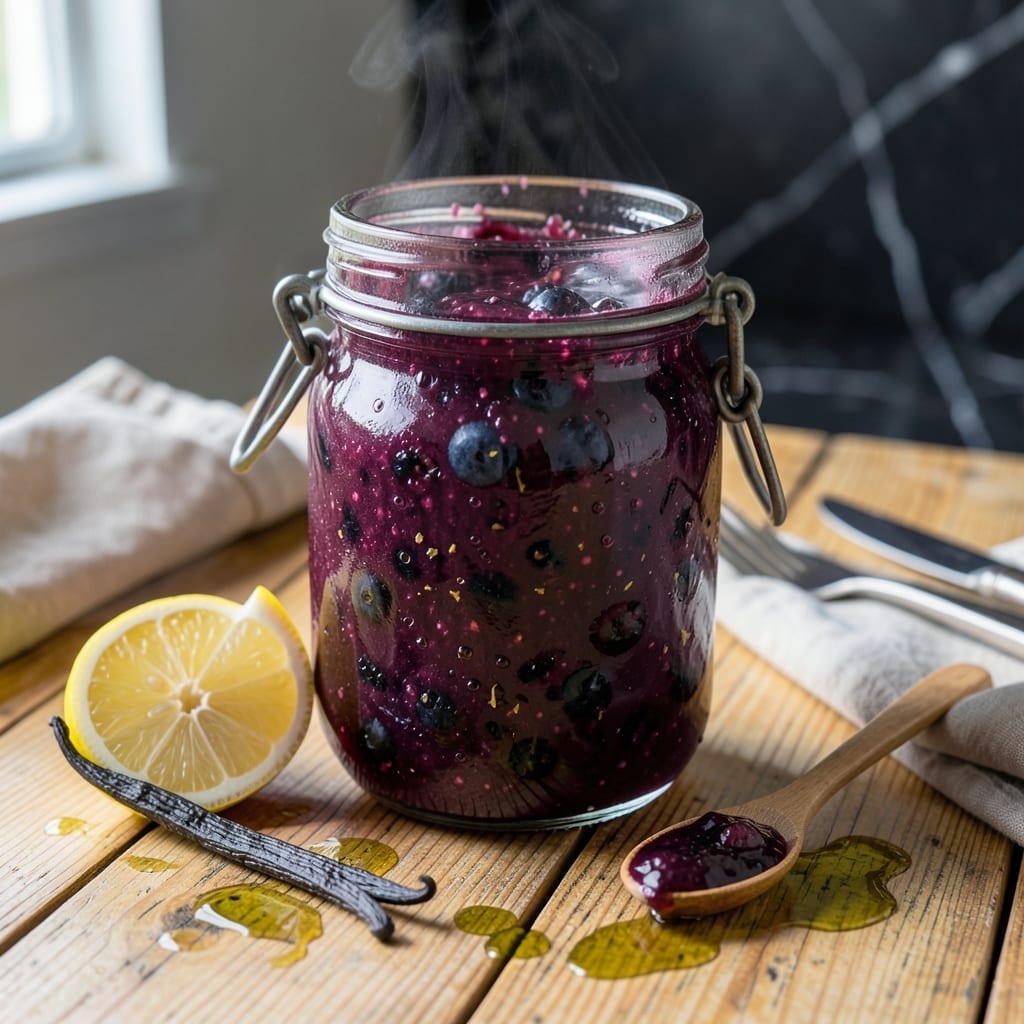
Homemade blueberry jam without pectin achieves perfect thickness through natural fruit chemistry. This method relies on proper cooking time and sugar ratios to create a spreadable consistency.
With just fruit, sugar, and lemon juice, you’ll produce a vibrant jam that captures peak blueberry flavor. The process transforms fresh berries into a glossy preserve with minimal effort.
Ingredients for Blueberry Jam Recipe No Pectin
Just fruit, sugar, and citrus transform into glossy, spreadable blueberry perfection with no added pectin.
| Ingredient | Amount | Notes |
|---|---|---|
| Fresh Blueberries 🫐 | 4 cups | Ripe, stemmed and rinsed |
| Granulated Sugar 🥘 | 2 ½ cups | White sugar for best pectin reaction |
| Lemon Juice 🍋 | ¼ cup | Freshly squeezed preferred |
| Water 💧 | ¼ cup | For initial maceration |
| Lemon Zest 🍋 | 1 tbsp | Finely grated for brightness |
| Vanilla Bean 🌿 | 1 whole | Split and scraped, optional |
| Cinnamon Stick 🌿 | 1 whole | Optional for warm spice |
[recipe_ingredient_scaler]
The blueberries are everything here. Look for plump, deep-blue fruit—underripe ones won’t release enough natural pectin. I get mine from local farmers markets in peak season (July-August), but frozen organic berries work surprisingly well if thawed and drained first. The sugar isn’t just for sweetness; it’s drawing out the juices that thicken into jam. Domino or C&H for consistent results.
No fresh lemon? Bottled lemon juice at 1:1 ratio works fine (just check for additives). Want to skip zest? A pinch of citric acid adds that bright pop. For a lighter jam, you can reduce sugar to 2 cups, but expect a softer set. The vanilla and cinnamon are optional but add depth—use a real vanilla bean if you’re going for it (the seeds look beautiful suspended in the jam).
This keeps beautifully in sterilized jars. Unopened, it’s good for 1 year in a cool, dark place. Once opened, use within 3 weeks and refrigerate. The flavor deepens over time, so it’s actually better after a week or two. Freeze extras for up to 6 months.
Why You’ll Love This Recipe
- No Fuss Cooking: I just dump the blueberries, sugar, and lemon juice in a pot—no special tools, no pectin hunting.
- Bright & Zesty: The lemon zest cuts through the sweetness, making every bite taste like summer in a jar.
- Spreads Everywhere: Honestly, it’s great on toast, swirled in yogurt, or even spooned over ice cream.
- Budget Friendly: A pint of blueberries and a few pantry staples make multiple jars—cheaper than store-bought.
Step-by-Step Instructions for Blueberry Jam Without Pectin
This method ensures a naturally thick spread with vibrant fruit flavor.
Step 1: Macerate the Blueberries with Sugar and Aromatics
In a large, heavy-bottomed pot, combine the 4 cups Fresh Blueberries, 2.5 cups Granulated Sugar, 0.25 cup Lemon Juice, 0.25 cup Water, and 1 tbsp Lemon Zest. Stir gently to dissolve the sugar into the liquid.
For enhanced depth, add the split and scraped 1 whole Vanilla Bean and 1 whole Cinnamon Stick to the mixture. Let this stand at room temperature for 30 minutes to allow the sugar to draw out the natural juices from the blueberries. You’ll notice the mixture becoming notably juicier as it sits.
Step 2: Bring to a Rolling Boil
Place the pot over medium-high heat and bring the mixture to a full rolling boil, stirring frequently with a wooden spoon. As the mixture heats, the sugar will fully dissolve, and the berries will begin to release their juices.
Once boiling, reduce the heat to medium and continue to cook, stirring occasionally. The mixture will start to thicken as the natural pectin in the blueberries activates. Watch for the foam that forms on the surface—this is normal and can be skimmed off if desired.
Step 3: Simmer Until Thickened
Maintain a steady simmer and cook the jam for 30-40 minutes. Stir more frequently as the mixture thickens to prevent sticking. The jam is ready when it reaches 220°F on a candy thermometer, or when a small spoonful placed on a chilled plate wrinkles when pushed with a finger.
You’ll also notice the color deepen to a rich, glossy purple, and the bubbles will become slower and thicker. If using the optional vanilla bean or cinnamon stick, you can remove them at this point, or leave them in for a stronger infusion.
Step 4: Test for Doneness and Adjust
To confirm the jam has reached the proper consistency, perform the plate test: place a small amount on a chilled plate and let it sit for 1 minute. Push the edge with your finger—if it wrinkles and holds its shape, the jam is done. If it’s still too runny, return the pot to the heat and simmer for another 5 minutes, then test again.
At this stage, if the jam seems too thick, you can stir in a small amount of water, but avoid adding too much, as it will dilute the flavor. The final product should be thick enough to coat the back of a spoon but still pourable.
Step 5: Jar and Cool
Remove the pot from the heat and let the jam sit for 5 minutes to cool slightly. This helps the fruit settle and prevents it from floating to the top of the jar. Skim off any remaining foam if necessary.
Ladle the jam into clean, sterilized jars, leaving ¼ inch of headspace at the top. Seal with lids and let cool completely at room temperature. The jam will thicken further as it cools. Store in the refrigerator for up to 3 weeks, or process in a water bath for longer shelf life.
Pro Tips For Making Blueberry Jam Recipe No Pectin
- Simmer Low and Slow: Cook the berries at a gentle simmer, not a rolling boil—this prevents the jam from breaking down too much while letting the natural pectin in the lemon juice do its work.
- Mash Some Berries: Crush about a quarter of the blueberries before cooking to release their juices and help thicken the jam naturally without pectin.
- Skip Unripe Berries: Use fully ripe blueberries for the best flavor and natural pectin content; underripe ones won’t soften enough and can make the jam tart or runny.
- Test with a Chill: To check for doneness, place a spoonful on a chilled plate—if it wrinkles when pushed with a finger, it’s ready. I learned this the hard way after pulling too many batches off the heat too early.
Wine and Beer Pairings for blueberry jam recipe no pectin
Sweet Wine Pairings
For this jam, I love pairing with Moscato d’Asti from Italy—its light fizz and honeyed stone fruit notes complement the blueberry’s natural sweetness. The low alcohol content (5-6% ABV) makes it perfect for brunch spreads. 🍷
Dessert Wine Match
A chilled Tawny Port (10-year) adds nutty depth that contrasts beautifully with the jam’s bright acidity. Serve in small 3-oz pours to balance the sweetness. I discovered this pairing at a coastal BBQ competition.
Beer Options
Try a Belgian lambic—the tart cherry or raspberry versions mirror the jam’s fruit intensity. For darker beers, a stout with coffee notes like Guinness creates an intriguing contrast. Both cut through the sugar wonderfully. 🍺
Sparkling Choice
Demi-sec Champagne offers effervescence that cleanses your palate between bites. Look for a Brut with 30-50g/L residual sugar—just enough sweetness to harmonize without overpowering. My go-to for afternoon tea pairings.
Cocktail Twist
Use the jam in a Bourbon Smash—muddle 2 tbsp jam with mint and bourbon. The vanilla notes from the jam (if you added the bean) echo beautifully in the whiskey. I ride to my favorite foraging spots thinking of variations like this.
Nutrition Facts
Frequently Asked Questions
Why does my jam stay runny?
Underripe berries or insufficient cooking time are common culprits. Ensure you use fully ripe fruit and simmer until reaching 220°F. The plate test helps confirm proper thickness.
Can I reduce the sugar amount?
You can cut sugar to 2 cups, but expect a softer set and shorter shelf life. Sugar aids preservation and helps activate natural pectin, so less means a thinner, less stable jam.
How long does homemade jam last?
Unopened, it keeps for 1 year in a cool, dark place. Once opened, refrigerate and use within 3 weeks. For longer storage, freeze for up to 6 months.
Can I use frozen blueberries?
Yes! Thaw and drain them first, but don’t rinse. Frozen berries often work better than fresh out-of-season ones because they’re picked at peak ripeness.

Trained in classic French technique but raised on slow-cooked ribs and spicy rubs, she blends culinary skill with smoke and soul.
- Recipe for Fried Prawns Batter: Ultra-Crispy Golden Shell - October 3, 2026
- Indian Lamb Curry Recipe Pressure Cooker: Fragrant Spices in a Fraction of the Time - October 3, 2026
- Recipe for Oven Roasted: Golden Crisp Perfection Without the Fryer - October 3, 2026