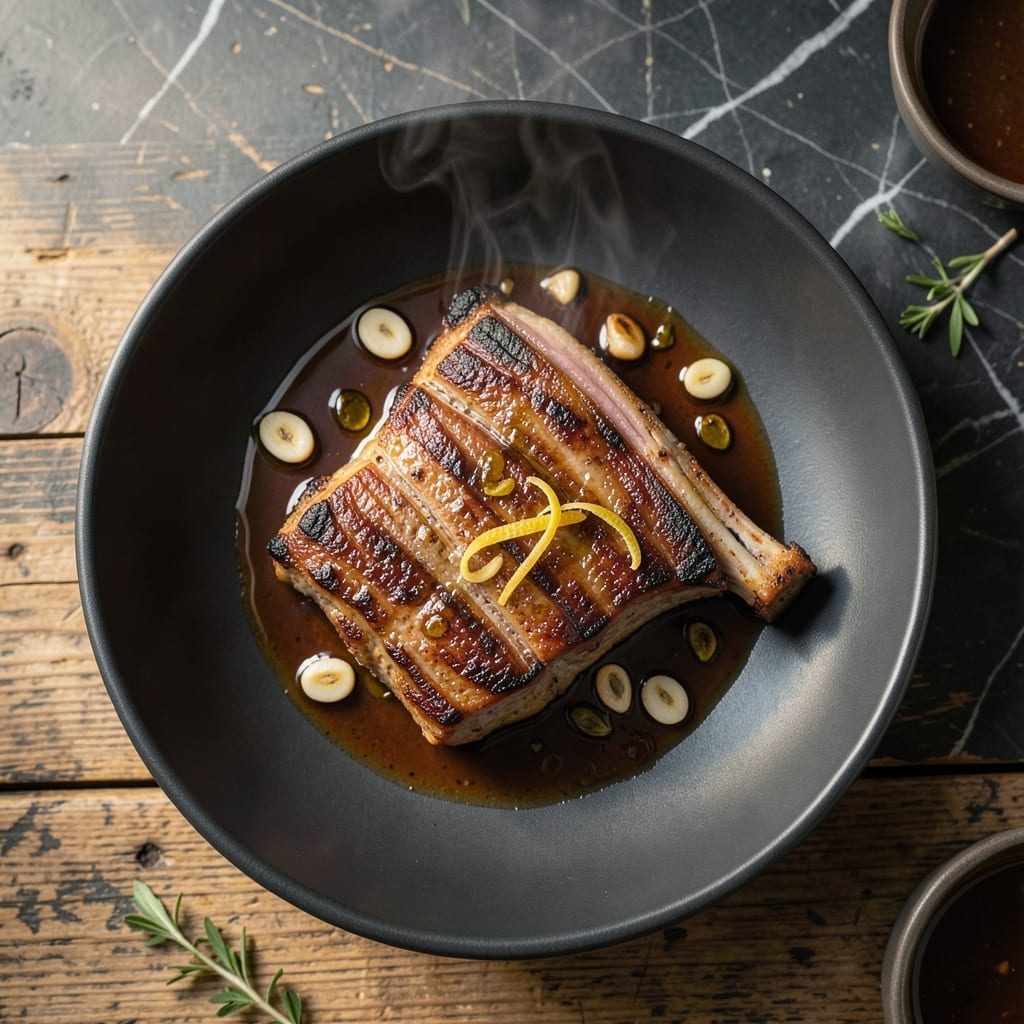
This recipe transforms affordable pork shoulder blade steak into a juicy, flavor-packed main course. The bone-in cut stays moist during cooking.
Marinating overnight ensures deep flavor penetration. High heat creates a perfect char while keeping the inside tender.
Ingredients for Bone in Pork Shoulder Blade Steak
Affordable bone-in pork shoulder blade steak meets a bold marinade for maximum juiciness and char.
| Ingredient | Amount | Notes |
|---|---|---|
| Pork Shoulder Blade Steak 🥩 | 2 lb | Bone-in, about 1-inch thick |
| Soy Sauce 🫒 | ½ cup | Low-sodium preferred |
| Olive Oil 🫒 | ¼ cup | Extra-virgin for marinade |
| Brown Sugar 🍚 | 3 tbsp | Packed, for caramelization |
| Apple Cider Vinegar 🍏 | 2 tbsp | For acidity balance |
| Garlic Cloves 🧄 | 6 cloves | Minced, for marinade depth |
| Fresh Rosemary 🌿 | 2 tbsp | Chopped, stems discarded |
| Fresh Thyme 🌿 | 1 tbsp | Leaves stripped from stems |
| Black Peppercorns 🌶️ | 1 tbsp | Coarsely crushed |
| Kosher Salt 🧂 | 1 tbsp | Diamond Crystal preferred |
| Dijon Mustard 🥄 | 2 tbsp | Smooth, for emulsification |
| Honey 🍯 | 2 tbsp | For natural sweetness |
| Red Pepper Flakes 🌶️ | 1 tsp | Adjust for heat preference |
[recipe_ingredient_scaler]
The pork shoulder blade steak is key here. Bone-in cuts from Whole Foods or a trusted butcher ensure moisture retention. Look for pieces with good marbling—at least 1-inch thick for even cooking. Avoid pre-cut steaks labeled ‘shoulder steak’ without the blade specification, as they may lack the connective tissue that breaks down beautifully during cooking.
No apple cider vinegar? White wine vinegar or lemon juice work at a 1:1 ratio. Brown sugar can be swapped for maple syrup or coconut sugar (use slightly less). Dijon mustard not on hand? Whole-grain mustard adds texture, while yellow mustard works in a pinch. Fresh herbs are ideal, but dried at one-third the amount can substitute.
Marinate the steak for 12-24 hours for optimal flavor. Store raw marinated steak in the fridge for up to 2 days. Leftover cooked steak keeps 4 days refrigerated or 3 months frozen. Always bring pork to room temperature before cooking for even charring.
Why You’ll Love This Recipe
- One Pan Magic: I toss the steak with soy sauce, olive oil, and brown sugar, then let the oven do the rest—minimal cleanup, maximum flavor.
- Sweet & Tangy Bite: That brown sugar caramelizes with the apple cider vinegar for a sticky, savory glaze that’s downright addictive.
- Feeds My Crew: This hearty cut stretches easily for family dinners or meal prep, and the bone-in keeps it juicy every time.
- Budget Hero: Pork shoulder blade steak is cheap but tastes like a million bucks—honestly, it’s my secret to impressive meals without the splurge.
Step-by-Step Instructions for Bone In Pork Shoulder Blade Steak
This method ensures maximum flavor penetration and perfect char while maintaining juiciness.
Step 1: Prepare the Marinade Base
In a medium bowl, whisk together the 0.5 cup soy sauce, 0.25 cup olive oil, 3 tbsp brown sugar, 2 tbsp apple cider vinegar, and 2 tbsp honey until the sugar fully dissolves. The vinegar balances the sweetness while the oil carries the flavors deep into the meat.
Add the 2 tbsp Dijon mustard, 1 tsp red pepper flakes, 1 tbsp kosher salt, and 1 tbsp coarsely crushed black peppercorns. Whisk vigorously for 30 seconds until the mustard emulsifies with the liquids, creating a thick, glossy marinade base that will cling to the pork.
Step 2: Infuse with Aromatics
Stir in the 6 cloves minced garlic cloves, 2 tbsp chopped fresh rosemary, and 1 tbsp fresh thyme leaves. The herbs should release their essential oils immediately—you’ll notice the marinade darken slightly and become intensely fragrant.
Let the mixture sit for 5 minutes to allow the aromatics to bloom. This resting period intensifies the flavors significantly more than immediate use. The garlic will mellow while the rosemary and thyme infuse their piney, earthy notes throughout the liquid.
Step 3: Marinate the Pork Shoulder Blade Steak
Place the 2 lb pork shoulder blade steak in a resealable plastic bag or shallow dish. Pour the marinade over the steak, ensuring it’s completely submerged. Massage the marinade into the meat for 1 minute, paying special attention to the bone-in area where flavor absorption is most critical.
Seal and refrigerate for at least 4 hours, though overnight yields optimal results. The bone-in nature of this cut means the connective tissue and fat will absorb the marinade slowly but thoroughly, resulting in exceptional tenderness and depth of flavor.
Step 4: Grill to Juicy Perfection
Remove the steak from the marinade and let it come to room temperature for 30 minutes. This prevents the cold meat from seizing on the grill. Pat the surface dry with paper towels—this ensures a proper sear rather than steaming.
Grill over medium-high heat for 6-8 minutes per side until the internal temperature reaches 145°F and the surface develops a dark, caramelized crust. The bone-in section may cook slightly faster, so use a meat thermometer to verify doneness in the thickest part away from the bone.
Transfer to a cutting board and tent loosely with foil. Let rest for 10 minutes before slicing—this allows the juices to redistribute throughout the steak, ensuring each bite is moist and flavorful. Slice against the grain for maximum tenderness.
Pro Tips For Making Bone In Pork Shoulder Blade Steak
- Sear High Heat: I learned this the hard way—get your pan screaming hot before adding the pork. A proper sear locks in juices and gives that caramelized crust the brown sugar and soy sauce deserve.
- Score the Fat: Cut 1/4-inch slits into the fat cap before cooking. This keeps the pork from curling in the pan and lets the marinade penetrate deeper.
- Rest Before Slicing: After cooking, let it rest 8-10 minutes under foil. Skip this and all those delicious juices will end up on your cutting board instead of in the meat.
- Deglaze with Vinegar: After removing the pork, pour in a splash of apple cider vinegar to scrape up those browned bits. It turns pan drippings into an instant glaze that’s too good to waste.
Serving Suggestions for This Recipe
Plating Presentation
Slice the steak against the grain into ½-inch thick pieces, fanning them slightly on a warm platter. The bone-in portion makes for a dramatic centerpiece—I love arranging it so the bone peeks out from the fan. Drizzle any resting juices over the top for extra shine and flavor. 💫
Side Dish Pairings
Serve with garlic mashed potatoes to soak up the rich marinade juices. I also love grilled asparagus tossed with lemon zest—the acidity cuts through the pork’s richness perfectly. A simple kale salad with apple slices adds freshness.
Sauce Accompaniments
Offer a small bowl of chimichurri sauce on the side for dipping. The bright, herby flavors complement the charred pork beautifully. Alternatively, a honey-mustard glaze (mix 2 tbsp honey with 1 tbsp Dijon) adds a sweet-tangy touch.
Garnishing Touches
Sprinkle with fresh rosemary sprigs and thyme leaves for a pop of color and aroma. A pinch of flaky sea salt like Maldon on top elevates the flavors. I often add a few red pepper flakes for guests who enjoy extra heat.
For local competitions, I sometimes garnish with wild herbs from my foraging spots for a unique touch. 🌿
Nutrition Facts
Frequently Asked Questions
What’s the best way to store leftover steak?
Wrap slices tightly in plastic wrap, then place in an airtight container. Refrigerate for up to 4 days or freeze for 3 months.
Can I use a different cooking method?
Yes! Try pan-searing in a cast iron skillet over medium-high heat for 6-8 minutes per side. Finish in a 400°F oven for even cooking if needed.
Why does the steak need to rest?
Resting for 10 minutes lets juices redistribute. Slicing too soon causes dry meat as the juices spill out onto the cutting board.
How do I know when it’s done without a thermometer?
Press the thickest part: medium feels like the base of your thumb when your hand is relaxed. For 145°F, it should spring back slightly.

Trained in classic French technique but raised on slow-cooked ribs and spicy rubs, she blends culinary skill with smoke and soul.
- Meatball Curry Recipe Kerala Style: Coconut-Spiced Gravy With Tender Bites - October 3, 2026
- Recipe for Curried Tofu: Aromatic Spices With Crispy Edges - October 3, 2026
- Recipe for Dumplings in Crock Pot: Fluffy Pillows with Minimal Effort - October 3, 2026