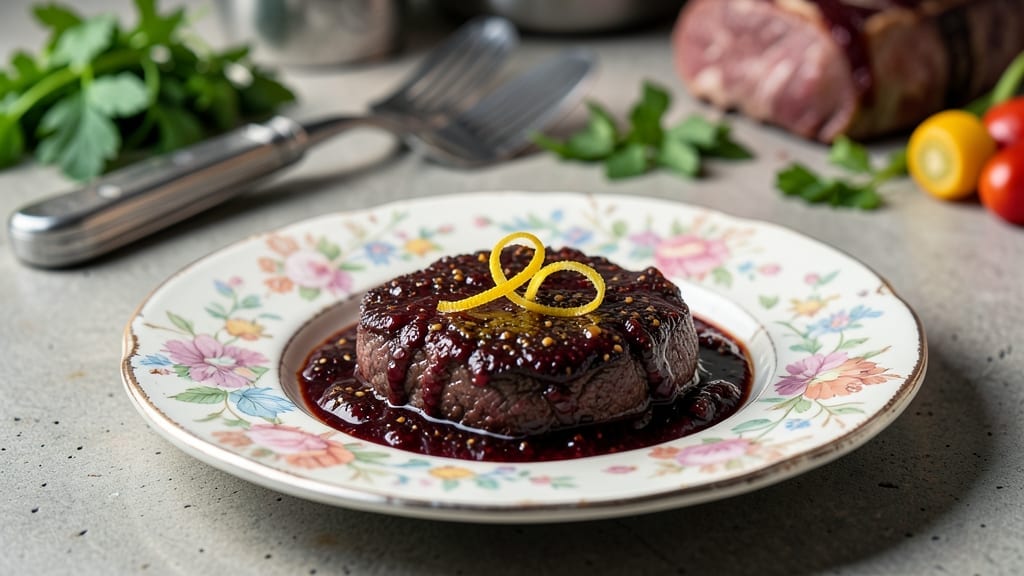
A burgundy wine steak marinade transforms tough cuts into melt-in-your-mouth perfection by infusing deep red wine richness and aromatic herbs. This recipe relies on precise ratios of red wine, shallots, and garlic to create a balanced marinade that tenderizes while building complex layers of flavor.
The acidity from vinegar ensures the marinade penetrates deeply, while fresh thyme and bay leaves add earthy depth that pairs beautifully with steak.
The secret lies in the 30-minute marinating time—long enough to infuse flavor without overpowering the meat’s natural taste. This marinade works best with ribeye, sirloin, or flank steak, where its bold flavors shine.
The red wine’s tannins break down proteins, ensuring a tender result every time. For optimal results, let the marinade sit at room temperature while you prep the steak, allowing the ingredients to meld seamlessly.
What you’ll achieve is steak with a caramelized crust and a juicy interior, where every bite carries the essence of burgundy wine, garlic, and herbs. The marinade’s acidity also helps sear the meat perfectly, locking in moisture and enhancing the wine’s depth.
This isn’t just a marinade—it’s a flavor foundation that elevates any steak dish to restaurant-quality status.
Use this marinade for grilled, pan-seared, or broiled steak, adjusting cooking times based on your preferred doneness. The leftovers keep well in the fridge for up to 5 days, making it a versatile addition to your meal prep arsenal.
Let’s dive into the ingredients and instructions to bring this bold marinade to life.
Ingredients for burgundy steak marinade
A bold blend of burgundy wine and aromatic herbs. Just ten ingredients transform tough steaks into restaurant-quality perfection.
| Ingredient | Amount | Notes |
|---|---|---|
| Dry Red Burgundy Wine 🍷 | 1 cup | Bold, dry variety preferred |
| Shallots 🧅 | 3 whole | Minced for fine texture |
| Garlic Cloves 🧄 | 4 cloves | Peeled, minced finely |
| Fresh Thyme Leaves 🌿 | ¼ cup | Packed, stems removed |
| Fresh Bay Leaves 🍃 | 2 whole | Crushed lightly for release |
| White Wine Vinegar 🍋 | 2 tbsp | For acidity balance |
| Extra-Virgin Olive Oil 🫒 | ¼ cup | High-quality, fruity |
| Diamond Crystal Kosher Salt 🧂 | 1 ½ tsp | Fine grain preferred |
| Freshly Ground Black Pepper 🌶️ | ½ tsp | Coarsely cracked |
| Granulated Sugar 🍚 | 1 tsp | Balances acidity |
[recipe_ingredient_scaler]
The burgundy wine is non-negotiable here—look for dry, bold varieties like Pinot Noir at your local wine shop or grocery store. Trader Joe’s and Total Wine carry excellent options without breaking the bank. Fresh thyme and bay leaves make all the difference, so skip the dried stuff (it just can’t match the depth). For the shallots, buy them whole—they keep longer and taste fresher than pre-minced. The olive oil should be extra-virgin, something you’d drizzle on good bread—none of that cheap cooking oil nonsense.
No burgundy wine? Cabernet Sauvignon works in a pinch, but it’ll be less refined. Fresh herbs missing? Dried thyme at one-third the amount is better than nothing, but trust me on the fresh stuff. Pre-minced garlic? Use half the amount—it loses potency when pre-chopped. The vinegar and sugar balance the wine’s acidity, so don’t skip them. For a sweeter marinade, add an extra half teaspoon of sugar. Want more heat? Swap half the olive oil for red pepper flakes—just a pinch.
This marinade keeps for 5 days in the fridge, sealed tightly. For longer storage, freeze in ice cube trays—thaw overnight in the fridge before using. The wine flavor actually improves after a day or two as the tannins mellow. I like to make extra and portion it out—perfect for meal prep. Just remember: never reuse marinade that’s touched raw meat. Save some for basting instead.
Why You’ll Love This Recipe
- No-Fuss Marinade Magic: Honestly, this marinade takes five minutes of active time—just mincing shallots and garlic, crushing bay leaves, and whisking. The rest? It’s hands-off while the wine and herbs do their thing. I keep a bottle of dry burgundy on hand anyway, so no extra grocery trips.
- Crave-Worthy Depth: That crushed bay leaf trick? Game-changer. The wine’s earthy notes blend with thyme’s floral punch and garlic’s sharpness, then the sugar balances the vinegar’s bite—so your steak gets that restaurant-worthy crust without the fuss. Trust me, one bite and you’ll forget store-bought marinades.
- Leftovers? No Problem: This marinade lasts five whole days in the fridge, sealed tight—perfect for meal prep. Use it on chicken, toss it with roasted veggies, or even drizzle it over mashed potatoes for a wine-kissed twist. My kids actually ask for seconds when I serve it this way.
- Budget-Friendly Luxe: A bottle of burgundy isn’t cheap, but you’ll use just one cup—and the rest? You drink it. The shallots and thyme stretch far, and the olive oil? A little goes a long way. For the price of takeout, you get a steak so good, you’ll feel like you’re dining in Lyon. Worth it.
Step-by-step instructions for burgundy wine steak marinade
This marinade transforms tough cuts into melt-in-your-mouth perfection through gentle acidity and bold wine infusion.
Prepare the Aromatic Base
In a medium mixing bowl, combine the 3 shallots and 4 garlic cloves—both minced to a fine texture. The shallots should be so finely chopped they’re nearly invisible, creating a smooth marinade without grainy bits. Add the ¼ cup fresh thyme leaves and 2 crushed fresh bay leaves, pressing the bay leaves between your palms to release their essential oils. This aromatic foundation will form the backbone of your marinade’s complex flavor profile.
Here’s the thing—don’t skip crushing the bay leaves. Their oils are potent and will dissolve completely into the wine, adding earthy depth that transforms an ordinary steak into something extraordinary. Set this mixture aside while you prepare the liquid components, but keep it covered to preserve the fresh herbs’ vibrant flavors.
Create the Wine-Infused Liquid
Pour the 1 cup dry red burgundy wine into a separate measuring cup. The bold, dry variety is crucial here—it provides the necessary acidity to tenderize while contributing rich fruit notes that complement the steak’s natural beefiness. Add the 2 tablespoons white wine vinegar and 1 teaspoon granulated sugar, then stir vigorously with a whisk until the sugar dissolves completely. The vinegar enhances the wine’s acidity, while the sugar acts as a gentle preservative and balances the overall acidity level.
This is where the magic happens: the wine’s tannins begin breaking down muscle fibers even before the marinade touches your steak. Pour this mixture into the bowl with the aromatic base, then add the ¼ cup extra-virgin olive oil. The oil acts as an emulsifier, binding all components together while adding a luxurious mouthfeel. Stir everything thoroughly until you achieve a uniform consistency that coats the back of a spoon.
Season and Infuse
Add the 1½ teaspoons diamond crystal kosher salt and ½ teaspoon freshly ground black pepper to the marinade mixture. Use your fingers to gently press the salt crystals into the herbs, ensuring they dissolve completely. The salt will penetrate the steak’s surface, enhancing its natural flavors while helping to break down connective tissues. The freshly cracked black pepper adds a subtle heat that complements the wine’s fruitiness without overpowering it.
Transfer the marinade to a non-reactive container with a tight-fitting lid. Here’s what I do next: I place the container in the refrigerator and let it infuse for at least 4 hours, but I prefer 8-12 hours for maximum flavor penetration. The longer it sits, the more the wine’s tannins and the herbs’ essential oils will tenderize the meat. The marinade should develop a deep ruby color and an intoxicating aroma that combines earthy bay, floral thyme, and the wine’s complex fruit notes.
Marinate the Steak
Remove your steak from the refrigerator and pat it completely dry with paper towels—this step is non-negotiable. Wet surfaces prevent the marinade from forming a proper crust on the meat’s surface. Place the steak in a shallow dish and pour the infused marinade over it, ensuring it’s completely coated on all sides. For best results, I like to flip the steak every 2 hours during the marinating process, which guarantees even flavor distribution and maximum tenderness.
Cover the dish with plastic wrap and refrigerate for 4-12 hours, depending on your steak’s thickness. For thick cuts like ribeye or New York strip, I recommend the full 12 hours—this allows the marinade to work its magic without over-acidifying the meat. You’ll know it’s ready when the steak absorbs the marinade’s deep red color and develops an irresistible aroma that makes your kitchen smell like a Parisian bistro. The key is patience: rushing this step results in uneven flavor and potential acid damage to the meat’s surface.
Pro Tips For Making Burgundy Steak Marinade
- Crush Those Bay Leaves: DESCRIPTION: I learned this the hard way—skipping the crushing step leaves you with a marinade that tastes like it’s missing something. Press those bay leaves between your palms until they’re bruised, not broken; their oils dissolve better into the wine, giving you that deep, earthy backbone the recipe promises.
- Mince Shallots Like Mad: DESCRIPTION: Fine texture = smooth marinade. Chop those 3 shallots so small they’re nearly invisible—no visible flecks, no excuses. A microplane or food processor makes this faster, but if you’re doing it by hand, take your time. Grainy bits ruin the silky finish.
- Don’t Skip the Sugar: DESCRIPTION: The 1 teaspoon granulated sugar isn’t just for sweetness—it balances the acidity of the wine and vinegar, preventing the marinade from tasting harsh. Stir it in until fully dissolved, or you’ll end up with a gritty, uneven mix that won’t coat the steak properly.
- Flip the Steak Twice: DESCRIPTION: If you’re marinating for the full 12 hours, flip the steak every 2 hours to ensure even flavor penetration. I know, it’s a pain, but ignoring this means one side gets all the love while the other tastes like it’s been forgotten. Trust the process—your future self will thank you.
Troubleshooting your burgundy steak marinade
Marinade Too Thin?
If your marinade looks more like a broth than a thick coating, you’ve likely over-diluted it with too much wine or vinegar. The ¼ cup olive oil should be your emulsifier—if it’s missing or insufficient, the mixture will separate.
My trick? Stir in 1 tbsp cornstarch mixed with 2 tbsp cold water to thicken it slightly. This won’t alter the flavor but will help it cling better to the steak. 💡
Overly Acidic Taste
A sharp, vinegary bite can ruin the balance if you’ve used too much white wine vinegar or skipped the 1 tsp sugar. Taste before marinating—it should taste like a sophisticated wine, not a cleaning solution.
If it’s too acidic, add ½ tsp more sugar or a splash of burgundy wine to mellow it out. The sugar balances the acidity naturally.
Meat Absorbs Too Little Flavor
If your steak tastes bland after marinating, it might not have absorbed enough flavor because the marinade wasn’t infused long enough. The 8-12 hour recommendation isn’t optional—this is when the wine’s tannins and herbs fully penetrate.
For tougher cuts like flank steak, extend it to 24 hours in the fridge. Also, ensure the steak is completely dry before marinating—wet surfaces repel the marinade.
Marinade Separates
Separation happens when the oil and liquid components don’t mix properly. After adding the ¼ cup olive oil, whisk vigorously for 30 seconds to create an emulsion. If it still separates, blend the mixture for 10 seconds using an immersion blender.
This ensures the wine, herbs, and oil stay cohesive. A smooth marinade coats the steak evenly, so don’t skip this step! ⚡
Herbs Lose Flavor
Fresh herbs like thyme and bay leaves can wilt or lose potency if left in the marinade too long. After 12 hours, strain out the herbs and reserve them for another use—like garnishing your steak.
For extra depth, press the bay leaves between your palms to release their oils before adding them to the marinade. Dried herbs won’t work as well, so always opt for fresh when possible.
Nutrition facts
Frequently asked questions
Can I use a different type of red wine instead of burgundy?
While burgundy wine is ideal, you can substitute with dry Pinot Noir or Cabernet Sauvignon—just expect slightly different flavor notes. The key is using a dry, bold red wine to balance the acidity and tenderize the meat effectively. Avoid sweet wines, as they won’t complement the herbs or create the right depth of flavor.
Why does the marinade need to rest before using?
The 8-12 hour resting period lets the wine’s tannins and herbs fully infuse, creating a richer flavor profile. This step ensures the marinade penetrates the steak evenly, breaking down proteins for maximum tenderness. Skipping it results in uneven flavor distribution and less impactful results. Patience here pays off with restaurant-quality steak!
What should I do if my steak absorbs too much marinade?
If the steak soaks up too much liquid, pat it dry with paper towels before cooking and let it rest at room temperature for 10-15 minutes before searing. This helps the marinade cling better and prevents excess moisture during cooking. For extra crispiness, let the steak air-dry for 30 minutes before searing.
Can I make this marinade ahead of time?
The marinade actually improves with time—just store it in an airtight container in the fridge for up to 5 days. For longer storage, freeze it in portions, thawing overnight in the fridge before use. Just avoid freezing the steak itself, as the marinade won’t work as effectively once thawed. Perfect for meal prep!
How do I prevent the marinade from separating?
Separation happens when the oil and liquid don’t mix properly. After adding the ¼ cup olive oil, whisk vigorously for 30 seconds to create an emulsion. If it still separates, blend briefly with an immersion blender to combine everything smoothly. A cohesive marinade coats the steak evenly and delivers the best flavor.

Trained in classic French technique but raised on slow-cooked ribs and spicy rubs, she blends culinary skill with smoke and soul.
- Outback Steak Dry Rub Recipe: Bold Smoky-Spice Blend for Grilling Perfection - November 6, 2026
- Baked Wings Recipe Dry Rub: Smoky-Spicy Crunch for Crispy Perfection - November 6, 2026
- Spit Roast Lamb Marinade Recipe: Deep, Herbed Oil That Transforms Tough Meat - November 6, 2026