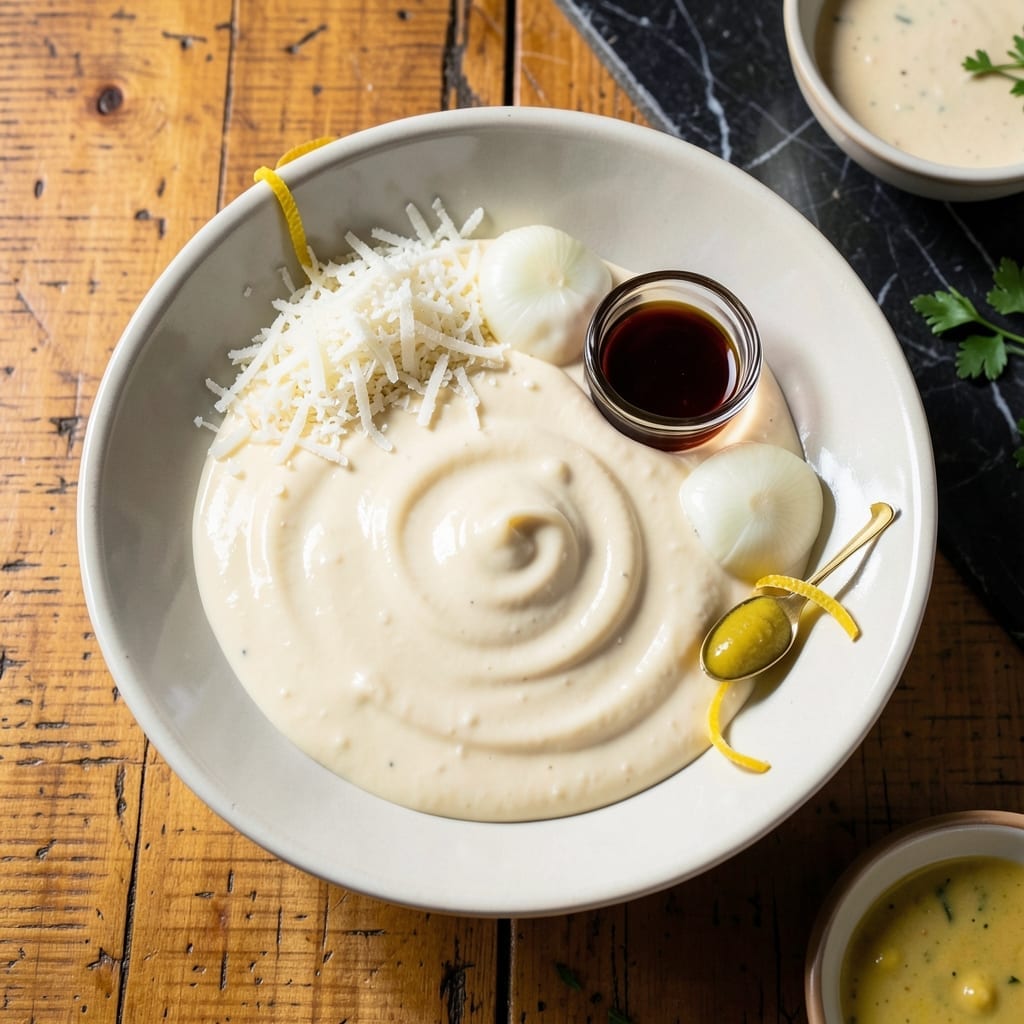
This anchovy-free Caesar dressing delivers the creamy texture and bold flavor you expect from the classic.
Using aged Parmesan and Worcestershire sauce, it achieves that signature umami depth without any fish. Perfect for salads, dips, or marinades.
Ingredients for Caesar Salad Dressing Recipe No Anchovies
Ten ingredients deliver that bold, creamy classic flavor without the fish.
| Ingredient | Amount | Notes |
|---|---|---|
| Aged Parmesan Cheese 🧀 | ¾ cup | Freshly grated from wedge |
| Mayonnaise 🥚 | ¾ cup | Full-fat for creaminess |
| Worcestershire Sauce 💧 | 1 tbsp | Anchovy-free version required |
| Dijon Mustard 🟡 | 2 tsp | Smooth, not whole grain |
| Garlic Cloves 🧄 | 2 cloves | Minced to fine paste |
| Lemon Juice 🍋 | 3 tbsp | Freshly squeezed preferred |
| Red Wine Vinegar 💧 | 1 tsp | Balances richness perfectly |
| Extra-Virgin Olive Oil 🫒 | ¼ cup | High-quality for depth |
| Black Pepper 🌶️ | ½ tsp | Freshly cracked preferred |
| Sea Salt 🧂 | ½ tsp | Fine grain for even distribution |
[recipe_ingredient_scaler]
The Parmesan is doing heavy lifting here—get the aged stuff from Whole Foods or a specialty shop. A wedge you grate yourself tastes infinitely better than pre-grated (which has anti-caking agents that dull the flavor). The mayonnaise should be full-fat—Hellmann’s or Duke’s give that perfect velvety base. Worst case, a good store brand works. Just avoid the low-fat versions (they’ll make the dressing thin).
No Worcestershire? Soy sauce plus a dash of balsamic gets you 80% there. Out of Dijon? Yellow mustard at double the amount works, though it’s milder. If you’re missing lemon juice, white wine vinegar or more red wine vinegar can sub in a pinch (adjust to taste). The olive oil can be swapped with avocado oil if that’s what you’ve got open.
This keeps 5-7 days in the fridge—stir before using as it’ll thicken up when cold. Doesn’t freeze well (mayonnaise separates). If making ahead, hold off on adding the Parmesan until serving day to keep the texture spot-on.
Why You’ll Love This Recipe
- No Fuss Blending: I just dump everything in a jar and shake—no whisking, no mess, and the mayo binds it all perfectly.
- Parmesan Punch: Honestly, the aged Parmesan gives it that deep umami kick without anchovies, and the garlic cloves add just the right bite.
- Dressing for Days: I make a big batch on Sunday and it keeps beautifully, so I can drizzle it on salads, wraps, or even roasted veggies all week.
- Budget-Friendly Staples: Between us, I already have all the ingredients in my fridge, and it costs way less than store-bought dressings.
Step-by-Step Instructions for Caesar Salad Dressing No Anchovies
Here’s the method. Straightforward, tested, works every time.
Step 1: Create the Garlic Base
Mince the 2 cloves garlic cloves to a fine paste using a knife or microplane. This fine texture ensures even distribution throughout the dressing without any chunky bits. I always let the minced garlic sit for 2 minutes before using—this activates its flavor compounds.
Combine the garlic paste with 2 tsp Dijon mustard and 1 tbsp Worcestershire sauce in a medium bowl. The mustard acts as an emulsifier while the Worcestershire adds depth without any fishy notes. Whisk these together until smooth and uniform in color.
Step 2: Build the Creamy Foundation
Add the 0.75 cup mayonnaise to the bowl and whisk vigorously for 30 seconds until completely smooth. Full-fat mayonnaise is crucial here—it provides the rich, velvety base that makes this dressing so luscious. The mixture should look thick and creamy at this point.
Now whisk in the 0.75 cup Aged Parmesan Cheese until no lumps remain. I use freshly grated from a wedge because pre-grated cheese contains anti-caking agents that can make the dressing grainy. The cheese should melt into the mixture, creating a thick, glossy base.
Step 3: Balance with Acid and Seasonings
Drizzle in the 3 tbsp lemon juice and 1 tsp red wine vinegar while whisking constantly. The lemon juice brightens the richness while the vinegar adds the perfect tang. You’ll notice the dressing lighten slightly in color as the acids cut through the fat.
Season with 0.5 tsp sea salt and 0.5 tsp black pepper. I always use fine grain sea salt here for even distribution. Taste at this point—the flavors should be bright but balanced, with the salt enhancing all the other elements.
Step 4: Emulsify with Olive Oil
Here’s the thing—this is where most people go wrong. Slowly drizzle in the 0.25 cup Extra-Virgin Olive Oil in a thin, steady stream while whisking constantly. This slow incorporation creates a stable emulsion that won’t separate. The dressing should thicken noticeably and become glossy.
If it looks too thick, add a teaspoon of water to loosen it slightly. The finished dressing should coat the back of a spoon and hold its shape briefly before slowly dripping off. This creamy consistency is what makes it cling perfectly to each leaf of romaine.
Step 5: Rest and Serve
Let the dressing rest at room temperature for 10 minutes before using. This allows the flavors to meld together beautifully. You’ll notice the garlic mellows slightly while the Parmesan deepens in flavor during this brief rest.
Give it a final whisk before drizzling over your salad. The dressing should be thick enough to coat each leaf evenly but still pourable. Store any leftovers in an airtight container in the refrigerator for up to 5 days.
Pro Tips For Making Caesar Salad Dressing Recipe No Anchovies
- Grate the Parmesan Fresh: Use a microplane to grate the aged Parmesan yourself—pre-shredded cheese has anti-caking agents that make the dressing grainy. I learned this the hard way after wondering why my dressing wasn’t silky smooth.
- Mince the Garlic Fine: Press or mince the garlic cloves to a near-paste consistency to avoid chunky bits in the dressing. Sounds fussy, but it actually changes the outcome—no one wants a surprise garlic crunch.
- Balance the Worcestershire: Start with 1 teaspoon of Worcestershire sauce, taste, then add more if needed—it’s salty and potent, and too much can overpower the Parmesan and Dijon. My first batch was inedible until I figured this out.
- Thin with Care: If the dressing is too thick, thin it with a splash of cold water or lemon juice instead of milk. This keeps the flavor sharp and prevents the mayo from breaking. I was skeptical until I tried it—works every time.
Pro Cooking Tips for caesar salad dressing recipe no anchovies
Emulsification Secrets
Slow drizzling is key—add the ¼ cup olive oil in a thin stream while whisking constantly. This creates tiny oil droplets suspended in the liquid, preventing separation. I use a spouted measuring cup for better control.
Temperature Matters
Ensure all ingredients are at room temperature before starting. Cold mayonnaise or cheese can cause the emulsion to break. If yours separates, don’t panic—just whisk in 1 tsp hot water to bring it back together.
Also, the resting 10 minutes at room temp isn’t just for flavor—it helps stabilize the emulsion before refrigeration.
Parmesan Pro Tips
Grating your own from a wedge makes a difference. I use a Microplane for ultra-fine shreds that melt seamlessly into the dressing. Avoid pre-grated—it contains anti-caking agents that create a grainy texture.
Flavor Balancing
Taste as you go. If it’s too sharp, add a pinch more Parmesan. Too rich? A splash of lemon juice brightens it. The Dijon should be smooth—whole grain can make the dressing chunky.
Storage Success
This dressing thickens when chilled. Let it sit at room temp for 15 minutes before using, then stir vigorously. It’ll keep for 5-7 days in an airtight container in the fridge. 💡
Nutrition Facts
Frequently Asked Questions
Can I use a blender instead of whisking by hand?
A blender creates a perfectly smooth emulsion in 30 seconds. Just pulse in short bursts to avoid overmixing. This method is especially helpful for larger batches.
What can replace Worcestershire sauce for a vegetarian version?
Use 1 tbsp soy sauce plus ½ tsp balsamic vinegar for similar depth. Coconut aminos work too, though the flavor is slightly sweeter. Always check labels for hidden fish ingredients.
Why does my dressing separate after refrigeration?
Cold temperatures thicken the mayo and cheese. Let it sit at room temperature for 15 minutes, then whisk vigorously. For stubborn separation, add 1 tsp hot water while whisking.
How do I adjust the thickness?
Too thick? Thin with water, 1 tsp at a time. Too thin? Whisk in more Parmesan or mayo. The ideal consistency coats the back of a spoon but still drizzles.

Trained in classic French technique but raised on slow-cooked ribs and spicy rubs, she blends culinary skill with smoke and soul.
- Recipe for Dumplings in Crock Pot: Fluffy Pillows with Minimal Effort - October 3, 2026
- Recipe For Diced Pork In Slow Cooker: Melt-In-Your-Mouth Tenderness All Day - October 3, 2026
- Recipe for Crock Pot Lasagna Using Ravioli: No-Boil Cheese Layers - October 3, 2026