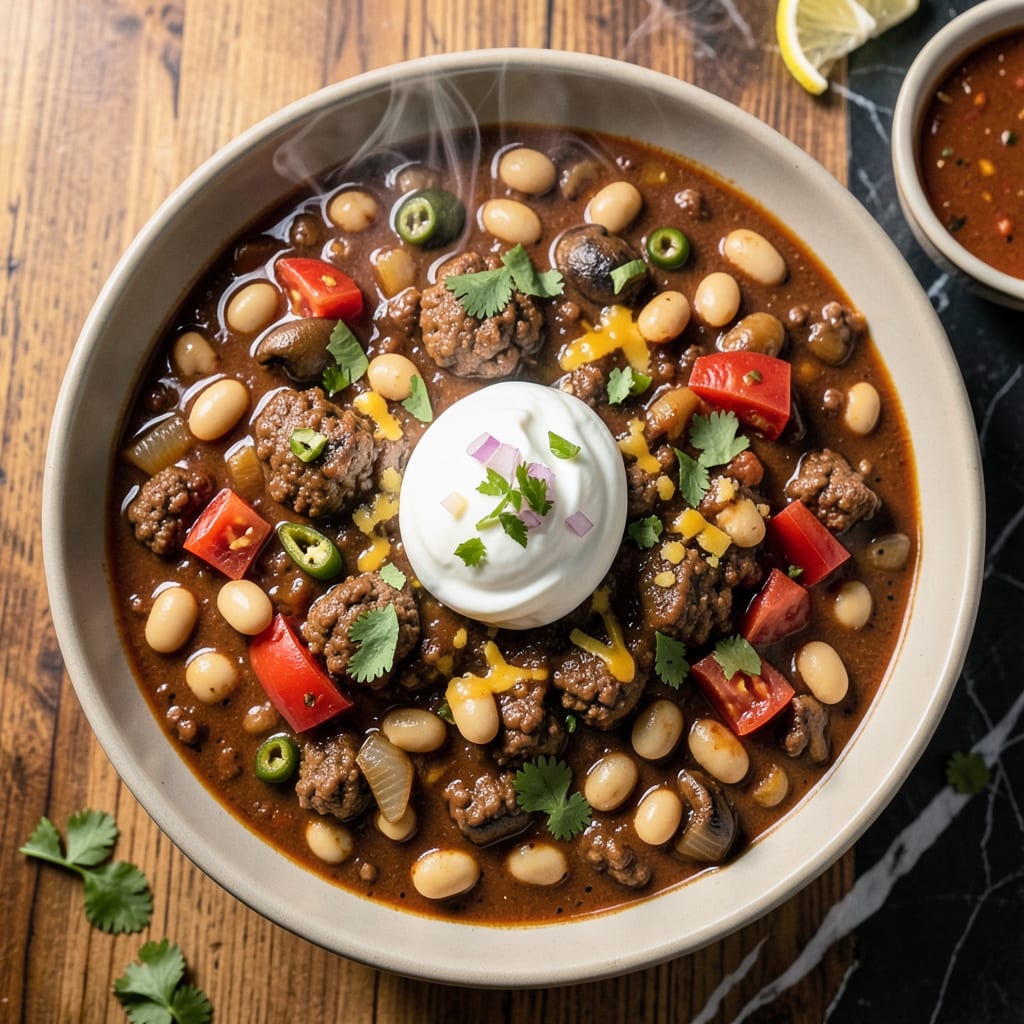
Yes, great northern beans work well in chili—their mild, nutty flavor absorbs spices beautifully while adding a creamy yet firm texture. They hold their shape better than kidney beans but may soften more than pinto beans during long cooking.
I love using these beans when I want a chili that’s rich in flavor but not overpowered by the legumes themselves. Their delicate skin breaks down just enough to thicken the broth naturally, creating that perfect spoon-coating consistency we all crave. 🔥 What’s particularly clever about them is how they balance heartiness with subtlety—ideal for when you’re working with complex spice blends or want the meat and vegetables to shine through.
From my pitmaster experience, they’re especially brilliant in white chili recipes where you’re using chicken or turkey. The beans’ creamy texture complements poultry beautifully while their neutral base lets ingredients like roasted green chiles and cumin take center stage. Just remember to monitor cooking times closely—they’ll go from perfect to mushy faster than you might expect! ✨
💡 In This Article
- How Great Northern Beans Affect Chili Texture and Flavor
- Best Chili Recipes Using Great Northern Beans
How Great Northern Beans Affect Chili Texture and Flavor
Great northern beans bring a unique starch profile to chili that sets them apart from other varieties. With about 22% starch content (higher than pintos at 18%), they release more thickening power as they cook. Their thin, delicate skins contain less fiber than kidney beans, which means they break down more evenly during simmering.
This creates that coveted velvety texture without the grainy mouthfeel you sometimes get with firmer-skinned beans. 🔥
The flavor science is equally fascinating. These beans contain lower levels of phytates (natural compounds that can create bitterness) compared to black beans, giving them a cleaner, more neutral base. Their mild nuttiness comes from higher concentrations of glutamic acid—the same compound that gives mushrooms their umami depth.
When combined with chili spices, this creates a flavor amplification effect where the beans enhance rather than compete with your seasoning blend. ✨
What I’ve observed in my test batches is that great northerns absorb liquid at a rate of about 1.5 times their dry volume—faster than pintos but slower than navy beans. This makes them ideal for chili because they swell enough to create body without turning to mush.
The key is maintaining a 2:1 liquid-to-bean ratio in your initial recipe to account for this absorption while leaving enough broth for that perfect chili consistency. 🌟
Compared to other chili staples, they offer distinct advantages: more creamy than kidney beans, less mealy than black beans, and with better structural integrity than cannellinis. Their starch releases gradually over 60-90 minutes of cooking, which gives you better control over thickness.
I’ve found they particularly excel in tomato-based chilies where their starch helps balance acidity, creating a smoother finish on the palate. ⚡
Their neutral pH (around 6.2) also makes them exceptionally versatile with different protein bases. In beef chili, they absorb and distribute the rich meat flavors evenly. With poultry in white chili, their mildness allows the delicate chicken or turkey notes to shine through.
This pH balance means they won’t turn your broth muddy or darken excessively like some other beans might during long cooking. 💫
One pro tip from my pitmaster days: if you want to maximize their textural benefits, soak them for exactly 8 hours before cooking. This hydrates them enough to prevent splitting while preserving just enough firmness to hold their shape.
Any longer and you risk losing that perfect creamy-yet-intact consistency that makes them so special in chili. 💛

Trained in classic French technique but raised on slow-cooked ribs and spicy rubs, she blends culinary skill with smoke and soul.
- Indian Lamb Curry Recipe Pressure Cooker: Fragrant Spices in a Fraction of the Time - October 3, 2026
- Recipe for Oven Roasted: Golden Crisp Perfection Without the Fryer - October 3, 2026
- Recipe for Fried Pork Chops With Flour: Crispy Crust and Juicy Centers - October 3, 2026