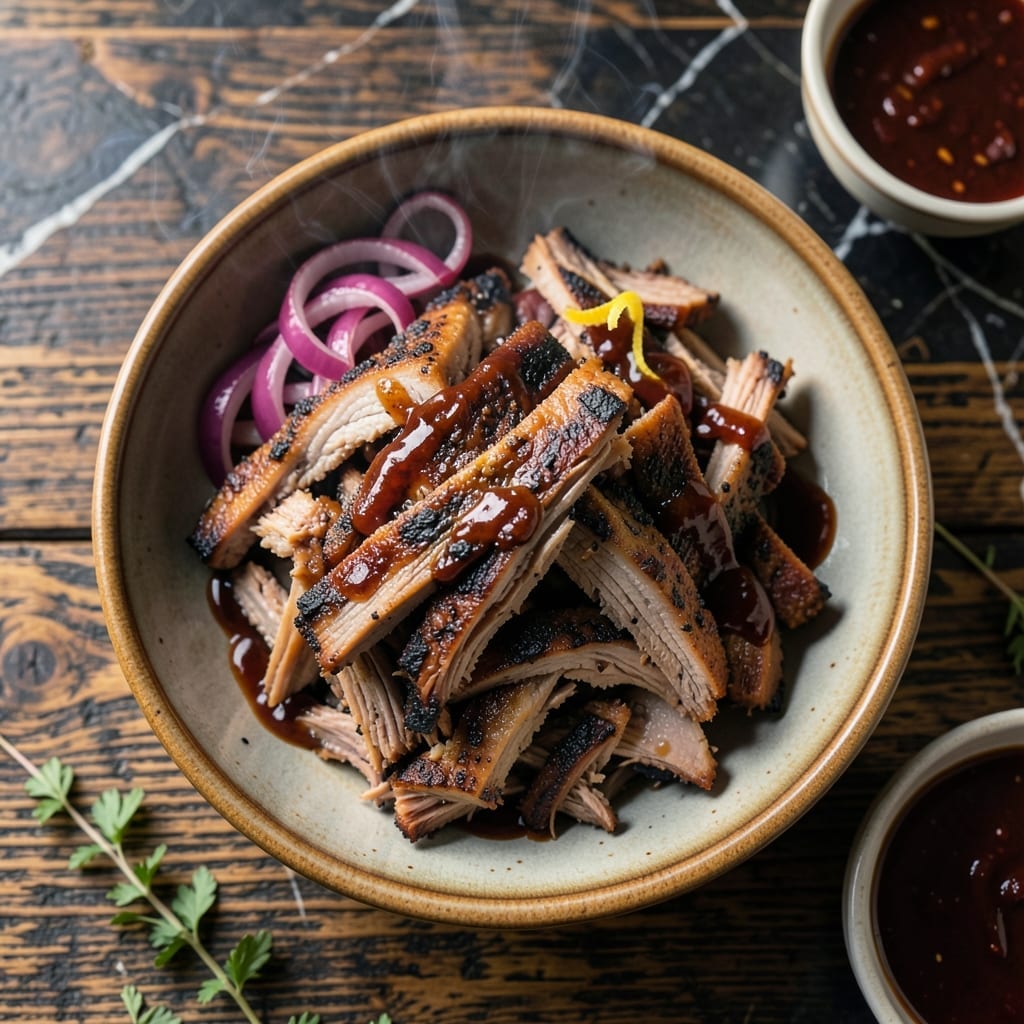
There’s nothing like the smoky depth of pulled pork cooked low and slow on a charcoal grill. This method transforms tough cuts into tender, flavorful meat that falls apart with a touch.
I’ve perfected this technique over years of backyard cookouts. The charcoal imparts a rich, authentic flavor that you just can’t replicate with other methods.
Ingredients for Charcoal Grill Pulled Pork
Transform tough pork shoulder into tender, smoky perfection with these essential ingredients for low and slow cooking.
| Ingredient | Amount | Notes |
|---|---|---|
| Pork Shoulder 🐖 | 4 lb | Bone-in preferred for flavor |
| Kosher Salt 🧂 | 2 tbsp | Diamond Crystal preferred |
| Black Pepper 🌶️ | 1 tbsp | Freshly ground coarse |
| Brown Sugar 🍚 | ½ cup | Light or dark variety |
| Paprika 🌶️ | 1 tbsp | Smoked paprika ideal |
| Garlic Powder 🧄 | 1 tbsp | Not garlic salt |
| Onion Powder 🧅 | 1 tbsp | Fresh ground preferred |
| Cayenne Pepper 🔥 | ½ tsp | Adjust for heat preference |
| Apple Cider Vinegar 🍏 | ½ cup | For tangy balance |
| Yellow Mustard 🟡 | ¼ cup | Binder for dry rub |
| Charcoal Briquettes ⚫ | 8 lb | Lump charcoal works too |
| Hickory Wood Chunks 🪵 | 4 pieces | For authentic smoke flavor |
| Barbecue Sauce 🍯 | 2 cups | Homemade or premium brand |
[recipe_ingredient_scaler]
The pork shoulder is non-negotiable here. Bone-in cuts deliver superior flavor and moisture—look for 8-10 lb whole shoulders at warehouse stores like Costco or Sam’s Club and portion them yourself. The fat cap should be intact, not trimmed away. For the dry rub, Diamond Crystal kosher salt is the professional standard; its larger crystals distribute more evenly than table salt.
Out of smoked paprika? Regular paprika plus a pinch of liquid smoke gets you close. No apple cider vinegar? White vinegar in a pinch, though the depth won’t be quite the same. The mustard is purely for binding—Dijon works too, just avoid sweet varieties. For wood, hickory is classic, but apple or cherry wood adds a fruitier note that pairs beautifully with pork.
Store dry rub components in airtight containers away from light for up to 6 months. The pork can be rubbed and refrigerated overnight—actually improves flavor. Leftovers keep 4-5 days refrigerated or 3 months frozen (the fat solidifies beautifully for easy shredding later).
Why You’ll Love This Recipe
- Set and Forget: I rub the pork shoulder with salt, pepper, and brown sugar, let the charcoal do its slow magic, and come back to fall-apart tender meat hours later.
- Smoky Sweetness: The paprika and brown sugar caramelize over the coals, giving that deep, sticky crust with a hint of heat underneath.
- Feeds the Crew: I’ve served this at backyard parties and packed it for work lunches—shreds perfectly for sandwiches, tacos, or straight from the tray.
- Wallet-Friendly Feast: A whole pork shoulder is cheap per pound, and one batch gives me leftovers for days—way better than takeout for my budget.
Step-by-Step Instructions for Charcoal Grill Pulled Pork
Master the charcoal method for tender, smoky pulled pork with professional-grade results.
Step 1: Prepare the Dry Rub and Season the Pork
In a small bowl, combine the 2 tbsp Kosher Salt, 1 tbsp Black Pepper, 0.5 cup Brown Sugar, 1 tbsp Paprika, 1 tbsp Garlic Powder, 1 tbsp Onion Powder, and 0.5 tsp Cayenne Pepper. Stir until the mixture is uniform and free of lumps.
Pat the 4 lb Pork Shoulder dry with paper towels to ensure the rub adheres properly. Apply the 0.25 cup Yellow Mustard evenly over the surface of the pork—it acts as a binder. Coat the pork generously with the dry rub, pressing it into the meat so it forms a thick, even crust. Let it sit at room temperature for 30-45 minutes while you prepare the grill.
Step 2: Set Up the Charcoal Grill for Indirect Heat
Arrange the 8 lb Charcoal Briquettes in a two-zone fire: pile them on one side of the grill for direct heat, leaving the other side empty for indirect cooking. Light the charcoal and let it burn until covered with a light layer of white ash, about 15-20 minutes.
Once the coals are ready, add the 4 pieces Hickory Wood Chunks directly onto the hot coals. Place the cooking grate on the grill and position a disposable aluminum drip pan under the indirect heat side. The temperature should stabilize between 250-275°F—use a grill thermometer for accuracy. If the temperature climbs too high, adjust the vents to reduce airflow.
Step 3: Smoke the Pork Low and Slow
Place the seasoned pork shoulder on the indirect heat side of the grill, fat-side up. Insert a meat thermometer into the thickest part of the pork, avoiding the bone. Close the lid and maintain the temperature between 250-275°F throughout the cook.
Smoke the pork undisturbed for 4-5 hours, or until the internal temperature reaches 165-170°F. Spritz the pork occasionally with the 0.5 cup Apple Cider Vinegar to keep the surface moist and enhance the bark. Avoid opening the lid unnecessarily—each peek releases heat and extends the cooking time.
Step 4: Wrap and Finish the Cook
When the pork hits 165-170°F, remove it from the grill and wrap it tightly in heavy-duty aluminum foil. Add a splash of the 0.5 cup Apple Cider Vinegar and a drizzle of barbecue sauce before sealing to infuse extra moisture and flavor. Return the wrapped pork to the grill and continue cooking until the internal temperature reaches 200-203°F, about 2-3 hours longer.
The pork is done when it probes like butter with no resistance. Transfer the wrapped pork to a clean towel, wrap it again, and let it rest in a warm place for 1 hour. This resting period allows the juices to redistribute and the collagen to fully break down, ensuring maximum tenderness.
Step 5: Shred and Sauce the Pork
Unwrap the pork and discard any large fat chunks. Use two forks or meat claws to shred the pork into bite-sized pieces. Discard the bone if using a bone-in cut. Transfer the shredded pork to a large bowl and pour 1 cup of the 2 cups Barbecue Sauce over the top. Toss gently to coat evenly.
Taste and adjust the seasoning, adding more barbecue sauce as needed. Serve the pulled pork warm on buns, with extra sauce on the side. The meat should be tender, juicy, and infused with a deep, smoky flavor from the hickory wood and charcoal.
Pro Tips For Making Charcoal Grill Pulled Pork
- Start Indirect: Set up your charcoal on one side of the grill so the pork cooks slowly over indirect heat—I learned this the hard way after burning the outside while the inside stayed raw.
- Dry the Pork: Pat the pork shoulder completely dry before seasoning; even a little moisture prevents the rub from sticking and the bark from forming.
- Skip the Rush: Resist the urge to crank the heat—low and slow (around 225°F) is the only way to get that fall-apart texture without drying it out.
- Double the Rub: Use more brown sugar and paprika in your rub than you think you need; the long cook time mellows the sweetness and deepens the flavor.
Best Sauces and Condiments for This charcoal grill pulled pork
Classic BBQ Sauce
For that perfect balance of sweet and smoky, I always reach for Sweet Baby Ray’s Original. Its thick consistency clings beautifully to shredded pork. I mix 1 cup into the meat, then serve extra on the side for dipping. 💛
Vinegar-Based Sauce
A North Carolina staple that cuts through the richness. My go-to is Texas Pete Vinegar Sauce—tangy with just enough heat. I drizzle ¼ cup over the pork before serving to brighten the flavors.
Mustard-Based Option
South Carolina style brings a bold kick. I use Yellow Mustard mixed with apple cider vinegar and a touch of honey. Combine ½ cup mustard, ¼ cup vinegar, and 1 tbsp honey for a zesty finish.
Spicy Kick
For heat lovers, Stubs Spicy Barbecue Sauce adds a perfect punch. I stir in ½ cup with the pork, then top with pickled jalapeños. The vinegar tang balances the smoky depth beautifully. 🌶️
Alabama White Sauce
This creamy, tangy alternative is a game-changer. Whisk 1 cup mayonnaise, ¼ cup apple cider vinegar, and 1 tbsp horseradish. Drizzle over pulled pork for a unique, refreshing twist.
Nutrition Facts
Frequently Asked Questions
What’s the ideal cooking temperature?
Maintain your grill between 250-275°F for perfect low-and-slow cooking. This range breaks down collagen without drying out the meat.
Can I use a different wood for smoking?
While hickory is classic, apple or cherry wood add a sweeter, fruitier note. Avoid softwoods like pine—they create bitter flavors.
How do I know when it’s done?
The pork is ready at 200-203°F internally, but the real test is texture—it should probe like butter. Always use a meat thermometer for accuracy.
Why rest the meat after cooking?
Resting for 1 hour lets juices redistribute, making the pork juicier and easier to shred. Skipping this step risks dry, stringy meat.

Trained in classic French technique but raised on slow-cooked ribs and spicy rubs, she blends culinary skill with smoke and soul.
- Hamburgers in Sauce Recipe Crock Pot: Slow-Cooked Savory Delight - October 3, 2026
- Sanjeev Kapoor Egg Biryani Recipe: Fragrant Spiced Rice With Boiled Eggs - October 3, 2026
- Recipe for French Pork Spread Gorton: Savory Gallic Flavors in a Spreadable Delight - October 3, 2026