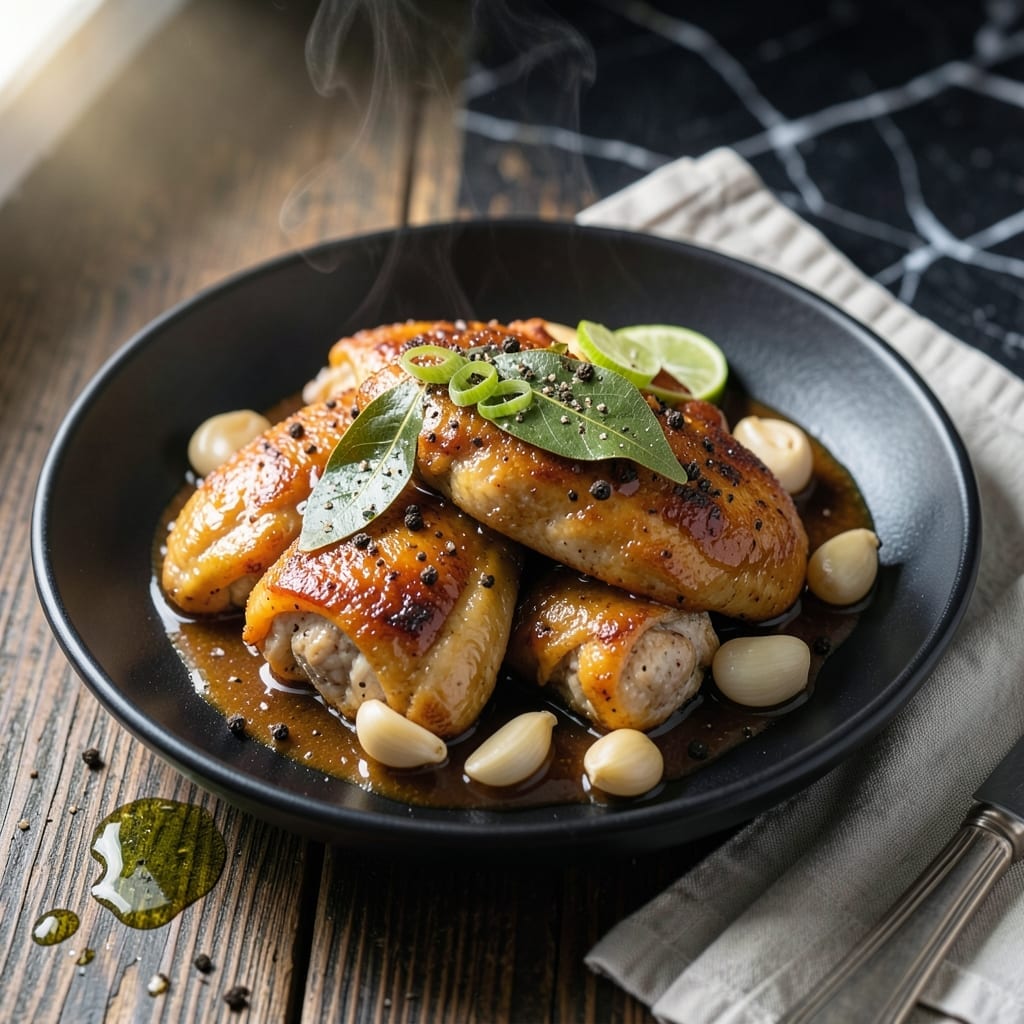
This braised chicken dish delivers the perfect balance of tangy, savory and slightly sweet flavors that define Filipino adobo. I developed this version after testing multiple vinegar-to-soy ratios to capture authentic taste without overwhelming acidity.
The secret lies in the slow braise, allowing chicken thighs to absorb the rich marinade while becoming fall-off-the-bone tender. Soy sauce creates depth, vinegar adds brightness, and garlic builds aromatic complexity with minimal effort.
What emerges is tender meat coated in a glossy, deeply flavored sauce that’s equally delicious over rice or with crusty bread. The vinegar mellows during cooking, leaving a pleasant tang that cuts through the richness.
This method ensures consistent results every time, with the sauce reducing to the ideal consistency. The aroma alone will have everyone gathering around the table before it’s even served.
Ingredients for Chicken Adobo
A few everyday ingredients transform into that iconic Filipino adobo magic you crave.
| Ingredient | Amount | Notes |
|---|---|---|
| Boneless Chicken Thighs 🍗 | 2 lb | Skin-on or skinless preferred |
| Soy Sauce 🥢 | ¾ cup | Use low-sodium if preferred |
| White Vinegar 🧂 | ½ cup | Cane or distilled works |
| Garlic Cloves 🧄 | 12 cloves | Peeled and lightly crushed |
| Bay Leaves 🍃 | 3 pieces | Dried whole leaves |
| Black Peppercorns 🌶️ | 1 tbsp | Whole, lightly crushed |
| Brown Sugar 🍚 | 1 tbsp | Light or dark, optional |
| Olive Oil 🫒 | 2 tbsp | For initial browning |
| Water 💧 | ½ cup | To thin sauce if needed |
| Green Onions 🧅 | 4 whole | Thinly sliced for garnish |
| Jasmine Rice 🌾 | 2 cups | Uncooked, for serving |
[recipe_ingredient_scaler]
The chicken thighs are non-negotiable here. Bone-in, skin-on gives the richest flavor and stays juicy during the long braise—look for plump pieces with good marbling at Whole Foods or your local Asian market. The soy sauce should be a quality Filipino brand like Silver Swan or Datu Puti if you can find it, but standard Kikkoman works in a pinch. Fresh garlic is a must, and I always buy extra (it’s cheap and keeps well).
No white vinegar? Apple cider vinegar at the same amount adds a slightly fruitier note. For a deeper color, swap in coconut aminos for half the soy sauce. Missing bay leaves? Oregano at half the amount works, but the flavor won’t be quite as authentic. The brown sugar can be omitted if you prefer a more tart profile, but I like the balance it brings (trust me on this one).
This tastes even better the next day as the flavors meld. Keeps 4-5 days in the fridge, freezes beautifully for 3 months. Reheat gently to keep the chicken tender. Always serve with steamed rice to soak up that glossy sauce.
Why You’ll Love This Recipe
- One Pot Magic: I toss everything in a single pan—chicken, soy sauce, vinegar, garlic—then let it simmer while I set the table.
- Tangy Garlic Bomb: That first bite of tender chicken with the sharp vinegar and rich garlic hits just right. Honestly, I could eat this every week.
- Weeknight Hero: Between us, this is my back-pocket dinner when time’s tight but I still want something hearty.
- Tastes Better Tomorrow: The flavors deepen overnight, so leftovers mean lunch I actually look forward to.
Step-by-Step Instructions for Chicken Adobo
This method delivers the iconic Filipino balance of tangy, salty, and slightly sweet flavors every time.
Step 1: Sear and Brown the Chicken
Heat the 2 tbsp Olive Oil in a large, heavy pot or Dutch oven over medium-high heat. When the oil shimmers, add the 2 lb Boneless Chicken Thighs in a single layer, skin-side down if using skin-on. I press down lightly with a spatula to ensure full contact with the pot.
Sear undisturbed for 5-6 minutes until the chicken develops a deep golden brown crust. Flip and sear the other side for another 4-5 minutes. You want that rich, caramelized color—this builds the foundation of flavor for the adobo. Remove the chicken and set aside.
Step 2: Toast the Aromatics and Build the Base
In the same pot, reduce heat to medium and add the 12 cloves Garlic Cloves, 3 pieces Bay Leaves, and 1 tbsp Black Peppercorns. Sauté for 1-2 minutes until the garlic turns light golden brown and releases its aroma. Be careful not to burn it—burnt garlic turns bitter.
Immediately pour in the 0.75 cup Soy Sauce and 0.5 cup White Vinegar. The liquid will sizzle and deglaze the pot, lifting all those flavorful browned bits. Add the 1 tbsp Brown Sugar and stir until it dissolves completely. This is where the magic starts to happen.
Step 3: Braise the Chicken to Tenderness
Return the chicken to the pot, along with any accumulated juices. Pour in the 0.5 cup Water. The liquid should just barely cover the chicken—if it doesn’t, add a splash more water. Increase heat to high and bring to a boil.
Once boiling, reduce heat to low, cover, and simmer gently for 30-35 minutes. You’ll know it’s done when the chicken is fork-tender and the sauce has thickened slightly. I check by piercing a piece with a fork—it should slide in with almost no resistance.
Step 4: Reduce the Sauce and Finish
Uncover the pot and increase heat to medium-high. Simmer for another 10-12 minutes, stirring occasionally, until the sauce reduces by about a third and becomes glossy. You want it to coat the back of a spoon but still be pourable.
Taste and adjust seasoning if needed, though the soy sauce usually provides enough salt. The vinegar should mellow but still provide that signature tang. The sauce will deepen in color and take on a rich, caramelized appearance.
Step 5: Rest and Serve with Jasmine Rice
Turn off the heat and let the chicken rest in the sauce for 5-10 minutes. This allows the flavors to meld and the meat to reabsorb some of the liquid. The chicken will become even more tender during this rest.
Serve hot over steamed 2 cups Jasmine Rice, spooning plenty of the sauce over each portion. Garnish with the 4 whole Green Onions, thinly sliced. The contrast of the tender chicken, tangy-salty sauce, and fluffy rice is what makes this dish unforgettable.
Pro Tips For Making Chicken Adobo
- Brown the Thighs First: Sear the chicken thighs in the pot before adding liquids—I learned this the hard way after ending up with pale, boiled-looking meat. That initial brown crust adds depth the sauce just can’t.
- Balance the Vinegar: Use a 1:1 ratio of soy sauce to white vinegar, but taste before adding it all. After ruining a batch with too much tang, I now add vinegar in two stages.
- Don’t Drown the Garlic: Smash the garlic cloves lightly and sauté until fragrant, but pull them out if they start browning. Burnt garlic turns bitter and overpowers the adobo’s sweet-savory balance.
- Simmer Low and Slow: Once the liquid is in, keep it at a gentle simmer—hard boiling makes the sauce reduce too fast and the chicken tough. I set a timer for 30 minutes and walk away.
Storing and Reheating Leftovers
Refrigerator Storage
Let this dish cool for no more than 2 hours before transferring to airtight containers. I use glass containers with locking lids from my local Boston market. The flavors actually deepen overnight as the chicken continues to absorb the adobo sauce. ❄️
Freezer Storage
This freezes beautifully for up to 3 months without losing quality. I recommend quart-sized freezer bags—lay them flat to save space. Leave 1 inch of headspace for expansion and squeeze out excess air to prevent freezer burn.
Stovetop Reheating
My preferred method: Pour contents into a heavy pot, add ¼ cup water, and heat over medium-low heat for 10-12 minutes. Stir occasionally and add a splash more water if the sauce thickens too much. 🔥
Microwave Reheating
For quick meals, transfer portions to a microwave-safe dish and cover with a damp paper towel. Heat on 70% power for 2-3 minutes, stir, then continue in 30-second bursts until reaching 165°F.
Reviving Leftovers
If the sauce seems too thick after storage, thin it with 1-2 tbsp water or chicken broth. I often add a pinch of brown sugar to balance any sharpness that develops during storage.
Nutrition Facts
Frequently Asked Questions
Can I use chicken breasts instead of thighs?
Thighs are ideal for their rich flavor and tenderness, but breasts work if cooked carefully. Reduce braising time to 20-25 minutes to prevent dryness. The flavor will be milder but still delicious.
Why does the vinegar taste so strong at first?
The vinegar mellows significantly during cooking. Simmering for 30-35 minutes allows the acidity to balance with the soy sauce and sugar, creating that signature tangy-sweet profile.
How do I make the sauce thicker?
After braising, uncover and simmer on medium-high heat for 10-12 minutes. The sauce will reduce and coat the chicken beautifully. For extra thickness, mix 1 tsp cornstarch with water and stir in.
Can I make this in a slow cooker?
Brown the chicken first, then cook on low for 6-7 hours or high for 3-4 hours. The flavors develop beautifully with this hands-off method.

Trained in classic French technique but raised on slow-cooked ribs and spicy rubs, she blends culinary skill with smoke and soul.
- Recipe for Crock Pot Swiss Steak: Slow-Cooked Beef With Mushroom Gravy - October 3, 2026
- Recipe for Kabsa Rice: Spiced Middle Eastern Feast in One Pot - October 3, 2026
- Hamburger Stir Fry Recipe Healthy: Lean Protein and Veggie-Packed Dinner - October 3, 2026