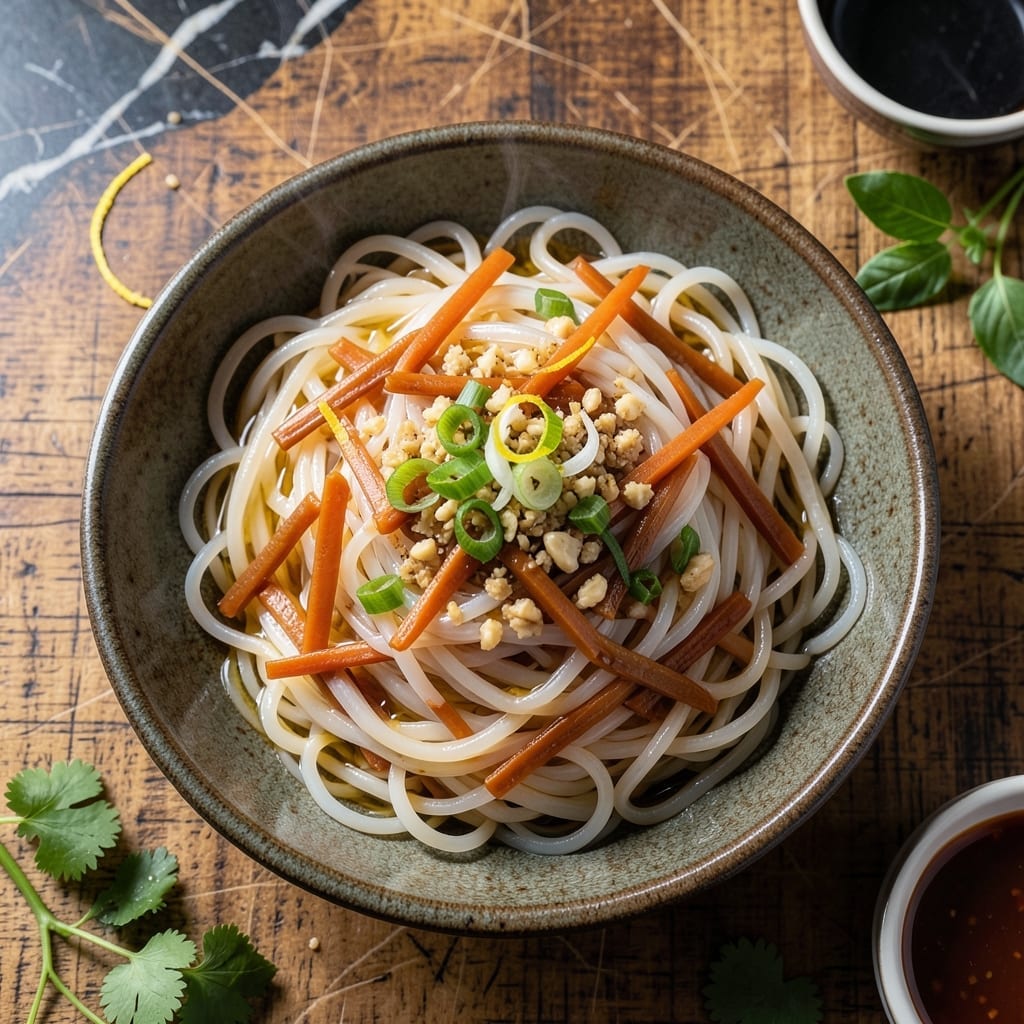
This recipe transforms simple cellophane noodles into a chewy, translucent stir-fry that captures authentic Chinese takeout texture at home. The key is proper rehydration and high-heat cooking.
I developed this method after years of trial and error, learning that soaking the noodles in warm water—not boiling—prevents them from turning to mush. The stir-fry step must be quick and hot to achieve that signature bounce.
The result is a dish with perfectly tender noodles coated in a savory sauce, each bite delivering the right resistance. It pairs beautifully with vegetables, proteins, or serves as a satisfying vegetarian main.
Master the technique once, and you’ll have a foolproof foundation for endless variations. This is restaurant-quality in your own kitchen.
Ingredients for Chinese Glass Noodle
Transform simple cellophane noodles into a restaurant-quality stir-fry with these authentic ingredients.
| Ingredient | Amount | Notes |
|---|---|---|
| Cellophane Noodles 🍜 | 8 oz | Also called glass noodles or mung bean noodles |
| Vegetable Oil 🫒 | 3 tbsp | High smoke point for stir-frying |
| Garlic Cloves 🧄 | 4 cloves | Minced finely for even distribution |
| Fresh Ginger 🌿 | 1 tbsp | Peeled and minced |
| Green Onions 🧅 | 4 whole | Thinly sliced, white and green parts separated |
| Carrots 🥕 | 2 whole | Julienned for quick cooking |
| Red Bell Pepper 🌶️ | 1 whole | Thinly sliced into strips |
| Shiitake Mushrooms 🍄 | 4 oz | Fresh or rehydrated dried, sliced |
| Soy Sauce 💧 | 3 tbsp | Low-sodium preferred for control |
| Dark Soy Sauce 💧 | 1 tbsp | For depth of color and flavor |
| Oyster Sauce 🫒 | 2 tbsp | Vegetarian oyster sauce if needed |
| Sesame Oil 🫒 | 1 tsp | Toasted for finishing aroma |
| Rice Vinegar 💧 | 1 tbsp | Balances the richness of the sauce |
| Cornstarch 🌾 | 1 tsp | Mixed with water for slurry |
| White Pepper 🧂 | ½ tsp | Ground, for subtle heat |
[recipe_ingredient_scaler]
The cellophane noodles are non-negotiable for texture—look for mung bean noodles in the Asian aisle at H Mart or Whole Foods. Avoid pre-cut or broken strands, as they won’t achieve that signature chew. For the mushrooms, fresh shiitake (with stems removed) provide the best meaty bite, but dried work if rehydrated properly. Always opt for toasted sesame oil—the untoasted variety lacks depth.
No oyster sauce? Hoisin or vegetarian oyster sauce are the closest substitutes, though the flavor profile shifts slightly. For a gluten-free version, swap soy sauces for tamari (use one-third more for depth). The rice vinegar can be replaced with apple cider vinegar, but reduce by half to avoid overpowering. If you’re missing green onions, chives work in a pinch (use double the amount).
Dry noodles keep indefinitely in a cool, dark place. Once rehydrated, use immediately—they degrade quickly. The stir-fry sauce components (except cornstarch slurry) can be mixed in advance and stored for up to 1 week in the fridge. Leftovers hold for 3-4 days but lose some chew—reheat gently with a splash of water.
Why You’ll Love This Recipe
- One Pot Wonder: I just soak the cellophane noodles while the garlic and ginger sizzle in oil—no boiling, no fuss.
- Addictive Aroma: Honestly, the smell of garlic and fresh ginger hitting hot oil makes my kitchen smell like a restaurant.
- Meal Prep Magic: I’ll make a big batch on Sunday and toss it into stir-fries or soups all week.
- Budget Stretch: A pound of glass noodles costs pennies and feeds my family twice, with leftovers tasting even better the next day.
Step-by-Step Instructions for Chinese Glass Noodles
Master the technique for perfectly chewy noodles with vibrant vegetables and rich umami flavor.
Step 1: Prepare the Cellophane Noodles
Soak the 8 oz Cellophane Noodles in warm water for 10-15 minutes until softened but still slightly firm. They’ll expand significantly, so use a large bowl with plenty of water. Drain thoroughly and snip the noodles with kitchen shears into manageable 6-inch lengths—this prevents tangling during stir-frying.
This step is crucial, as under-soaked noodles will remain hard, while over-soaked ones can turn mushy. The noodles should feel pliable but retain a slight bite when tested. Pat them dry with a clean towel to prevent splattering when they hit the hot wok.
Step 2: Stir-Fry the Aromatics and Vegetables
Heat 2 tbsp Vegetable Oil in a wok or large skillet over high heat until shimmering. Add the 4 cloves Garlic Cloves and 1 tbsp Fresh Ginger, stir-frying for 20-30 seconds until fragrant but not browned. Immediately add the julienned 2 whole Carrots, sliced 1 whole Red Bell Pepper, and 4 oz Shiitake Mushrooms.
Cook for 3-4 minutes, stirring constantly, until the vegetables soften slightly but maintain a crisp texture. The carrots should brighten in color, and the mushrooms will release their moisture. Push the mixture to the sides of the wok, creating space in the center for the next step.
Step 3: Combine Noodles with Sauce and Finish
Add the remaining 1 tbsp Vegetable Oil to the wok, then add the drained noodles. Pour in the 3 tbsp Soy Sauce, 1 tbsp Dark Soy Sauce, 2 tbsp Oyster Sauce, 1 tbsp Rice Vinegar, and 0.5 tsp White Pepper. Using tongs, toss everything together vigorously for 2-3 minutes until the noodles are evenly coated and heated through.
Create a slurry by mixing the 1 tsp Cornstarch with 1 tbsp water, then stir it into the wok. Cook for an additional 30-60 seconds until the sauce thickens slightly and clings to the noodles. The dish is ready when the noodles are translucent and glossy.
Step 4: Garnish and Serve
Remove the wok from heat and stir in the 1 tsp Sesame Oil. Toss in the thinly sliced 4 whole Green Onions, reserving a pinch for garnish if desired. The residual heat will soften the green onions slightly while keeping their vibrant color.
Transfer to a serving platter and garnish with the remaining green onions. Serve immediately while hot, as the noodles will continue to absorb the sauce and soften as they sit. The ideal texture is chewy with a subtle springiness, and each bite should carry the balanced sweetness, saltiness, and umami depth of the sauces.
Pro Tips For Making Chinese Glass Noodle
- Soak Noodles First: Cover cellophane noodles in hot water for 5-7 minutes until pliable—I learned this the hard way after ending up with chewy, undercooked strands.
- Slice Ginger Thin: Cut fresh ginger into matchsticks or thin slices so it infuses the oil quickly and doesn’t overpower the dish with chunky bits.
- Skip Overcrowding: Cook the noodles in batches if needed; tossing too many at once steams them instead of letting them crisp up in the wok.
- Use Scallion Whites: Save the green tops for garnish and sauté the white parts first—they hold up better to heat and add a subtler onion flavor to the base.
Dietary Considerations for This Recipe
Gluten-Free Option
This dish is naturally gluten-free if you use tamari instead of regular soy sauce. Tamari is a Japanese soy sauce made without wheat, and it has a deeper, richer flavor. I find San-J brand tamari works beautifully here. 💡
Vegetarian Adaptation
For a vegetarian version, simply swap the oyster sauce for vegetarian oyster sauce or hoisin sauce. Both provide that essential umami depth without compromising the dish’s authentic flavor. I often use Koon Chun vegetarian oyster sauce.
Vegan Modifications
To make this fully vegan, use the vegetarian oyster sauce mentioned above and ensure your cellophane noodles are 100% mung bean—some brands include egg. Check labels at your local Asian market or H Mart for egg-free options.
Low-Sodium Version
Reduce the sodium by using low-sodium soy sauce and low-sodium oyster sauce. I also cut the total soy sauce by 1 tbsp and boost flavor with an extra ½ tsp white pepper and 1 tsp rice vinegar for balance.
This adjustment keeps the dish flavorful while significantly lowering the sodium content.
Nut Allergy Note
While this recipe is nut-free, always check your oyster sauce and sesame oil labels. Some brands process these in facilities that handle peanuts or tree nuts. For complete safety, I recommend Kikkoman oyster sauce and Spectrum sesame oil. ❤️
Protein Additions
For extra protein, add shrimp, chicken, or tofu. Cook the protein separately first, then combine with the noodles at the end. Shrimp only needs 2-3 minutes per side, while chicken should be cooked to 165°F before adding.
Nutrition Facts
Frequently Asked Questions
What can I use instead of oyster sauce?
Vegetarian oyster sauce or hoisin sauce work best as substitutes. Both provide the needed umami depth without altering the dish’s authentic flavor.
How do I prevent the noodles from sticking together?
Rinse the soaked noodles under cold water after draining, then toss with 1 tsp oil before stir-frying. This creates a light barrier to prevent clumping.
Can I make this dish ahead of time?
Cook the noodles and sauce separately, then combine just before serving. The noodles will absorb the sauce and soften if left together too long.
Why are my noodles mushy?
Over-soaking is the most common cause. Soak for only 10-15 minutes in warm water until pliable but still slightly firm. Stir-fry immediately after draining.

Trained in classic French technique but raised on slow-cooked ribs and spicy rubs, she blends culinary skill with smoke and soul.
- Recipe for Curried Lamb Chops: Spice-Rubbed and Pan-Seared to Succulence - October 3, 2026
- Recipe for Boneless Leg of Lamb Roast in the Oven: Herb-Crusted and Rosy Pink Inside - October 3, 2026
- Meat Loaf Recipe With Beef And Pork: Homestyle Blend With Rich Gravy - October 3, 2026