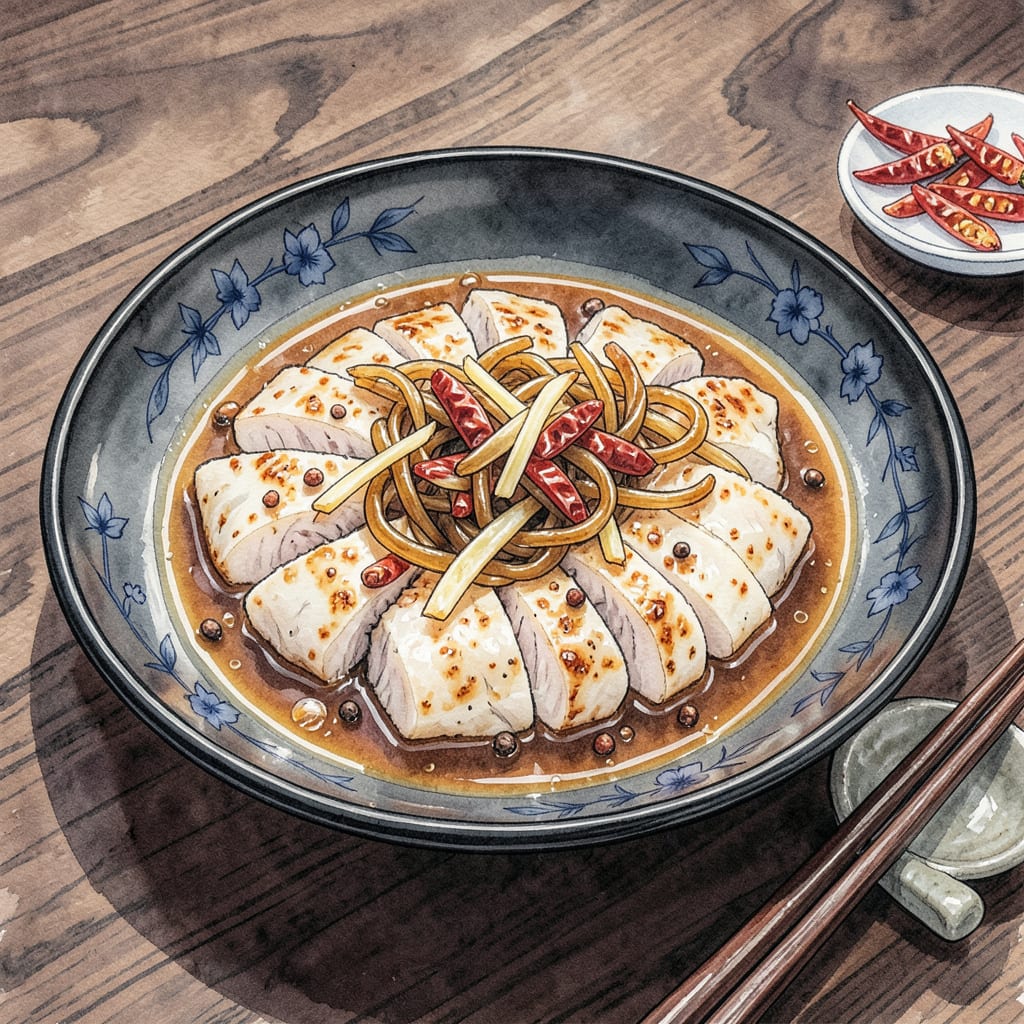
This Chinese sauerkraut fish delivers the perfect balance of tangy, spicy, and savory flavors—all in 30 minutes. The dish transforms simple ingredients into a deeply comforting meal, where tender fish absorbs the bold, fermented notes of sauerkraut while aromatic ginger and garlic build layers of complexity.
The key is braising the fish just until flaky, allowing the sauerkraut’s sourness to mellow into the broth. Serve over steamed rice to soak up every drop of the rich, aromatic sauce. This recipe proves that authentic Chinese home cooking can be both quick and deeply satisfying.
Ingredients for Chinese Sauerkraut Fish
Fresh fish, fermented sauerkraut, and aromatic spices create this deeply flavorful Chinese comfort dish in under 30 minutes.
| Ingredient | Amount | Notes |
|---|---|---|
| White Fish Fillets 🐟 | 1 ½ lb | Cod or tilapia preferred, cut into 2-inch pieces |
| Chinese Sauerkraut 🥬 | 2 cups | Rinsed and drained (suan cai) |
| Fresh Ginger 🌿 | 1 ½ tbsp | Julienned or thinly sliced |
| Garlic Cloves 🧄 | 5 cloves | Thinly sliced or minced |
| Dried Red Chilies 🌶️ | 4 whole | Seeds removed for milder heat |
| Sichuan Peppercorns 🌿 | 1 tsp | Lightly crushed (optional for numbing spice) |
| Light Soy Sauce 💧 | 2 tbsp | Low-sodium preferred for balance |
| Shaoxing Wine 🍶 | 2 tbsp | Dry sherry as substitute |
| Rock Sugar 🍬 | 1 tsp | Or substitute granulated sugar |
| Vegetable Oil 🫒 | 3 tbsp | High smoke point for frying |
| Green Onions 🧅 | 3 whole | Cut into 2-inch sections |
| Cilantro 🌿 | ¼ cup | Roughly chopped for garnish |
| Chicken Stock 🍲 | 1 ½ cups | Low-sodium or homemade preferred |
| Cornstarch 🌾 | 1 tbsp | Mixed with 1 tbsp water for slurry |
| Steamed Jasmine Rice 🍚 | 2 cups | Cooked, for serving |
[recipe_ingredient_scaler]
The fish selection is critical for texture. Cod or tilapia hold up well during braising—avoid delicate fish like sole. For authentic flavor, Chinese sauerkraut (suan cai) is essential; find it at Asian markets or online retailers like Weee!. The ginger and garlic should be fresh for optimal aroma, while Sichuan peppercorns (available at specialty stores) add the signature numbing spice. Use light soy sauce for seasoning without overpowering the broth’s delicate balance.
No Shaoxing wine? Dry sherry works in a pinch. For a vegetarian version, swap fish for extra-firm tofu (press and cube first). If sauerkraut is too sour, rinse it briefly before using. The chilies can be adjusted—remove seeds for milder heat or add chili oil for extra kick. Rock sugar balances acidity; granulated sugar is fine but less traditional. The cornstarch slurry is non-negotiable for that glossy, clinging sauce.
Prep the sauerkraut and aromatics ahead—store separately in the fridge for up to 3 days. The dish reheats well but loses some fish texture; consume within 2 days for best results. Freezing isn’t recommended. For efficiency, measure all ingredients before starting—the cooking process moves quickly once the fish hits the pan.
Why You’ll Love This Recipe
- One-Pan Magic: I love that this comes together in a single skillet—just sear the fish, toss in the sauerkraut with ginger and garlic, and let it simmer. No fancy techniques, no mountain of dishes.
- That Umami Punch: The sauerkraut’s tangy funk with the crispy fish skin is next-level. Add those dried chilies for heat, and honestly? I’ve caught myself sneaking bites straight from the pan.
- Weeknight Lifesaver: It’s my go-to when I need dinner fast (25 minutes, start to finish). Leftovers? Even better the next day over rice or noodles—if there *are* leftovers.
- Budget-Friendly Luxury: White fish fillets stretch further than you’d think, and a jar of Chinese sauerkraut lasts for multiple meals. Between us, it tastes like a restaurant dish but costs half as much.
Step-by-Step Instructions for Chinese Sauerkraut Fish
This straightforward method delivers perfectly balanced flavors with minimal effort and maximum comfort.
Step 1: Prepare the Aromatics and Fish
Begin by patting the 1.5 lb white fish fillets completely dry with paper towels. Cut them into 2-inch pieces and set aside. This ensures even cooking and prevents the fish from breaking apart during cooking. The uniform size guarantees all pieces finish at the same time.
Next, prepare your aromatics. Thinly slice the 5 cloves garlic cloves and julienne the 1.5 tbsp fresh ginger. Cut the 3 whole green onions into 2-inch sections. Lightly crush the 1 tsp Sichuan peppercorns if using, and remove seeds from the 4 whole dried red chilies for milder heat. Having everything prepped before cooking makes the process smoother.
Step 2: Bloom the Spices and Aromatics
Heat the 3 tbsp vegetable oil in a wok or large skillet over medium-high heat until shimmering. Add the dried red chilies and Sichuan peppercorns, stirring constantly for 30 seconds until fragrant but not burned. Immediately add the garlic, ginger, and white parts of the green onions.
Stir-fry for 1-2 minutes until the garlic turns light golden brown and the ginger softens slightly. Be careful not to let the garlic burn, as it will turn bitter. The aroma should be intense and fragrant at this stage, indicating the spices have properly bloomed and released their essential oils.
Step 3: Cook the Sauerkraut and Fish
Add the 2 cups Chinese sauerkraut to the wok, stirring to combine with the aromatics. Cook for 2-3 minutes until the sauerkraut softens slightly and absorbs some of the oil. The color will deepen slightly, and the volume will reduce by about one-third.
Pour in the 1.5 cups chicken stock, 2 tbsp light soy sauce, 2 tbsp Shaoxing wine, and 1 tsp rock sugar. Bring to a gentle simmer, then carefully add the fish pieces in a single layer. Cook for 3-4 minutes until the fish turns opaque and flakes easily with a fork. Avoid stirring vigorously to prevent breaking the fillets.
Step 4: Thicken the Sauce and Finish
Mix the 1 tbsp cornstarch with 1 tbsp water to create a slurry. Slowly drizzle this into the simmering liquid while gently stirring. The sauce will thicken within 30-60 seconds, coating the back of a spoon lightly. This creates a velvety texture that clings to the fish and sauerkraut.
Taste and adjust seasoning if needed, though the balance should be perfect. The sauce should have a tangy-spicy complexity with a subtle sweetness from the rock sugar. Remove from heat and stir in the green onion tops and 0.25 cup cilantro, reserving some for garnish.
Step 5: Serve Over Rice
Divide the 2 cups steamed jasmine rice among four bowls. Ladle the fish and sauerkraut mixture over the rice, ensuring each serving gets plenty of the flavorful sauce. The rice absorbs the tangy-spicy broth beautifully, creating a comforting balance of textures and temperatures.
Garnish with the remaining cilantro and green onions. Serve immediately while hot, as the contrast between the warm fish and cool garnishes enhances the overall experience. The dish should have a harmonious blend of tangy, spicy, and umami flavors in every bite.
Storing and Reheating This Recipe
Refrigerator Storage
After cooking, let the sauerkraut fish cool to room temperature—no longer than 2 hours—before transferring to an airtight container. I use glass containers with snap-tight lids to preserve the flavors. The dish keeps beautifully in the fridge for up to 3 days, though the fish texture softens slightly over time. ❄️
Reheating on Stovetop
For best results, reheat gently in a covered skillet over medium-low heat. Add 2-3 tbsp water or chicken stock to prevent drying out. Stir occasionally until heated through—about 5-7 minutes. This method maintains the fish’s tenderness while reviving the sauce’s glossy consistency.
Microwave Reheating
Transfer a single portion to a microwave-safe bowl and cover with a damp paper towel. Heat on 50% power for 2-minute intervals, stirring between each. The fish reheats in about 4-6 minutes total without becoming rubbery. I always check the center temperature reaches 145°F.
Freezing Considerations
Honestly, I don’t recommend freezing this dish. The fish texture becomes mealy upon thawing, and the sauerkraut loses its crisp-tender bite. If you must, freeze without the fish—just the sauerkraut and broth—for up to 1 month. Thaw overnight in the fridge before adding freshly cooked fish.
Sauce Refresh Tip
If the sauce thickens too much during storage, whisk in 1-2 tbsp hot water before reheating. For extra brightness, I sometimes add a splash of Shaoxing wine or a pinch of sugar. The flavors actually deepen after a day, making leftovers even more satisfying.
Serving Leftovers
Reheated sauerkraut fish pairs perfectly with fresh steamed jasmine rice or crisp stir-fried greens. I love garnishing with extra cilantro and a drizzle of chili oil to revive the dish’s vibrant flavors. The tangy-spicy balance shines even brighter the next day. 💛
Nutrition Facts

Trained in classic French technique but raised on slow-cooked ribs and spicy rubs, she blends culinary skill with smoke and soul.
- Recipe for Curried Tofu: Aromatic Spices With Crispy Edges - October 3, 2026
- Recipe for Dumplings in Crock Pot: Fluffy Pillows with Minimal Effort - October 3, 2026
- Recipe For Diced Pork In Slow Cooker: Melt-In-Your-Mouth Tenderness All Day - October 3, 2026