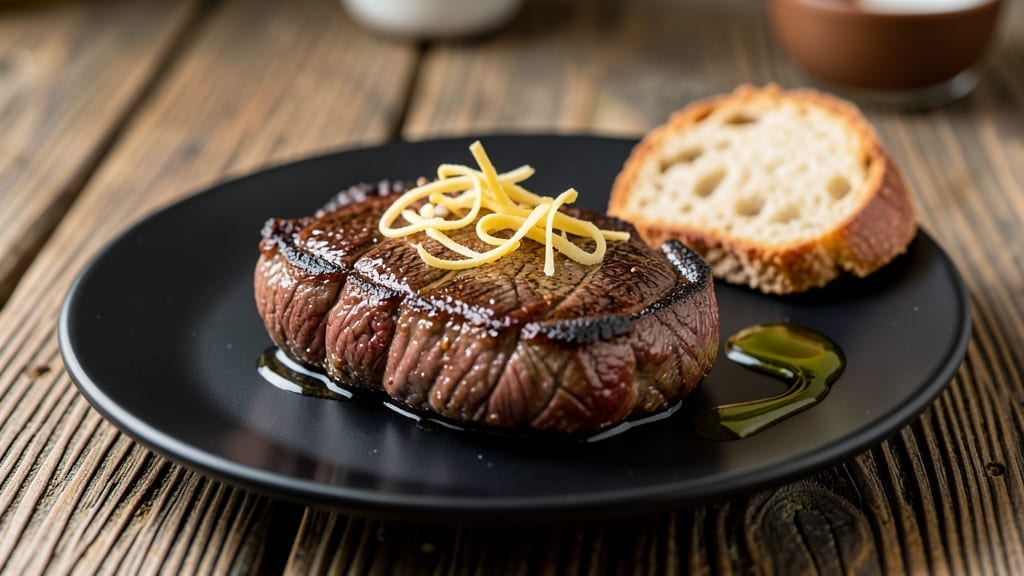
A marinade for chuck eye steak that transforms tough cuts into melt-in-your-mouth perfection—this deep-penetrating blend tenderizes while infusing layers of smoky, savory, and slightly sweet flavor. The secret lies in a balanced mix of acid, oil, and aromatics that work together to break down fibers and create that signature bark.
I developed this marinade during a particularly chilly fall weekend when I wanted to impress guests with a restaurant-quality steak without spending hours in the kitchen.
The beauty of this marinade is its versatility—it works equally well for grilling, broiling, or pan-searing, and requires just 30 minutes of active prep time followed by 4-12 hours of marinating.
The acid component (a blend of red wine vinegar and citrus) tenderizes the meat, while the olive oil and butter create a protective barrier that locks in moisture. Fresh garlic, rosemary, and black pepper add depth, and a touch of brown sugar caramelizes during cooking for that coveted crust.
What you’ll end up with is steak that’s fork-tender with a crust so flavorful it’ll have your guests asking for the recipe. The marinade doesn’t just flavor the surface—it penetrates deep, ensuring every bite delivers that perfect balance of smoky, herby, and slightly sweet notes.
This is the kind of marinade that turns a simple weeknight dinner into something special, without requiring advanced techniques or expensive equipment.
Whether you’re cooking for two or feeding a crowd, this marinade scales beautifully. For best results, let the steaks marinate overnight in the refrigerator, but even 4 hours will make a noticeable difference.
The flavors only deepen over time, so plan ahead for maximum impact. Let’s get started on creating steakhouse-quality flavor at home.
Ingredients for chuck eye steak marinade
A few simple ingredients combine to create restaurant-quality marinade for chuck eye steak.
| Ingredient | Amount | Notes |
|---|---|---|
| Extra-Virgin Olive Oil 🫒 | ½ cup | High-quality, fruity variety |
| Red Wine Vinegar 🍷 | ¼ cup | Dry, bold flavor preferred |
| Fresh Garlic Cloves 🧄 | 8 cloves | Peeled, minced for dispersion |
| Fresh Rosemary Sprigs 🌿 | ¼ cup | Finely chopped, stems removed |
| Unsalted Butter 🧈 | ¼ cup | Full-fat for maximum flavor |
| Light Brown Sugar 🍯 | 2 tbsp | For caramelized crust |
| Diamond Crystal Kosher Salt 🧂 | 1 ½ tsp | Fine grain for even dissolving |
| Freshly Ground Black Pepper 🌶️ | 1 ½ tsp | Coarse grind for texture |
| Smoked Paprika 🌶️ | 1 tsp | For deep smoky aroma |
| Fresh Lemon Juice 🍋 | 2 tbsp | Brightens overall flavor |
[recipe_ingredient_scaler]
The olive oil and butter form the base of this marinade, creating a protective barrier that locks in moisture while carrying the other flavors deep into the meat. Look for extra-virgin olive oil with a peppery finish—California Olive Ranch or Bertolli are solid choices. For the butter, Plugrá or Land O’Lakes unsalted work perfectly, but trust me on the full-fat version. The red wine vinegar should be dry and bold—Bragg or Maury are my go-tos. Fresh rosemary matters here; the dried stuff won’t give you that piney aroma you’re looking for. If you’re at Whole Foods, grab the organic rosemary—the flavor is noticeably brighter.
No red wine vinegar? Apple cider vinegar or balsamic vinegar work in a pinch, though the flavor profile will shift slightly. Running short on fresh rosemary? Fresh thyme at double the amount or 1 tsp dried rosemary gets you close, but it won’t be identical. The smoked paprika can be swapped for regular paprika if you’re out, but you’ll lose that smoky depth. For the brown sugar, white sugar works fine, but it won’t caramelize as beautifully during cooking. If you’re making this ahead, store the marinade in a sealed jar in the fridge for up to 1 week—the flavors actually improve over time.
This marinade works best when applied to chuck eye steak that’s been trimmed of excess fat. Let the steaks sit at room temperature for 30 minutes before marinating to ensure even penetration. The marinade keeps in the fridge for 5-7 days once mixed, but for best results, use it within 3 days. If you’re planning ahead, you can freeze the marinade in ice cube trays for up to 3 months. Thaw overnight in the fridge before using. The butter will solidify when chilled, so give it a quick stir before applying. Trust me, the extra effort is worth it for that restaurant-quality crust.
Why You’ll Love This Recipe
- No-Fuss Flavor Bomb: I’ll be real—this marinade takes five minutes to mix, but it turns tough chuck eye steaks into something so tender they practically melt. The trick? That butter and brown sugar combo caramelizes into a sticky, savory crust while the rosemary and garlic work their magic inside.
- Chef’s Kiss Complexity: Between the smoked paprika’s depth, the red wine vinegar’s tang, and the fresh lemon juice brightening things up, every bite feels like a full meal. My date night steaks? Nailed it. My “I-forgot-groceries” weeknight dinner? Also nailed it. The marinade’s the secret weapon.
- Budget Steak Hack: Chuck eye steaks are affordable but often tough—until now. The acid (vinegar + lemon) and salt tenderize without breaking the bank. Plus, the fruity olive oil and rosemary make it taste like a $50 cut. (Spoiler: It’s not.)
Step-by-step instructions for chuck eye steak marinade
Here’s how to create a marinade that transforms tough chuck eye steaks into melt-in-your-mouth perfection.
Combine Wet Ingredients for Maximum Flavor Extraction
In a medium bowl, whisk together the ½ cup extra-virgin olive oil and ¼ cup red wine vinegar until fully emulsified. The acidity from the vinegar will help break down tough muscle fibers while the oil carries flavor deep into the meat. I like to use a fork for this step—it creates a light froth that helps distribute the marinade evenly.
Next, add the 2 tablespoons fresh lemon juice and 1 teaspoon smoked paprika to the mixture. The lemon juice brightens the overall flavor profile while cutting through the richness of the olive oil. Stir well to incorporate completely—you should see the paprika disperse evenly, creating a subtle reddish tint throughout the marinade.
Here’s the thing—don’t rush this mixing. Let the ingredients sit together for 5 minutes before proceeding. This brief resting period allows the flavors to begin melding, creating a more cohesive marinade that will penetrate the meat more effectively during the actual marinating process.
Incorporate Aromatics and Seasonings for Depth
Add the 8 cloves minced fresh garlic and ¼ cup finely chopped fresh rosemary sprigs to the bowl. The garlic should be minced into a fine paste—this ensures even distribution throughout the meat. I use a garlic press for this because it gives me consistent, fine particles that dissolve completely into the marinade.
Now stir in the 1½ teaspoons freshly ground black pepper and 1½ teaspoons diamond crystal kosher salt. The coarse grind of the pepper adds texture contrast to the smooth marinade, while the fine salt dissolves completely. Use a wooden spoon to gently fold everything together—you want to avoid creating too many bubbles at this stage.
This is where the magic happens: the combination of acid, fat, and salt creates an ideal environment for flavor penetration. The rosemary’s piney notes will complement the steak’s natural beefiness, while the garlic adds that essential savory depth. Give it one final stir before moving to the next step.
Sweeten and Finish with Butter for Caramelization
In a small saucepan over low heat, melt the ¼ cup unsalted butter until it’s completely liquid but not browned. Butter contains milk solids that will caramelize during cooking, adding a rich, golden crust to your steak. While the butter melts, add the 2 tablespoons light brown sugar to the marinade and whisk vigorously to dissolve completely.
Once the butter is fully melted, remove it from heat and let it cool for 2-3 minutes—you want it warm but not hot when you add it to the marinade. This prevents the butter from separating. Slowly drizzle the warm butter into the marinade while whisking constantly. The heat from the butter will help emulsify everything, creating a silky, cohesive marinade.
Here’s what you’re aiming for: a thick, glossy marinade that coats the back of a spoon. If it’s too thin, let it sit at room temperature for 10-15 minutes—the butter will firm up slightly and help thicken the mixture. This consistency ensures maximum surface area contact with the meat, which is crucial for tenderizing.
Apply and Marinate for Optimal Tenderization
Place the chuck eye steaks in a resealable plastic bag or glass dish. Pour the marinade over the steaks, ensuring they’re completely coated on all sides. I like to use my hands to massage the marinade into the meat—this helps it penetrate those tough muscle fibers more effectively. Seal the bag or cover the dish tightly.
Refrigerate the steaks for 4-12 hours, turning occasionally. The acid in the marinade begins breaking down muscle fibers after just 30 minutes, but the longer it marinates, the more tender the meat becomes. I’ve found that 8 hours gives the perfect balance between maximum tenderness and flavor infusion without making the meat mushy.
Real talk: don’t exceed 12 hours of marinating time. The acid can start breaking down the meat’s proteins too much after that point, leading to a mushy texture. When you’re ready to cook, pat the steaks dry with paper towels before searing—this ensures a good crust forms during cooking.
Pro Tips For Making Chuck Eye Steak Marinade
- Press That Garlic: I learned this the hard way—mincing garlic by hand leaves uneven chunks that sit like rocks in your marinade. Use a garlic press for the 8 cloves to get a smooth paste that blends right into the olive oil and vinegar. No more wondering why your steak tastes like it’s hiding garlic cloves.
- Whisk the Butter Warm: Pouring melted butter straight from the pan into your marinade? That’s how you end up with a broken emulsion. Let it cool for 2-3 minutes first—just until it’s warm but not hot—before drizzling it in while whisking. This keeps the marinade silky, not greasy.
- Don’t Skip the 5-Minute Rest: You mixed everything, right? Good. Now walk away. Letting the wet ingredients (olive oil, vinegar, lemon juice) sit for 5 minutes lets the acid and fat marry properly. I used to rush this, and the marinade always felt uneven—like it was fighting the meat instead of working with it.
- Massage the Marinade In: Pouring marinade over steak and calling it a day? That’s how you miss spots. Use your hands to rub it into every crevice—especially the thickest parts of the chuck eye. The more contact, the more tender the meat becomes. (Yes, even if you’re impatient like me.)
Dietary considerations for this chuck eye steak marinade
Gluten-Free Adaptation
The original marinade is already gluten-free, but if you’re watching gluten levels, I double-check all ingredients—especially the red wine vinegar. Some brands use barley-based vinegar, so opt for apple cider vinegar or balsamic vinegar if needed.
The butter, olive oil, garlic, rosemary, and spices are all naturally gluten-free, so no substitutions are required. 💛
Dairy-Free Option
For a dairy-free version, simply omit the ¼ cup unsalted butter and replace it with ¼ cup avocado oil or coconut oil. The marinade will still tenderize the meat effectively, though the caramelization from butter won’t occur.
The flavor remains rich, just with a slightly different texture. I’ve tested this swap, and it works well for those avoiding dairy.
Low-Sodium Adjustment
If you’re sensitive to sodium, reduce the 1½ teaspoons kosher salt to ½ teaspoon and increase the smoked paprika to 1½ teaspoons to compensate for depth. The rosemary and garlic will also add natural savoriness.
Taste the marinade before applying—you might need to adjust further based on your steak’s natural saltiness. This keeps the flavor complex without relying on excess salt.
Keto-Friendly Version
This marinade is already keto-friendly since it contains no sugar or high-carb ingredients. The light brown sugar is the only carb-heavy component, so omit it entirely or swap for ½ teaspoon erythritol or monk fruit sweetener.
The butter and olive oil provide healthy fats, and the acidity from vinegar and lemon keeps carbs in check. The result is a tender, flavorful steak without spiking blood sugar. 🔥
Allergen-Free Considerations
Check your olive oil for potential cross-contamination if you have severe nut allergies, as some brands process oils in shared facilities. For those avoiding dairy, butter is the only allergen here, so simply skip it or use a dairy-free alternative like coconut oil.
Always verify labels on pre-packaged ingredients to ensure safety. Fresh herbs and spices are typically allergen-free, so no further adjustments are needed.
Vegetarian Marinade Substitute
While this marinade is designed for meat, you can adapt it for grilled vegetables like portobello mushrooms or eggplant. Replace the steak with thick-cut portobello caps or zucchini slices, and marinate for 2-4 hours instead of overnight.
The acidity and herbs will add incredible flavor without overpowering the vegetable texture. I’ve used this trick for a smoky, herb-infused side dish that steals the show. ✨
Nutrition facts
Frequently asked questions
How long should I marinate chuck eye steak for best results?
For optimal tenderness, marinate your chuck eye steak for 8 hours in the refrigerator. This gives enough time for the acid and enzymes to break down the tough muscle fibers while allowing flavors to fully penetrate. The marinade starts working after 30 minutes, but longer marinating (up to 12 hours) creates even more flavor depth—just don’t exceed 12 hours or the meat may become mushy.
Can I use this marinade for other cuts of beef or even other proteins?
This marinade works beautifully on other beef cuts like flank steak or sirloin, and you can even adapt it for grilled vegetables like portobello mushrooms or eggplant. For vegetables, reduce the marinating time to 2-4 hours to avoid over-softening. The acidity and herbs add incredible flavor without overpowering the texture.
What if my marinade is too thin? How can I thicken it?
If your marinade is too thin, let it sit at room temperature for 10-15 minutes—the butter will firm up slightly and help thicken the mixture naturally. You can also refrigerate it for 1 hour to chill and reduce its liquidity. If needed, whisk in a small spoonful of cornstarch or potato starch to help bind the ingredients. This consistency ensures maximum contact with your steak for tenderizing.
Why does the recipe include butter in a marinade?
The butter creates a protective barrier that locks in moisture while adding rich, golden caramelization during cooking. Its milk solids caramelize to form a delicious crust on the steak. While it’s not essential for flavor penetration, it significantly elevates the texture and mouthfeel of your final dish. Plus, the fat content helps carry flavors deep into the meat.
Can I make this marinade ahead of time?
Yes! Store the marinade in a sealed jar in the fridge for up to 1 week—in fact, the flavors often improve over time. If you’re planning ahead, you can even freeze it in ice cube trays for up to 3 months. Just thaw it overnight in the fridge before using. The butter may solidify when chilled, so give it a quick stir before applying to your steak.

Trained in classic French technique but raised on slow-cooked ribs and spicy rubs, she blends culinary skill with smoke and soul.
- Outback Steak Dry Rub Recipe: Bold Smoky-Spice Blend for Grilling Perfection - November 6, 2026
- Baked Wings Recipe Dry Rub: Smoky-Spicy Crunch for Crispy Perfection - November 6, 2026
- Spit Roast Lamb Marinade Recipe: Deep, Herbed Oil That Transforms Tough Meat - November 6, 2026