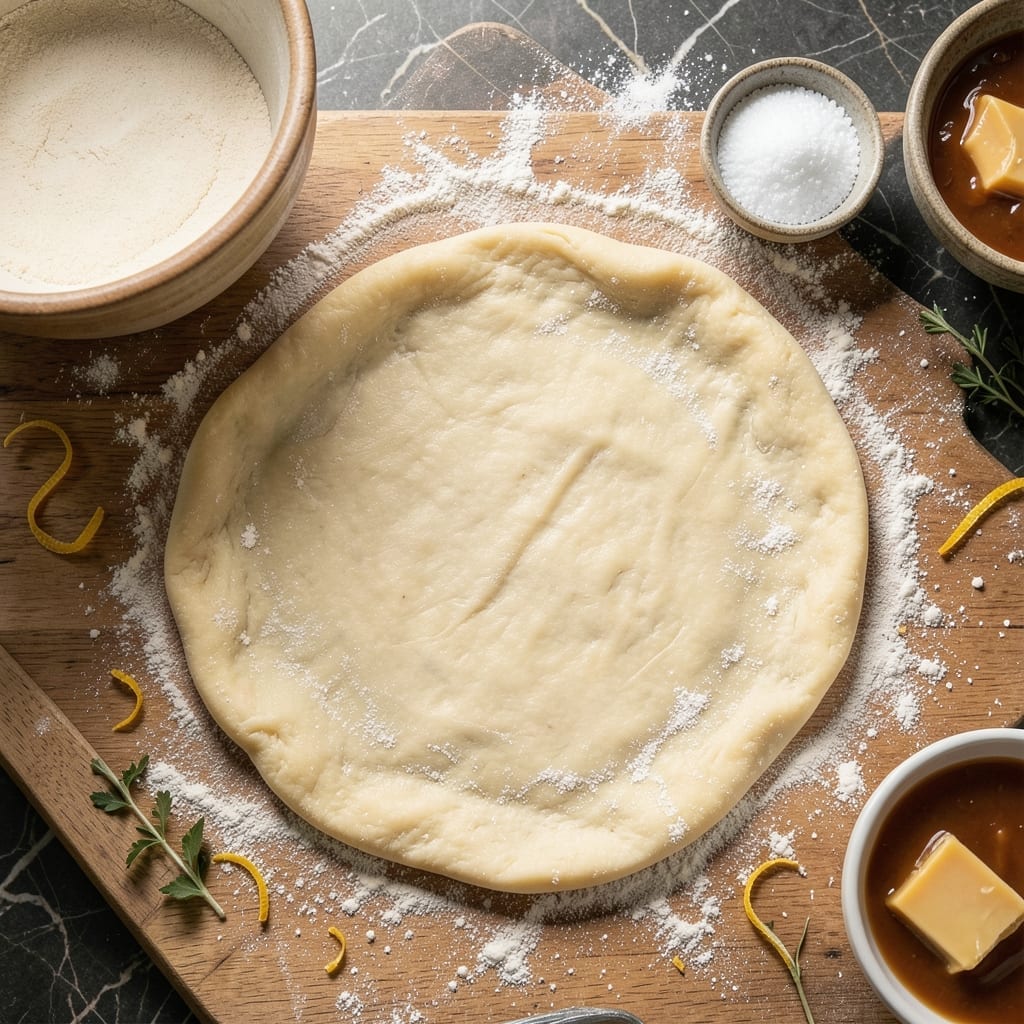
This crescent dough sheet recipe delivers flaky layers that elevate any meal from breakfast to dinner. I developed this method to create a versatile base that works for sweet or savory dishes.
The secret lies in proper handling of the dough to maintain those distinctive layers that puff beautifully during baking. With just a few simple techniques, you’ll achieve professional-quality results every time.
Whether you’re making appetizers, main courses, or desserts, this dough adapts perfectly. The golden, buttery layers provide the perfect foundation for your favorite fillings and toppings.
Ready in under an hour, this recipe proves that homemade flaky pastry doesn’t require all-day effort. The results speak for themselves.
Ingredients for Crescent Dough Sheet
Nine simple ingredients create buttery, flaky layers ready for any filling you imagine.
| Ingredient | Amount | Notes |
|---|---|---|
| All-Purpose Flour 🌾 | 2 ½ cups | Plus extra for dusting |
| Unsalted Butter 🧈 | 1 cup | Cold, cut into small cubes |
| Sour Cream 🥛 | ½ cup | Full-fat for flakiness |
| Baking Powder 🧂 | 1 tbsp | Ensures proper rise |
| Granulated Sugar 🍚 | 1 tbsp | Balances the flavor |
| Salt 🧂 | 1 tsp | Fine sea salt preferred |
| Large Egg 🥚 | 1 whole | Lightly beaten for binding |
| Ice Water 💧 | ¼ cup | Plus 1 tbsp as needed |
| Heavy Cream 🥛 | 2 tbsp | For brushing layers |
| Vanilla Extract 🌿 | 1 tsp | Optional for sweet applications |
[recipe_ingredient_scaler]
The butter is everything here. Use high-fat European-style—it has less water, which means flakier layers. Plugrá from Costco is my go-to, but any good-quality unsalted works. Keep it ice cold until you’re ready to use it, and cut it into even cubes so it incorporates evenly. The sour cream adds tenderness—full-fat only (the low-fat stuff has too much moisture).
No sour cream? Full-fat Greek yogurt at the same amount works in a pinch. Out of heavy cream for brushing? Melted butter gives a similar golden finish. If you’re making a sweet version, that vanilla is worth adding, but skip it for savory uses. The flour can be swapped for bread flour if you want slightly more chew, but all-purpose gives the perfect tenderness.
The dough keeps in the fridge for 2 days or freezes beautifully for 1 month. Wrap it tightly in plastic, then foil—no one wants freezer burn ruining their layers. Bring it to room temp before rolling, but don’t let it get warm (that’s how you lose the flake).
Why You’ll Love This Recipe
- One-Bowl Wonder: I mix everything right in the same bowl—flour, cold butter, sour cream—no fuss, no extra dishes.
- Buttery, Flaky Layers: The sour cream makes the dough so tender, and the butter gives it that melt-in-your-mouth richness.
- Endless Possibilities: I’ve used this dough for cinnamon rolls, dinner rolls, even quick fruit tarts—it never lets me down.
- Budget-Friendly Staple: All-purpose flour and a little butter stretch far, and I always have these ingredients on hand.
Step-by-Step Instructions for Crescent Dough Sheets
Here’s my tested method for creating layers so flaky they’ll shatter at the touch.
Step 1: Combine Dry Ingredients for Structure
In a large mixing bowl, whisk together the 2.5 cups All-Purpose Flour, 1 tbsp Baking Powder, 1 tbsp Granulated Sugar, and 1 tsp Salt until evenly distributed. This ensures the leavening agent and seasonings are uniformly incorporated throughout the dough.
I always sift my flour first to remove lumps and create a lighter texture. The baking powder provides the lift needed for those airy layers, while the sugar balances the richness of the butter and sour cream.
Step 2: Cut in Cold Butter for Flakiness
Add the 1 cup Unsalted Butter, cold and cut into small cubes, to the dry ingredients. Using a pastry cutter or your fingertips, work the butter into the flour until the mixture resembles coarse crumbs with pea-sized butter pieces remaining. These visible butter chunks are essential—they create the flaky layers as they melt during baking.
Keep your hands light and avoid overworking the dough. The butter must stay cold to prevent it from being absorbed into the flour, which would result in a tough, dense texture instead of the desired flakiness.
Step 3: Incorporate Wet Ingredients to Bind
Create a well in the center of the flour-butter mixture. Add the 0.5 cup Sour Cream, 1 whole Large Egg, 1 tsp Vanilla Extract, and 0.25 cup Ice Water. Use a fork to gently mix the ingredients until the dough just comes together—it will look shaggy, but that’s perfect.
If the dough feels too dry, add up to 1 tbsp of additional ice water. The sour cream adds tenderness and a subtle tang, while the egg provides structure. Be cautious not to overmix; this activates the gluten, making the dough tough.
Step 4: Laminate with Heavy Cream for Extra Layers
Turn the dough out onto a lightly floured surface and shape it into a rectangle. Roll it out to about ½-inch thickness. Fold the dough into thirds like a letter, then turn it 90 degrees and roll out again. Brush the surface lightly with 2 tbsp Heavy Cream before folding and turning once more.
This folding and turning process, called laminating, creates the distinct layers that make crescent dough so flaky. The heavy cream adds richness and helps the layers separate beautifully during baking. Repeat this step once more for maximum flakiness.
Step 5: Chill and Rest for Optimal Texture
Wrap the dough tightly in plastic wrap and refrigerate for at least 1 hour, or up to 24 hours. Chilling relaxes the gluten and solidifies the butter, making the dough easier to roll out and ensuring those perfect, distinct layers bake up properly.
When ready to use, roll the chilled dough into a large rectangle and cut into desired shapes. The rest period is non-negotiable—it prevents the dough from shrinking during baking and guarantees that each bite delivers that signature flaky, buttery texture.
Pro Tips For Making Crescent Dough Sheet
- Chill the Butter: Cut the unsalted butter into small cubes and refrigerate for 15 minutes before mixing—I learned this the hard way after my first few batches turned into dense hockey pucks instead of flaky layers.
- Use Cold Sour Cream: Straight from the fridge, no exceptions. Warm sour cream makes the dough sticky and hard to handle, and the layers won’t separate properly.
- Don’t Overwork the Dough: Mix just until the flour disappears. After over-kneading my early attempts, I finally realized that a light touch keeps the crescents tender and airy.
- Roll Evenly Thin: Aim for ¼-inch thickness when rolling out the dough—any thicker and the centers stay doughy while the edges over-brown.
Best Sauces and Condiments for crescent dough sheet
Sweet Glazes
For breakfast pastries or desserts, I love a simple powdered sugar glaze made with 1 cup powdered sugar and 2-3 tbsp milk. Add ½ tsp vanilla extract for warmth. Drizzle over warm crescents for a bakery-style finish. 💛
Savory Dips
A creamy ranch dip pairs perfectly with cheesy-filled crescents. Mix ½ cup sour cream with 2 tbsp mayonnaise, 1 tsp dried dill, and ½ tsp garlic powder. Serve chilled for dipping.
Herb Butter
Brush baked crescents with melted butter mixed with 1 tbsp chopped fresh parsley and ½ tsp garlic powder. This simple touch adds gourmet flair to any savory application.
Spicy Kick
For a bold twist, combine ¼ cup hot honey with 1 tsp sriracha for a sweet-spicy glaze. Drizzle over crescents filled with ham and cheese. The contrast is incredible.
Cheese Sauce
A cheddar cheese sauce made with 1 cup milk, 2 tbsp flour, and 1 cup shredded cheddar transforms crescents into a decadent appetizer. Stir until smooth and creamy.
Fruit Compote
Simmer 1 cup berries with 2 tbsp sugar and 1 tsp lemon juice for a quick compote. Spoon over sweet crescents for a fresh, fruity topping.
Nutrition Facts
Frequently Asked Questions
Can I make the dough ahead of time?
Yes! Wrap it tightly in plastic and refrigerate for up to 2 days or freeze for 1 month. Thaw overnight in the fridge before using.
Why is my dough tough instead of flaky?
Overworking the dough activates the gluten. Keep mixing to a minimum and ensure butter stays cold. The visible butter chunks create those prized layers.
What can I use instead of sour cream?
Full-fat Greek yogurt works perfectly as a 1:1 substitute. Avoid low-fat versions—they contain too much moisture for proper flakiness.
How thin should I roll the dough?
Aim for ⅛-inch thickness for crispy layers or ¼-inch for softer results. Use minimal flour when rolling to prevent toughness.

Trained in classic French technique but raised on slow-cooked ribs and spicy rubs, she blends culinary skill with smoke and soul.
- Recipe for Curried Tofu: Aromatic Spices With Crispy Edges - October 3, 2026
- Recipe for Dumplings in Crock Pot: Fluffy Pillows with Minimal Effort - October 3, 2026
- Recipe For Diced Pork In Slow Cooker: Melt-In-Your-Mouth Tenderness All Day - October 3, 2026