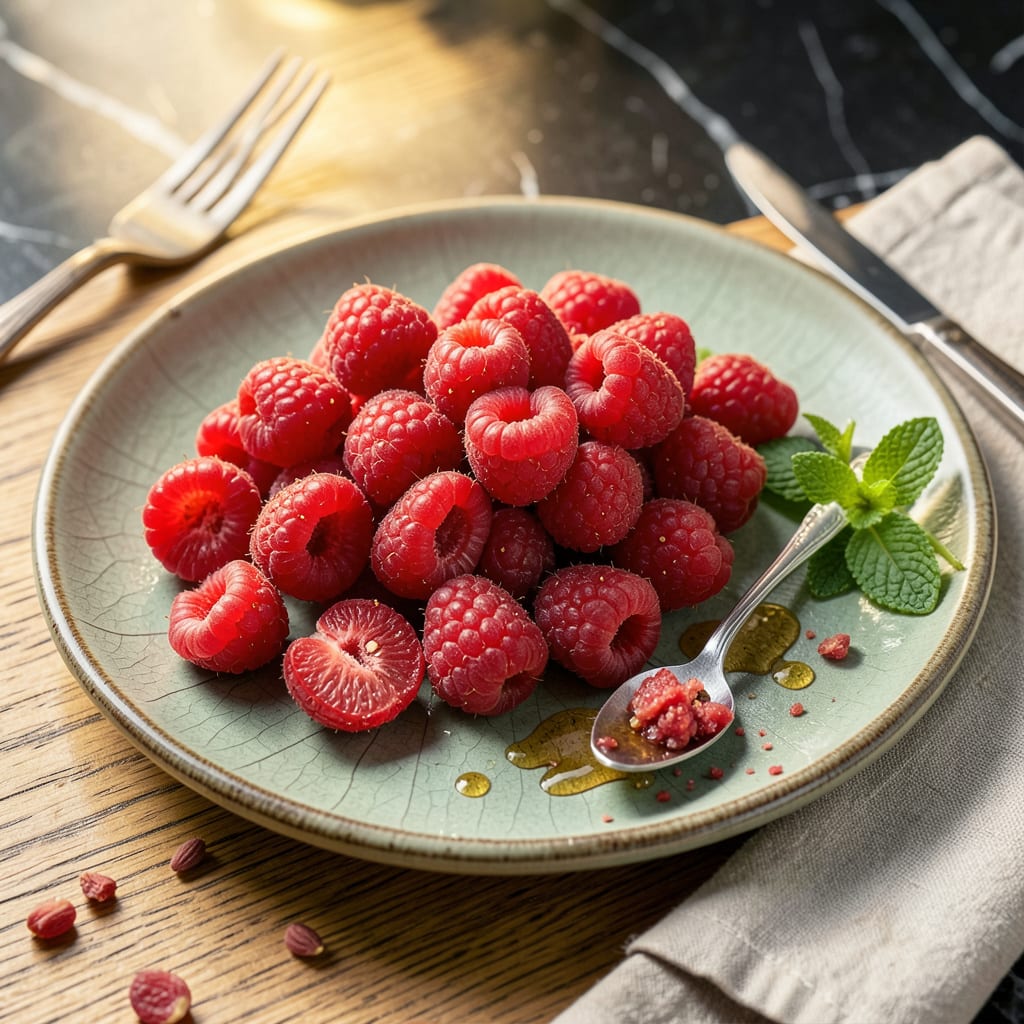
Yes, raspberries contain numerous tiny seeds called drupelets, each encased in a hard shell. These seeds are edible but can be removed if desired for smoother textures in recipes or purees.
These tiny seed clusters actually give raspberries their signature texture and nutritional boost. 🔥 Each drupelet is technically its own miniature fruit, which explains why they separate so easily when picked. I love using them whole in baked goods for added crunch, but for velvety sauces or seedless jams, a fine-mesh sieve becomes your best kitchen ally. The seeds pack fiber and healthy fats, making them worth keeping unless you’re after that ultra-smooth consistency.
What fascinates me most is how these seeds develop—each one forms from a separate ovary, creating that mosaic pattern we recognize. This unique structure also means raspberries are technically “aggregate fruits,” unlike their berry cousins. The seeds’ hard shells protect their nutrients while adding that subtle bite to every mouthful.
💡 In This Article
- Why Raspberries Have So Many Tiny Seeds
- How to Remove Raspberry Seeds for Smooth Recipes
Why Raspberries Have So Many Tiny Seeds
Raspberries aren’t just simple berries—they’re what botanists call aggregate fruits. Each raspberry forms from a single flower with multiple ovaries, and every tiny bump you see is actually an individual drupelet that developed from its own ovary. This explains why a single raspberry contains 100-120 seeds on average, each encased in its own protective shell.
The seeds’ hard exterior protects the delicate inner kernel, which contains the plant’s genetic material for future growth.
The unique structure gives raspberries their signature texture. When you bite into one, you’re experiencing dozens of miniature fruits simultaneously—each drupelet contains its own seed and pulp. This differs dramatically from strawberries (which have seeds on the outside) or blueberries (which contain seeds too small to notice).
The seeds contribute to raspberries’ 20% daily fiber value per cup, making them nutritional powerhouses despite their small size.
What’s fascinating is how these seeds develop. As the flower blooms, each ovary begins growing independently, eventually fusing together to form the familiar raspberry shape. The seeds’ hard shells develop to protect against environmental stressors while allowing the fruit to maintain its structure.
This botanical quirk also explains why raspberries separate so easily from their core—they’re not truly “one” fruit but a cluster of tiny fruits working together.
The seeds’ presence affects more than just texture. They contain healthy fats and antioxidants that complement the fruit’s vitamin C content. When cooking, these seeds can add a pleasant crunch to muffins or a rustic texture to jams.
However, their hardness comes from lignin, the same compound that makes wood rigid, which is why they remain intact even after cooking.
Compare this to blackberries, which also contain drupelets but with softer seeds. Raspberry seeds are noticeably harder because they’ve evolved to survive digestion by animals, ensuring the plant can spread its seeds effectively. This evolutionary advantage is why we still encounter them in every bite today.
The seeds’ resilience also means they retain their nutritional value even after processing or freezing.
For gardeners, these seeds represent the future. Each one contains the potential to grow into a new raspberry plant if given the right conditions. The hard shell protects the seed through harsh winters and animal digestion, ensuring the species’ survival.
This is why raspberries propagate so easily in the wild—their seed structure is perfectly adapted for natural dispersal.
Understanding this structure changes how you work with raspberries in the kitchen. The seeds’ hardness means they won’t break down completely when cooked, which is why seedless raspberry purees require special techniques. Their presence also affects how raspberries behave in baked goods, often creating delightful textural contrasts that elevate simple recipes into something extraordinary.

Trained in classic French technique but raised on slow-cooked ribs and spicy rubs, she blends culinary skill with smoke and soul.
- Hamburgers in Sauce Recipe Crock Pot: Slow-Cooked Savory Delight - October 3, 2026
- Sanjeev Kapoor Egg Biryani Recipe: Fragrant Spiced Rice With Boiled Eggs - October 3, 2026
- Recipe for French Pork Spread Gorton: Savory Gallic Flavors in a Spreadable Delight - October 3, 2026