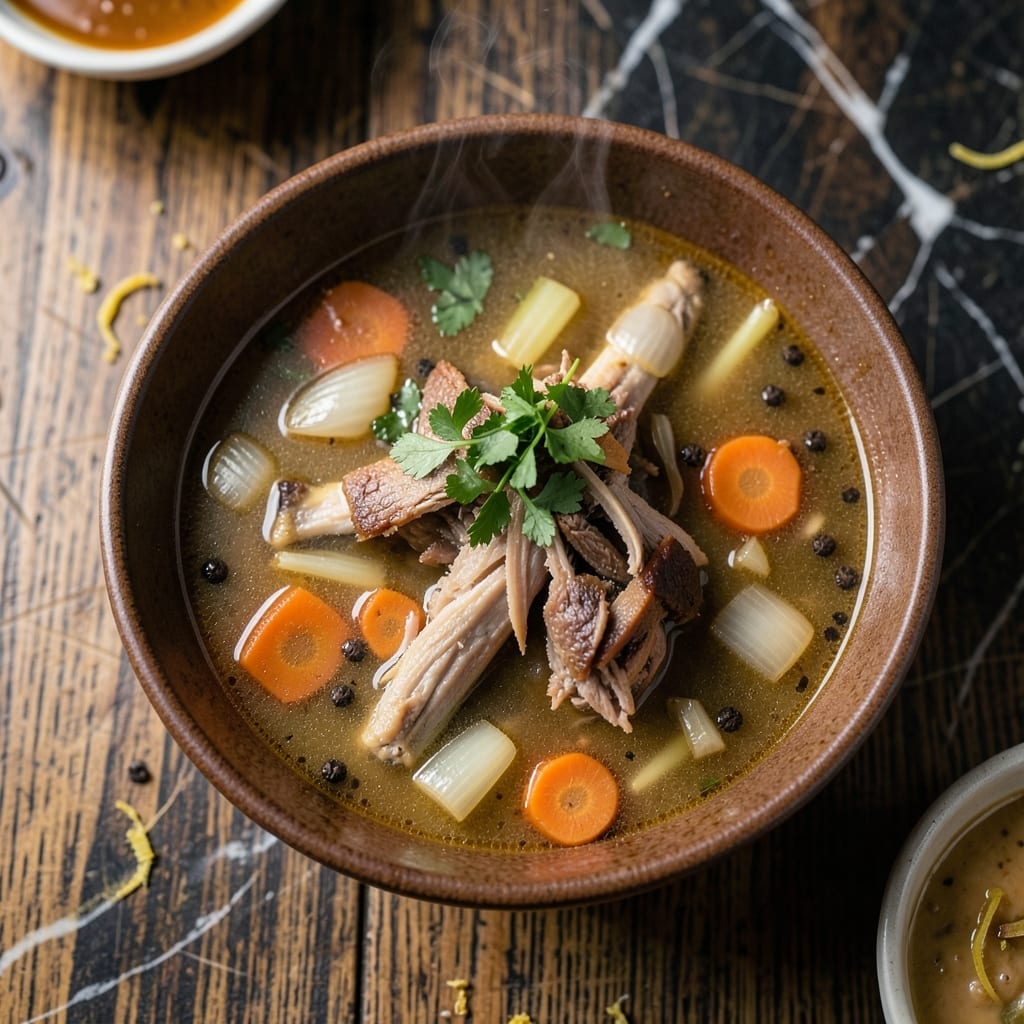
Transform your duck carcass into a rich, flavorful broth that rivals any stock you’ve ever tasted. This method extracts every bit of depth from bones and scraps, creating a base that’s as economical as it is delicious.
The process begins with a slow simmer, allowing the carcass to release its natural gelatin and collagen. Aromatics like onions, carrots, and celery build layers of complexity, while a splash of vinegar helps pull out minerals from the bones.
What emerges is a golden, savory liquid that forms the heart of this soup. Strain, season, and add your choice of vegetables or noodles for a dish that’s both hearty and refined.
No waste, just pure, honest flavor. Here’s how to make it.
Ingredients for Duck Soup Recipe from Carcass
Turn leftover duck bones into a gold-mine broth with pantry staples and veggies.
| Ingredient | Amount | Notes |
|---|---|---|
| Duck Carcass 🦆 | 1 whole | From a cooked duck, meat removed |
| Yellow Onion 🧅 | 1 whole | Quartered, skin on |
| Carrots 🥕 | 2 whole | Roughly chopped |
| Celery Stalks 🌿 | 2 whole | Roughly chopped |
| Garlic Cloves 🧄 | 4 cloves | Smashed, skin on |
| Bay Leaves 🍃 | 2 whole | Dried or fresh |
| Black Peppercorns 🌶️ | 1 tbsp | Whole, for broth depth |
| Apple Cider Vinegar 🍏 | 2 tbsp | Helps extract minerals from bones |
| Cold Water 💧 | 8 cups | Enough to cover carcass |
| Salt 🧂 | 1 tsp | Kosher or sea salt |
| Fresh Thyme Sprigs 🌿 | 4 whole | Optional, for added aroma |
| Egg Noodles 🍜 | 8 oz | For serving in soup |
| Fresh Parsley 🌿 | ¼ cup | Chopped, for garnish |
[recipe_ingredient_scaler]
The duck carcass is key here—look for one with plenty of meat still clinging to the bones (that’s flavor). Whole Foods or local butchers often sell just the carcasses cheap. The onion, carrot, and celery (the holy trinity) add depth, and don’t bother peeling them—just wash and chop roughly. I always keep a stash of carcasses in the freezer for broth days.
No duck carcass? Chicken or turkey bones work in a pinch. Skip the vinegar if you don’t have it, but know it helps pull out the good stuff from the bones. Dried herbs at half the amount can replace fresh thyme. If you’re short on veggies, frozen mirepoix from Trader Joe’s saves the day.
Broth keeps in the fridge for 4-5 days or freezes beautifully for 3 months. Strain and cool before storing—fat rises to the top for easy skimming. I freeze mine in ice cube trays for quick use in sauces or soups.
Why You’ll Love This Recipe
- One Pot Wonder: I just toss the duck carcass, onion, carrots, celery, and garlic into a pot and let it simmer—no fancy steps.
- Rich, Deep Broth: The duck bones create a velvety, umami-packed base that beats any store-bought stock.
- Meal Prep Hero: I make a big batch on Sunday and use it for soups, risottos, or just sipping all week.
- Zero Waste Win: Honestly, using the whole duck this way saves money and nothing goes to waste.
Step-by-Step Instructions for Duck Soup from Carcass
Transform that leftover duck frame into a deeply flavorful broth with almost no effort.
Step 1: Simmer the Duck Carcass with Aromatics
Place the 1 whole Duck Carcass in a large stockpot. Add the 1 whole Yellow Onion, 2 whole Carrots, and 2 whole Celery Stalks—all roughly chopped as specified. Toss in the 4 cloves Garlic Cloves, 2 whole Bay Leaves, and 1 tbsp Black Peppercorns.
Pour in the 8 cups Cold Water and 2 tbsp Apple Cider Vinegar. The vinegar helps draw out every last bit of richness from the bones. Bring to a boil over high heat, then immediately reduce to a gentle simmer. You’ll see small bubbles breaking the surface—this is the perfect pace.
Step 2: Skim and Maintain a Gentle Simmer
As the broth simmers, a layer of foam will rise to the top. Skim this off with a spoon every 10-15 minutes during the first 30 minutes. This keeps your broth clear and clean-flavored. The 4 whole Fresh Thyme Sprigs can go in now if you’re using them—they’ll infuse a subtle herbal note.
Partially cover the pot and maintain that gentle simmer for 2-3 hours. The broth should take on a deep amber color, and the aroma will fill your kitchen with a rich, comforting scent. Resist the urge to crank the heat—this slow process extracts maximum flavor without clouding the broth.
Step 3: Strain and Season the Finished Broth
After simmering, remove the pot from the heat and let it sit for 10 minutes to allow the solids to settle. Carefully strain the broth through a fine-mesh sieve into a clean pot, pressing gently on the solids to extract all the liquid. Discard the spent vegetables and carcass.
Return the strained broth to the stove over medium heat and add the 1 tsp Salt. Taste and adjust the seasoning if needed—remember, you can always add more salt later, but you can’t take it out. The broth should be rich and deeply savory, with a clean finish.
Step 4: Cook the Egg Noodles and Serve
Bring the broth to a rolling boil and add the 8 oz Egg Noodles. Cook according to package directions, usually about 8-10 minutes, until the noodles are tender but still have a slight bite. Stir occasionally to prevent sticking.
Ladle the soup into bowls and garnish each serving with a sprinkle of the 0.25 cup Fresh Parsley. The parsley adds a bright, fresh contrast to the rich broth. Serve immediately while hot—the noodles will continue to absorb the broth as it sits, so this is best enjoyed fresh.
Pro Tips For Making Duck Soup Recipe From Carcass
- Roast the Carcass: Before simmering, roast the duck carcass at 400°F for 20-25 minutes until deeply browned—this caramelizes the bones and adds a rich, meaty depth to your broth that skipping this step just can’t match.
- Skim the Fat: As the soup simmers, a thick layer of duck fat will rise to the top; skim it off with a spoon or fine mesh skimmer every 15-20 minutes to keep the broth clean and prevent a greasy finish.
- Char the Veggies: Toss the onion, carrots, and celery with a little oil and roast them alongside the carcass; charring them first brings out their sweetness and prevents the soup from tasting flat.
- Simmer Low and Slow: Keep the heat at a gentle simmer—just a few bubbles breaking the surface—anything harder and you’ll cloud the broth with impurities; 3-4 hours is the sweet spot for maximum flavor extraction.
Flavor Customization for duck soup recipe from carcass
Asian-Inspired Twist
Add 1 tbsp grated ginger, 3 star anise pods, and 1 cinnamon stick while simmering. Finish with 2 tbsp soy sauce and 1 tbsp sesame oil after straining. Garnish with sliced scallions and cilantro for a pho-like depth. 🌟
Herb-Forward Version
Bundle 4 sprigs rosemary, 6 sprigs parsley stems, and 1 tsp coriander seeds in cheesecloth. Simmer with the carcass, then remove before serving. This brings a French-inspired aromatic complexity to your broth.
Spicy Kick
Drop in 1 dried chipotle pepper or ½ tsp red pepper flakes during the last 30 minutes of simmering. The heat will infuse beautifully without overpowering. I love this for chilly coastal evenings.
Creamy Variation
After straining, whisk in ½ cup heavy cream or coconut milk for a velvety texture. This transforms the soup into a richer, more decadent dish. Perfect for a fancy dinner starter.
Citrus Brightness
Add 1 strip orange peel and 2 strips lemon peel (avoid pith) while cooking. Finish with 1 tbsp fresh lemon juice before serving. The citrus lifts the richness beautifully.
Mushroom Depth
Sauté 8 oz sliced shiitakes in butter until golden, then add to the finished broth. The umami from mushrooms pairs perfectly with duck’s natural richness. I forage wild mushrooms when I can. 💫
Nutrition Facts
Frequently Asked Questions
How long should I simmer the bones?
Simmer the carcass for 2-3 hours on low heat. This slow process extracts maximum gelatin and flavor without making the broth cloudy. Skim foam during the first 30 minutes for clearest results.
Can I use a slow cooker?
Yes! Combine everything in your slow cooker and cook on low for 8-10 hours. The longer time compensates for the lower temperature, yielding a rich, deep broth with minimal effort.
What if my broth is bland?
Roast the carcass and veggies at 400°F for 20 minutes before simmering. This caramelizes the natural sugars, adding depth. Finish with a splash of vinegar or soy sauce to boost flavor.

Trained in classic French technique but raised on slow-cooked ribs and spicy rubs, she blends culinary skill with smoke and soul.
- Recipe for Cut Up Chicken: One-Pan Crispy Bites - October 3, 2026
- Recipe For Oven Baked Haddock: Buttery Crumbs With Zesty Lemon Topping - October 3, 2026
- Recipe For Fried Salmon Patties With Flour: Crispy Golden Crust With Flaky Centers - October 3, 2026