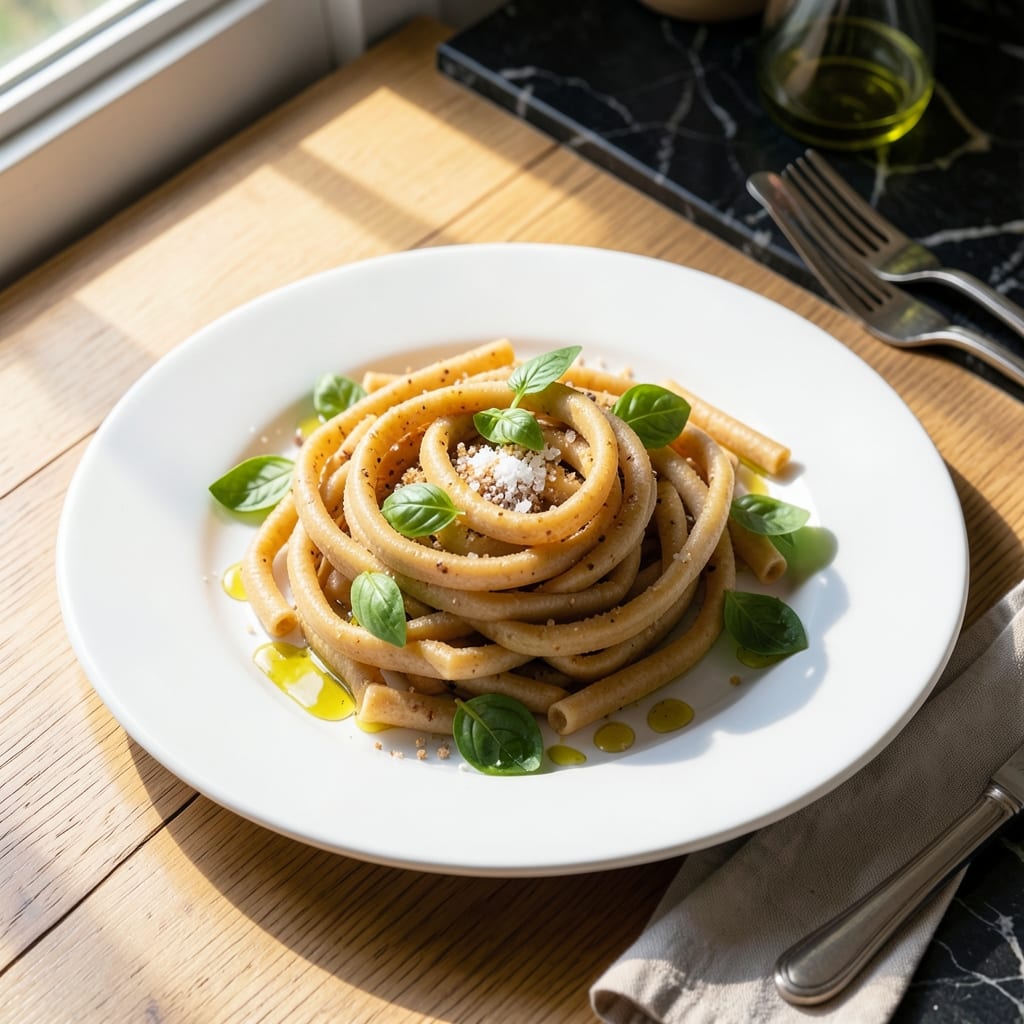
There’s a reason Italian nonnas have been making eggless pasta for generations—this traditional method delivers the perfect al dente bite every time. Durum wheat semolina is the only ingredient you need to create pasta that’s both sturdy and tender.
This recipe relies on a precise ratio of semolina to water, kneaded until smooth and elastic. The dough rests to relax the gluten, making it easier to roll out thinly without cracking or tearing.
Once rolled and cut, the pasta cooks in just 2-3 minutes, absorbing sauce beautifully while maintaining its texture. The result is authentic Italian pasta with the satisfying chew that defines great handmade noodles.
No special equipment is required—just patience and attention to detail. Here’s how to master this classic technique.
Ingredients for Durum Wheat Pasta Recipe No Egg
Just four ingredients create authentic Italian pasta with perfect texture and bite.
| Ingredient | Amount | Notes |
|---|---|---|
| Durum Wheat Semolina 🌾 | 2 cups | Fine grind for smooth texture |
| Water 💧 | ¾ cup | Lukewarm for optimal hydration |
| Sea Salt 🧂 | 1 tsp | Fine grain for even distribution |
| Extra-Virgin Olive Oil 🫒 | 1 tbsp | For dough elasticity and flavor |
[recipe_ingredient_scaler]
The semolina is non-negotiable here. Durum wheat semolina (look for Bob’s Red Mill or King Arthur brands) delivers that signature chew. Grocery store baking aisles usually stock it, but Italian specialty markets have the finest grind. Avoid regular flour—it lacks the protein structure for proper pasta texture. The grind should feel almost powdery between your fingers.
No semolina? All-purpose flour plus vital wheat gluten can work in a pinch (add 1 tbsp per cup of flour), but the texture won’t be identical. Skip the olive oil if you prefer a purist approach—traditional nonnas often use just semolina and water. The water temperature matters less than the ratio: 3 parts semolina to 1 part water by volume is your golden rule.
The dough rests best at room temperature, covered with a damp towel for 30 minutes. Unused semolina keeps in an airtight container for 6-12 months. Fresh pasta cooks immediately or can be dried on a rack for 24-48 hours before storing.
Why You’ll Love This Recipe
- Three Ingredients Only: I just need semolina, water, and a pinch of salt—no eggs, no fuss.
- Nutty Rich Flavor: The durum wheat gives it that deep, toasty taste that store-bought can’t touch.
- Meal Prep Hero: I make a big batch on Sunday and it keeps beautifully for quick lunches all week.
- Pantry Staple Saver: Between us, it costs pennies per serving and still feels like a treat.
Step-by-Step Instructions for Durum Wheat Pasta No Egg
Master this traditional technique for authentic Italian pasta with perfect texture and bite.
Step 1: Form the Dough
On a clean work surface, mound the 2 cups Durum Wheat Semolina and create a well in the center. Pour the 0.75 cup Water and 1 tbsp Extra-Virgin Olive Oil into the well. Use a fork to gradually incorporate the liquid into the semolina, starting from the inner rim of the well.
Once the mixture becomes too stiff for the fork, use your hands to knead it into a cohesive ball. The dough should feel slightly rough at first but will smooth out as you work it. This process activates the gluten for the ideal chewy texture.
Step 2: Knead to Develop Gluten
Knead the dough vigorously for 8-10 minutes by pushing it away with the heel of your hand, then folding it back over itself. The dough is ready when it feels smooth, elastic, and slightly tacky but not sticky. If it feels too dry, add water 1 teaspoon at a time.
Proper kneading is crucial for that authentic al dente bite. You’ll notice the dough becomes more pliable and less likely to crack as the gluten develops. Wrap the finished dough in plastic and let it rest at room temperature for 30 minutes.
Step 3: Roll and Cut the Pasta
Divide the rested dough into 4 equal portions to make it easier to handle. Working with one portion at a time, flatten it with your hands and run it through a pasta machine on the widest setting. Fold the sheet in half and repeat this process 3-4 times to ensure even thickness.
Gradually decrease the machine setting and roll the dough through once at each level until you reach the desired thickness. For most shapes, the second-to-thinnest setting works well. Cut into your preferred shape immediately to prevent drying.
Step 4: Cook to Al Dente Perfection
Bring a large pot of water to a rolling boil and add the 1 tsp Sea Salt. The water should taste like the sea. Add the fresh pasta and cook for 2-3 minutes—fresh pasta cooks much faster than dried.
Begin testing for doneness after 2 minutes. The pasta is ready when it floats to the surface and offers slight resistance when bitten. Drain immediately and toss with your favorite sauce to prevent sticking. Serve immediately for the best texture.
Pro Tips For Making Durum Wheat Pasta Recipe No Egg
- Knead Long Enough: Work the semolina and water for at least 8-10 minutes by hand—any less and the dough stays crumbly and hard to roll. I learned this the hard way after my first three batches fell apart in the pot.
- Use Lukewarm Water: Cold water makes the dough stiff and hard to work with, while hot water can denature the gluten before you even start. Aim for about 100°F—warm to the touch but not hot.
- Skip the Over-Flouring: Dust your surface lightly, but resist the urge to keep adding flour if the dough feels sticky. Too much extra semolina throws off the ratio and gives you dense, dry pasta.
- Rest Before Rolling: Wrap the kneaded dough in plastic and let it sit for 30 minutes at room temp—this relaxes the gluten so it rolls out smooth instead of springing back like a rubber band.
Creative Variations of durum wheat pasta recipe no egg
Whole Wheat Fusion
Replace ½ cup of semolina with fine whole wheat flour for a nuttier flavor and added fiber. The dough may feel slightly drier, so add 1-2 tsp extra water as needed. This variation pairs wonderfully with hearty sauces like ragù. 🌾
Herb-Infused Dough
Add 2 tbsp finely chopped fresh basil or 1 tbsp dried oregano to the dough during kneading. The herbs release their oils, infusing the pasta with subtle aromatic notes. I love this with a simple garlic and olive oil sauce.
Spinach Green Pasta
Blend ½ cup cooked spinach (squeezed completely dry) with the water before mixing. This adds vibrant color and a mild earthy taste. Reduce water by 1-2 tbsp to compensate for the spinach’s moisture. Your kids won’t believe it’s veggie-packed!
Spicy Red Pepper
Mix 1 tbsp smoked paprika or 1 tsp cayenne into the semolina before adding liquids. The spice adds warmth without overpowering. This works especially well for orecchiette shapes that hold bold sauces. 🔥
Lemon Zest Brightness
Add 1 tbsp lemon zest to the dough for a citrusy lift. The brightness cuts through rich sauces like alfredo or carbonara. Use a microplane to get the finest zest without bitterness.
Black Pepper Pasta
Incorporate 1 tbsp coarsely ground black pepper into the semolina before hydrating. This creates a subtle heat that builds with each bite. It’s my go-to for cacio e pepe night.
Nutrition Facts
Frequently Asked Questions
Can I use all-purpose flour instead of semolina?
All-purpose flour will work but the texture won’t be the same. For best results, add 1 tbsp vital wheat gluten per cup of flour. Semolina’s high protein content is key for that authentic chew.
Why does the dough need to rest?
Resting relaxes the gluten strands, making the dough easier to roll thinly without springing back. Without this 30-minute rest, you’ll struggle to achieve smooth, even sheets.
How thin should I roll the pasta?
For most shapes, aim for the second-to-thinnest setting on your pasta machine. The dough should be nearly translucent. Thicker sheets work well for pappardelle or rustic cuts.
Can I make this without a pasta machine?
Use a rolling pin to roll the dough as thin as possible on a lightly floured surface. It’ll take more muscle but produces equally delicious results. Cut shapes with a sharp knife.

Trained in classic French technique but raised on slow-cooked ribs and spicy rubs, she blends culinary skill with smoke and soul.
- Energy Ball Recipe Peanut Butter: No-Bake Protein-Packed Bites - September 24, 2026
- Jerk Chicken Recipe Crock Pot: Slow-Cooked Caribbean Heat - September 24, 2026
- Japanese Curry Recipe Kenji: Chef-Tested Rich and Velvety Sauce - September 24, 2026