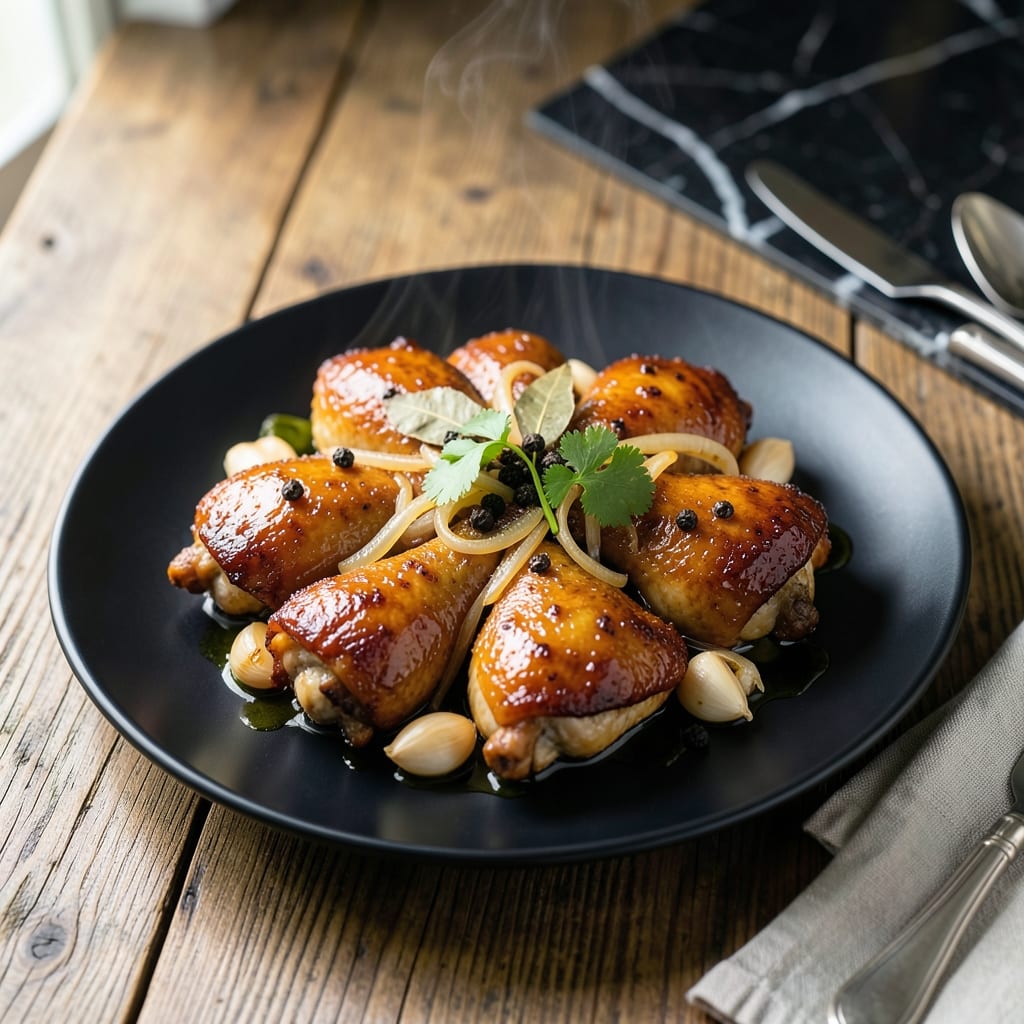
This Filipino adobo-style chicken thighs recipe transforms simple ingredients into a deeply flavorful dish with minimal effort. The combination of vinegar, soy sauce, and garlic creates a perfect balance of tangy and savory notes.
I developed this method after years of testing different ratios, and the key is letting the chicken marinate in the sauce before cooking. The result is tender meat with a rich, glossy coating that clings to every bite.
The cooking process is straightforward: sear the thighs, then simmer until the sauce reduces to a thick, aromatic glaze. The vinegar mellows during cooking, leaving behind its bright acidity.
Serve with steamed rice to soak up the incredible sauce. This dish brings authentic Filipino flavors to your table with confidence.
Ingredients for Filipino Recipe for Chicken Thighs
Simple pantry staples and fresh aromatics create this deeply flavorful Filipino classic with ease.
| Ingredient | Amount | Notes |
|---|---|---|
| Chicken Thighs 🍗 | 2 lb | Bone-in, skin-on preferred |
| Soy Sauce 🥫 | ½ cup | Regular or low-sodium |
| White Vinegar 💧 | ½ cup | Cane or distilled white |
| Garlic Cloves 🧄 | 8 cloves | Peeled and minced |
| Bay Leaves 🍃 | 3 pieces | Dried, whole leaves |
| Black Peppercorns 🌶️ | 1 tsp | Freshly cracked preferred |
| Brown Sugar 🍚 | 2 tbsp | Light or dark variety |
| Olive Oil 🫒 | 2 tbsp | For searing chicken |
| Onion 🧅 | 1 whole | Medium, sliced thin |
| Water 💧 | ½ cup | For simmering sauce |
| Salt 🧂 | 1 tsp | Adjust to taste |
[recipe_ingredient_scaler]
The chicken thighs are key here. Bone-in, skin-on gives the richest flavor and stays juicy during cooking. I source mine from Whole Foods or local Asian markets—they often have better quality at competitive prices. Look for thighs with good fat marbling. The soy sauce should be Filipino brands like Silver Swan or Datu Puti if available, but any standard soy sauce works.
No white vinegar? Apple cider vinegar or rice vinegar both work, though the flavor will shift slightly. Out of bay leaves? Skip it—it’s traditional but not deal-breaking. For a deeper sauce, add 1 tbsp of oyster sauce (check for vegetarian if needed). The brown sugar can be swapped for coconut sugar or honey. If using boneless thighs, reduce cooking time by about 5 minutes.
This keeps beautifully. Leftovers taste even better the next day once flavors meld. Store in an airtight container for up to 4 days in the fridge. Freezes well for up to 3 months—just thaw overnight before reheating. Always reheat gently to keep the meat tender.
Why You’ll Love This Recipe
- One Pan Simplicity: I toss everything in a single pot, let it simmer, and the soy-vinegar combo does all the work.
- Umami Explosion: The garlic and bay leaves soak into the thighs, creating this deep, tangy-savory flavor that’s honestly addictive.
- Feeds Everyone: Between us, this is my go-to for potlucks—equally great hot or at room temp.
- Budget Stretcher: Chicken thighs stay juicy and cheap, and the sauce doubles as a rice topping the next day.
Step-by-Step Instructions for Adobo-Style Chicken Thighs
This classic method delivers tender chicken with a rich, tangy sauce that deepens in flavor.
Step 1: Sear the Chicken Thighs
Heat the 2 tbsp Olive Oil in a large skillet over medium-high heat. Pat the 2 lb Chicken Thighs dry with paper towels and season both sides with the 1 tsp Salt and half of the 1 tsp Black Peppercorns, freshly cracked.
Working in batches if needed, sear the chicken for 5-6 minutes per side until the skin is golden brown and crispy. Don’t overcrowd the pan—this ensures even browning and prevents steaming. Transfer the seared thighs to a plate and set aside.
Step 2: Sauté Aromatics and Build the Base
In the same skillet, reduce heat to medium and add the 1 whole Onion, sliced thin. Sauté for 3-4 minutes until softened and translucent. Add the 8 cloves Garlic Cloves, minced, and cook for 1 minute until fragrant—don’t let it burn.
Pour in the 0.5 cup Soy Sauce, 0.5 cup White Vinegar, 2 tbsp Brown Sugar, and remaining black peppercorns. Stir in the 3 pieces Bay Leaves and 0.5 cup Water. Simmer for 2-3 minutes to meld the flavors.
Step 3: Braise the Chicken Until Tender
Return the chicken to the skillet, skin-side up, along with any accumulated juices. Cover and reduce heat to low. Let it braise for 30-35 minutes, turning the thighs halfway through, until the meat is fork-tender and the sauce has thickened slightly.
Check the sauce consistency—if it’s too thin, simmer uncovered for 5 minutes to reduce. The aroma should be deeply savory with a tangy brightness. Adjust seasoning if needed, though the soy sauce typically provides enough salt.
Step 4: Rest and Serve
Remove the bay leaves and discard. Transfer the chicken to a serving dish and spoon the sauce generously over the top. Let it rest for 5 minutes—this allows the juices to redistribute and the flavors to settle.
Serve hot with steamed rice to soak up the rich, tangy sauce. The chicken should be fall-off-the-bone tender, and the sauce should coat each piece with a glossy, deeply flavorful sheen.
Pro Tips For Making Filipino Recipe For Chicken Thighs
- Marinate Overnight: I learned this the hard way—soaking the chicken thighs in soy sauce, vinegar, and crushed garlic for at least 4 hours (or overnight) lets the flavors sink deep, so every bite tastes rich, not just the surface.
- Sear Then Simmer: Start with high heat to brown the thighs in the marinade, then drop to low and cover for 25 minutes—this keeps the meat tender while the sauce reduces into a glossy glaze.
- Don’t Skip Bay Leaves: Sounds minor, but two dried bay leaves in the simmering sauce add a subtle earthy depth that’s classic in Filipino adobo; skip them and the dish tastes flat.
- Reduce the Sauce: After the chicken is cooked, crank the heat to medium and let the sauce thicken for 3–4 minutes—this turns the liquid into a sticky, flavor-packed coat for the thighs.
Common Mistakes When Making Perfect Results
Overcrowding the Pan
I see this all the time: trying to sear all 2 lb Chicken Thighs at once in a small pan. This steams the meat instead of browning it. Work in batches to give each piece space for that crispy skin. 🔥
Skipping the Sear
Don’t rush straight to braising. Searing builds flavor through the Maillard reaction. Those 5-6 minutes per side create a rich foundation for your sauce. I always hear the sizzle before adding aromatics.
Uneven Cooking
Bone-in thighs need consistent heat. Maintain low heat during braising to prevent dry edges while waiting for the center to reach fork-tender perfection. Turn them halfway through the 30-35 minutes.
Vinegar Overload
The 0.5 cup White Vinegar mellows during cooking, but too much upfront creates an harsh flavor. If you’re sensitive to acidity, start with ⅓ cup and adjust. The sauce should be tangy, not puckering.
Neglecting the Sauce
If your sauce is thin, simmer uncovered for 5 minutes to reduce. The bay leaves and black peppercorns need time to infuse their essence. I often taste and adjust the brown sugar balance at this stage.
Remember, the sauce should coat the back of a spoon before serving. 💡
Nutrition Facts
Frequently Asked Questions
Can I use boneless chicken thighs instead?
Yes, but reduce braising time to 20-25 minutes. Boneless cooks faster and may dry out if overdone. They’ll still absorb the adobo flavors beautifully.
What if I don’t have bay leaves?
You can skip them—the dish will still taste great. For depth, try adding 1 tsp dried thyme or 1 tsp oregano as substitutes. The garlic and vinegar remain the star flavors.
How do I make the sauce thicker?
Simmer uncovered for 5-10 minutes after braising. For a quicker fix, mix 1 tsp cornstarch with water and stir in during the last 2 minutes of cooking.
Can I make this in a slow cooker?
Sear the thighs first, then cook on low for 4-5 hours or high for 2-3 hours. The flavors will develop even more deeply over time.

Trained in classic French technique but raised on slow-cooked ribs and spicy rubs, she blends culinary skill with smoke and soul.
- Recipe For Fried Salmon Patties With Flour: Crispy Golden Crust With Flaky Centers - October 3, 2026
- Meat and Potato Recipe Ideas: Savory Pairings for Hearty Meals - October 3, 2026
- Recipe for Fried Prawns Batter: Ultra-Crispy Golden Shell - October 3, 2026