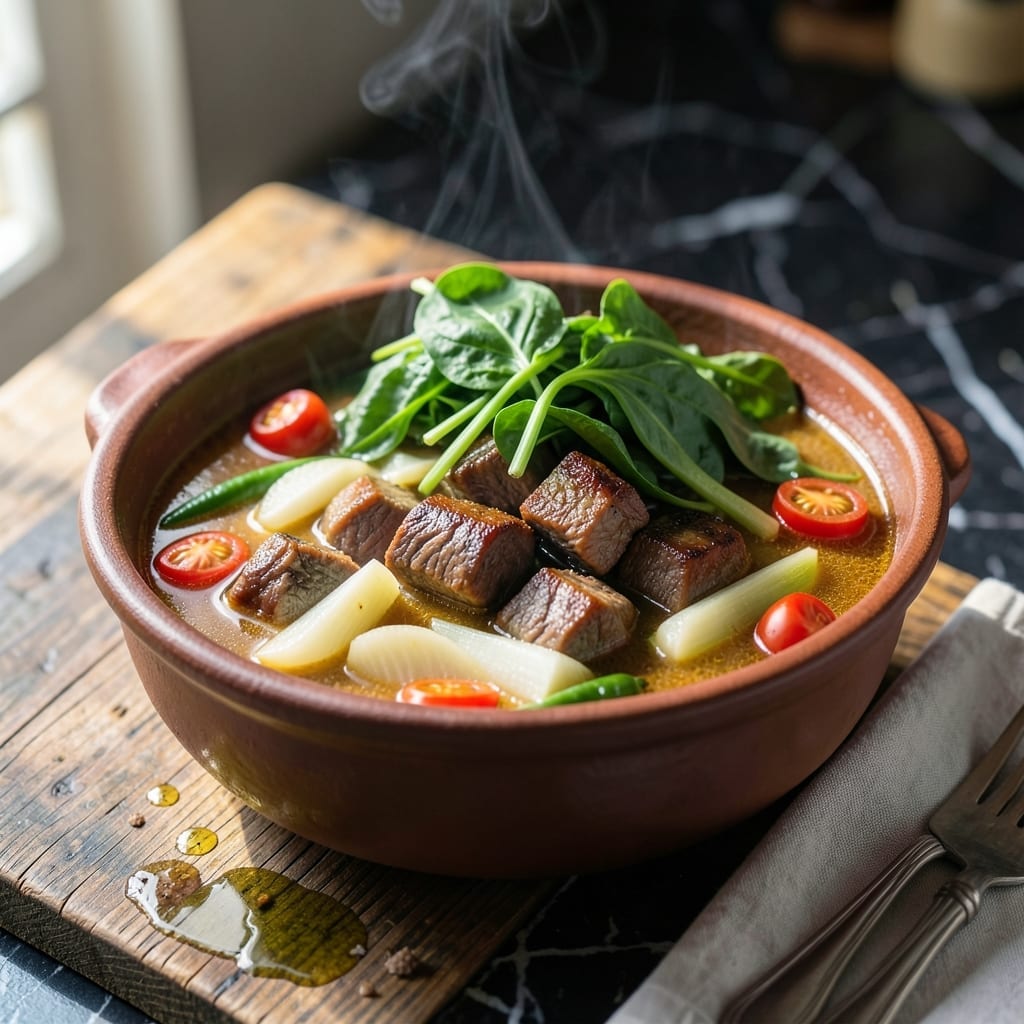
This Filipino beef sinigang is all about that tangy tamarind broth and melt-in-your-mouth meat. I learned the trick is slow cooking until the beef falls apart.
The sour tamarind base cuts through the richness, while veggies soak up every bit of flavor. It’s comfort food that’s bright and satisfying.
Ingredients for Filipino Sinigang Recipe Beef
Tamarind broth, tender beef, and fresh veggies make this dish unforgettable. Simple and bright.
| Ingredient | Amount | Notes |
|---|---|---|
| Beef Chuck Roast 🥩 | 1 ½ lb | Cut into 1-inch cubes, well-marbled |
| Tamarind Soup Base Mix 🍈 | 2 packages | Filipino brand preferred, or tamarind paste |
| Daikon Radish 🥒 | 1 whole | Peeled and sliced into rounds |
| Kangkong Spinach 🥬 | 1 bunch | Or substitute baby spinach |
| Long Green Chili Pepper 🌶️ | 2 pieces | Optional for heat, left whole |
| Tomatoes 🍅 | 2 whole | Medium, quartered |
| Red Onion 🧅 | 1 whole | Sliced into wedges |
| Eggplant 🍆 | 1 whole | Cut into chunks, optional |
| Okra 🌿 | 4 pieces | Trimmed, optional |
| Water 💧 | 8 cups | For broth, adjust to preference |
| Fish Sauce 🐟 | 2 tbsp | Patis, or soy sauce for vegetarian |
| Salt 🧂 | 1 tsp | Adjust to taste |
[recipe_ingredient_scaler]
The beef is everything here. Chuck roast breaks down beautifully—avoid lean cuts like sirloin (they stay tough). Look for bright red meat with plenty of marbling at Filipino markets or well-stocked Asian grocery stores. The tamarind soup base mix is non-negotiable for authentic flavor. Mama Sita’s or Knorr are the brands to grab if you’re not using fresh tamarind paste.
No daikon? White radish or even large carrots work in a pinch. Kangkong spinach is traditional but baby spinach or watercress are fine substitutes. For the chili, jalapeños or serranos add similar heat. Vegetarian? Swap the fish sauce for soy sauce or salt—just taste as you go. The key is balancing that sour tamarind with the savory elements.
This tastes even better the next day once the flavors meld. Store leftovers in the fridge for up to 3 days—reheat gently to keep the beef tender. The broth freezes beautifully for 2 months if you want to make a big batch. Just thaw and add fresh veggies.
Why You’ll Love This Recipe
- One Pot Meal: I just toss everything in—beef, tamarind mix, radish—and let it simmer while I set the table.
- Tangy Comfort: That first sip of sour tamarind broth with tender beef and spinach? Pure Filipino soul in a bowl.
- Feeds the Freezer: Honestly, it tastes even better the next day, and the leftovers freeze beautifully for lazy nights.
- Budget Stretcher: A cheap cut like chuck roast turns into something special with daikon and kangkong to bulk it up.
Step-by-Step Instructions for Filipino Sinigang with Beef
This method delivers tender beef in a perfectly balanced tamarind broth every single time.
Step 1: Sear the Beef Chuck Roast Cubes
Heat a large pot over medium-high heat without oil. Add the 1.5 lb Beef Chuck Roast cubes and sear until browned on all sides, about 5-7 minutes total. This step builds a deep, meaty foundation for your broth.
You’ll notice the beef releases its own fat—this is perfect. The cubes should develop a rich, caramelized crust. Don’t rush this; the browning reaction creates complex flavors that define the dish.
Step 2: Build the Broth Base with Aromatics
Pour in the 8 cups Water and add the 2 packages Tamarind Soup Base Mix, stirring until fully dissolved. Add the 1 whole Red Onion sliced into wedges and the 2 whole Tomatoes quartered. Bring to a rolling boil, then reduce to a gentle simmer.
Let this cook for 10 minutes so the tamarind infuses the water and the tomatoes begin to soften. The broth should turn a light amber color and smell tangy and aromatic. This is where the signature sinigang flavor starts to develop.
Step 3: Simmer the Beef Until Tender
Return the seared beef to the pot along with any accumulated juices. Add the 1 whole Daikon Radish sliced into rounds. The daikon should be partially submerged in the broth.
Cover and simmer on low heat for 1.5 to 2 hours, until the beef is fork-tender and the daikon is soft but still holds its shape. Check occasionally and skim off any foam that rises to the surface. The longer simmer time ensures the beef becomes melt-in-your-mouth tender.
Step 4: Add the Vegetables and Final Seasoning
Stir in the 1 whole Eggplant cut into chunks, 4 pieces Okra trimmed, and 2 pieces Long Green Chili Pepper left whole. If using, add the 1 bunch Kangkong Spinach last, as it wilts quickly.
Simmer for an additional 5-7 minutes until the eggplant is soft and the okra is bright green. Season with 2 tbsp Fish Sauce and 1 tsp Salt, adjusting to taste. The fish sauce adds umami depth, while salt enhances the tamarind’s natural tang.
The broth should now be a vibrant, slightly cloudy liquid with a perfect balance of sour, savory, and slightly sweet flavors from the vegetables. Serve hot over steamed rice, ensuring each bowl has a good mix of beef and vegetables.
Pro Tips For Making Filipino Sinigang Recipe Beef
- Boil Beef First: Parboil the beef chuck for 5-10 minutes to remove impurities before adding other ingredients—I learned this the hard way after skimming scum off my sinigang for way too long.
- Slice Radish Thick: Cut daikon into 1-inch chunks so they hold shape during the long simmer, instead of turning mushy like they did when I used to dice them small.
- Add Spinach Last: Toss in kangkong spinach only in the final 2 minutes of cooking to keep it bright green and crisp, not sad and wilted.
- Adjust Tamarind Gradually: Stir in the tamarind soup base in 2-3 batches and taste as you go—sounds obvious, but I used to dump it all in and end up with sinigang so sour it made my jaw clench.
Make-Ahead Tips for filipino sinigang recipe beef
Broth Prep Ahead
You can prepare the tamarind broth base 1 day in advance. Simply combine the 8 cups Water with 2 packages Tamarind Soup Base Mix, bring to a boil, then cool completely. Store in the fridge in a sealed container. This actually intensifies the sour flavor. 💡
Beef Pre-Cooking
For a head start, sear and simmer the 1.5 lb Beef Chuck Roast until just tender—about 1 hour—then cool and refrigerate in its broth. The next day, finish cooking the beef and add your veggies. The meat will be even more tender.
Veggie Prep
Wash and chop all vegetables the night before. Store the Daikon Radish, Eggplant, and Okra in separate containers with damp paper towels to keep them fresh. Slice the Red Onion and quarter the Tomatoes just before using to preserve their texture.
Freezing Broth
The tamarind broth freezes beautifully for up to 3 months. Cool it completely, then pour into freezer-safe bags or containers. Leave 1 inch of headspace for expansion. Thaw overnight in the fridge before reheating with fresh beef and vegetables. ❄️
Reheating Tips
Reheat gently on the stove over medium-low heat to prevent the beef from toughening. Add a splash of water if the broth seems too thick. For the best texture, add fresh Kangkong Spinach or other greens at the very end.
Assembly Day
On serving day, reheat your pre-cooked beef in its broth, then add the prepped vegetables. Simmer for 10-15 minutes until everything is heated through. This method cuts active cooking time in half while delivering full flavor.
Nutrition Facts
Frequently Asked Questions
Can I use a different cut of beef?
Stick with well-marbled cuts like short ribs or brisket. Avoid lean options like sirloin—they won’t break down properly during simmering.
What if I can’t find tamarind soup base?
Use 1/2 cup tamarind paste mixed with 2 cups hot water, strained. Or try guava or calamansi for a similar tang.
How do I adjust the sourness?
Start with 1 package of mix, taste, then add more. For less sour, add 1 tsp sugar to balance.
Can I make this in a slow cooker?
Yes! Sear beef first, then cook on low for 6-8 hours. Add veggies in the last 30 minutes.

Trained in classic French technique but raised on slow-cooked ribs and spicy rubs, she blends culinary skill with smoke and soul.
- Recipe for Cut Up Chicken: One-Pan Crispy Bites - October 3, 2026
- Recipe For Oven Baked Haddock: Buttery Crumbs With Zesty Lemon Topping - October 3, 2026
- Recipe For Fried Salmon Patties With Flour: Crispy Golden Crust With Flaky Centers - October 3, 2026