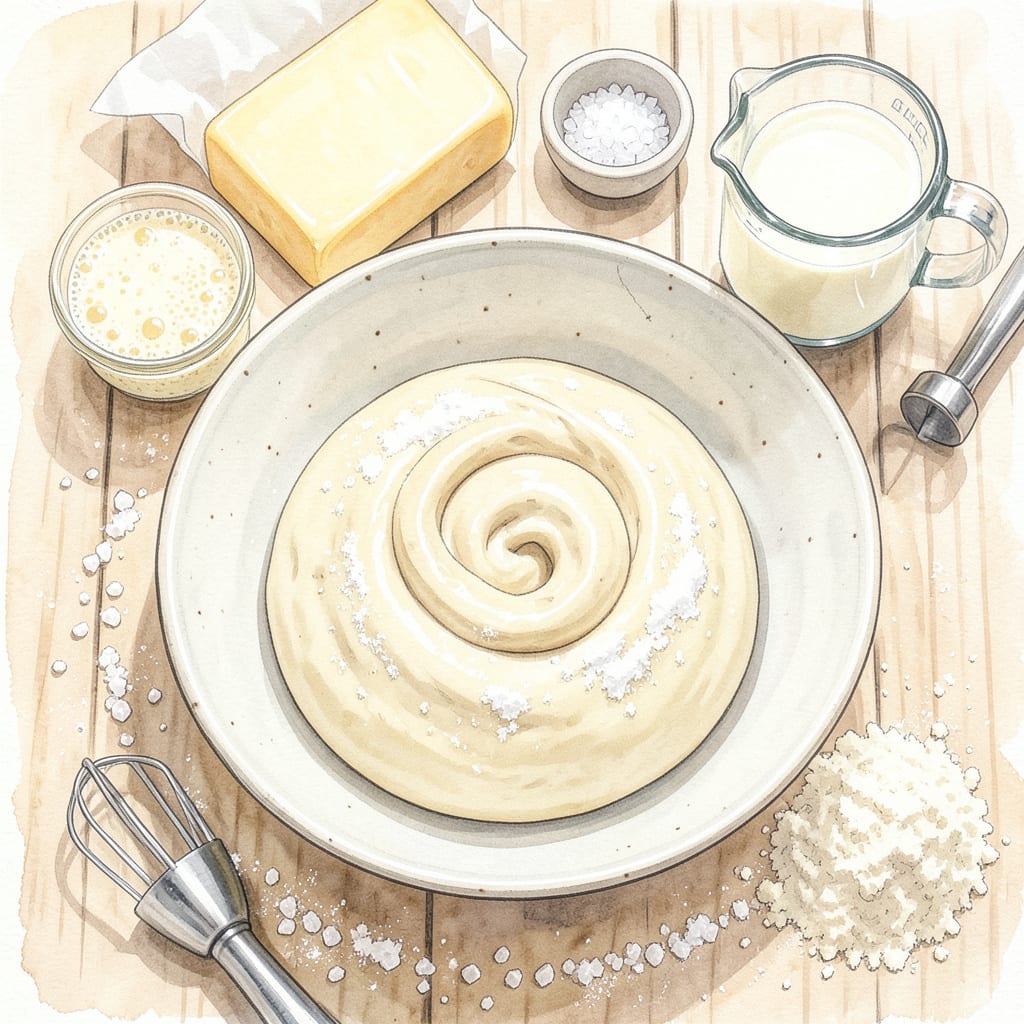
Freshly baked bread at a moment’s notice—that’s the power of keeping homemade frozen dough on hand. This professional-quality recipe delivers consistent results whether you’re making crusty loaves, soft dinner rolls, or even pizza crust. The secret lies in proper yeast activation and controlled freezing techniques that preserve the dough’s rising potential.
I’ve perfected this method through years of testing, ensuring the dough maintains its structure and flavor for up to three months in the freezer. The process requires just six basic ingredients and yields dough that thaws and bakes beautifully. Whether you’re a seasoned baker or just starting out, this foolproof approach guarantees homemade bread quality without the daily time commitment.
Ingredients for Frozen Bread Dough
Six professional-grade ingredients form the foundation for this versatile frozen bread dough system.
| Ingredient | Amount | Notes |
|---|---|---|
| Bread Flour 🌾 | 4 ½ cups | High-protein, 12-13% preferred |
| Instant Yeast 🍞 | 2 ¼ tsp | SAF Red or equivalent |
| Fine Sea Salt 🧂 | 2 tsp | Diamond Crystal preferred |
| Granulated Sugar 🍚 | 1 tbsp | For yeast activation |
| Unsalted Butter 🧈 | 3 tbsp | Melted, European-style preferred |
| Whole Milk 🥛 | 1 ½ cups | Warm to 110°F |
[recipe_ingredient_scaler]
The flour quality is paramount for structural integrity. King Arthur Bread Flour (12.7% protein) delivers optimal gluten development, while Central Milling Organic Artisan offers superior flavor. Yeast selection impacts rise time and flavor—SAF Instant Yeast provides consistent results across temperature variations. For salt, Diamond Crystal kosher salt ensures precise measurement by volume (half the weight of table salt). Butter quality affects dough extensibility; Plugrá European-style contains higher fat content (82%) for superior texture.
Milk substitutions require fat content adjustments: whole milk at 3.25% fat is ideal, but 2% milk plus 1 tbsp melted butter approximates the richness. Sugar alternatives like honey or maple syrup may be used at one-to-one ratio, though granulated sugar yields most consistent yeast activation. For butter-free versions, refined coconut oil (melted) substitutes effectively at equal weight. Yeast may be replaced with fresh compressed yeast at three times the volume (6.75 tsp for this recipe).
Dough maintains viability for up to 3 months at 0°F (-18°C) when properly wrapped. Portion into 1-lb segments for loaves or 2-oz balls for rolls before freezing. Thaw overnight in refrigerator (12-16 hours) for best results. Freeze yeast separately if pre-mixing dry ingredients to extend shelf life to 6 months. Always test yeast viability before large batches by proofing 1 tsp in 1/4 cup warm water with 1 tsp sugar—should foam within 10 minutes.
Why You’ll Love This Recipe
- No-Knead Magic: Honestly, the hardest part is measuring the flour. Mix everything in one bowl, let the yeast do its thing, and you’ve got dough ready for the freezer—no sticky counters or sore arms.
- Buttery, Toasty Perfection: That unsalted butter folded in? It’s the secret to golden crusts and a tender crumb. I’ll be real: the smell alone when it bakes is worth the 10 minutes of prep.
- Dinner or Dessert: Pizza night, garlic knots, cinnamon rolls—this dough plays all the roles. I keep a stash frozen so I can pull it out for last-minute dinners or when my kid demands “fresh bread *now*.”
- Budget-Friendly Insurance: A batch costs pennies compared to store-bought dough, and it lasts for weeks. Between us, I’ve saved myself from more than one “forgot to buy bread” panic with this in my freezer.
Step-by-Step Instructions for Frozen Bread Dough
This professional method ensures perfectly textured dough that freezes beautifully and bakes to golden perfection.
Step 1: Activate Yeast and Develop the Dough
Begin by warming the 1.5 cups whole milk to precisely 110°F—this temperature activates the yeast without killing it. In the bowl of a stand mixer fitted with the dough hook, combine the warmed milk with 1 tbsp granulated sugar and 2.25 tsp instant yeast. Allow this mixture to sit for 5-7 minutes until it becomes foamy and slightly domed.
Add the 4.5 cups bread flour and 2 tsp fine sea salt to the yeast mixture. Mix on low speed until the ingredients are just combined, then increase to medium speed and knead for 6-8 minutes. The dough should pull away from the bowl sides and form a smooth, elastic ball that springs back when pressed gently with a finger.
Step 2: Incorporate Butter for Richness and Texture
With the mixer running on medium-low speed, gradually add the 3 tbsp unsalted butter (previously melted and cooled to room temperature). Add it in three separate additions, allowing each to fully incorporate before adding the next. This gradual addition prevents the dough from becoming greasy and ensures proper gluten development.
After all butter is incorporated, continue kneading for an additional 3-4 minutes until the dough becomes satiny smooth and passes the windowpane test: stretch a small piece between your fingers—it should be thin enough to see light through without tearing. The dough temperature should register 75-78°F on an instant-read thermometer for optimal fermentation.
Step 3: First Rise for Flavor Development
Transfer the dough to a lightly oiled bowl, turning to coat all sides. Cover tightly with plastic wrap and let rise at room temperature (72-75°F) for 1-1.5 hours, or until nearly doubled in volume. The dough should look puffy with visible air pockets beneath the surface when gently pressed.
To test for proper proofing, press two fingers about ½ inch into the dough—it should spring back slowly, leaving a slight indentation. If it springs back immediately, it needs more time; if it doesn’t spring back at all, it’s overproofed. This controlled fermentation develops complex flavors while maintaining structural integrity for freezing.
Step 4: Portion and Freeze for Future Use
Turn the risen dough onto a lightly floured surface and divide it into 4 equal portions (approximately 10-12 ounces each). Shape each portion into a tight ball by pulling the dough toward the center and pinching the seams underneath. This tension creates a smooth surface that will bake into an even crust.
Place each dough ball on a parchment-lined baking sheet, leaving 3 inches between them. Cover loosely with oiled plastic wrap and freeze for 1 hour until firm. Then transfer to individual freezer bags, squeezing out all air before sealing. Label with the date—the dough maintains optimal quality for up to 3 months at 0°F or below.
Step 5: Thaw and Bake for Perfect Results
When ready to bake, transfer the frozen dough to the refrigerator and thaw overnight (8-12 hours). The dough should be pliable but still slightly chilled. Shape as desired—into loaves, rolls, or pizza crust—and place on a parchment-lined baking sheet.
Let rise at room temperature until nearly doubled in size (1-2 hours), then bake in a preheated 375°F oven for 20-25 minutes until the internal temperature reaches 190°F and the crust is deep golden brown. The baked bread should sound hollow when tapped on the bottom and have an even, crisp crust with a tender, airy crumb.
Serving Suggestions for This frozen bread dough
Warm Bread Basket
Nothing beats the aroma of freshly baked bread straight from the oven. I love serving this as a warm bread basket with whipped European butter and flaky sea salt for dipping. Arrange the golden loaves in a linen-lined basket with a checkered cloth for that classic bakery feel. 🥖
Garlic Herb Dinner Rolls
Transform your thawed dough into irresistible garlic herb rolls. After shaping into small balls, brush with melted garlic butter (mix 4 tbsp butter with 2 minced garlic cloves and 1 tbsp chopped parsley). Bake until golden and serve warm with marinara for dipping.
Breakfast Bread Boats
For a hearty morning treat, shape the dough into small boats before baking. After cooling slightly, fill with scrambled eggs, crispy bacon, and shredded cheddar. The bread’s soft interior soaks up all the flavors beautifully. I discovered this at a coastal brunch spot after one of my motorcycle rides.
Sweet Cinnamon Twists
Roll out the thawed dough into a rectangle, brush with melted butter, and sprinkle generously with cinnamon sugar (¼ cup sugar + 1 tbsp cinnamon). Cut into strips, twist, and bake until caramelized. Drizzle with vanilla glaze for an extra-special treat. ✨
Pizza Night Foundation
This dough makes incredible homemade pizza crust. After thawing, stretch the dough thin on a floured surface, then top with San Marzano tomato sauce, fresh mozzarella, and basil. Bake at 475°F on a pizza stone for that perfect crispy-chewy texture. My French training taught me the importance of proper dough hydration for pizza.
Cheese-Stuffed Breadsticks
Roll the dough into ropes, then wrap each around mozzarella string cheese sticks. Brush with garlic-infused olive oil and sprinkle with Parmesan before baking. Serve with warm marinara for an irresistible appetizer. I first made these for a local BBQ competition and they were a hit!
Nutrition Facts

Trained in classic French technique but raised on slow-cooked ribs and spicy rubs, she blends culinary skill with smoke and soul.
- Recipe for Fried Prawns Batter: Ultra-Crispy Golden Shell - October 3, 2026
- Indian Lamb Curry Recipe Pressure Cooker: Fragrant Spices in a Fraction of the Time - October 3, 2026
- Recipe for Oven Roasted: Golden Crisp Perfection Without the Fryer - October 3, 2026