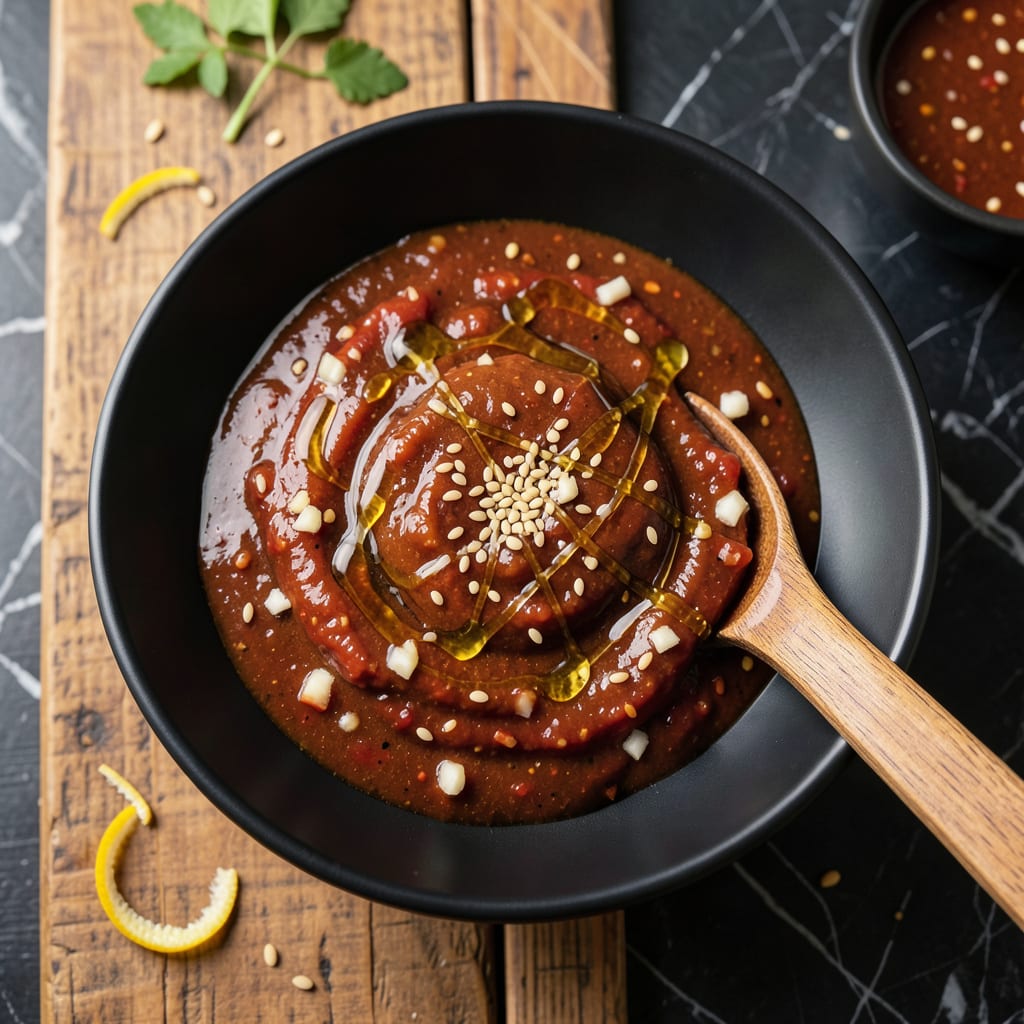
This dressing captures the essence of Korean BBQ in a sweet-savory drizzle that transforms simple greens into something extraordinary. The balance of umami, tang, and subtle heat makes it irresistibly versatile.
With just 5 ingredients and 5 minutes of whisking, you’ll have a sauce that elevates salads, marinates meats, or dresses grain bowls. Store it in the fridge for up to a week—if it lasts that long.
Ingredients for Gen Korean Bbq Salad Dressing
Seven ingredients deliver that signature sweet-savory umami punch with minimal effort required.
| Ingredient | Amount | Notes |
|---|---|---|
| Soy Sauce 🫕 | ½ cup | Low-sodium preferred for balance |
| Gochujang 🌶️ | 2 tbsp | Korean fermented chili paste |
| Honey 🍯 | 3 tbsp | Or sub agave for vegan option |
| Rice Vinegar 🍶 | 2 tbsp | Mild and slightly sweet |
| Sesame Oil 🫒 | 1 tbsp | Toasted for nutty aroma |
| Garlic Cloves 🧄 | 2 cloves | Minced for pungent depth |
| Fresh Ginger 🌿 | 1 tsp | Finely grated for zing |
[recipeingredientscaler]
Soy sauce is the foundation here, so opt for a high-quality brand like Kikkoman or San-J for clean, consistent flavor. Gochujang varies in heat and sweetness—Sempio or CJ are reliable choices at most Asian markets. The sesame oil should be toasted (not raw) for that deep, nutty note that defines the profile.
No gochujang? Sriracha mixed with a bit of miso paste gets you close. Honey can be swapped for maple syrup or brown sugar (dissolve it first). Rice vinegar is non-negotiable though—apple cider or white vinegar will throw off the balance. For a milder dressing, reduce the ginger to half a teaspoon.
This keeps beautifully in the fridge for up to 1 week. The flavors actually deepen after a day, so make it ahead if you can. Shake before using—the gochujang will settle at the bottom.
Why You’ll Love This Recipe
- 5-Minute Whisk: I dump all five ingredients in a bowl and stir—no chopping, no cooking, just instant flavor.
- Sweet-Spicy Balance: The gochujang heat and honey sweetness hit that addictive Korean BBQ taste without overpowering.
- Dressing for Days: I drizzle it on greens, use it as a marinade, or toss with noodles and it works every time.
- Pantry Staples: Soy sauce, gochujang, and the rest are already in my cupboard, so I never have to plan ahead.
Step-by-Step Instructions for Korean BBQ Salad Dressing
This simple emulsification process creates a balanced dressing with layers of umami, heat, and sweetness.
Step 1: Mince the Aromatics
Finely mince the 2 cloves garlic cloves and finely grate the 1 tsp fresh ginger using a microplane. This releases their essential oils, which are crucial for building the flavor base. The garlic should be reduced to nearly a paste consistency.
I prefer to keep the minced garlic and grated ginger together in a small prep bowl. This ensures you’re ready to add them simultaneously in the next step, preventing any burning or uneven cooking that might occur if added separately.
Step 2: Bloom the Aromatics in Sesame Oil
Heat the 1 tbsp sesame oil in a small saucepan over medium-low heat until it shimmers slightly. Add the minced garlic and grated ginger, stirring constantly for 30-45 seconds until fragrant but not browned.
Watch carefully—garlic burns easily and can turn bitter in seconds. The moment it starts to turn golden at the edges, remove the pan from heat. This blooming process mellows the raw bite of the aromatics while intensifying their flavors.
Step 3: Whisk in the Liquid Ingredients
In a medium bowl, combine the 0.5 cup soy sauce, 2 tbsp gochujang, 3 tbsp honey, and 2 tbsp rice vinegar. Whisk vigorously until the gochujang is fully incorporated and no lumps remain. The mixture should be smooth with a deep reddish-brown color.
The gochujang will initially resist blending into the liquids. Keep whisking—it will gradually dissolve. The honey helps bind everything together, while the rice vinegar adds the necessary acidity to balance the richness.
Step 4: Emulsify with the Aromatic Oil
Slowly pour the warm sesame oil mixture (with garlic and ginger) into the bowl with the liquid ingredients while whisking continuously. This creates a temporary emulsion that will hold for several hours.
You’ll notice the dressing thicken slightly as the oil incorporates. The final product should coat the back of a spoon with a glossy sheen. If separation occurs during storage, simply whisk again before use.
Let the dressing cool to room temperature before using. This allows the flavors to meld completely, with the heat from the oil gently mellowing the raw edge of the vinegar and soy sauce.
Pro Tips For Making Gen Korean Bbq Salad Dressing
- Whisk Vigorously: I learned this the hard way—gochujang and honey don’t blend smoothly without effort, so whisk for at least 30 seconds until the dressing is completely emulsified.
- Warm the Honey: Microwave the honey for 10-15 seconds before mixing—it combines with the soy sauce and gochujang much more easily.
- Skip the Cheap Soy: Use a good-quality soy sauce like Kikkoman or a Korean brand; the cheap stuff adds a metallic tang that throws off the balance.
- Rest Before Serving: Let the dressing sit for 10 minutes after mixing—this gives the flavors time to meld, especially the sesame oil, which needs a moment to shine.
Wine and Beer Pairings for This Recipe
White Wine Pairings
An off-dry Riesling from Washington State or Germany cuts through the dressing’s sweetness beautifully. I love how the stone fruit notes complement the gochujang heat. Look for Chateau Ste. Michelle or Dr. Loosen for reliable bottles. 🍷
Red Wine Options
A light-bodied Pinot Noir with bright acidity works surprisingly well. Try a Oregon Pinot Noir like Domaine Serene—its red fruit flavors balance the umami without overpowering the dish.
Beer Pairings
A crisp Korean lager like Hite or OB Golden Lager is the classic choice—its clean, slightly sweet profile matches perfectly. For craft lovers, a Belgian witbier with citrus notes adds an interesting twist. 🍺
Non-Alcoholic
Sparkling water with lime or yuzu refreshes your palate between bites. I also enjoy green tea—its subtle bitterness contrasts the dressing’s sweetness. Serve it chilled for best results.
Cocktail Match
A soju cocktail with grapefruit juice and soda water keeps the Korean theme going. The effervescence lifts the rich, savory notes of this dressing. Garnish with a lime wedge for brightness.
Nutrition Facts

Trained in classic French technique but raised on slow-cooked ribs and spicy rubs, she blends culinary skill with smoke and soul.
- Recipe for Curried Lamb Chops: Spice-Rubbed and Pan-Seared to Succulence - October 3, 2026
- Recipe for Boneless Leg of Lamb Roast in the Oven: Herb-Crusted and Rosy Pink Inside - October 3, 2026
- Meat Loaf Recipe With Beef And Pork: Homestyle Blend With Rich Gravy - October 3, 2026