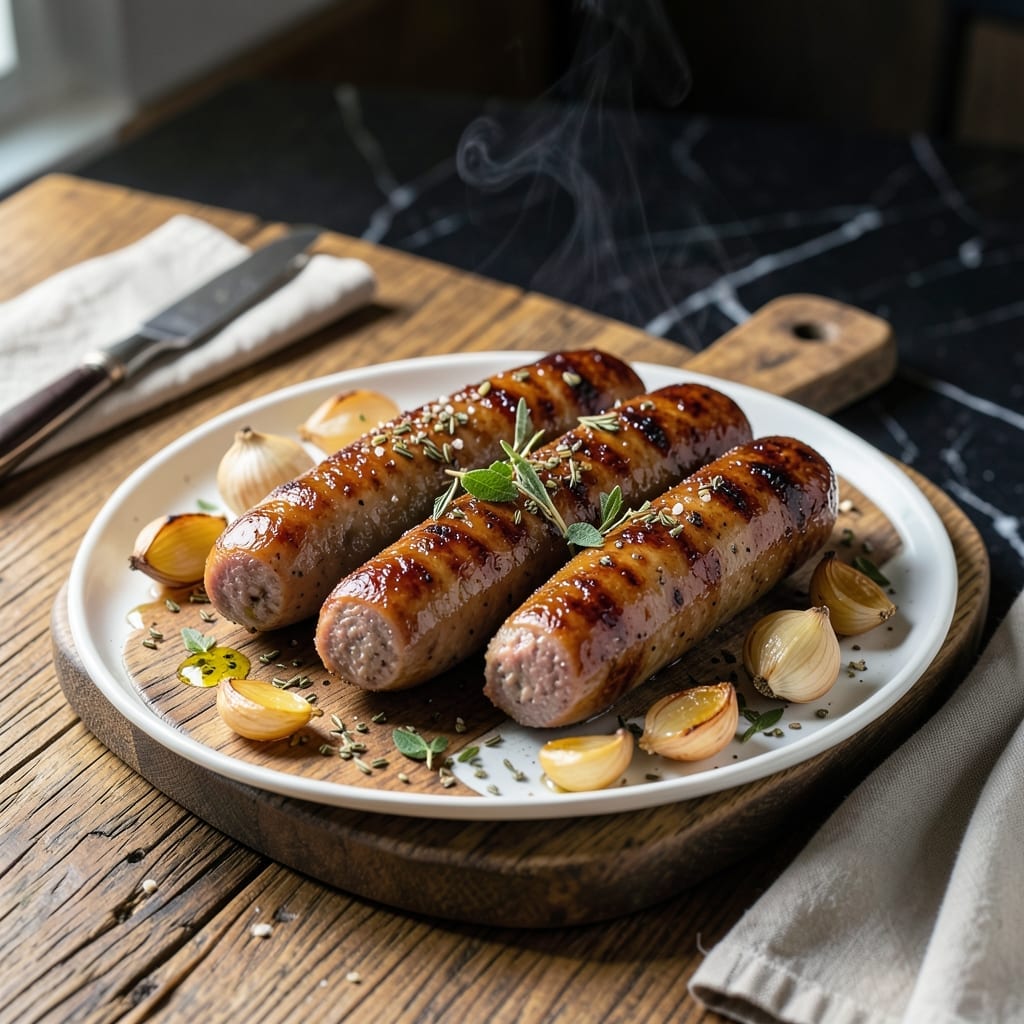
This recipe brings the robust flavors of German grill culture to your backyard. The secret lies in the garlic-infused meat blend and traditional seasoning that creates a sausage with bold character.
I developed this method after years of perfecting my grill techniques, combining classic German spices with my pitmaster expertise. The result is a juicy sausage with a satisfying snap when you bite into it.
What you’ll achieve is a homemade sausage that rivals any butcher’s, with a perfect balance of garlic and herbs. The grilling process adds that essential smoky depth that makes these sausages unforgettable.
Serve these with mustard and fresh bread for an authentic experience. This is grilling at its finest.
Ingredients for German Garlic Sausage
Bold German flavors start with quality pork, fresh garlic, and traditional spices for authentic results.
| Ingredient | Amount | Notes |
|---|---|---|
| Ground Pork Shoulder 🐖 | 2 lb | 80/20 fat ratio preferred |
| Garlic Cloves 🧄 | 8 cloves | Minced finely for even distribution |
| Kosher Salt 🧂 | 2 tbsp | Diamond Crystal preferred for texture |
| Black Pepper 🌶️ | 1 tbsp | Freshly ground for boldness |
| Dried Marjoram 🌿 | 1 tbsp | German tradition essential ingredient |
| Dried Sage 🍃 | 1 tbsp | Rubbed for aromatic release |
| Ground Nutmeg 🌰 | ½ tsp | Freshly grated recommended |
| Paprika 🌶️ | 1 tsp | Sweet or smoked variety |
| Ice Cold Water 💧 | ½ cup | For binding fat and meat |
| Natural Hog Casings 🌭 | 4 pieces | Soaked in water 30 minutes |
| Dijon Mustard 🟡 | ½ cup | For serving authentic flavor |
| Fresh Bread 🥖 | 4 pieces | Rustic rolls or baguette |
[recipe_ingredient_scaler]
The pork shoulder is non-negotiable here—80/20 fat ratio keeps the sausages juicy. I get mine from Whole Foods or a local butcher who grinds it fresh (ask for coarse grind if possible). The garlic should be fresh—none of that pre-minced stuff in jars. For the casings, natural hog casings from Amazon or a specialty meat shop work best. Soak them in warm water for 30 minutes before using.
No pork shoulder? Ground pork butt works too, but avoid lean cuts like tenderloin. Fresh out of marjoram? Oregano at half the amount gets you close. No hog casings? Collagen casings (available at most butcher shops) are the next best thing. The nutmeg is subtle but important—don’t skip it. If you’re making a big batch, order spices in bulk from Penzeys to save.
These sausages freeze beautifully—3 months max for best flavor. Store raw in the fridge for up to 2 days before cooking. Once cooked, they’ll keep for 5 days in the fridge. Pro tip: vacu-seal before freezing to prevent freezer burn (worth the extra minute).
Why You’ll Love This Recipe
- Minimal Effort: I just mix ground pork shoulder with minced garlic and spices, then shape—no fancy techniques required.
- Garlic Lover’s Dream: The combination of fresh garlic and marjoram gives it that rich, savory depth I crave.
- Freezer Friendly: I make a big batch and freeze some for quick meals later—saves me time on busy weeks.
- Budget Stretcher: Pork shoulder is affordable, and a little goes a long way, especially with bold flavors like this.
Step-by-Step Instructions for German Garlic Sausage
This traditional method delivers authentic flavor with a perfectly balanced spice profile.
Step 1: Prepare the Hog Casings and Seasoning Blend
Begin by soaking the 4 pieces Natural Hog Casings in room temperature water for 30 minutes. This softens them and prevents tearing during stuffing. While they soak, finely mince the 8 cloves Garlic Cloves—this ensures even distribution throughout the sausage.
In a small bowl, combine the 2 tbsp Kosher Salt, 1 tbsp Black Pepper, 1 tbsp Dried Marjoram, 1 tbsp Dried Sage, 0.5 tsp Ground Nutmeg, and 1 tsp Paprika. Stir until fully blended. The aroma should be rich and earthy, a hallmark of German sausage tradition.
Step 2: Mix the Sausage Meat
Place the 2 lb Ground Pork Shoulder in a large mixing bowl. Sprinkle the seasoning blend evenly over the meat. Using your hands, gently mix the spices into the pork, ensuring every bit is coated. This step is about even distribution, not compacting the meat.
Gradually add the 0.5 cup Ice Cold Water while continuing to mix. The cold water helps bind the fat and lean meat, creating a cohesive texture. Mix just until combined—overworking the meat can make the sausage tough. You’ll notice the mixture becomes slightly sticky.
Step 3: Stuff the Sausage Casings
Drain the soaked Natural Hog Casings and rinse under cold water. Slide them onto the nozzle of a sausage stuffer or a piping bag fitted with a large star tip. Fill the casings with the meat mixture, being careful not to overfill—this prevents bursting during cooking.
Tie off the ends of each sausage with kitchen twine, leaving about 6 inches between knots for individual links. Twist the sausages gently to create even segments. Handle them carefully; the casings are delicate when wet. You should end up with about 8-10 links depending on your preferred size.
Step 4: Cook the Sausage to Perfection
Heat your grill to medium heat (about 350°F). Place the sausages on the grill and cook for 15-20 minutes, turning occasionally. You’ll know they’re done when the internal temperature reaches 160°F and the casings develop a deep golden-brown color.
Avoid high heat, which can cause the casings to split. The sausages should sizzle gently, not pop or flare up. If using a skillet, add a small amount of oil to prevent sticking and cook over medium-low heat for the same duration.
Step 5: Serve with Traditional Accompaniments
Once cooked, let the sausages rest for 5 minutes before serving. This allows the juices to redistribute, ensuring each bite is moist and flavorful. Slice or serve whole, depending on your preference.
Serve the sausages with the 0.5 cup Dijon Mustard and 4 pieces Fresh Bread on the side. The mustard’s tang pairs perfectly with the rich, garlicky sausage, while the bread is ideal for soaking up every last bit of flavor. This combination is a classic for a reason—it’s simple, satisfying, and undeniably delicious.
Pro Tips For Making German Garlic Sausage
- Chill the Pork: Keep your ground pork shoulder cold until ready to mix—I learned this the hard way after my first batch turned greasy and loose.
- Grind Garlic Fine: Pulse the garlic cloves into a near-paste in a food processor; uneven chunks create pockets of harsh flavor in the sausage.
- Rest Before Grilling: Let the shaped sausages rest 30 minutes in the fridge after stuffing, or they’ll split on the grill every time.
- Use Fresh Marjoram: Swap dried marjoram for fresh if you can—about 3 times the volume—and it actually changes the outcome with a brighter, more authentic taste.
Flavor Customization for german garlic sausage
Herb Variations
For a brighter twist, replace half the dried marjoram with 2 tbsp fresh thyme. I forage wild thyme along the coast—it adds a floral note that’s incredible. Alternatively, rosemary works but use sparingly (1 tsp max) as it’s potent.
Garlic Adjustments
Love bold garlic? Add 2 extra cloves to the mix. Prefer a milder taste? Roast the 8 cloves Garlic Cloves first at 400°F for 15 minutes before mincing. This mellows the bite while keeping the aroma. I often do this when serving to garlic-sensitive friends.
Spice Boosts
Add ½ tsp cayenne for heat or 1 tsp caraway seeds for an earthy depth—both are traditional in some German regions. For a smoky note, use smoked paprika instead of sweet. These small tweaks make big flavor differences.
Meat Blends
For a leaner version, replace ½ lb Ground Pork Shoulder with ground veal. The flavor stays rich but the texture becomes slightly finer. I get my veal from the local butcher who sources it ethically. 💛
Casings Alternatives
No hog casings? Use collagen casings (soak 10 minutes only) for similar results. For a rustic look, form the mixture into patties and pan-fry. They won’t have the snap but still deliver all the flavor.
Serving Twists
Instead of Dijon, try whole-grain mustard for texture or beer mustard for a tangy kick. For bread, pretzel buns add a fun, authentic touch. These small changes keep the dish exciting each time I make it.
Nutrition Facts
Frequently Asked Questions
Can I use ground turkey instead of pork?
Yes, but the texture and flavor will differ. Use 80/20 ground turkey for best results. The sausage will be leaner and milder, so consider adding 1 extra tbsp of spices to compensate.
How do I prevent the casings from bursting while cooking?
Cook on medium heat only and avoid overfilling the casings. Poking small holes in any air pockets before grilling also helps. This prevents pressure buildup during cooking.
What’s the best way to store leftover cooked sausages?
Let them cool completely, then refrigerate in an airtight container for up to 5 days. For longer storage, freeze for up to 3 months. Reheat gently to avoid drying them out.
Why is the pork fat ratio important?
The 80/20 fat ratio keeps the sausage juicy and flavorful. Too lean, and it’ll dry out during cooking. The fat also helps carry the spices throughout the meat.

Trained in classic French technique but raised on slow-cooked ribs and spicy rubs, she blends culinary skill with smoke and soul.
- Recipe for Cut Up Chicken: One-Pan Crispy Bites - October 3, 2026
- Recipe For Oven Baked Haddock: Buttery Crumbs With Zesty Lemon Topping - October 3, 2026
- Recipe For Fried Salmon Patties With Flour: Crispy Golden Crust With Flaky Centers - October 3, 2026