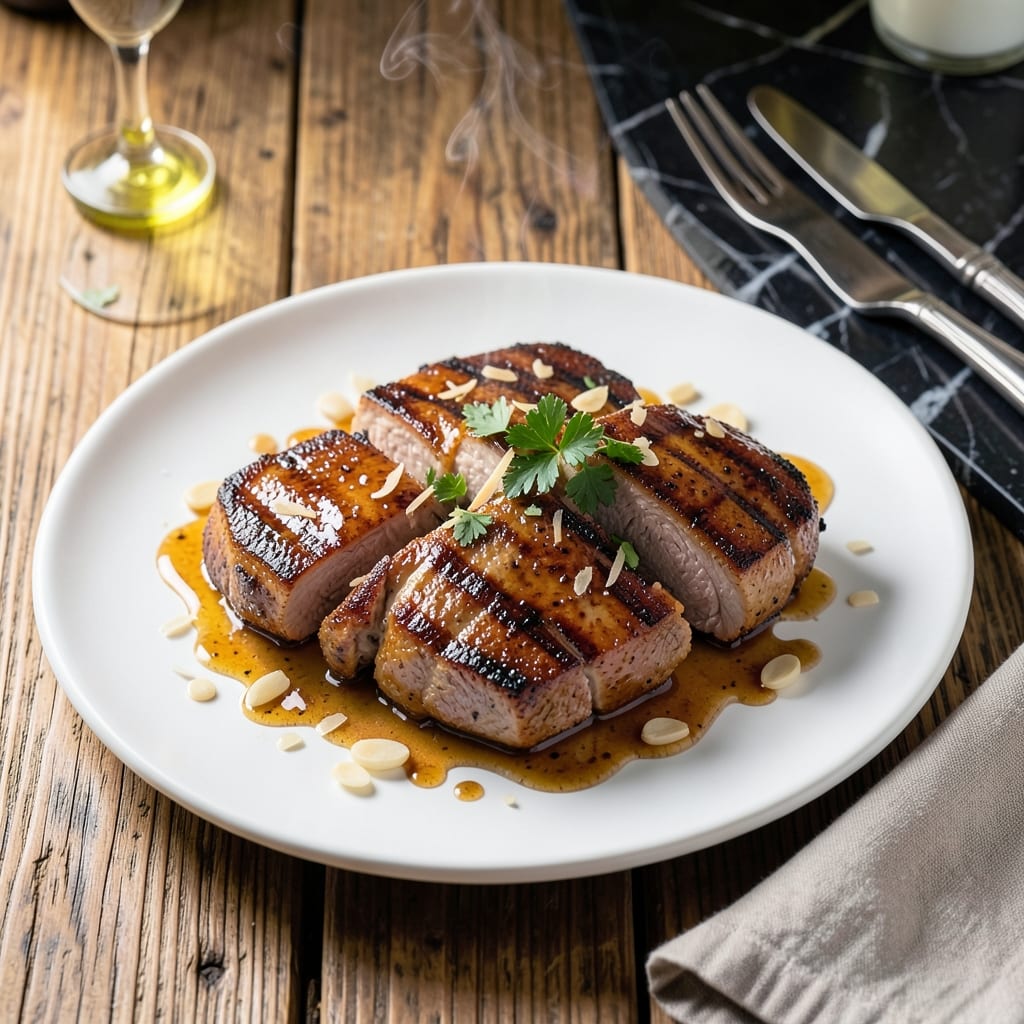
This pork chop glaze delivers a perfectly balanced sweet and sticky finish that elevates any seared chop. The combination of brown sugar, soy sauce, and apple cider vinegar creates complex depth in minutes.
I developed this recipe after testing countless variations to find the ideal ratio of sweet, salty, and tangy. The glaze thickens beautifully as it reduces, coating each chop in a glossy, caramelized layer.
What makes this special is its versatility—use it on grilled, pan-seared, or baked pork chops. The glaze keeps well in the fridge, so you can make a batch ahead for quick weeknight meals.
One taste and you’ll understand why this simple mixture transforms ordinary pork into something extraordinary.
Ingredients for Glaze for Pork Chops
Nine simple ingredients transform into that glossy, caramelized finish you crave on pork.
| Ingredient | Amount | Notes |
|---|---|---|
| Brown Sugar 🍯 | ¾ cup | Light or dark works |
| Soy Sauce 🥢 | ½ cup | Low-sodium preferred |
| Apple Cider Vinegar 🍎 | ¼ cup | Not white vinegar |
| Garlic Cloves 🧄 | 3 cloves | Minced for best flavor |
| Fresh Ginger 🌿 | 1 tbsp | Peeled and grated |
| Honey 🍯 | 2 tbsp | Or maple syrup alternative |
| Dijon Mustard 🟡 | 1 tbsp | Smooth variety preferred |
| Olive Oil 🫒 | 1 tbsp | For sautéing aromatics |
| Black Pepper 🌶️ | ½ tsp | Freshly ground preferred |
[recipe_ingredient_scaler]
The brown sugar is doing most of the heavy lifting here—Domino or C&H work great but organic raw sugar adds depth. Kikkoman soy sauce is my go-to (the regular, not low-sodium), but any brand works. For the vinegar, Bragg makes a solid apple cider version. Fresh ginger and garlic from the produce section are non-negotiable (the jarred stuff just doesn’t have the same punch).
No apple cider vinegar? White wine vinegar works at the same ratio. Out of honey? Maple syrup or agave swap in perfectly. Dijon too strong? Regular yellow mustard at double the amount tones it down. The olive oil can be any neutral oil—avocado or vegetable oil are great substitutes. Skip the pre-minced garlic in jars though. Fresh makes a difference here (worth the extra minute).
This keeps in the fridge for up to 2 weeks in a sealed jar. The flavors meld and deepen over time. For longer storage, freeze in ice cube trays—3 months max. Thaw in the pan when ready to use (don’t skip this part).
Why You’ll Love This Recipe
- 5-Minute Mix: I just dump everything in a bowl—brown sugar, soy sauce, vinegar, garlic, ginger—and stir. Honestly, it’s faster than making toast.
- Sweet & Tangy: That first bite with the caramelized brown sugar and the zing of apple cider vinegar? Ridiculously good.
- Weeknight Hero: I’ve used this glaze on grilled chops, baked chops, even chicken in a pinch. Between us, it’s my Tuesday night lifesaver.
- Stretches Far: One batch glazes four chops and keeps for days. I’ll be real: I’ve even spooned leftovers over roasted veggies.
Step-by-Step Instructions for Glaze for Pork Chops
This simple method guarantees a glossy, flavorful finish that clings beautifully to your chops.
Step 1: Sauté the Aromatics for Depth
Heat the olive oil in a medium saucepan over medium heat until it shimmers slightly. Add the 3 cloves garlic cloves and 1 tbsp fresh ginger, stirring constantly for 30-45 seconds until fragrant but not browned.
This base layer of aromatics builds the complex foundation for your glaze. Watch carefully—garlic burns quickly and can turn bitter if overcooked. You want it just golden at the edges, releasing its sweet, pungent aroma into the oil.
The ginger should sizzle gently, filling your kitchen with its warm, citrusy scent. This step takes less than a minute, but it makes all the difference in your final flavor profile.
Step 2: Combine the Liquid Foundation
Pour in the 0.5 cup soy sauce, 0.25 cup apple cider vinegar, and 0.75 cup brown sugar. Stir well to dissolve the sugar completely. Bring the mixture to a gentle boil, then reduce heat to maintain a steady simmer.
As the sugar melts, the liquid will transform from cloudy to a rich amber color. The vinegar’s tang will mellow as it cooks, balancing the sweetness of the sugar and soy. This is where the magic starts to happen.
Let this simmer for 5-7 minutes until the mixture thickens slightly and becomes syrupy. You’ll notice it coating the back of your spoon more heavily as it reduces.
Step 3: Add the Finishing Touches
Stir in the 2 tbsp honey, 1 tbsp Dijon mustard, and 0.5 tsp black pepper. Whisk vigorously for 1-2 minutes to fully incorporate these final ingredients. The mustard will add a subtle sharpness that cuts through the sweetness.
The honey deepens the glossy sheen of your glaze while adding another layer of sweetness. As it warms, it blends seamlessly with the other ingredients, creating that signature sticky consistency.
Taste and adjust the seasoning if needed, though the combination of salty, sweet, and tangy should be perfectly balanced at this point. The glaze should be thick enough to coat a spoon but still pourable.
Step 4: Reduce to Perfection
Continue simmering for another 5-8 minutes, stirring occasionally, until the glaze reduces by about one-third. It should be thick enough to leave a clear trail on the bottom of the pan when you drag a spoon through it.
Keep an eye on the consistency—the glaze will thicken further as it cools. You’re aiming for a syrup-like texture that will cling to your pork chops without being too thick or sticky.
Remove from heat and let cool for 5 minutes before using. The glaze will thicken slightly as it cools, which is exactly what you want for that perfect, glossy finish on your chops.
Pro Tips For Making Glaze For Pork Chops
- Simmer Low and Slow: I learned this the hard way—boil the glaze and it turns into hard candy. Keep it at a gentle simmer for 8-10 minutes so the brown sugar melts into the soy sauce and vinegar without burning.
- Grate the Ginger: Fresh ginger is non-negotiable here, but mincing it leaves stringy bits. A microplane grater gives you the flavor without the texture, and 1 teaspoon is all you need.
- Skip the Pre-Minced Garlic: That jarred garlic tastes harsh and bitter in this glaze. Smash 2 fresh cloves with the side of your knife first—it releases the oils and blends into the sauce better.
- Reduce Before Glazing: After simmering, let the glaze cool for 2-3 minutes before brushing it on the pork. It thickens slightly as it cools, so it clings to the chops instead of sliding right off.
Wine and Beer Pairings for These Flavors
White Wine Pairings
A crisp Sauvignon Blanc from New Zealand cuts through the glaze’s sweetness with its bright acidity and citrus notes. The grapefruit and lime flavors complement the vinegar tang beautifully. I love Kim Crawford or Oyster Bay for this pairing. 🍷
Red Wine Options
For red wine lovers, a medium-bodied Pinot Noir with its red fruit flavors and earthy undertones works surprisingly well. Try a Willamette Valley bottle from Oregon. The wine’s acidity balances the sugar without overpowering the dish.
Craft Beer Selections
An American amber ale brings caramel notes that echo the brown sugar in your glaze. Fat Tire from New Belgium is my go-to. The malt sweetness pairs perfectly with the sticky finish. 🍺
Light Beer Alternatives
A crisp pilsner like Samuel Adams Noble Pils cleanses your palate between bites. The light body and slight bitterness cut through the richness while letting the glaze flavors shine.
Non-Alcoholic Pairings
Sparkling apple cider mirrors the vinegar’s fruitiness while adding refreshing effervescence. I serve it chilled in wine glasses for a festive touch. The bubbles enhance the glaze’s caramelized notes.
Cocktail Match
A bourbon old fashioned with its caramel and vanilla notes amplifies the glaze’s depth. The cocktail’s bitterness from the bitters balances the sweetness beautifully. I use Maker’s Mark for this pairing. ✨
Nutrition Facts
Frequently Asked Questions
Can I make this glaze ahead of time?
Yes! Prepare it up to 2 weeks in advance and store in an airtight container in the fridge. Reheat gently on the stove before using.
How do I prevent the glaze from burning?
Cook on medium-low heat and stir frequently. If it thickens too fast, add 1-2 tablespoons of water to loosen it.
What can I use instead of apple cider vinegar?
White wine vinegar or rice vinegar work equally well at the same 0.25 cup measurement. Avoid balsamic as it will overpower the flavors.
Is this glaze suitable for other meats?
It pairs beautifully with chicken, salmon, or even roasted vegetables. Adjust cooking times accordingly.

Trained in classic French technique but raised on slow-cooked ribs and spicy rubs, she blends culinary skill with smoke and soul.
- Recipe For Leftover Fried Fish: Crunchy Leftovers Transformed - October 3, 2026
- Recipe for Crock Pot Swiss Steak: Slow-Cooked Beef With Mushroom Gravy - October 3, 2026
- Recipe for Kabsa Rice: Spiced Middle Eastern Feast in One Pot - October 3, 2026