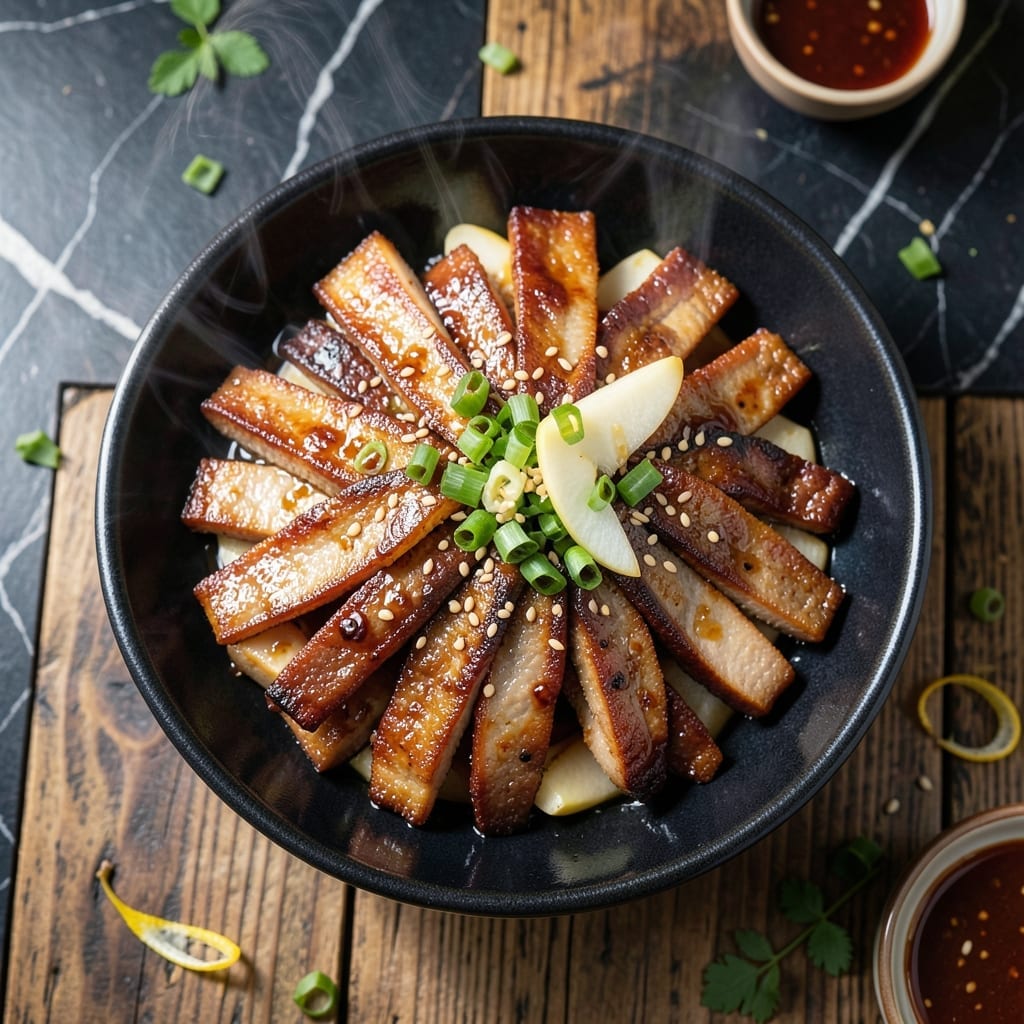
I developed this method after testing countless marinades to achieve that perfect balance of sweet and savory with a chewy texture.
This foolproof approach combines traditional Korean flavors with a drying technique that delivers restaurant-quality results at home.
Ingredients for Golden Island Korean Bbq Pork Jerky
Thinly sliced pork shoulder meets a complex marinade for authentic Korean BBQ flavor at home.
| Ingredient | Amount | Notes |
|---|---|---|
| Pork Shoulder 🥩 | 1 ½ lb | Thinly sliced against grain |
| Soy Sauce 🫒 | ½ cup | Low-sodium preferred for balance |
| Brown Sugar 🍚 | ⅓ cup | Packed, for caramelization |
| Gochujang 🌶️ | 2 tbsp | Korean red pepper paste essential |
| Sesame Oil 🫒 | 1 tbsp | Toasted for depth of flavor |
| Rice Vinegar 💧 | 2 tbsp | Balances sweetness with acidity |
| Garlic Cloves 🧄 | 6 cloves | Minced finely for even distribution |
| Fresh Ginger 🌿 | 1 tbsp | Grated for maximum flavor infusion |
| Green Onions 🧅 | 4 whole | Thinly sliced, for garnish and marinade |
| Black Pepper 🌶️ | 1 tsp | Freshly ground for best results |
| Toasted Sesame Seeds 🌾 | 1 tbsp | For garnish and texture |
| Korean Pear 🍐 | ½ whole | Pureed for natural tenderizer |
| Mirin 🍶 | 2 tbsp | Sweet rice wine for complexity |
| Sesame Seeds 🌾 | 1 tsp | For marinade and topping |
[recipe_ingredient_scaler]
The pork is everything here. Pork shoulder gives you the right fat content for juicy, chewy jerky—avoid lean cuts like tenderloin. Most Asian markets will slice it paper-thin for free if you ask. The gochujang is non-negotiable; look for Sempio or Chung Jung One brands in the international aisle. For the Korean pear, Bae variety is traditional, but any ripe pear works.
No Korean pear? Kiwi or pineapple puree at equal amounts tenderizes just as well. Out of gochujang? Gochugaru (Korean chili flakes) plus 1 tsp sugar gets you close. The mirin can be swapped with 1 tbsp sugar plus 1 tbsp rice vinegar. For a gluten-free version, use tamari instead of soy sauce. The brown sugar can be replaced with coconut sugar if preferred.
Marinated pork keeps 3-4 days in the fridge before drying. Store finished jerky in airtight containers at room temperature for up to 2 weeks, or freeze for 3 months. Always slice against the grain for the most tender bite.
Why You’ll Love This Recipe
- Five Ingredient Magic: I love that this comes together with just pork shoulder, soy sauce, brown sugar, gochujang and sesame oil—no complicated shopping list.
- Sweet & Spicy Fix: The brown sugar caramelizes while the gochujang brings heat, creating that addictive Korean BBQ flavor in every chewy bite.
- Meal Prep MVP: I make a big batch on Sunday and it keeps perfectly for snacks, lunches or even chopped over rice bowls all week.
- Budget Stretcher: Pork shoulder is affordable, and this recipe transforms it into something that tastes way more expensive than it is.
Step-by-Step Instructions for Golden Island Korean BBQ Pork Jerky
Master the technique for tender, flavorful jerky with authentic Korean BBQ character.
Step 1: Prepare the Pork and Marinade Base
Begin by thinly slicing the 1.5 lb Pork Shoulder against the grain into ¼-inch thick strips. This ensures a tender texture once dried. Place the slices in a large bowl and set aside.
In a separate bowl, combine the 0.5 cup Soy Sauce, 0.33 cup Brown Sugar, 2 tbsp Gochujang, 1 tbsp Sesame Oil, 2 tbsp Rice Vinegar, 2 tbsp Mirin, 1 tsp Black Pepper, 6 cloves Garlic Cloves (minced), and 1 tbsp Fresh Ginger (grated). Whisk until the brown sugar dissolves completely and the mixture is smooth.
Step 2: Incorporate the Natural Tenderizer
Peel and core the 0.5 whole Korean Pear, then puree it until smooth. Add this puree to the marinade along with 1 tsp Sesame Seeds. The pear contains enzymes that naturally tenderize the pork, which is essential for achieving the desired chewy texture.
Pour the marinade over the pork strips, ensuring each piece is fully coated. Add the thinly sliced 4 whole Green Onions to the bowl. Cover and refrigerate for at least 12 hours (overnight is ideal). This extended marinating time allows the flavors to penetrate deeply and the pork to absorb the tenderizing properties of the pear.
Step 3: Dry the Jerky
Preheat your oven to its lowest setting, ideally around 175°F. If your oven doesn’t go that low, set it to 200°F and prop the door open slightly with a wooden spoon to maintain airflow.
Remove the pork from the marinade (reserve the marinade for basting if desired) and pat each strip dry with paper towels. This step is crucial—excess moisture will prevent proper drying. Arrange the strips on a wire rack set over a baking sheet, ensuring they don’t touch.
Step 4: Bake and Finish
Place the rack in the oven and dry the pork for 3-4 hours, flipping the strips and rotating the rack every 45-60 minutes for even drying. The jerky is done when it is dry to the touch but still pliable, with no moisture beading on the surface.
Once dried, sprinkle the jerky with 1 tbsp Toasted Sesame Seeds for added texture and visual appeal. Let it cool completely before storing in an airtight container. It will keep at room temperature for up to 2 weeks, though it’s best enjoyed within the first week for optimal flavor and texture.
Pro Tips For Making Golden Island Korean Bbq Pork Jerky
- Slice Against Grain: Cut the pork shoulder into thin strips against the grain—about 1/4 inch thick—to guarantee tender jerky that doesn’t turn chewy.
- Bloom the Gochujang: Heat the gochujang in a pan with a splash of sesame oil for 1-2 minutes before mixing with other marinade ingredients. This deepens its flavor and removes any raw paste taste.
- Pat Dry First: Blot the pork strips thoroughly with paper towels before marinating. I learned this the hard way—excess moisture dilutes the marinade and slows down the drying process.
- Use a Fan: Place a fan near your oven or dehydrator to speed up the drying and create that perfect slightly tacky exterior. My first few batches were soggy until I tried this.
Flavor Customization for These Flavors
Spice Level Adjustments
For milder heat, reduce gochujang to 1 tbsp and add 1 extra tbsp brown sugar to balance. I often do this when serving kids or heat-sensitive friends. The sweetness will still shine through beautifully. 🌶️
Extra Umami Boost
Add 1 tbsp fish sauce or 1 tsp MSG to the marinade for deeper savory notes. This trick came from my coastal rides to Korean markets where I learned authentic flavor hacks. Trust me, it makes a noticeable difference.
Smoky Variation
Incorporate 1 tsp smoked paprika or ½ tsp liquid smoke to the marinade. This works especially well if you’re using a dehydrator instead of an oven. The smoky aroma complements the Korean BBQ profile beautifully.
Citrus Twist
Add zest of 1 orange or 1 tbsp orange juice to brighten the marinade. The citrus cuts through the richness and adds a refreshing note. I discovered this while foraging wild herbs for my rubs.
Nutty Depth
Swap toasted sesame oil for the regular version and add 2 tbsp tahini to the marinade. This creates a richer, nuttier base that pairs wonderfully with the pork’s natural sweetness.
Herbal Complexity
Add 1 tbsp chopped cilantro or 1 tsp dried oregano to the marinade. These herbs add layers of complexity without overpowering the traditional Korean flavors. 💛
Nutrition Facts

Trained in classic French technique but raised on slow-cooked ribs and spicy rubs, she blends culinary skill with smoke and soul.
- Meat and Potato Recipe Ideas: Savory Pairings for Hearty Meals - October 3, 2026
- Recipe for Fried Prawns Batter: Ultra-Crispy Golden Shell - October 3, 2026
- Indian Lamb Curry Recipe Pressure Cooker: Fragrant Spices in a Fraction of the Time - October 3, 2026