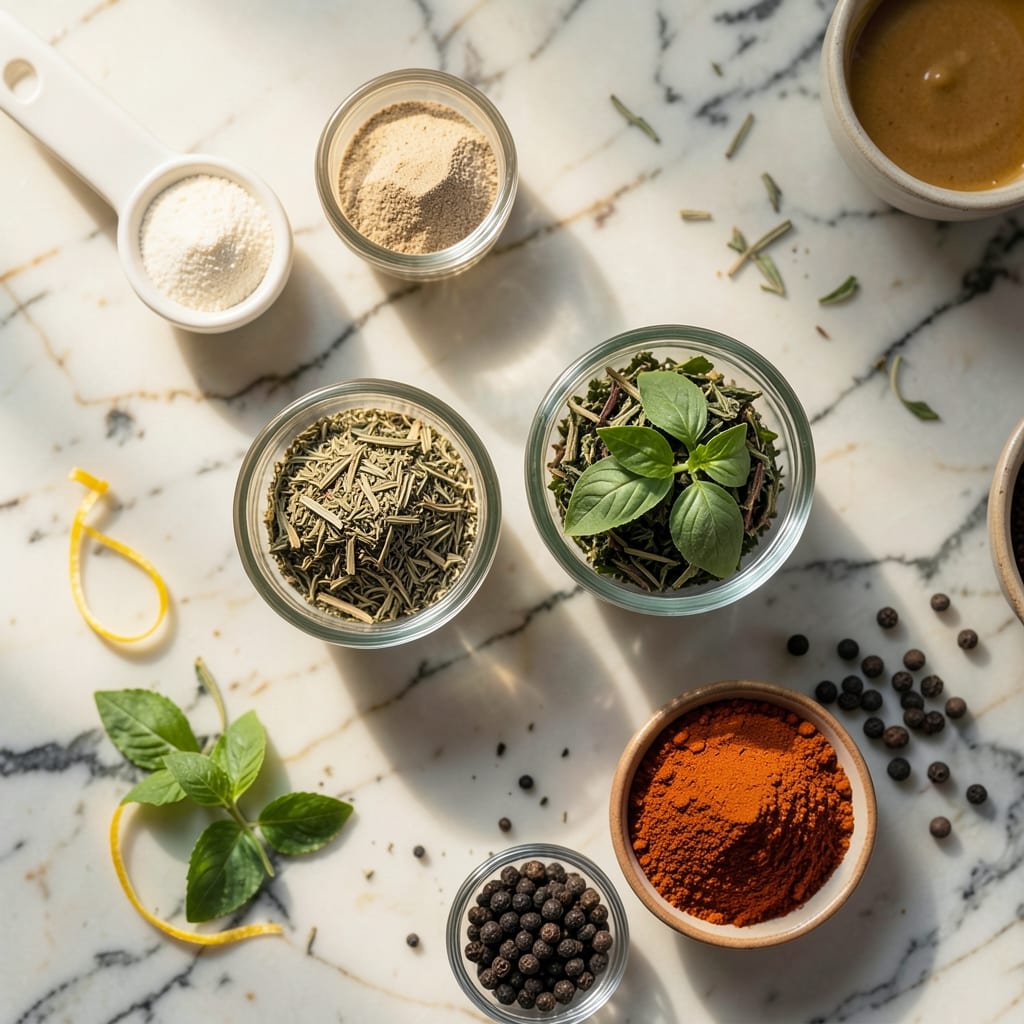
Getting that first whiff of hickory smoke always takes me back to family cookouts. This method delivers tender pork with deep smoky flavor and perfect char.
Low and slow is key—maintain consistent heat and let the meat rest. The result is fall-apart tender pork with a caramelized crust that’s worth the wait.
Ingredients for Grilled Pork Butt
Ten ingredients transform pork butt into smoky, fall-apart perfection on your grill.
| Ingredient | Amount | Notes |
|---|---|---|
| Pork Butt 🥩 | 4 lb | Bone-in, well-marbled preferred |
| Coarse Kosher Salt 🧂 | 2 tbsp | Diamond Crystal brand recommended |
| Freshly Ground Black Pepper 🌶️ | 2 tbsp | Coarse grind for texture |
| Brown Sugar 🍚 | ½ cup | Light or dark variety |
| Paprika 🌶️ | 1 tbsp | Smoked paprika for depth |
| Garlic Powder 🧄 | 1 tbsp | Not garlic salt |
| Onion Powder 🧅 | 1 tbsp | Freshly opened for potency |
| Hickory Wood Chips 🌳 | 2 cups | Soaked in water 1 hour |
| Apple Cider Vinegar 🍏 | ½ cup | For spritzing during cooking |
| Yellow Mustard 🟡 | ¼ cup | Binder for dry rub |
| Olive Oil 🫒 | 2 tbsp | For grilling grate |
[recipe_ingredient_scaler]
The pork butt is non-negotiable here. Bone-in, well-marbled cuts from Costco or a trusted butcher deliver the best results—avoid pre-trimmed lean pieces. Diamond Crystal kosher salt is my go-to for the rub; its coarse texture adheres better than fine grains. Hickory wood chips must be 100% natural (no additives) and soaked thoroughly to prevent flare-ups. Most hardware stores carry decent options, but Amazon has reliable bulk packs.
No hickory chips? Mesquite or apple wood work well—just adjust soaking time to 45 minutes for mesquite. Brown sugar can be swapped for honey (use one-third less by volume), though the molasses notes in brown sugar complement pork best. If you’re out of apple cider vinegar, white vinegar in a pinch—but expect a sharper tang. The mustard binder is flexible: Dijon adds complexity, while plain yellow keeps it classic.
Store pork butt in its original packaging until ready to prep—use within 3-4 days of purchase. Dry rub ingredients keep indefinitely in airtight containers. Soaked wood chips can be refrigerated overnight if prepping ahead. Leftovers? They reheat beautifully and freeze for up to 3 months.
Why You’ll Love This Recipe
- Set and Forget: I just season the pork butt with salt, pepper, brown sugar, and paprika, then let the grill do the work—no babysitting required.
- Smoky Sweet Crust: That brown sugar and paprika rub caramelizes into this ridiculously good crust that’s sticky, smoky, and just a little spicy.
- Feeds a Hungry Crowd: One pork butt stretches to sandwiches, tacos, or a hearty dinner—ideal for summer cookouts or meal prepping for the week.
- Leftovers for Days: Honestly, it tastes even better the next day in sandwiches or nachos, and my wallet loves how budget-friendly pork butt is.
Step-by-Step Instructions for Grilled Pork Butt
This method ensures slide-off-the-bone tenderness with deep smoky char every time.
Step 1: Prepare the Dry Rub and Season the Pork Butt
Combine the 2 tbsp Coarse Kosher Salt, 2 tbsp Freshly Ground Black Pepper, 0.5 cup Brown Sugar, 1 tbsp Paprika, 1 tbsp Garlic Powder, and 1 tbsp Onion Powder in a bowl. Stir until evenly blended—the brown sugar should be fully incorporated with no visible clumps.
Pat the 4 lb Pork Butt dry with paper towels to ensure the rub adheres properly. Apply the 0.25 cup Yellow Mustard evenly over all surfaces of the pork butt—this acts as a binder and adds subtle tang. Immediately coat the mustard-covered pork with the dry rub, pressing firmly so it forms a thick crust. Let it sit at room temperature for 30 minutes while you prepare the grill.
Step 2: Set Up the Grill for Indirect Heat with Smoke
Soak the 2 cups Hickory Wood Chips in water for at least 1 hour. Drain them just before use. This prevents the chips from burning too quickly and ensures steady smoke production throughout the cook.
Configure your grill for indirect heat: bank the coals to one side for charcoal grills or preheat only half the burners for gas grills. Aim for a stable temperature of 275°F on the cool side. Add the soaked hickory wood chips directly onto the coals or into a smoker box. You want consistent, thin blue smoke—not thick white smoke, which can impart bitter flavors. Lightly oil the grates with the 2 tbsp Olive Oil to prevent sticking.
Step 3: Smoke the Pork Butt to Ideal Internal Temperature
Place the pork butt on the cool side of the grill, fat-side up. Insert a meat probe into the thickest part, avoiding the bone. Maintain the grill temperature between 250-275°F and smoke undisturbed for 4-5 hours.
Every 45-60 minutes, spritz the pork with the 0.5 cup Apple Cider Vinegar to keep the surface moist and build layers of flavor. The bark should develop a dark, mahogany crust. You’ll know it’s nearing completion when the internal temperature reaches 195-203°F—this range ensures the connective tissue breaks down into gelatin for that signature tenderness.
Step 4: Rest and Serve for Maximum Juiciness
Once the pork butt reaches the target temperature and a probe slides in with no resistance, remove it from the grill. Wrap it tightly in foil and let it rest for 1 hour. This resting period allows the juices to redistribute throughout the meat—skipping this step will result in dry, stringy pork.
Unwrap the pork and discard any accumulated juices (or reserve for sauce). Shred the pork using two forks, pulling along the natural seams of the muscle. The meat should separate effortlessly, with a smoky aroma and a glistening, moist interior. Serve immediately on buns or as a main course, ensuring each portion has a mix of bark and tender meat.
Pro Tips For Making Grilled Pork Butt
- Score the Fat Cap: Cut 1/4-inch deep crosshatches into the fat cap before seasoning—this helps the brown sugar and paprika rub penetrate deeper and renders fat more evenly.
- Low and Slow Wins: Keep your grill between 225-250°F and resist the urge to crank it up. I learned this the hard way after turning out dry, tough pork butt twice.
- Rest Before Slicing: Let the pork butt rest under foil for at least 15 minutes after grilling—this keeps all those juices from running onto the cutting board instead of your plate.
- Double the Rub: Use more rub than you think, especially with coarse kosher salt and brown sugar. The initial coating will form a crust, but you need enough to actually season the meat beneath.
Health Benefits of grilled pork butt
Rich Protein Source
Pork butt delivers a serious protein punch—about 50 grams per 6-ounce serving. This supports muscle repair and growth, especially after those long rides along the coast when my body craves quality fuel. The slow cooking process actually preserves more of these nutrients than quick methods. 💪
Vitamin B Powerhouse
This cut is packed with B vitamins, particularly thiamine, niacin, and B12. These are essential for energy metabolism and nervous system health. I notice my energy levels stay steady when I include pork in my diet regularly.
Iron and Zinc Boost
You’ll get a healthy dose of iron and zinc from pork butt—about 15% of your daily iron and 30% of zinc per serving. These minerals support immune function and wound healing, which comes in handy for someone like me who’s always tinkering with new rub recipes.
Healthy Fats Balance
While it contains some saturated fat, pork butt also provides monounsaturated fats that support heart health. The marbling that makes it so tender also contributes to these beneficial fats. I always opt for well-marbled cuts from my local butcher.
Collagen Benefits
The connective tissue in pork butt breaks down into gelatin during slow cooking. This collagen provides amino acids that support skin, hair, and joint health. It’s why that fall-apart texture is as good for your body as it is for your taste buds. ✨
Low-Carb Friendly
With zero carbs naturally, pork butt fits perfectly into low-carb or keto diets. The dry rub adds minimal carbs—just 2-3 grams per serving from the brown sugar. I often serve mine with a side of grilled veggies for a complete, balanced meal.
Nutrition Facts

Trained in classic French technique but raised on slow-cooked ribs and spicy rubs, she blends culinary skill with smoke and soul.
- Recipe for Cut Up Chicken: One-Pan Crispy Bites - October 3, 2026
- Recipe For Oven Baked Haddock: Buttery Crumbs With Zesty Lemon Topping - October 3, 2026
- Recipe For Fried Salmon Patties With Flour: Crispy Golden Crust With Flaky Centers - October 3, 2026