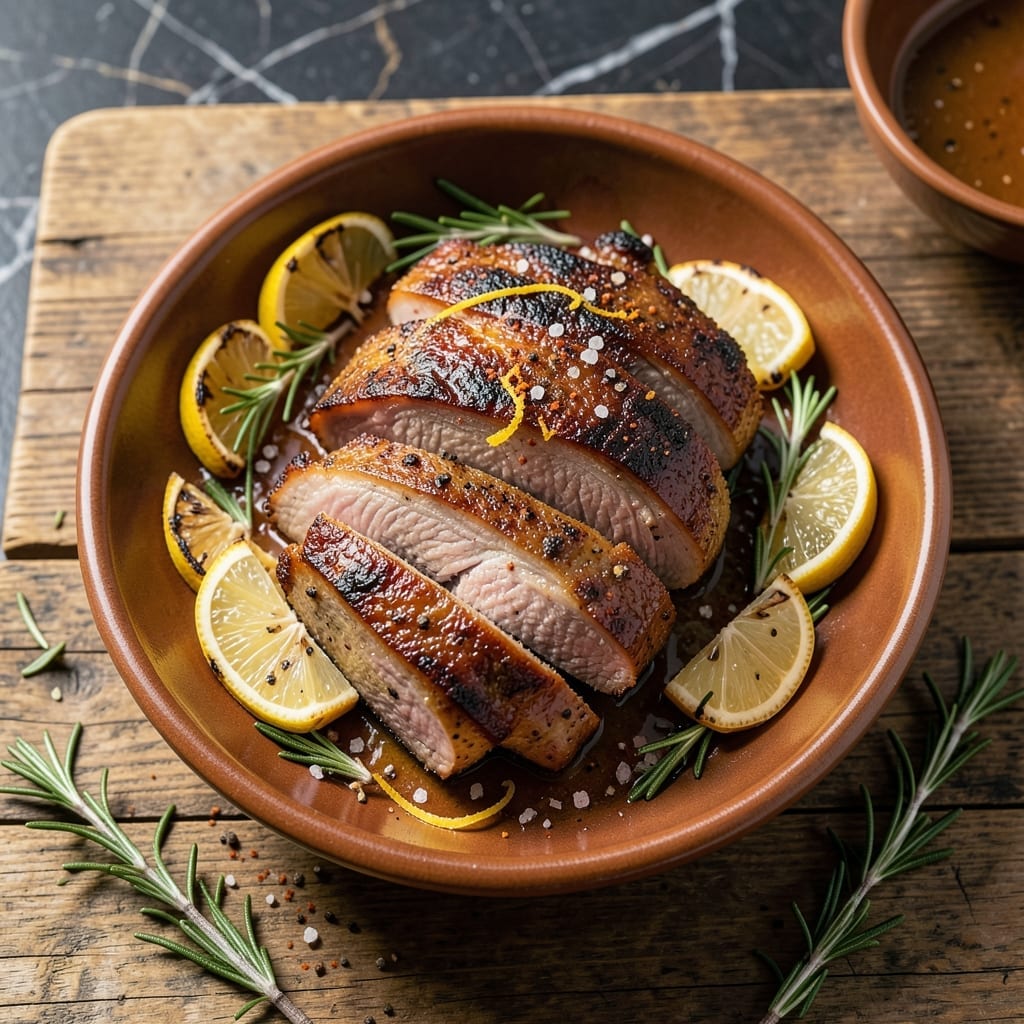
Few things compare to the aroma of pork ribeye roast hitting a hot grill. The smoky char and juicy interior make this dish unforgettable.
This method brings out the best in the cut, with a perfectly caramelized crust and tender slices. I’ve refined the technique over years of competitions and backyard cookouts.
With simple seasoning and precise timing, you’ll achieve restaurant-quality results. The key is patience—letting the roast rest ensures every bite stays succulent.
Serve with grilled vegetables or a fresh salad for a complete meal. The flavor speaks for itself.
Ingredients for Grilled Pork Ribeye Roast
Quality pork ribeye roast plus bold spices deliver that smoky, juicy perfection.
| Ingredient | Amount | Notes |
|---|---|---|
| Pork Ribeye Roast 🥩 | 3 lb | Bone-in, well-marbled preferred |
| Kosher Salt 🧂 | 2 tsp | Diamond Crystal preferred |
| Black Pepper 🌶️ | 1 tsp | Freshly cracked for best flavor |
| Garlic Powder 🧄 | 1 tsp | Not garlic salt |
| Onion Powder 🧅 | 1 tsp | Fresh ground preferred |
| Smoked Paprika 🌶️ | 1 tsp | Sweet or hot variety |
| Olive Oil 🫒 | 2 tbsp | For high-heat searing |
| Apple Cider Vinegar 🍏 | 1 tbsp | For acidity balance |
| Brown Sugar 🍚 | 1 tbsp | Light or dark works |
| Fresh Rosemary 🌿 | 2 tsp | Chopped, stems removed |
| Fresh Thyme 🍃 | 2 tsp | Leaves stripped from stems |
| Hardwood Charcoal 🔥 | 6 cups | Or lump charcoal alternative |
[recipe_ingredient_scaler]
The pork ribeye roast is everything here. Look for bone-in with good marbling—this keeps it moist during grilling. Costco or a quality butcher like Whole Foods are reliable sources. A 3-pound roast feeds four generously with leftovers. If buying pre-packaged, check the date—fresher means better flavor and texture. Avoid anything labeled ‘enhanced’ as it can make the meat mushy.
No smoked paprika? Regular paprika plus a pinch of cayenne works in a pinch. Fresh out of herbs? Dried rosemary and thyme at half the amount are fine substitutes. For the vinegar, white vinegar or lemon juice can replace apple cider—just use slightly less. The brown sugar adds caramelization, but honey or maple syrup (1 tbsp) works too if that’s what you’ve got.
Store the roast in the fridge for up to 3-4 days before cooking. Leftovers keep for 4-5 days refrigerated or freeze for 3 months. Bring the meat to room temperature before grilling—this ensures even cooking and that perfect crust.
Why You’ll Love This Recipe
- Five-Minute Prep: I just rub the roast with salt, pepper, garlic and onion powder—no marinating, no fuss.
- Crispy, Juicy Bite: That char from the grill locks in the juices while the spices give it a deep, savory kick.
- Feeds a Crowd: One roast serves my whole family with leftovers for sandwiches the next day.
- Budget-Friendly Centerpiece: A pork ribeye roast is cheaper than beef but still feels like a special occasion meal.
Step-by-Step Instructions for Grilled Pork Ribeye Roast
Master the technique for perfectly charred exterior and tender, juicy interior with these precise steps.
Step 1: Prepare the Dry Rub and Season the Roast
In a small bowl, combine the 2 tsp Kosher Salt, 1 tsp Black Pepper, 1 tsp Garlic Powder, 1 tsp Onion Powder, and 1 tsp Smoked Paprika. Stir until the spices are evenly distributed, breaking up any clumps in the brown sugar.
Pat the 3 lb Pork Ribeye Roast completely dry with paper towels—this ensures the rub adheres properly. Rub the spice mixture all over the pork, pressing firmly to create a uniform crust. Let the seasoned roast sit at room temperature for 30-45 minutes while you prepare the grill.
Step 2: Build the Charcoal Fire for Indirect Heat
Light the 6 cups Hardwood Charcoal in a chimney starter until fully ashed over, about 15-20 minutes. Pour the hot coals onto one side of your grill, leaving the other side empty for indirect cooking. This two-zone fire setup allows you to sear directly over the coals, then finish cooking gently away from the heat.
Place the grill grate on and preheat for 5 minutes with the lid closed. Clean the grate thoroughly with a brush, then oil it lightly with a paper towel dipped in olive oil to prevent sticking.
Step 3: Sear and Infuse with Aromatics
In a small bowl, mix the 2 tbsp Olive Oil, 1 tbsp Apple Cider Vinegar, 1 tbsp Brown Sugar, 2 tsp Fresh Rosemary, and 2 tsp Fresh Thyme. Brush this mixture all over the pork ribeye roast, coating it evenly.
Place the roast directly over the hot coals. Sear for 3-4 minutes per side until each surface develops a deep, rich brown crust. Move the roast to the cool side of the grill, cover, and let it cook indirectly.
Step 4: Cook to Ideal Internal Temperature
Maintain the grill temperature between 325-350°F by adjusting the vents as needed. Cook the roast with the lid closed until the internal temperature reaches 145°F in the thickest part, about 45-60 minutes.
Check the temperature with an instant-read thermometer—when it hits 140°F, start checking every 5 minutes to avoid overcooking. The meat should pull away slightly from the bone and feel tender when pressed.
Step 5: Rest and Slice Against the Grain
Transfer the roast to a cutting board and tent loosely with foil. Let it rest for 15 minutes—this allows the juices to redistribute for maximum tenderness. Slice against the grain into ½-inch thick pieces, serving the end pieces first as they tend to be the most well-done.
The finished roast should have a smoky, caramelized exterior with a pink, juicy center. Serve immediately while warm, with any accumulated juices spooned over the top.
Pro Tips For Making Grilled Pork Ribeye Roast
- Reverse Sear First: Start with indirect heat at 225°F until the internal temp hits 110°F, then sear over direct heat. I learned this the hard way—skipping this step left me with dry edges and a raw center.
- Dry the Surface: Pat the roast bone-dry with paper towels before seasoning. Sounds weird, but it works: the salt and spices stick better, and you’ll get that perfect crust.
- Skip the Overcrowding: Leave at least 2 inches between the roast and any other food on the grill. After burning three batches, I finally figured out that steam from crowded food ruins the sear.
- Rest Under Foil: Tent the roast with foil and let it rest for 15-20 minutes after grilling. My grandmother swore by this, and she was right: it keeps all the juices inside where they belong.
Pro Cooking Tips for Perfect Results
Two-Zone Fire Control
Set up your grill with coals on one side for direct heat and an empty side for indirect cooking. This lets you sear the roast first, then finish it gently. I use a chimney starter with 6 cups hardwood charcoal for even, consistent heat. 🔥
Perfect Sear Technique
Sear the roast over direct heat for 3-4 minutes per side until a deep brown crust forms. Press firmly when applying the dry rub—this creates that signature bark we all love. The crust locks in juices for the indirect cooking phase.
Temperature Precision
Maintain 325-350°F in your grill by adjusting the vents. Use a dual-probe thermometer—one for grill temp, one for meat. I swear by ThermoWorks for accuracy. Pull the roast at 145°F internal for perfect doneness.
Resting Matters
Let the roast rest 15 minutes under foil before slicing. This step is non-negotiable—it allows juices to redistribute. I learned this the hard way at my first BBQ competition when I sliced too soon.
Slicing Like a Pro
Slice against the grain into ½-inch pieces for maximum tenderness. The end pieces will be more well-done, so serve those to guests who prefer their pork that way. A sharp 12-inch knife makes clean cuts. 💡
Aromatic Infusion
Brush the roast with a mix of olive oil, apple cider vinegar, and fresh herbs before searing. This adds layers of flavor and helps the crust develop. I forage wild rosemary for an extra earthy note.
Nutrition Facts
Frequently Asked Questions
How long should I let the pork rest after grilling?
Let it rest for 15 minutes under foil. This allows juices to redistribute, ensuring every slice stays tender and juicy. Skipping this step can lead to dry meat.
Can I use a gas grill instead of charcoal?
Yes! Preheat to 325-350°F and use a two-zone setup. Charcoal adds smokiness, but gas works fine with wood chips for extra flavor.
What if my roast isn’t cooking evenly?
Rotate it occasionally and ensure the grill vents are open for consistent heat. Use a thermometer to check both grill and meat temps.
Is it safe to eat pork at 145°F?
The USDA confirms 145°F is safe for whole cuts like roasts, with a 3-minute rest afterward. This temp keeps it juicy.

Trained in classic French technique but raised on slow-cooked ribs and spicy rubs, she blends culinary skill with smoke and soul.
- Recipe for Kabsa Rice: Spiced Middle Eastern Feast in One Pot - October 3, 2026
- Hamburger Stir Fry Recipe Healthy: Lean Protein and Veggie-Packed Dinner - October 3, 2026
- Recipe for Curried Lamb Chops: Spice-Rubbed and Pan-Seared to Succulence - October 3, 2026