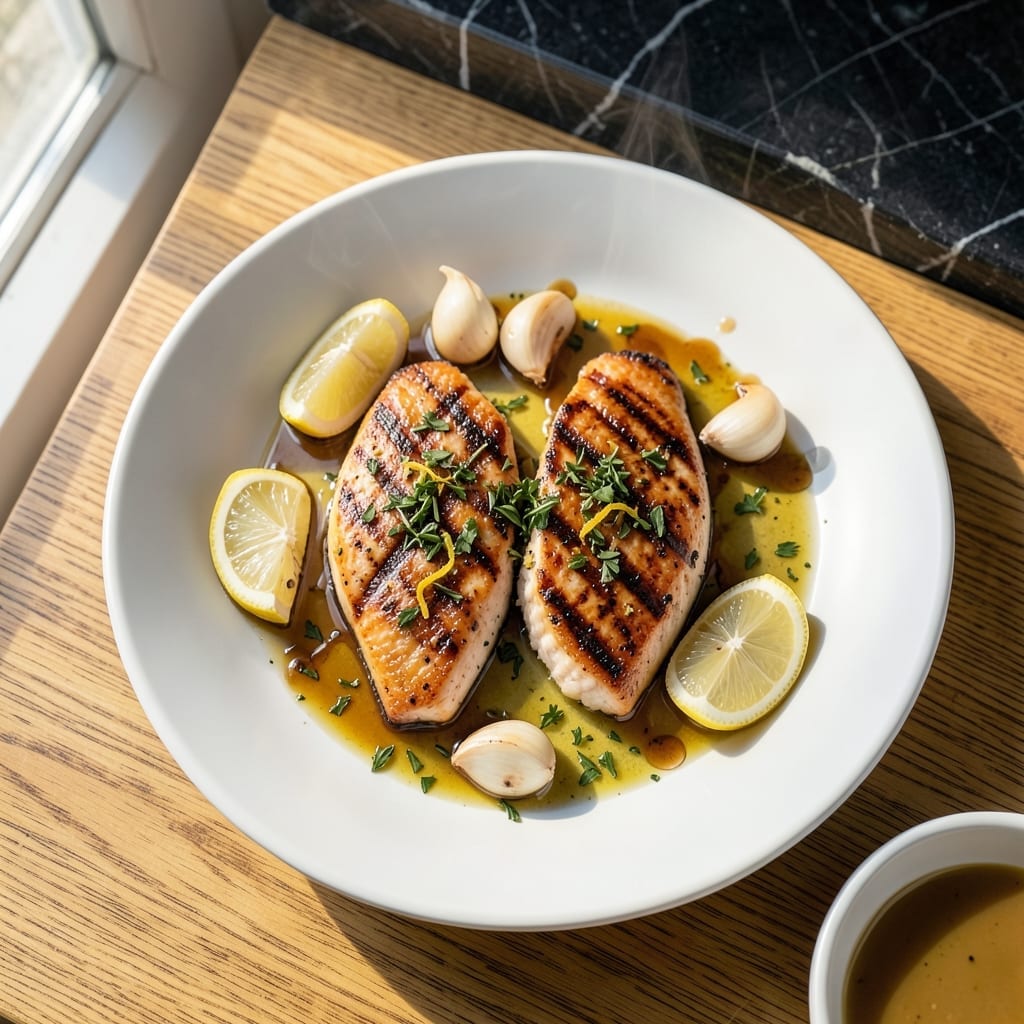
This grilled salmon recipe elevates simple fillets with bright lemon and fragrant rosemary. The herbs infuse the fish as it cooks, creating flaky texture and restaurant-quality flavor at home.
I developed this method after testing countless variations, focusing on precise timing and heat control. The lemon adds acidity that cuts through the richness, while rosemary brings earthy depth to each bite.
The result is tender, perfectly cooked salmon with a subtle char from the grill. The aromatic herbs and citrus create a balanced, sophisticated dish that impresses without effort.
Serve with seasonal vegetables or a light salad for a complete meal. Here’s how to achieve these results every time.
Ingredients for Grilled Salmon Recipe Lemon Rosemary
Wild-caught salmon, bright lemon, and fresh rosemary bring restaurant flair to your grill.
| Ingredient | Amount | Notes |
|---|---|---|
| Salmon Fillets 🐟 | 1 ½ lb | Skin-on, wild-caught preferred |
| Fresh Lemon 🍋 | 1 whole | Zested and juiced |
| Fresh Rosemary 🌿 | 2 tbsp | Finely chopped, stems removed |
| Olive Oil 🫒 | 3 tbsp | Extra-virgin preferred |
| Garlic Cloves 🧄 | 3 cloves | Minced finely |
| Salt 🧂 | 1 tsp | Kosher or sea salt |
| Black Pepper 🌶️ | ½ tsp | Freshly ground |
| Dijon Mustard 🟡 | 1 tbsp | For marinade depth |
| Honey 🍯 | 1 tbsp | Balances acidity |
| Red Pepper Flakes 🔥 | ¼ tsp | Optional for heat |
[recipe_ingredient_scaler]
The salmon is the star—wild-caught sockeye or king have the richest flavor and hold up best on the grill. Look for fillets with vibrant color and a mild scent (avoid anything fishy-smelling). Whole Foods and Trader Joe’s typically carry high-quality options. For the rosemary, fresh sprigs from the produce section pack more aroma than dried. Don’t skimp on the olive oil either—extra-virgin adds depth to the marinade.
No fresh rosemary? Dried works at half the amount, but rehydrate it in warm water for 10 minutes first. Out of lemon? Lime zest and juice offer a similar brightness. The honey can be swapped for maple syrup if you prefer a vegan option. For a milder mustard, yellow mustard works in a pinch, though Dijon’s sharpness pairs best with the salmon’s richness.
Marinate the salmon for no more than 30 minutes—the acid in the lemon can start to cook the fish. Store fresh herbs wrapped in damp paper towels for up to 5 days. Leftover cooked salmon keeps in the fridge for 2-3 days and reheats gently in a skillet.
Why You’ll Love This Recipe
- Ready in 15: I can get this from fridge to plate faster than ordering takeout, with just a quick marinade of olive oil, garlic, and rosemary.
- Bright and Zesty: The lemon and rosemary make the salmon taste like a fancy restaurant dish, but it’s honestly just five ingredients.
- Meal Prep Magic: Leftovers taste amazing cold in salads or wrapped in a tortilla the next day—no reheating needed.
- Budget Luxury: Salmon feels like a splurge, but this recipe stretches one fillet into a satisfying meal with bold flavors.
Step-by-Step Instructions for Grilled Salmon with Lemon and Rosemary
Follow this method precisely and you’ll achieve restaurant-quality results with perfectly flaky texture.
Step 1: Prepare the Lemon Rosemary Marinade
In a small bowl, whisk together the 3 tbsp olive oil, 1 tbsp Dijon mustard, 1 tbsp honey, zest and juice of the 1 whole fresh lemon, minced 3 cloves garlic cloves, 2 tbsp fresh rosemary, 1 tsp salt, 0.5 tsp black pepper, and 0.25 tsp red pepper flakes.
This marinade balances bright citrus with herbal depth while the mustard and honey create a glossy finish. Let it sit for 5 minutes to allow the flavors to meld before using.
Step 2: Marinate the Salmon Fillets
Place the 1.5 lb salmon fillets skin-side down on a shallow dish. Pour the marinade over them, ensuring both sides are fully coated. I always use a spoon to spread any thick bits of mustard or honey evenly across the surface.
Let the salmon marinate at room temperature for 15-20 minutes. Don’t exceed 30 minutes—the acid in the lemon can begin to “cook” the fish, turning the texture mealy instead of flaky. This step infuses the salmon with flavor while keeping it moist during grilling.
Step 3: Preheat and Oil the Grill
Preheat your grill to medium-high heat (about 400°F). A properly hot grill is essential for achieving those desirable grill marks and preventing the fish from sticking. Clean the grates thoroughly with a grill brush to remove any residue.
Once hot, use tongs to rub a folded paper towel dipped in a bit of the olive oil over the grates. This creates a non-stick surface. The grates should sizzle when the salmon touches them—if not, wait another 2-3 minutes for the grill to reach the right temperature.
Step 4: Grill the Salmon to Perfection
Place the marinated salmon fillets skin-side down on the oiled grates. Close the lid and grill for 4-5 minutes. Resist the urge to move them—this is when the skin crisps and the fish develops those beautiful char marks.
Flip the fillets gently using a wide spatula and grill for another 3-4 minutes until the salmon is opaque throughout and flakes easily when tested with a fork. The internal temperature should reach 145°F. If the edges start to blacken, move the fillets to a cooler part of the grill to finish cooking.
Step 5: Rest and Serve Immediately
Transfer the grilled salmon to a serving platter and let it rest for 3-5 minutes. This brief rest allows the muscle fibers to relax, ensuring the fillets stay intact and flaky when served.
Garnish with any remaining fresh rosemary and lemon slices if desired. Serve while warm—the salmon should have a golden crust, moist interior, and a bright, herby aroma from the lemon and rosemary. The flakes should separate effortlessly with a fork.
Pro Tips For Making Grilled Salmon Recipe Lemon Rosemary
- Preheat the Grill: Crank it to medium-high (around 400°F) and let it sit for 10 minutes—salmon sticks to cool grates, and I learned this the hard way after ruining two fillets.
- Pat Salmon Dry: Use paper towels to remove every bit of moisture from the fillets; it guarantees a good sear instead of steamed fish.
- Skip the Skin Flipping: Start with the skin side down and resist the urge to flip more than once—it keeps the fish intact and prevents tearing.
- Infuse the Oil: Warm the olive oil with crushed garlic and rosemary for 5 minutes before brushing it on the salmon; it adds depth without extra effort.
Perfect Pairings for This Dish
Wine Pairings
A crisp Sauvignon Blanc from New Zealand mirrors the lemon’s brightness while complementing the rosemary’s earthiness. I love Kim Crawford or Oyster Bay—their citrus notes feel like an extension of the dish. Serve chilled at 45-50°F. 🍷
Beer Options
A light Belgian witbier like Hoegaarden or Blue Moon offers citrusy coriander notes that echo the lemon. The wheat base adds a soft creaminess that pairs beautifully with the salmon’s texture. Avoid hop-heavy IPAs—they’ll overpower the delicate flavors.
For something local, I often grab a coastal pilsner from a nearby brewery. The subtle saltiness enhances the fish’s natural richness.
Side Dish Ideas
Try grilled asparagus tossed with 1 tbsp olive oil and a pinch of salt—its smoky char complements the salmon perfectly. Or serve with a quinoa salad featuring cucumber, cherry tomatoes, and a lemon vinaigrette to double down on the citrus theme.
Light Salads
A simple arugula salad with shaved fennel, lemon zest, and a drizzle of extra-virgin olive oil cuts through the richness. I like to add toasted pine nuts for crunch. The peppery arugula balances the salmon’s buttery texture beautifully. 🥗
Nutrition Facts
Frequently Asked Questions
What’s the best way to keep salmon from sticking to the grill?
Preheat to 400°F and oil the grates with a paper towel dipped in oil. Use tongs to avoid burns. Place salmon skin-side down and don’t move it for 4-5 minutes to form a crisp crust.
Can I use dried rosemary instead of fresh?
Yes, but use half the amount and rehydrate in warm water for 10 minutes. Fresh rosemary has a brighter flavor, but dried works in a pinch.
How do I know when the salmon is done?
Check for an internal temperature of 145°F and opaque flesh that flakes easily with a fork. Overcooking dries it out, so pull it off just as it reaches temperature.
Can I make this recipe indoors?
Use a grill pan on medium-high heat or bake at 400°F for 12-15 minutes. The flavor will be similar, though you’ll miss the smoky char.

Trained in classic French technique but raised on slow-cooked ribs and spicy rubs, she blends culinary skill with smoke and soul.
- Hamburgers in Sauce Recipe Crock Pot: Slow-Cooked Savory Delight - October 3, 2026
- Sanjeev Kapoor Egg Biryani Recipe: Fragrant Spiced Rice With Boiled Eggs - October 3, 2026
- Recipe for French Pork Spread Gorton: Savory Gallic Flavors in a Spreadable Delight - October 3, 2026