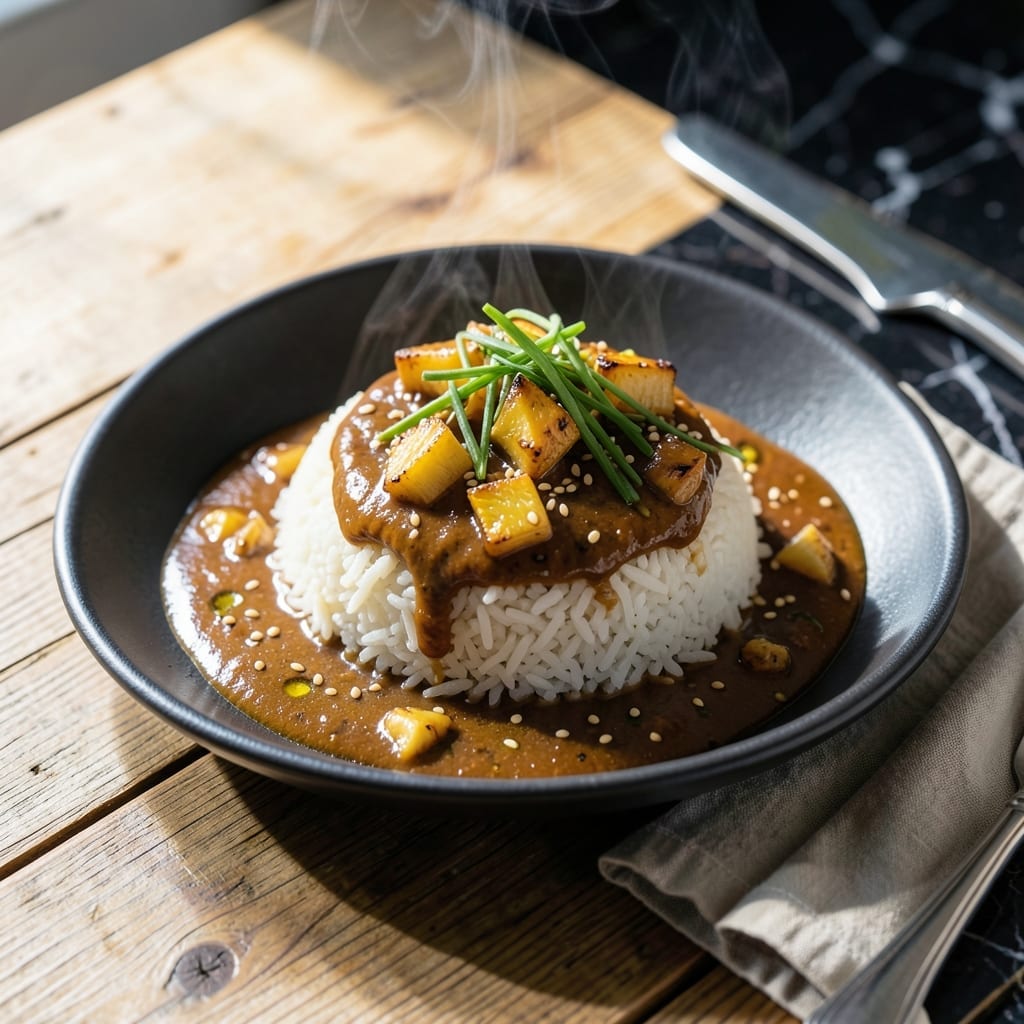
This sauce captures the essence of Honolulu’s famous plate lunches, blending sweet, savory, and umami into a versatile drizzle. I’ve refined the balance to complement grilled meats and rice bowls perfectly.
Simple ingredients come together for a tropical twist that elevates any dish. Use it as a marinade, finishing sauce, or dipping condiment for bold, authentic flavor.
Ingredients for Honolulu Grill Rice Sauce
Nine ingredients create this bold tropical umami sauce that elevates every bite.
| Ingredient | Amount | Notes |
|---|---|---|
| Soy Sauce 💧 | ½ cup | Low-sodium preferred for balance |
| Pineapple Juice 🍍 | ½ cup | 100% juice, no added sugar |
| Brown Sugar 🍚 | ¼ cup | Light or dark, packed |
| Rice Vinegar 💧 | 3 tbsp | Unseasoned for clean acidity |
| Fresh Ginger 🌿 | 1 tbsp | Peeled and finely grated |
| Garlic Cloves 🧄 | 3 cloves | Peeled and minced |
| Green Onions 🧅 | 3 whole | Thinly sliced, white and green parts |
| Sesame Oil 🫒 | 1 tbsp | Toasted for nutty aroma |
| Red Pepper Flakes 🌶️ | ½ tsp | Adjust to heat preference |
[recipe_ingredient_scaler]
Soy sauce is the backbone here—Kikkoman low-sodium is my go-to for its clean, balanced flavor. Pineapple juice should be 100% pure; skip the cocktail blends with added syrups. For ginger and garlic, fresh is non-negotiable (the jarred stuff lacks the bright, sharp punch). Most supermarkets carry everything, but Asian markets often have superior rice vinegar and sesame oil at better prices.
No pineapple juice? Orange juice with a squeeze of lime works in a pinch, though the flavor shifts slightly. Brown sugar can be swapped for honey or maple syrup (adjust to taste). Out of fresh ginger? Ground ginger at one-quarter the amount saves the day. If you’re avoiding heat, omit the red pepper flakes entirely—it’ll still taste authentic.
This sauce keeps beautifully. Store in an airtight jar in the fridge for up to 2 weeks. The flavors meld and deepen over time, so make it a day ahead if possible. Freeze for 3 months if you’ve made a big batch.
Why You’ll Love This Recipe
- 5-Minute Mix: I just dump the soy sauce, pineapple juice, and brown sugar in a pot and let it simmer—no whisking, no fuss.
- Sweet-Tangy Balance: The brown sugar and rice vinegar create this crazy-good contrast that makes every bite pop.
- Pairs with Everything: I use it on rice bowls, grilled chicken, even as a stir-fry finisher. Honestly, it’s my weekday MVP.
- Makes Extra: I always double the batch because it keeps for a week, and I’ll be real: leftovers taste even better.
Step-by-Step Instructions for Honolulu Grill Rice Sauce
This simple method transforms basic ingredients into a vibrant, balanced sauce perfect for drizzling.
Step 1: Combine Wet Ingredients and Sweeteners
In a medium saucepan, combine the 0.5 cup soy sauce, 0.5 cup pineapple juice, and 0.25 cup brown sugar. Stir well to dissolve the sugar completely—this creates the sweet-savory foundation that defines the sauce.
Add the 3 tbsp rice vinegar at this stage. The vinegar’s acidity balances the sweetness and saltiness, creating that signature umami depth. Heat the mixture over medium heat until it just begins to simmer around the edges.
Step 2: Infuse with Aromatics
Once simmering, stir in the 1 tbsp fresh ginger and 3 cloves garlic cloves. These aromatics release their fragrances quickly, so keep the heat at a gentle simmer to avoid burning. Cook for 2-3 minutes until the mixture becomes fragrant and the ginger and garlic soften slightly.
Watch for small bubbles forming at the surface—this indicates the sauce is at the right temperature for infusion. The ginger and garlic should mellow but retain their fresh, pungent character.
Step 3: Finish with Oil and Heat
Remove the saucepan from heat and stir in the 1 tbsp sesame oil. This step preserves the oil’s nutty aroma, which would diminish if exposed to high heat for too long. The oil adds a rich, toasty layer that complements the tropical and umami notes.
Add the 0.5 tsp red pepper flakes and let the sauce sit for 1-2 minutes to allow the heat to infuse. Taste and adjust the spice level if needed, though the flakes will develop more intensity as the sauce rests.
Step 4: Incorporate Freshness and Serve
Stir in the 3 whole green onions, reserving a small handful for garnish if desired. The green onions add a bright, fresh finish that cuts through the richness of the sauce. Let the mixture cool for 5-10 minutes before using.
The sauce should be glossy and slightly thickened, with visible flecks of ginger, garlic, and green onion. Use it warm or at room temperature to drizzle over rice, grilled meats, or vegetables for a burst of Honolulu-inspired flavor.
Pro Tips For Making Honolulu Grill Rice Sauce
- Simmer, Don’t Boil: Keep the heat at a gentle simmer when reducing the sauce—I learned this the hard way after burning the brown sugar in my first three attempts.
- Grate the Ginger: Use freshly grated ginger instead of minced for a smoother texture and more even flavor distribution in the sauce.
- Balance the Sweet: Taste before serving and add a splash of rice vinegar if the brown sugar and pineapple juice make it too sweet—sounds obvious, but it’s easy to overlook.
- Strain the Pineapple: If using fresh pineapple, strain the juice to remove pulp for a silkier sauce—yes, it’s an extra step, but worth it.
Storing and Reheating Leftovers
Fridge Storage
Let the sauce cool completely at room temperature for about 30 minutes. Transfer to a clean airtight glass jar—I love using Ball Mason jars for this. It’ll keep beautifully in the fridge for up to 2 weeks, and the flavors actually deepen over time. ❄️
Freezer Option
For longer storage, freeze in ice cube trays first, then transfer the cubes to a freezer bag. This way, you can thaw just what you need. The sauce stays fresh for 3 months in the freezer without losing its vibrant tropical notes.
Stovetop Reheating
Gently warm the sauce in a small saucepan over low heat for 3-5 minutes. Stir frequently to prevent sticking, and add a splash of water if it thickens too much. This method preserves the balance of flavors perfectly.
Microwave Method
For a quick fix, microwave in 15-second bursts at 50% power, stirring between each. This prevents hot spots and keeps the sauce from separating. I find this works best for small portions. 🔥
Room Temperature Use
Honestly, this sauce tastes amazing straight from the fridge or even at room temperature. The flavors are bold enough to shine cold, making it perfect for drizzling over cold rice bowls or salads.
Nutrition Facts
Frequently Asked Questions
Can I use canned pineapple instead of juice?
Yes, blend canned pineapple chunks with their juice until smooth for a thicker texture. Strain if you prefer a smoother sauce. The flavor remains tropical and balanced.
How can I make this sauce gluten-free?
Simply swap regular soy sauce for tamari or coconut aminos. Both provide the same umami depth without gluten. Adjust saltiness to taste.
What if my sauce turns out too thin?
Simmer uncovered for an extra 3-5 minutes to reduce. For a quick fix, mix 1 tsp cornstarch with water and stir in while warm.
Does this pair well with seafood?
It’s fantastic with grilled shrimp, mahi-mahi, or scallops. The sweetness complements the natural flavors beautifully.

Trained in classic French technique but raised on slow-cooked ribs and spicy rubs, she blends culinary skill with smoke and soul.
- Hamburgers in Sauce Recipe Crock Pot: Slow-Cooked Savory Delight - October 3, 2026
- Sanjeev Kapoor Egg Biryani Recipe: Fragrant Spiced Rice With Boiled Eggs - October 3, 2026
- Recipe for French Pork Spread Gorton: Savory Gallic Flavors in a Spreadable Delight - October 3, 2026