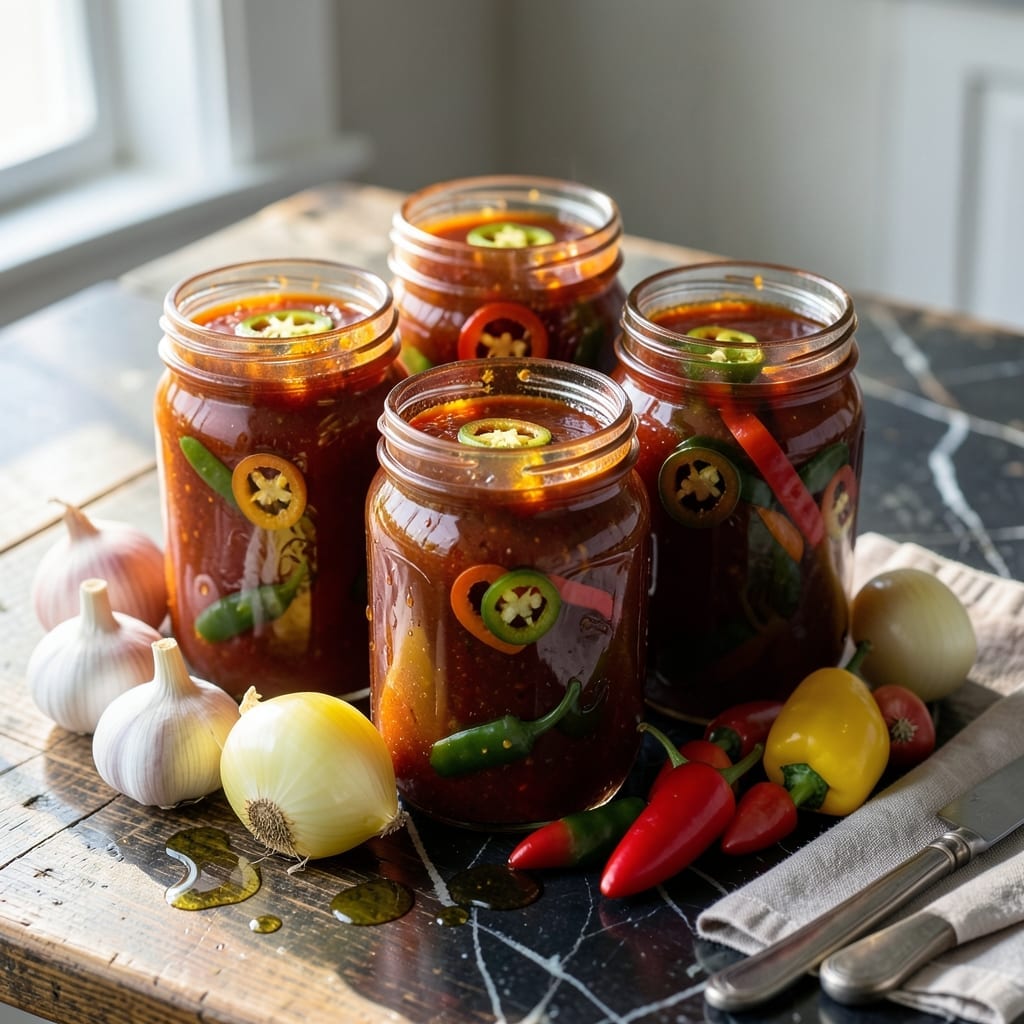
This proven method delivers a fiery hot pepper sauce with lasting shelf stability. The process combines fresh peppers, vinegar, and spices into a bold condiment ready for canning.
No special equipment needed—just simple ingredients and precise timing. The result is a versatile sauce that preserves its heat and flavor for months.
Ingredients for Hot Pepper Sauce Recipe for Canning
Ten simple ingredients transform into a bold, fiery condiment with lasting shelf stability.
| Ingredient | Amount | Notes |
|---|---|---|
| Fresh Hot Peppers 🌶️ | 2 lb | Jalapeño, serrano, or habanero, stems removed |
| White Vinegar 🍶 | 3 cups | 5% acidity for preservation |
| Apple Cider Vinegar 🍏 | 1 cup | Adds depth of flavor |
| Garlic Cloves 🧄 | 8 cloves | Peeled and smashed |
| Yellow Onion 🧅 | 1 whole | Medium, roughly chopped |
| Kosher Salt 🧂 | 2 tbsp | Diamond Crystal preferred |
| Granulated Sugar 🍚 | ¼ cup | Balances acidity and heat |
| Black Peppercorns 🌶️ | 1 tbsp | Whole, for infusion |
| Dried Oregano 🍃 | 1 tsp | Mexican oregano preferred |
| Dried Thyme 🌿 | 1 tsp | Crushed for better release |
[recipe_ingredient_scaler]
The peppers define the heat level—jalapeños for mild, serranos for medium, habaneros for intense fire. Source from a farmers market for peak freshness and vibrant color. Use 5% acidity vinegar exclusively; anything less compromises preservation. Diamond Crystal kosher salt is ideal for its clean flavor and precise measurement. Avoid iodized table salt, as it can impart a metallic taste over time.
Need to adjust the heat? Reduce habaneros or seed all peppers for milder sauce. No fresh peppers? Dried chiles rehydrated in vinegar work in a pinch, though fresh is superior. For depth, substitute half the white vinegar with apple cider vinegar. The sugar balances acidity—honey or agave can replace it, but stick to granulated for consistency in canning.
This sauce keeps its punch for 12-18 months when properly canned. Store in a cool, dark pantry. Once opened, refrigerate and use within 1 month. Always use sterilized jars and follow tested canning procedures for safety.
Why You’ll Love This Recipe
- Minimal Chopping: I just toss peppers, onion, and garlic in the blender—no fancy knife skills needed.
- Fiery & Tangy: The mix of apple cider and white vinegar with fresh peppers gives it that bright, punchy kick.
- Pantry Staple: Honestly, I reach for this on tacos, eggs, even pizza—lasts months in the jar.
- Budget Friendly: A handful of peppers and vinegar makes gallons of sauce for pennies.
Step-by-Step Instructions for Hot Pepper Sauce for Canning
This tested method ensures proper preservation and maximum flavor development for your sauce.
Step 1: Prepare and Blanch the Peppers
Begin by wearing gloves to protect your hands from the capsaicin in the 2 lb Fresh Hot Peppers. Remove stems and roughly chop the peppers, keeping seeds if you want extra heat. This variety works well with jalapeño, serrano, or habanero peppers as specified.
Blanch the chopped peppers in boiling water for 3 minutes, then immediately transfer to an ice bath to stop the cooking process. This step softens the peppers while preserving their vibrant color and pungent flavor. Drain thoroughly before proceeding to the next step.
Step 2: Infuse the Vinegar Base with Aromatics
In a large stainless steel pot, combine the 3 cups White Vinegar and 1 cup Apple Cider Vinegar. Add the 8 cloves Garlic Cloves (peeled and smashed), 1 whole Yellow Onion (roughly chopped), 1 tbsp Black Peppercorns, 1 tsp Dried Oregano, and 1 tsp Dried Thyme.
Bring the mixture to a gentle simmer over medium heat and maintain for 10 minutes to allow the aromatics to infuse fully. The vinegar will take on a golden hue and the kitchen will fill with a fragrant, spicy aroma. This infusion builds the complex flavor foundation for your sauce.
Step 3: Combine All Ingredients and Simmer
Add the blanched peppers to the vinegar mixture along with the 2 tbsp Kosher Salt and 0.25 cup Granulated Sugar. The sugar balances the acidity of the vinegars and the heat of the peppers, creating a harmonious flavor profile that’s both tangy and spicy.
Stir well to dissolve the salt and sugar completely. Bring the mixture to a boil, then reduce heat to maintain a gentle simmer. Cook for 15-20 minutes until the peppers are very soft and the flavors have melded together. Stir occasionally to prevent sticking.
Step 4: Process the Sauce for Smooth Texture
Remove the pot from heat and let the mixture cool slightly for 5-10 minutes. Using an immersion blender, purée the sauce until smooth. For a thinner consistency, you can strain the mixture through a fine-mesh sieve to remove any remaining solids.
The final texture should be uniform and slightly thick, with no visible chunks of pepper or onion. Taste and adjust seasoning if needed, though the specified quantities should provide the perfect balance of heat, acidity, and sweetness.
Step 5: Can and Process for Long-Term Storage
Ladle the hot sauce into sterilized pint jars, leaving ½-inch headspace. Wipe the rims clean with a damp cloth, then apply lids and rings, tightening to fingertip-tight. This headspace is crucial for proper sealing during the canning process.
Process the jars in a water bath canner for 15 minutes (adjusting for altitude if necessary). After processing, remove the jars and let them cool undisturbed for 12-24 hours. You’ll hear the satisfying “ping” of lids sealing as they cool. Store in a cool, dark place for up to 1 year for optimal flavor and safety.
Pro Tips For Making Hot Pepper Sauce Recipe For Canning
- Use Gloves Always: I learned this the hard way—hot pepper oils linger on skin for hours, and touching your face after chopping will ruin your day. Wear nitrile gloves when handling the peppers.
- Simmer Low and Slow: After combining all ingredients, keep the heat at a gentle simmer for 15-20 minutes—this mellows the raw vinegar bite while letting the flavors meld.
- Skip the Seeds: For a milder sauce, remove all pepper seeds and membranes before blending; if you want extra heat, leave some in but expect the heat to intensify over time in the jar.
- Balance the Vinegars: I was skeptical until I tried it, but using equal parts white vinegar and apple cider vinegar actually changes the outcome. The white keeps it bright, while the cider adds depth.
Wine and Beer Pairings for This Recipe
Beer Pairings
Spicy hot pepper sauce calls for beers that can stand up to the heat while complementing its bold flavors. A Hefeweizen with its citrusy, clove-like notes and subtle sweetness helps balance the fiery kick, making each bite more enjoyable. For a bolder match, try an IPA—the hoppy bitterness cuts through the heat and enhances the sauce’s complexity. If you prefer something darker, a Porter with its roasted malt flavors adds a rich, smoky contrast to the spice.
Wine Pairings
Wine lovers can turn to off-dry options to tame the heat. A Riesling with its crisp acidity and hints of stone fruit or honey provides a refreshing counterbalance. For a red wine, consider a Zinfandel—its jammy, peppery notes echo the sauce’s spice while its bold body holds its own. If you enjoy a bit of effervescence, a chilled Lambrusco offers a semi-sweet, slightly fizzy pairing that cools the palate.
Non-Alcoholic Options
For a non-alcoholic pairing, try a ginger beer—its spicy, effervescent bite complements the heat beautifully. A sparkling lemonade with a touch of mint also works wonders, offering a sweet and tangy contrast that refreshes between bites. Both options keep the focus on the sauce’s fiery character while soothing the palate.
Nutrition Facts

Trained in classic French technique but raised on slow-cooked ribs and spicy rubs, she blends culinary skill with smoke and soul.
- Recipe for Fried Prawns Batter: Ultra-Crispy Golden Shell - October 3, 2026
- Indian Lamb Curry Recipe Pressure Cooker: Fragrant Spices in a Fraction of the Time - October 3, 2026
- Recipe for Oven Roasted: Golden Crisp Perfection Without the Fryer - October 3, 2026