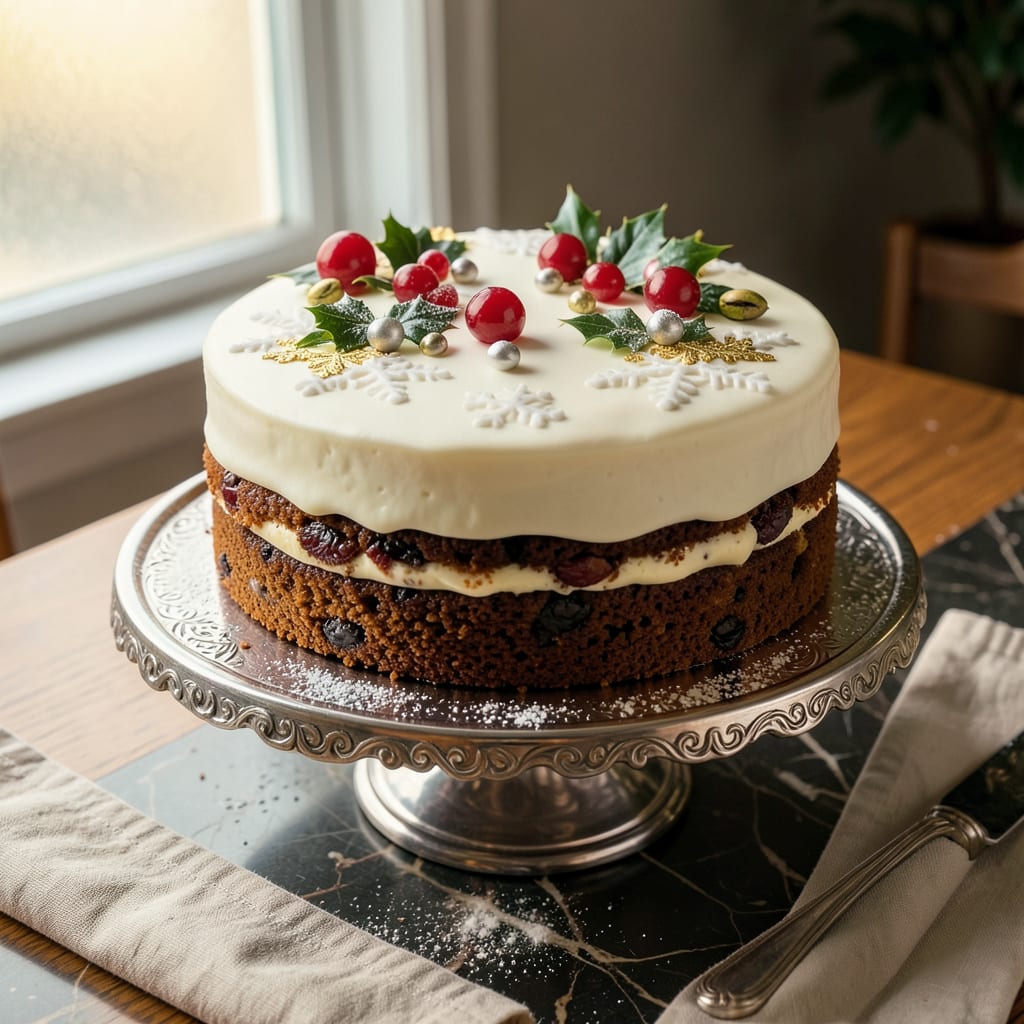
A traditional Christmas cake stays fresh for 2-3 weeks at room temperature in an airtight container, up to 3 months refrigerated, or 6-12 months frozen if properly wrapped. Alcohol-preserved cakes last even longer.
The secret to this impressive shelf life lies in the cake’s dense, fruit-packed composition. 🔥 The high sugar content from dried fruits and the alcohol (if used) create an environment that naturally inhibits bacterial growth. I’ve found that cakes made with brandy or rum can develop richer flavors over time, almost like a fine wine. Proper wrapping is non-negotiable—oxygen is the enemy of freshness, so I always use a double layer of parchment and foil for long-term storage.
💡 In This Article
- Why Christmas Cake Stays Fresh for Weeks or Months
- Best Storage Methods for Christmas Cake by Type
Why Christmas Cake Stays Fresh for Weeks or Months
The secret lies in its unique composition. Traditional Christmas cakes contain high concentrations of dried fruits (typically 50-70% of total weight) which are naturally preserved through dehydration. These fruits have sugar concentrations above 60%, creating a hypertonic environment that draws moisture out of bacteria cells, preventing microbial growth.
The low water activity (typically <0.85) makes it inhospitable for most spoilage organisms.
Alcohol plays a crucial preservation role in many recipes. When cakes are “fed” with brandy, rum, or sherry (typically 1-2 tablespoons weekly), the alcohol content reaches 5-15% by volume. This concentration inhibits mold growth and bacterial activity while enhancing flavor complexity over time.
I’ve noticed cakes with 20% alcohol content can last up to 5 years when properly stored – the alcohol acts as both preservative and flavor enhancer.
The dense texture also contributes to longevity. The tight crumb structure (from high fruit content and low flour ratio) creates fewer air pockets, reducing oxidation. Store-bought versions often include additional preservatives like potassium sorbate (E202) which extend shelf life to 6-12 months unopened.
Homemade cakes rely solely on natural preservation methods, which is why their storage windows are slightly shorter but develop more complex flavors.
Temperature control matters more than you might think. At room temperature (60-70°F), the cake’s natural preservation systems work optimally. Refrigeration (35-40°F) slows all chemical processes, including flavor development, while freezing (0°F) essentially pauses them. The sugar and alcohol prevent ice crystal formation that would normally damage cell structures in other baked goods.
What most people don’t realize is that Christmas cakes actually improve with age. The alcohol continues to mellow and distribute throughout the cake, while the dried fruits rehydrate slightly from the surrounding moisture.
I’ve tasted cakes that were 5 years old – the flavors had deepened into something reminiscent of fine port wine, with layers of caramelized fruit and spice notes that simply don’t exist in fresh cakes.
For maximum longevity, the wrapping technique is critical. A double layer of parchment paper followed by heavy-duty aluminum foil creates a micro-environment that maintains the perfect humidity balance. The parchment absorbs any excess moisture while the foil provides an oxygen barrier.
This method preserves texture better than plastic wrap, which can create condensation and lead to soggy spots.
The marzipan and icing layers on decorated cakes add another preservation dimension. Marzipan’s high sugar content (typically 60-70%) forms a protective barrier against air exposure. Royal icing hardens into a shell that further seals in freshness.
I’ve found that decorated cakes often outlast plain ones by 2-3 weeks when stored properly, though they require more careful handling to prevent damage to the decorations.

Trained in classic French technique but raised on slow-cooked ribs and spicy rubs, she blends culinary skill with smoke and soul.
- Sanjeev Kapoor Egg Biryani Recipe: Fragrant Spiced Rice With Boiled Eggs - October 3, 2026
- Recipe for French Pork Spread Gorton: Savory Gallic Flavors in a Spreadable Delight - October 3, 2026
- Recipe for Pan Fried: Golden Crust with Savory Depth - October 3, 2026