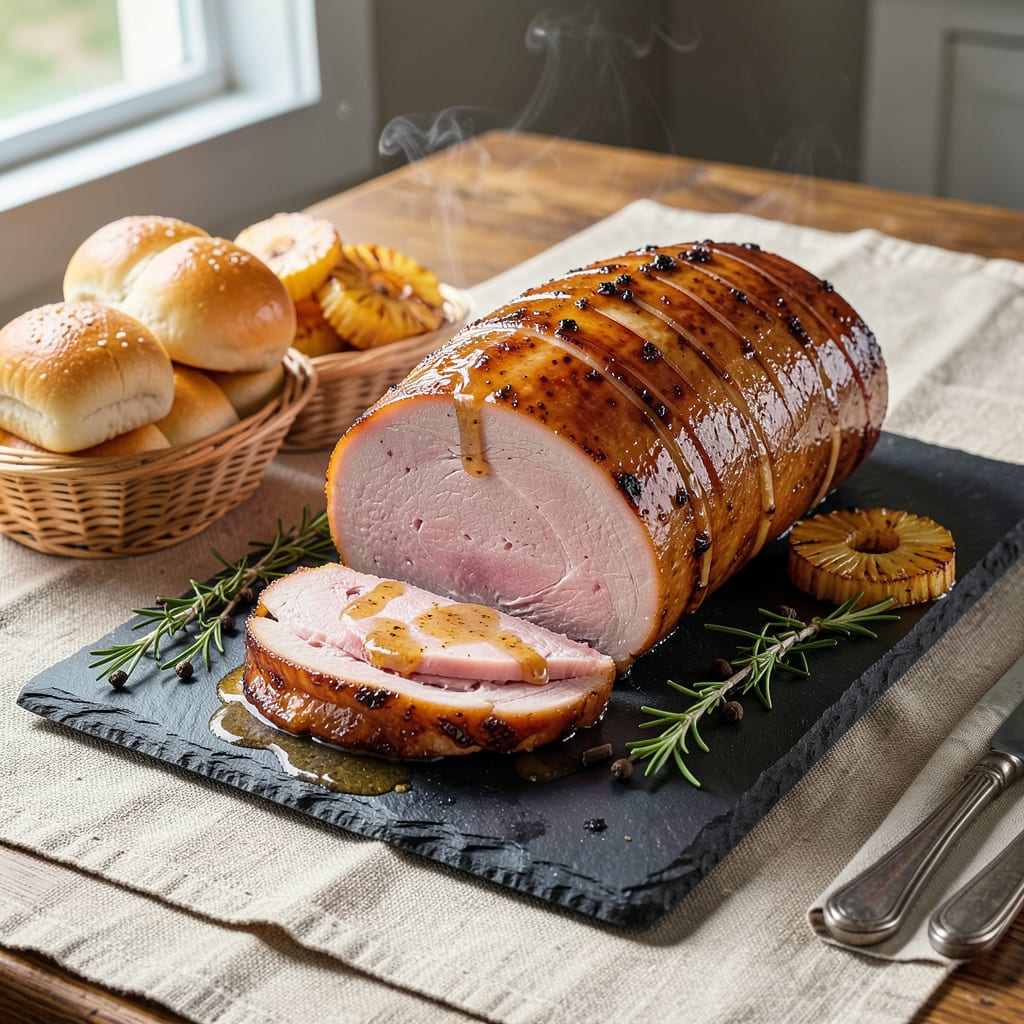
Ham prices typically range from $3 to $8 per pound, depending on type (fresh, cured, or spiral-cut), brand, and whether it’s bone-in or boneless. Holiday seasons often see higher prices due to increased demand.
I’ve noticed that specialty hams—like those with unique curing methods or organic certifications—can push toward the higher end of that range. 🔥 What really impacts your wallet is the preparation level: a fully cooked spiral-cut ham might cost more upfront, but it saves you hours of prep time. I always recommend checking per-serving costs rather than just per-pound prices, especially when comparing bone-in versus boneless options.
The price swings during holidays aren’t just about demand—they reflect the extra labor and premium ingredients many producers use for seasonal hams. ✨ I’ve found that local butcher shops often offer better quality at competitive prices compared to big-box stores, particularly if you’re willing to buy larger cuts.
💡 In This Article
- Factors That Influence Ham Pricing per Pound
- Smart Ways to Buy Ham Without Overspending
Factors That Influence Ham Pricing per Pound
The journey from pig to plate explains most price differences. A fresh ham (uncured) costs less because it skips the time-intensive curing process that adds labor and ingredients. Cured hams undergo weeks of salt, sugar, and sometimes nitrates treatment—adding $1.50-$3 per pound to the base price.
Spiral-cut hams command premium pricing because the pre-slicing requires specialized equipment and skilled butchery to maintain moisture and presentation.
Bone structure dramatically impacts your cost per edible pound. A bone-in ham averages 20-30% cheaper per pound than boneless, but you’re paying for inedible weight. For example, a 10-pound bone-in ham yields about 7 pounds of meat after carving, while a 7-pound boneless ham gives you the same amount of edible portions.
The bone also affects cooking—it insulates the meat, requiring longer roasting times that some home cooks prefer to avoid.
Farming practices create the widest price gaps. Conventionally raised hams start around $3.50/lb, while organic or heritage-breed hams (like Duroc) can hit $12-$15/lb. The difference comes from feed quality (organic grains cost 2-3x more), space requirements, and slower growth rates.
I’ve tasted the difference—heritage hams have deeper marbling and more complex flavor, but whether that justifies the price depends on your occasion and budget.
Regional pricing quirks surprise many shoppers. In the Southeast where ham production concentrates, prices average 10-15% lower than in the Northeast. Warehouse clubs in rural areas often beat urban grocery prices by $0.75-$1.50/lb due to bulk purchasing power.
Holiday markups aren’t just about demand—they reflect temporary labor costs for seasonal staffing and premium packaging that many brands use for gift-ready hams.
The curing method adds hidden costs. Traditional dry-cured hams (like country hams) lose 25-30% of their weight during the months-long aging process, which gets factored into the per-pound price. Wet-cured hams (injected with brine) cost less to produce but may contain 10-15% added water weight that you’re paying for.
Always check the label for “added solution” percentages—this can make a $5.99/lb ham effectively cost $7+/lb for actual meat content.
Even the cut location affects pricing. The shank end (with more connective tissue) typically costs $1-$2 less per pound than the butt end, which has a higher meat-to-fat ratio. For large gatherings, I often buy both ends—the shank for slow-cooked dishes where the collagen melts into rich gelatin, and the butt for beautiful carved slices.
This strategy can save 15-20% compared to buying only premium cuts.
Pro tip: Watch for “price per pound” versus “price per serving” traps. A $6.99/lb boneless ham might seem expensive, but if it yields 12 servings per 7-pound ham (about $0.44/serving), it’s often cheaper than a $4.99/lb bone-in ham that only yields 8 servings per 10-pound ham ($0.62/serving).
Always calculate based on your actual guest count rather than just comparing pound prices. 💫

Trained in classic French technique but raised on slow-cooked ribs and spicy rubs, she blends culinary skill with smoke and soul.
- Recipe For Diced Pork In Slow Cooker: Melt-In-Your-Mouth Tenderness All Day - October 3, 2026
- Recipe for Crock Pot Lasagna Using Ravioli: No-Boil Cheese Layers - October 3, 2026
- Recipe for Cut Up Chicken: One-Pan Crispy Bites - October 3, 2026