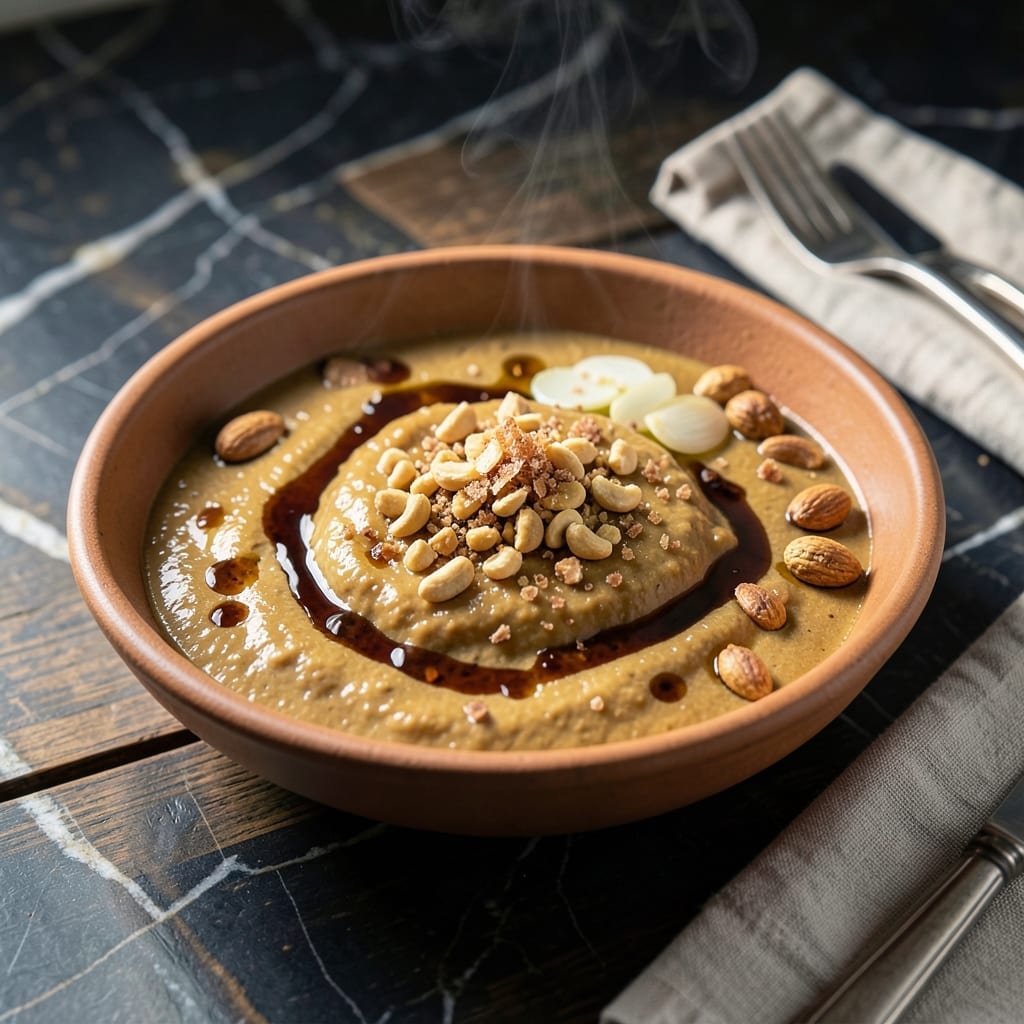
This peanut sauce delivers the authentic Indonesian flavors I first tasted at a neighborhood market in Boston. The rich, nutty depth comes from slowly toasting the peanuts before blending.
I developed this recipe to capture that perfect balance of creamy, sweet, and savory that makes satay irresistible. Coconut milk adds luxurious texture while tamarind provides the signature tang.
What you get is a versatile sauce that’s equally at home drizzled over grilled meats, tossed with noodles, or used as a dip for fresh vegetables. The aroma alone will transport you.
Store in an airtight container in the refrigerator for up to 5 days, where the flavors continue to meld and intensify. This recipe makes about 2 cups.
Ingredients for Indonesian Peanut Sauce
Eight simple ingredients blend into this creamy, dreamy sauce with authentic flavor.
| Ingredient | Amount | Notes |
|---|---|---|
| Dry-Roasted Peanuts 🥜 | 1 ½ cups | Unsalted, skin-on for texture |
| Coconut Milk 🥥 | ¾ cup | Full-fat for creaminess |
| Tamarind Paste 🍋 | 2 tbsp | Or substitute lime juice |
| Soy Sauce 🫒 | 2 tbsp | Use tamari for gluten-free |
| Brown Sugar 🍚 | 1 ½ tbsp | Packed, or coconut sugar |
| Garlic Cloves 🧄 | 3 cloves | Peeled and roughly chopped |
| Fresh Ginger 🌿 | 1 tbsp | Peeled and grated |
| Red Chili Flakes 🌶️ | ½ tsp | Adjust to heat preference |
| Lime Juice 🍈 | 1 tbsp | Freshly squeezed preferred |
[recipe_ingredient_scaler]
The peanuts are non-negotiable here. Dry-roasted, unsalted peanuts (the kind in the baking aisle, not the salty snack ones) give you the right texture and depth. I get mine from Trader Joe’s or the bulk bins at Whole Foods—freshness matters. Toast them until they’re golden and fragrant (don’t skip this step). The coconut milk should be full-fat—Thai Kitchen or Native Forest are reliable brands that don’t separate weirdly.
No tamarind paste? Lime juice with a pinch of sugar gets you close—it won’t be identical, but it’ll still taste great. Soy sauce can be swapped for coconut aminos if you need gluten-free. Brown sugar not on hand? Coconut sugar or maple syrup work in a pinch. The chili flakes are flexible—use sriracha or sambal oelek if you want more fire. Fresh ginger is ideal, but ground ginger (at half the amount) works if you’re desperate.
This keeps for 5 days in the fridge, and honestly tastes better the next day. The oil might separate—just stir before using. Freeze in ice cube trays for up to 3 months (thaw overnight in the fridge). Always store in an airtight container to keep those flavors bright.
Why You’ll Love This Recipe
- 5-Minute Blend: I toss everything in the blender—peanuts, coconut milk, tamarind—and it’s done before the rice finishes cooking.
- Sweet-Savory Balance: That mix of brown sugar, soy, and tamarind hits all the right notes—creamy, tangy, and just salty enough.
- Drizzle on Anything: I’ve used it on satay, noodles, even as a salad dressing. Honestly, it’s my shortcut to making everything taste intentional.
- Budget Stretch: A bag of peanuts and a few pantry staples feed a crowd, and leftovers keep for days. I’ll be real: it’s cheaper than takeout and twice as good.
Step-by-Step Instructions for Indonesian Peanut Sauce
This foolproof method delivers a velvety, well-balanced sauce with minimal effort and maximum flavor.
Step 1: Toast the Peanuts for Depth
Heat a dry skillet over medium heat and add all 1.5 cups dry-roasted peanuts. Toast them for 3-4 minutes, stirring frequently, until they deepen in color and release a rich, nutty aroma. Watch closely—peanuts burn quickly once they start browning.
I skip this step for store-bought roasted peanuts, but if you’re using raw, toasting is non-negotiable. The skin-on variety adds texture, but if you prefer a smoother sauce, you can rub them in a towel to remove excess skin after toasting. Transfer the warm peanuts to a food processor or high-powered blender.
Step 2: Blend with Coconut Milk and Aromatics
To the food processor, add the 0.75 cup coconut milk, 3 cloves garlic cloves, 1 tbsp fresh ginger, 2 tbsp tamarind paste, 2 tbsp soy sauce, 1.5 tbsp brown sugar, and 0.5 tsp red chili flakes. Pulse until the mixture is mostly smooth but still has some texture from the peanuts.
The full-fat coconut milk is key here—it creates a luxurious, creamy base that balances the tang of the tamarind and the saltiness of the soy sauce. If the mixture seems too thick, add a splash of warm water to help it along. I prefer to pulse rather than blend continuously to avoid overheating the mixture, which can make the sauce separate.
Step 3: Adjust Consistency and Seasoning
Transfer the peanut mixture to a saucepan and warm it over low heat for 3-4 minutes, stirring constantly. This step helps the flavors meld together beautifully. If the sauce is too thick, thin it with a little warm water until it reaches your desired consistency—it should coat the back of a spoon but still be pourable.
Taste and adjust the seasoning. If it needs more sweetness, add a touch more brown sugar. For extra tang, a little more tamarind paste does the trick. If you prefer more heat, now’s the time to add a pinch more red chili flakes.
Step 4: Finish with Lime Juice
Remove the sauce from heat and stir in the 1 tbsp lime juice. The acidity brightens all the flavors and ties everything together. Let the sauce cool slightly—it will thicken a bit as it cools.
This is the moment that matters: the lime juice should be the final touch. Adding it while the sauce is too hot can make the flavor dull, so let it sit for a minute before stirring it in. The sauce is now ready to drizzle over satay, toss with noodles, or use as a dip for fresh vegetables.
Pro Tips For Making Indonesian Peanut Sauce
- Toast the Peanuts: Dry-roast your peanuts in a pan over medium heat until golden and fragrant—about 5 minutes. I learned this the hard way: raw peanuts leave the sauce tasting flat.
- Bloom the Tamarind: Mix the tamarind paste with a splash of warm water and let it sit for 10 minutes before adding. Sounds weird, but it works: this prevents clumps and helps distribute the tang evenly.
- Skip the Cold Coconut Milk: Use room-temperature coconut milk to avoid seizing when mixed with the other ingredients. After ruining a batch with cold milk, I now pull it out of the fridge first thing.
- Balance the Sweetness: Add the brown sugar gradually and taste as you go—peanut butter can vary in sweetness. My grandmother swore by this, and she was right: you can always add more, but you can’t take it out.
Dietary Considerations for This Dish
Vegan and Vegetarian
This sauce is naturally 100% plant-based, making it perfect for vegan and vegetarian diets. The dry-roasted peanuts and coconut milk provide rich, satisfying depth without any animal products. I love that it delivers such bold flavor while being inherently cruelty-free. 🌱
Gluten-Free Adaptation
To make this gluten-free, simply swap the soy sauce for tamari or coconut aminos. Both alternatives maintain the salty, umami profile without the gluten. I always keep San-J tamari on hand for this exact purpose.
Nut Allergy Caution
Since peanuts are the star ingredient, this sauce isn’t suitable for anyone with a nut allergy. For a nut-free alternative, try substituting sunflower seed butter—it won’t taste identical but offers a similar creamy texture. Always check labels for cross-contamination warnings.
Low-Sugar Option
Reduce the brown sugar to 1 tablespoon or replace it with a sugar-free sweetener like monk fruit. The tamarind and lime juice will still provide plenty of tangy brightness to balance the sauce. I’ve tested this with Swerve and it works beautifully.
Spice Level Control
Adjust the red chili flakes to suit your tolerance—start with ¼ teaspoon for mild heat or omit entirely for a kid-friendly version. For extra kick, add 1 teaspoon sambal oelek when blending. I always taste as I go to get it just right. 🔥
Nutrition Facts
Frequently Asked Questions
Can I use crunchy peanut butter instead of whole peanuts?
Yes, but the texture will differ. Use 1 cup natural peanut butter and reduce coconut milk to ½ cup. The sauce will be thicker and less textured.
How do I fix a sauce that’s too thick?
Thin it with warm water, 1 tablespoon at a time, until it reaches your desired consistency. Coconut milk works too but adds richness.
What if I don’t have tamarind paste?
Substitute 1 tablespoon lime juice plus 1 teaspoon brown sugar. It won’t be identical but provides similar tang.
How long does it keep in the fridge?
Stored in an airtight container, it stays fresh for 5 days. Stir before using as separation is normal.

Trained in classic French technique but raised on slow-cooked ribs and spicy rubs, she blends culinary skill with smoke and soul.
- Recipe for Cut Up Chicken: One-Pan Crispy Bites - October 3, 2026
- Recipe For Oven Baked Haddock: Buttery Crumbs With Zesty Lemon Topping - October 3, 2026
- Recipe For Fried Salmon Patties With Flour: Crispy Golden Crust With Flaky Centers - October 3, 2026