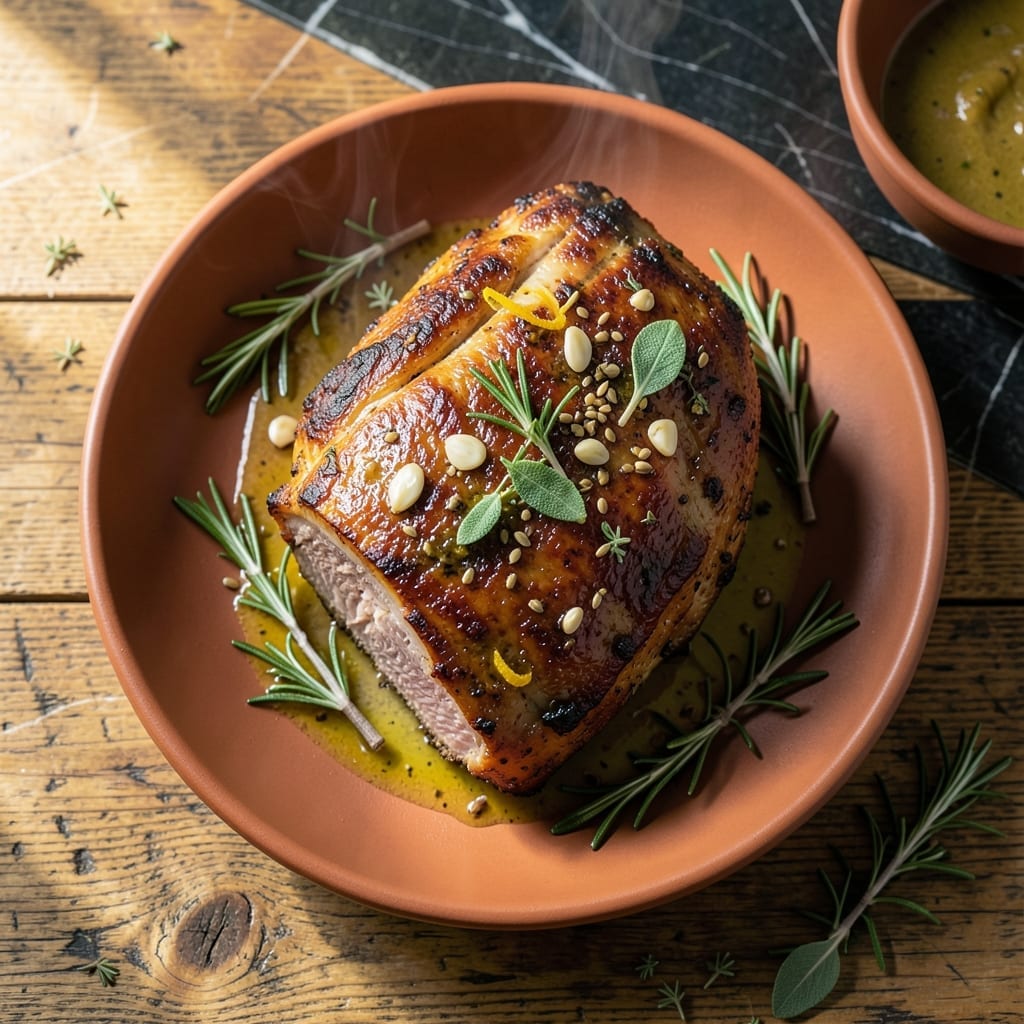
This herb-crusted pork roast delivers tender results through slow roasting that transforms tough cuts into melt-in-your-mouth perfection. My French training meets traditional Italian seasoning in this foolproof method.
Simple ingredients and precise timing create a dish with a crispy herb crust and juicy interior. The aroma alone signals you’ve achieved something special.
Ingredients for Italian Pork Roast
Simple ingredients transform into something extraordinary with this slow-roasted method.
| Ingredient | Amount | Notes |
|---|---|---|
| Pork Shoulder Roast 🥩 | 3 lb | Bone-in for best flavor |
| Fresh Rosemary 🌿 | 2 tbsp | Finely chopped, stems removed |
| Fresh Thyme 🍃 | 2 tbsp | Finely chopped, stems removed |
| Fresh Sage 🌿 | 1 tbsp | Finely chopped, stems removed |
| Garlic Cloves 🧄 | 6 cloves | Minced for herb crust |
| Extra-Virgin Olive Oil 🫒 | ¼ cup | Divided for searing and herbs |
| Sea Salt 🧂 | 1 ½ tsp | Diamond Crystal preferred |
| Black Pepper 🌶️ | 1 tsp | Freshly ground coarsely |
| Dijon Mustard 🟡 | 2 tbsp | For herb crust binding |
| Dry White Wine 🍷 | ½ cup | For deglazing pan |
| Chicken Stock 🥣 | 1 cup | Low-sodium preferred |
| Crushed Tomatoes 🍅 | 1 can | San Marzano preferred |
| Red Pepper Flakes 🌶️ | ½ tsp | Optional for heat |
| Fennel Seeds 🌿 | 1 tsp | Lightly crushed for aroma |
[recipe_ingredient_scaler]
The pork shoulder is non-negotiable here. Bone-in from a butcher or Whole Foods gives you that gelatinous, fall-apart texture—boneless works but lacks depth. Look for good marbling (white streaks of fat) and a vibrant pink color. I always grab mine from the butcher counter at Costco—they’ll even cut it to size for you. Don’t trim the fat cap; it self-bastes as it roasts.
No fresh herbs? Dried at one-third the amount works in a pinch, but fresh makes the crust sing. Short on white wine? Chicken stock plus a splash of lemon juice gets you close. The Dijon can be swapped for whole-grain mustard—slightly different texture, same tang. For the tomatoes, San Marzano cans are worth the splurge, but any quality brand works.
Leftovers keep for 4-5 days in the fridge, actually improving as the flavors meld. Freezes beautifully for 3 months—portion before freezing for easy reheating. The herb crust loses some crispness when stored, but a quick broil revives it. Always bring pork to room temp before roasting (about 30 minutes on the counter).
Why You’ll Love This Recipe
- Set and Forget: I toss the pork in the oven with herbs and garlic, then walk away for hours while it does all the work.
- Herb heaven: The rosemary, thyme, and sage fill the kitchen with a smell that makes my whole family hover around the stove.
- Feeds My Crew: One roast gives us dinner for two nights, plus sandwiches for lunch the next day.
- Budget hero: Pork shoulder is cheap, but with those fresh herbs and garlic, it tastes like a fancy Sunday supper.
Step-by-Step Instructions for Italian Pork Roast
Here’s the method that guarantees fall-apart tender pork with a fragrant herb crust.
Step 1: Create the Herb Crust for Maximum Flavor
In a small bowl, combine the 2 tbsp fresh rosemary, 2 tbsp fresh thyme, 1 tbsp fresh sage, 6 cloves minced garlic, 2 tbsp Dijon mustard, 1.5 tsp sea salt, 1 tsp black pepper, and 1 tsp crushed fennel seeds.
Drizzle in 2 tbsp extra-virgin olive oil from the 0.25 cup total and mix until it forms a thick paste. I like to use the back of a spoon to really work the herbs into the mustard—this ensures every bite of pork carries that intense aromatic punch.
Step 2: Sear the Pork Shoulder for a Perfect Crust
Pat the 3 lb pork shoulder roast completely dry with paper towels. This is crucial for achieving that deep, golden sear we’re after. Season the meat lightly with a pinch of salt (you’ve already got plenty in the herb mix).
Heat the remaining extra-virgin olive oil in a large Dutch oven over medium-high heat. When the oil shimmers, add the pork and sear for 4-5 minutes per side until the surface is deep brown. Don’t rush this—you want a good crust before the slow roasting.
Step 3: Build the Braising Liquid and Begin Slow Cooking
Remove the pork and set it aside. In the same pot, add the 1 can crushed tomatoes, 0.5 cup dry white wine, and 1 cup chicken stock. Scrape up all those beautiful browned bits from the bottom—they’re packed with flavor.
Stir in the 0.5 tsp red pepper flakes if using. Return the pork to the pot. The liquid should come about halfway up the meat. If it doesn’t, add a splash more stock.
Step 4: Slow-Roast to Tenderness
Spread the herb paste all over the top and sides of the pork, pressing it in so it adheres well. Cover the pot and transfer it to a 325°F oven. Roast for 2.5 to 3 hours, turning and basting the pork with the pan juices every 45 minutes.
You’ll know it’s done when the pork pulls apart easily with a fork and reaches an internal temperature of 195°F. The meat should be so tender it nearly falls off the bone, and the herb crust will have formed a beautiful, flavorful layer.
Step 5: Rest and Serve
Carefully transfer the pork to a cutting board. Skim any excess fat from the surface of the braising liquid, then simmer the liquid on the stovetop for 5-7 minutes until it reduces slightly into a rich sauce.
Let the pork rest for 15 minutes before shredding or slicing. Serve with the reduced pan sauce spooned over the top. The meat should be incredibly moist and infused with the Italian herb flavors throughout.
Pro Tips For Making Italian Pork Roast
- Score the Fat: Cut 1/4-inch deep slits in the pork shoulder fat cap before seasoning—this lets the rosemary, thyme, and garlic penetrate deeper as it roasts.
- Herb Prep Matters: Finely chop the fresh rosemary, thyme, and sage together with the garlic, then mix with a pinch of salt to create a paste that sticks to the meat better than loose herbs.
- Low and Slow: Start at 450°F for 20 minutes to crisp the skin, then drop to 300°F for the remaining time—I learned this the hard way after drying out three roasts with high heat the whole way.
- Rest Before Slicing: Tent the roast with foil and let it sit for 15-20 minutes after cooking, or all those beautiful juices will spill out onto the cutting board instead of staying in the meat.
Best Sauces and Condiments for Italian Pork Roast
Herb-Infused Pan Sauce
After removing the pork, skim excess fat from the braising liquid, then simmer for 5-7 minutes until slightly reduced. This creates a rich, herb-infused sauce that’s perfect for spooning over each serving. I often add a pat of butter for extra silkiness.
Chimichurri Drizzle
Blend 1 cup fresh parsley, 3 garlic cloves, ¼ cup olive oil, 2 tbsp red wine vinegar, and ½ tsp red pepper flakes. The bright, herby notes cut through the richness beautifully. I learned this trick at a coastal BBQ competition. 🌿
Salsa Verde Accompaniment
Simmer ½ cup capers, ¼ cup white wine vinegar, 2 tbsp chopped cornichons, and 1 tbsp Dijon mustard until thickened. This tangy, briny sauce adds a French-Italian fusion touch that complements the pork perfectly.
Balsamic Reduction
Reduce 1 cup balsamic vinegar with 1 tbsp honey until syrupy. Drizzle over sliced pork for a sweet-tart finish. Look for aged balsamic from specialty shops for deeper flavor.
Garlic Aioli
Whisk ½ cup mayo with 2 minced garlic cloves, 1 tbsp lemon juice, and 1 tsp Dijon. This creamy condiment adds richness while letting the herb crust shine. 💛
Nutrition Facts
Frequently Asked Questions
What’s the best cut for this method?
Use bone-in pork shoulder for the most tender, flavorful results. The connective tissue breaks down during the 2.5-3 hour roast, creating that melt-in-your-mouth texture. Avoid lean cuts like tenderloin—they’ll dry out.
Can I use dried herbs instead?
Yes, but reduce the amount by two-thirds. Dried herbs are more concentrated, so 2 tsp of dried rosemary replaces 2 tbsp fresh. Fresh herbs provide better flavor, but dried work in a pinch.
Why rest the pork before serving?
Resting for 15 minutes allows juices to redistribute throughout the meat. Slicing too soon causes all those flavorful juices to spill onto the cutting board instead of staying in the pork.
Can I make this in a slow cooker?
Brown the pork first, then cook on low for 8 hours. Add the herb paste and braising liquid as directed. The texture will be similar, though you won’t get the same crust development.

Trained in classic French technique but raised on slow-cooked ribs and spicy rubs, she blends culinary skill with smoke and soul.
- Recipe for Pan Fried: Golden Crust with Savory Depth - October 3, 2026
- Recipe For Fried Chicken In A Pressure Cooker: Crispy Golden Bites in Half the Time - October 3, 2026
- Recipe For Leftover Fried Fish: Crunchy Leftovers Transformed - October 3, 2026