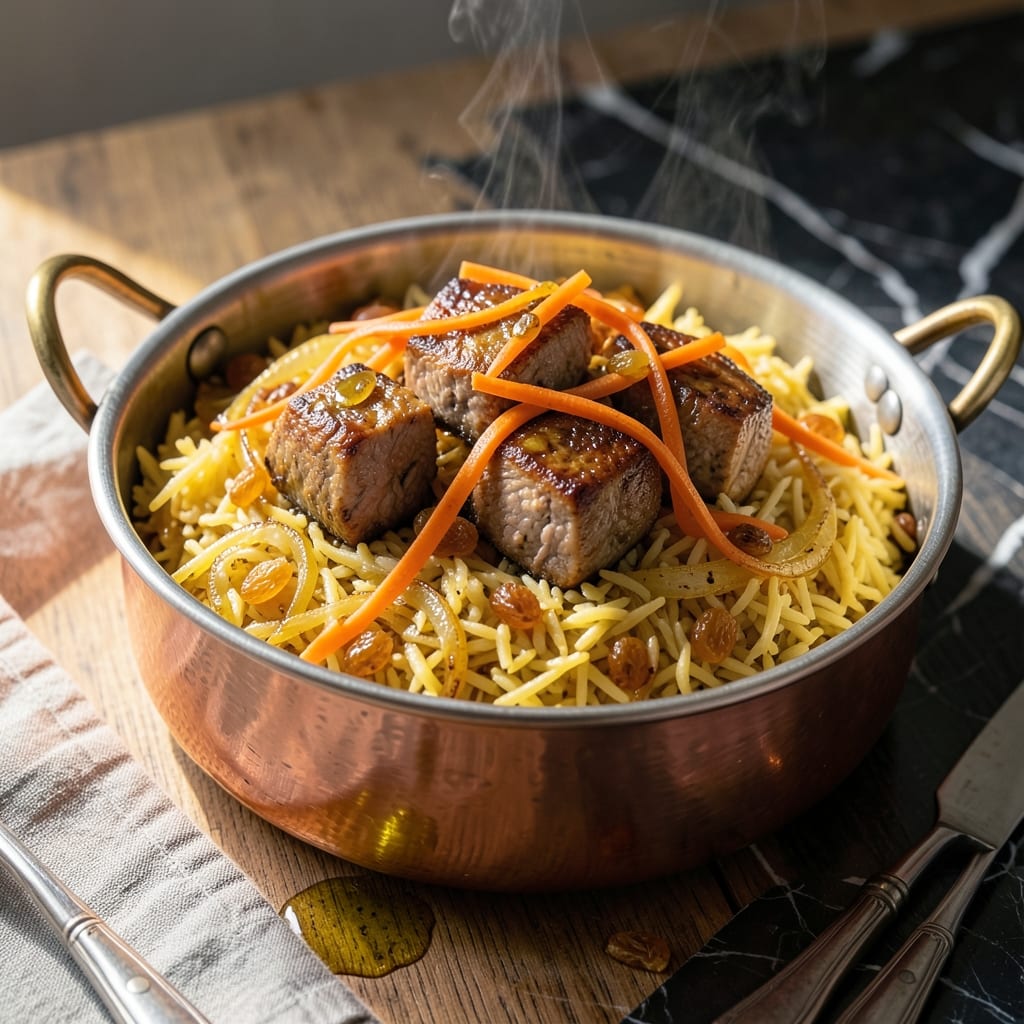
This traditional Afghan dish transforms simple ingredients into a fragrant masterpiece that fills your kitchen with intoxicating aromas. I’ve refined this method to ensure perfectly fluffy basmati rice every time, with each grain separate and infused with warmth.
The magic lies in the layering technique, where tender lamb, plump raisins, and caramelized carrots create a sweet-savory harmony. A blend of cardamom, cinnamon, and cumin adds depth that lingers in every bite.
What emerges is a dish that’s rich yet balanced, with the rice absorbing all the spices and the meat falling apart at the touch of a fork. The raisins add bursts of sweetness that contrast beautifully with the earthy spices.
Serve it with a side of yogurt or fresh salad for a complete meal. Here’s how to make it.
Ingredients for Kabuli Pulao Recipe by Food Fusion
Basmati rice, tender lamb, and warm spices create this fragrant Afghan masterpiece with plump raisins.
| Ingredient | Amount | Notes |
|---|---|---|
| Basmati Rice 🌾 | 2 cups | Soaked 30 minutes, drained |
| Lamb Shoulder 🐑 | 1 ½ lb | Boneless, cut into 1-inch cubes |
| Carrots 🥕 | 3 whole | Peeled, julienned for caramelization |
| Yellow Raisins 🍇 | ½ cup | Plumped in warm water |
| Yellow Onion 🧅 | 1 whole | Thinly sliced for base layer |
| Garlic Cloves 🧄 | 6 cloves | Minced for aromatic depth |
| Ground Cardamom 🌿 | 1 tsp | Freshly ground preferred |
| Ground Cinnamon 🌶️ | ½ tsp | Ceylon for subtle sweetness |
| Ground Cumin 🌿 | 1 tsp | Toasted for enhanced aroma |
| Vegetable Oil 🫒 | ½ cup | High smoke point for frying |
| Salt 🧂 | 1 ½ tsp | Diamond Crystal kosher preferred |
| Black Pepper 🌶️ | 1 tsp | Freshly ground for best flavor |
| Water 💧 | 4 cups | For rice cooking liquid |
| Sugar 🍚 | 1 tbsp | For caramelizing carrots |
[recipe_ingredient_scaler]
The lamb is non-negotiable here. Bone-in shoulder offers the best flavor and texture—Costco or a Middle Eastern market often carries high-quality cuts. Look for vibrant marbling in the meat, which ensures tenderness during the long cooking process. Basmati rice must be aged (check packaging) for that signature fluffiness and separation. Tilda or Royal Chef’s are reliable brands available at most supermarkets.
No lamb? Beef chuck works as a substitute, though the flavor profile will be slightly different. Raisins can be swapped for dried apricots at equal volume, though the sweetness will be more pronounced. Cardamom pods can replace ground—4-5 pods crushed per teaspoon. For the rice, jasmine can be used in a pinch, but it won’t achieve the same distinct separation as basmati.
Store lamb in the coldest part of the fridge for up to 3 days or freeze for 6-12 months. Basmati rice keeps indefinitely in a cool, dry pantry. Leftovers reheat beautifully—sprinkle a few teaspoons of water and cover before warming to restore moisture.
Why You’ll Love This Recipe
- One Pot Wonder: I love how everything cooks together—lamb shoulder, basmati rice, and those sweet carrots soak up all the flavor without extra dishes.
- Sweet & Savory Magic: The yellow raisins add this surprise burst of sweetness that pairs perfectly with the tender lamb and fragrant rice.
- Feeds a Crowd: Between us, this is my go-to for family gatherings—it stretches beautifully and tastes even better the next day.
- Budget-Friendly Luxury: Lamb shoulder is affordable, and a little goes a long way when slow-cooked with these simple, pantry-friendly ingredients.
Step-by-Step Instructions for Kabuli Pulao
Master this traditional technique for perfectly layered rice with tender lamb and sweet caramelized elements.
Step 1: Prepare the Lamb and Aromatics Base
Heat the 0.5 cup vegetable oil in a heavy-bottomed pot over medium-high heat. Add the 1.5 lb lamb shoulder cubes and sear for 8-10 minutes until deep golden brown on all sides. This builds a rich foundation of flavor, so resist moving the pieces until they release naturally.
Add the thinly sliced yellow onion and cook for 5-6 minutes until translucent and lightly caramelized. Stir in the minced garlic cloves, 1 tsp ground cardamom, 0.5 tsp ground cinnamon, and 1 tsp ground cumin, toasting for 1 minute until the spices release their aroma. Season with 1.5 tsp salt and 1 tsp black pepper.
Step 2: Caramelize the Carrots and Raisins
Add the julienned carrots and 1 tbsp sugar to the pot, stirring to coat evenly. Cook for 5-7 minutes until the carrots soften and begin to caramelize at the edges. The sugar enhances the natural sweetness while creating a glossy finish.
Drain the plumped yellow raisins and add them to the pot, stirring gently for 1-2 minutes to warm through. The raisins should appear swollen and glossy, absorbing the spiced oil. Remove the lamb and half the carrot mixture, setting aside for layering.
Step 3: Parboil the Rice
Bring the 4 cups water to a boil in a separate pot. Add the soaked and drained basmati rice and boil for 3-4 minutes until the grains are slightly softened but still firm to the bite. Drain immediately—this partial cooking prevents the rice from becoming mushy during the final steaming.
Step 4: Layer and Steam to Perfection
Return the reserved lamb and half the carrot mixture to the original pot. Spread the parboiled 2 cups basmati rice evenly over the top, creating a flat, even layer. Drizzle any remaining spiced oil from the set-aside carrot mixture over the rice. This ensures every grain carries the aromatic essence.
Cover the pot tightly with a lid and cook over low heat for 20-25 minutes. You’ll know it’s ready when the rice at the top is tender and fluffy and a golden crust forms at the bottom. Let it rest, covered, for 5 minutes before carefully flipping onto a serving platter to reveal the signature caramelized layer.
Pro Tips For Making Kabuli Pulao Recipe By Food Fusion
- Soak the Rice: Give the basmati rice a 30-minute soak in warm water—I learned this the hard way after ending up with dry, crumbly grains more than once. It guarantees even cooking and that perfect, fluffy texture kabuli pulao needs.
- Brown the Lamb: Sear the lamb shoulder in batches over medium-high heat until deeply browned on all sides. Sounds tedious, but it actually changes the outcome by building a rich, caramelized base for the entire dish.
- Skip the Overcrowding: Resist the urge to dump all the carrots and raisins in at once—cook them in a single layer so they soften and caramelize properly instead of steaming into a sad, mushy pile.
- Toast the Raisins: Lightly fry the yellow raisins in ghee for 30-45 seconds before adding liquids. My grandmother swore by this, and she was right: it plumps them up and deepens their sweetness without making them soggy.
Regional Styles of This kabuli pulao recipe by food fusion
Afghan Tradition
Kabuli pulao is Afghanistan’s national dish, where the rice is typically cooked in a degh (copper pot) for even heat distribution. The layering technique, called dam pukht, creates the prized crispy bottom layer known as tahiri. I learned this from my Afghan friend’s grandmother. 💛
Pakistani Style
In Pakistan, they often add 1 tsp coriander powder and ½ tsp cloves to the spice mix. The rice is sometimes colored with saffron-infused milk for a golden hue. They also use beef instead of lamb more commonly due to availability.
Uzbek Influence
Uzbek versions incorporate barberries and chickpeas for extra texture. The meat is often cooked separately then layered with the rice. They use a kazan (cast iron pot) for cooking, similar to the Afghan degh.
Indian Adaptation
Indian kabuli is spicier, with 1 tsp garam masala and ½ tsp turmeric added. Some regions use yogurt-marinated meat for extra tenderness. The raisins are often replaced with cashews or almonds. 🌟
Iranian Version
Persian-style pulao often includes saffron and rose water for fragrance. The rice is parboiled with salt and vinegar before layering. They might add pomegranate seeds for a tangy contrast.
Central Asian Twist
In Tajikistan, they add dried apricots and prunes along with the raisins. The meat is sometimes slow-cooked with onions until falling apart. The final dish is garnished with fresh herbs like dill and parsley.
Nutrition Facts
Frequently Asked Questions
Why soak the basmati rice first?
Soaking for 30 minutes allows the grains to absorb water evenly, preventing them from breaking during cooking. This step is crucial for achieving that signature fluffy, separate texture.
Can I use chicken instead of lamb?
Yes, boneless chicken thighs work well. Reduce cooking time to 15-20 minutes for the steaming step to prevent drying out. The flavor will be milder but still delicious.
How do I prevent the rice from sticking?
Use a heavy-bottomed pot and avoid stirring after layering. Ensure the heat stays at low during the 20-25 minute steaming phase for a perfect tahiri crust.

Trained in classic French technique but raised on slow-cooked ribs and spicy rubs, she blends culinary skill with smoke and soul.
- Recipe for Fried Prawns Batter: Ultra-Crispy Golden Shell - October 3, 2026
- Indian Lamb Curry Recipe Pressure Cooker: Fragrant Spices in a Fraction of the Time - October 3, 2026
- Recipe for Oven Roasted: Golden Crisp Perfection Without the Fryer - October 3, 2026