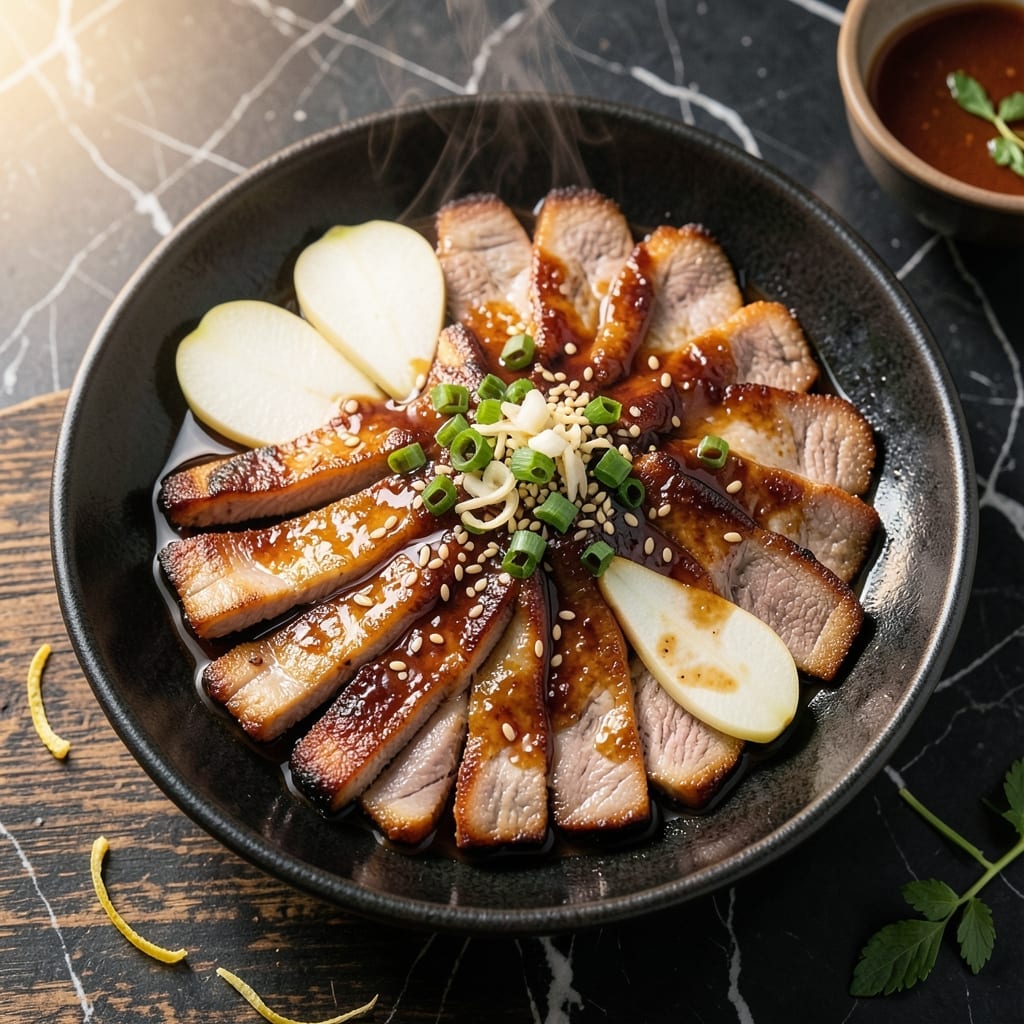
This recipe brings the bold flavors of Korean barbecue to your grill. The marinade transforms pork belly into tender, caramelized perfection with every bite.
I’ve refined this method to balance sweet, smoky, and savory notes. It’s a foolproof way to achieve restaurant-quality results at home.
Ingredients for Korean Barbecue Pork Belly
Transform pork belly with this bold marinade of sweet, smoky, and savory Korean flavors.
| Ingredient | Amount | Notes |
|---|---|---|
| Pork Belly 🥓 | 2 lb | Skin-on, sliced 1/2-inch thick |
| Soy Sauce 🫒 | ½ cup | Low-sodium preferred for balance |
| Brown Sugar 🍚 | ½ cup | Packed, for caramelization |
| Asian Pear 🍐 | 1 whole | Peeled, grated for natural sweetness |
| Garlic Cloves 🧄 | 6 cloves | Minced for marinade depth |
| Fresh Ginger 🌿 | 1 tbsp | Peeled, finely grated |
| Gochujang 🌶️ | 3 tbsp | Korean chili paste for heat |
| Sesame Oil 🫒 | 2 tbsp | Toasted, for nutty aroma |
| Rice Vinegar 💧 | 2 tbsp | Balances sweetness with acidity |
| Green Onions 🧅 | 4 whole | Thinly sliced for garnish |
| Sesame Seeds 🌾 | 2 tbsp | Toasted for garnish |
| Black Pepper 🌶️ | 1 tsp | Freshly ground for best flavor |
| Canola Oil 🫒 | 1 tbsp | For grilling prevention of sticking |
[recipe_ingredient_scaler]
The pork belly is non-negotiable here. Opt for skin-on cuts with good fat marbling from a reputable butcher or Asian market—this ensures the signature tender, caramelized result. Korean brands like Sempio for gochujang deliver authentic heat and depth. Avoid pre-sliced pork belly; cutting it yourself at 1/2-inch thickness allows better marinade penetration and even cooking.
No Asian pear? Bosc pear or grated apple works as a substitute for natural sweetness and tenderizing enzymes. Gochujang can be swapped with 1 tbsp sriracha plus 2 tbsp miso, though the flavor profile will differ slightly. For a gluten-free version, use tamari instead of soy sauce. Brown sugar alternatives like coconut sugar work, but may alter caramelization slightly.
Marinate the pork belly for at least 4 hours, preferably overnight for maximum flavor infusion. Store uncooked marinated pork in the fridge for up to 2 days. Cooked leftovers keep well for 3-4 days and reheat beautifully on a skillet or grill.
Why You’ll Love This Recipe
- Marinate in Minutes: I just toss the pork belly with soy sauce, brown sugar, grated pear, and garlic—no fancy steps, just flavor soaking in fast.
- Sweet-Savory Magic: The brown sugar caramelizes while the garlic and pear keep it tender and complex. Ridiculously good every time.
- Weeknight to Wow: Honestly, it’s my go-to for quick dinners but impressive enough for guests. Feeds a crowd without the stress.
- Leftovers? Even Better: The flavors deepen overnight, so I make extra. Cold pork belly in lettuce wraps? My secret weapon for lazy lunches.
Step-by-Step Instructions for Korean Barbecue Pork Belly
Master this technique for caramelized, tender pork belly with authentic Korean flavors.
Step 1: Prepare the Marinade Base
In a large bowl, combine the 0.5 cup soy sauce, 0.5 cup brown sugar, 3 tbsp gochujang, 2 tbsp sesame oil, and 2 tbsp rice vinegar. Whisk vigorously until the brown sugar fully dissolves and the mixture becomes smooth and glossy.
Add the 6 cloves minced garlic, 1 tbsp grated fresh ginger, and 1 tsp black pepper. Stir well to distribute the aromatics evenly throughout the marinade. The gochujang will create a slightly thick, vibrant red base that promises both heat and depth of flavor.
Step 2: Incorporate the Asian Pear and Pork Belly
Peel and finely grate the 1 whole Asian pear directly into the marinade. This adds natural sweetness and enzymes that help tenderize the 2 lb pork belly. Stir the grated pear into the mixture until fully integrated.
Slice the pork belly into ½-inch thick strips, keeping the skin on for texture. Submerge the pork in the marinade, ensuring each piece is thoroughly coated. Cover the bowl and refrigerate for at least 4 hours, or ideally overnight. This extended marination allows the flavors to penetrate deeply.
Step 3: Grill the Pork Belly to Perfection
Preheat your grill to medium-high heat. Lightly brush the grates with the 1 tbsp canola oil to prevent sticking. Remove the pork belly from the marinade (reserve the marinade) and grill for 4-5 minutes per side, or until the edges begin to caramelize and develop a deep, mahogany crust.
Baste the pork with the reserved marinade during the last 2 minutes of grilling. Watch closely to avoid flare-ups from the sugars in the marinade. The pork belly is ready when it’s cooked through and the surface is glossy with charred bits.
Step 4: Rest and Garnish for Serving
Transfer the grilled pork belly to a cutting board and let it rest for 5 minutes. This allows the juices to redistribute, ensuring every bite remains succulent. Slice the pork into bite-sized pieces if desired.
Thinly slice the 4 whole green onions and toast the 2 tbsp sesame seeds in a dry pan over low heat for 1-2 minutes until fragrant and lightly golden. Garnish the pork with the green onions and sesame seeds. Serve immediately with steamed rice and additional gochujang on the side for dipping.
Pro Tips For Making Korean Barbecue Pork Belly
- Score the Fat: Cut shallow slits in the pork belly fat cap about 1/4 inch apart—this lets the marinade penetrate deeper and creates crispier edges when cooking.
- Grate the Pear: Finely grate the Asian pear instead of chopping it; it blends into the marinade better and tenderizes the meat more effectively.
- Don’t Overcrowd: Leave space between pork belly slices on the grill or pan—crowding steams the meat instead of caramelizing the brown sugar.
- Rest Before Slicing: Let the cooked pork belly rest for 5 minutes under foil; it keeps the juices inside instead of pooling on your cutting board.
Troubleshooting Great korean barbecue pork belly
Uneven Cooking
If your pork belly cooks unevenly, check that your grill maintains consistent medium-high heat. I use a two-zone fire—hot coals on one side, cooler on the other—to manage flare-ups. Rotate pieces frequently for even caramelization. 🔥
Burnt Marinade
The sugars in brown sugar and gochujang can burn quickly. Avoid basting too early—wait until the last 2 minutes. If flare-ups occur, move pork to the cooler zone immediately.
Tough Texture
Tough pork belly usually means insufficient marinating time. I never rush this step—overnight marination in the fridge guarantees tenderness. Also, slice against the grain for easier chewing.
Sticking to Grill
Prevent sticking by oiling the grates with canola oil before heating. Ensure the grill is fully preheated to medium-high heat before adding pork. Don’t move the pieces too soon—let them sear for 2-3 minutes first.
Marinade Too Thick
If your marinade is too thick and clumps, thin it with 1-2 tbsp water or extra rice vinegar. This helps it coat the pork evenly without burning during grilling.
Lack of Flavor
If the flavor seems weak, your marinade time may have been too short. I always marinate for at least 4 hours, preferably overnight. Also, use fresh garlic and ginger for the boldest taste. 💪
Nutrition Facts
Frequently Asked Questions
Can I use a different cut of pork?
Pork belly is ideal for its fat content, but pork shoulder works in a pinch. Expect slightly less tenderness and caramelization.
How do I make it less spicy?
Reduce gochujang to 1 tbsp or substitute with 1 tbsp miso. This keeps the umami without the heat.
Can I bake it instead of grilling?
Yes! Broil on high for 5-6 minutes per side on a wire rack over a baking sheet. Watch closely to prevent burning.
What if I don’t have an Asian pear?
Use ½ cup grated apple or ¼ cup pineapple juice. Both add sweetness and tenderizing enzymes.

Trained in classic French technique but raised on slow-cooked ribs and spicy rubs, she blends culinary skill with smoke and soul.
- Recipe For Leftover Fried Fish: Crunchy Leftovers Transformed - October 3, 2026
- Recipe for Crock Pot Swiss Steak: Slow-Cooked Beef With Mushroom Gravy - October 3, 2026
- Recipe for Kabsa Rice: Spiced Middle Eastern Feast in One Pot - October 3, 2026