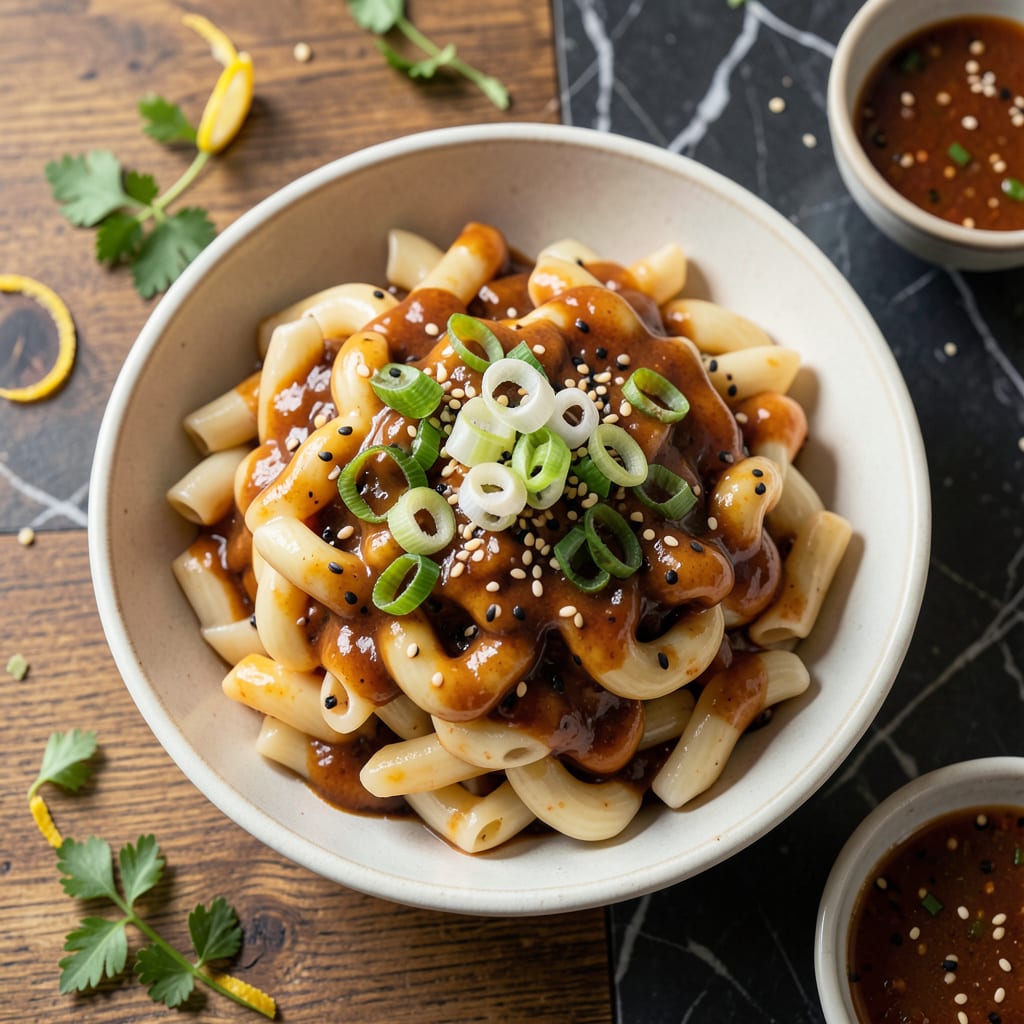
This fusion dish brings together creamy macaroni salad with the bold flavors of Korean BBQ. The combination creates a side that’s rich yet balanced, with smoky, sweet, and tangy notes in every bite.
I developed this recipe after noticing how well the cool creaminess complements the deep, charred flavors of grilled meats. It’s a crowd-pleaser that works alongside any main.
Ingredients for Korean Bbq Macaroni Salad
Creamy macaroni meets smoky Korean BBQ in this crowd-pleasing fusion dish with bold flavors.
| Ingredient | Amount | Notes |
|---|---|---|
| Elbow Macaroni 🍝 | 12 oz | Cooked al dente, drained |
| Mayonnaise 🥄 | 1 cup | Full-fat for creaminess |
| Gochujang 🌶️ | 3 tbsp | Korean chili paste, adjust for heat |
| Soy Sauce 🫒 | 2 tbsp | Low-sodium preferred |
| Brown Sugar 🍚 | 2 tbsp | Light or dark variety |
| Rice Vinegar 🍶 | 2 tbsp | For tangy brightness |
| Sesame Oil 🫒 | 1 tbsp | Toasted for depth |
| Garlic Cloves 🧄 | 3 cloves | Minced finely |
| Fresh Ginger 🌿 | 1 tbsp | Peeled, grated |
| Green Onions 🧅 | ½ cup | Thinly sliced, green parts only |
| Carrot 🥕 | 1 whole | Julienned for crunch |
| English Cucumber 🥒 | ½ whole | Seeds removed, diced |
| Toasted Sesame Seeds 🌰 | 1 tbsp | For garnish and texture |
| Kosher Salt 🧂 | ½ tsp | Or to taste |
| Black Pepper 🌶️ | ¼ tsp | Freshly ground |
[recipe_ingredient_scaler]
The gochujang is non-negotiable for authentic flavor—look for it in the Asian aisle at Whole Foods or Kroger. Sempio or Annie Chun’s are reliable brands. For the soy sauce, Kikkoman low-sodium keeps the salt in check without sacrificing depth. The sesame oil should be toasted (Kadoya is a solid choice), not the light variety. Fresh ginger and garlic are essential here; pre-minced just doesn’t have the same punch.
No gochujang? Sriracha mixed with a touch of miso gets you close. Out of rice vinegar? Apple cider vinegar at half the amount works. The macaroni can be any short pasta—cavatappi or shells hold the sauce well too. For a lighter version, Greek yogurt at half the mayonnaise quantity keeps it creamy. Skip the sesame seeds if needed, but they add that signature crunch.
This salad holds up well—store covered in the fridge for 3-4 days. The flavors meld and deepen over time. Freezing isn’t recommended (mayonnaise tends to separate). For best results, add the cucumber and green onions just before serving to keep them crisp.
Why You’ll Love This Recipe
- 20-Minute Meal: I can boil the pasta and mix the sauce while the water heats—honestly, it’s ready before I even set the table.
- Sweet-Spicy Fusion: The gochujang and brown sugar create this crave-worthy balance that makes every bite exciting.
- Potluck Star: Between us, this is my go-to for gatherings because it’s always the first dish to disappear.
Step-by-Step Instructions for Korean BBQ Macaroni Salad
Master this fusion dish with precision—balanced flavors and perfect texture every time.
Step 1: Cook and Cool the Elbow Macaroni
Bring a large pot of salted water to a rolling boil. Add the 12 oz Elbow Macaroni and cook according to package directions until al dente. Drain immediately in a colander and rinse under cold water to stop the cooking process.
This cooling step prevents the pasta from turning mushy when mixed with the dressing. Shake off excess water and transfer to a large mixing bowl. The pasta should be tender but still hold its shape when bitten. Toss with a drizzle of sesame oil to prevent sticking while it cools completely.
Step 2: Prepare the Korean BBQ Dressing
In a separate bowl, whisk together the 1 cup Mayonnaise, 3 tbsp Gochujang, 2 tbsp Soy Sauce, 2 tbsp Brown Sugar, and 2 tbsp Rice Vinegar until smooth. The gochujang will create a vibrant red sauce with a balance of heat, sweetness, and umami.
Add the 1 tbsp Sesame Oil, 3 cloves minced Garlic Cloves, and 1 tbsp grated Fresh Ginger. Whisk again to fully incorporate. Taste and adjust seasoning with 0.5 tsp Kosher Salt and 0.25 tsp Black Pepper as needed. The dressing should be creamy with a tangy, slightly spicy kick.
Step 3: Prepare and Combine the Fresh Vegetables
Julienne the 1 whole Carrot into thin matchsticks for a satisfying crunch. Remove the seeds from the 0.5 whole English Cucumber and dice into small, even pieces. Thinly slice the 0.5 cup Green Onions, using only the green parts for a mild onion flavor.
Add the carrot, cucumber, and green onions to the cooled macaroni. Pour the Korean BBQ dressing over the pasta and vegetables. Gently fold everything together with a silicone spatula until the pasta and vegetables are evenly coated. The dressing should cling to each piece without pooling at the bottom.
Step 4: Chill and Garnish Before Serving
Cover the bowl with plastic wrap and refrigerate for at least 1 hour to allow the flavors to meld. This chilling time is crucial for the macaroni to absorb the bold flavors of the dressing and for the salad to reach the ideal serving temperature.
Just before serving, sprinkle the 1 tbsp Toasted Sesame Seeds over the top for added texture and visual appeal. Stir once more to distribute the seeds evenly. The salad should be creamy, slightly sweet, with a subtle heat from the gochujang and a refreshing crunch from the fresh vegetables.
Pro Tips For Making Korean Bbq Macaroni Salad
- Boil Al Dente: Cook the elbow macaroni 1 minute less than the package says—it’ll soften more when mixed with the sauce, and nobody wants mushy salad.
- Balance the Gochujang: I learned this the hard way—start with 1 tablespoon gochujang, taste, then add more; its heat builds fast and can overpower the creamy mayo base.
- Chill Before Mixing: Let the cooked pasta cool completely, or at least 10 minutes, before folding in the sauce—hot noodles make the mayo split and turn greasy.
- Bloom the Sugar: Sounds weird, but it works: warm the brown sugar with the soy sauce for 30 seconds in the microwave to dissolve it fully before mixing—no more grainy dressing.
Regional Styles of korean bbq macaroni salad
Seoul Street Food
In bustling Gwangjang Market, vendors mix cold noodles with spicy gochujang sauce, inspiring this dish. The creamy macaroni replaces traditional jjajangmyeon noodles, but keeps the bold, sweet-spicy profile. I love how this version makes the flavors more approachable. 🌟
Busan Beach Picnic
Coastal Busan adds seafood twists, but their BBQ joints serve similar creamy salads with grilled meats. The sesame oil and toasted sesame seeds reflect the region’s love for nutty, aromatic finishes. Perfect for your next outdoor spread.
Jeonju Royal Cuisine
Jeonju’s royal court cuisine emphasizes balance, so their version would use less gochujang and more brown sugar for a milder, sweeter profile. The rice vinegar adds the signature tang that cuts through richness, just like in traditional bibimbap.
Modern Korean Fusion
In Seoul’s Hongdae district, young chefs blend global flavors, creating dishes like this with elbow macaroni instead of rice. The carrot and cucumber add fresh crunch, balancing the creamy, smoky dressing. 💛
Home-Style Adaptation
Korean home cooks often use what’s on hand, so cavatappi or shells work just as well. The key is the dressing ratio—3 tbsp gochujang to 1 cup mayonnaise—which I’ve perfected through years of testing.
Nutrition Facts

Trained in classic French technique but raised on slow-cooked ribs and spicy rubs, she blends culinary skill with smoke and soul.
- Recipe for Cut Up Chicken: One-Pan Crispy Bites - October 3, 2026
- Recipe For Oven Baked Haddock: Buttery Crumbs With Zesty Lemon Topping - October 3, 2026
- Recipe For Fried Salmon Patties With Flour: Crispy Golden Crust With Flaky Centers - October 3, 2026