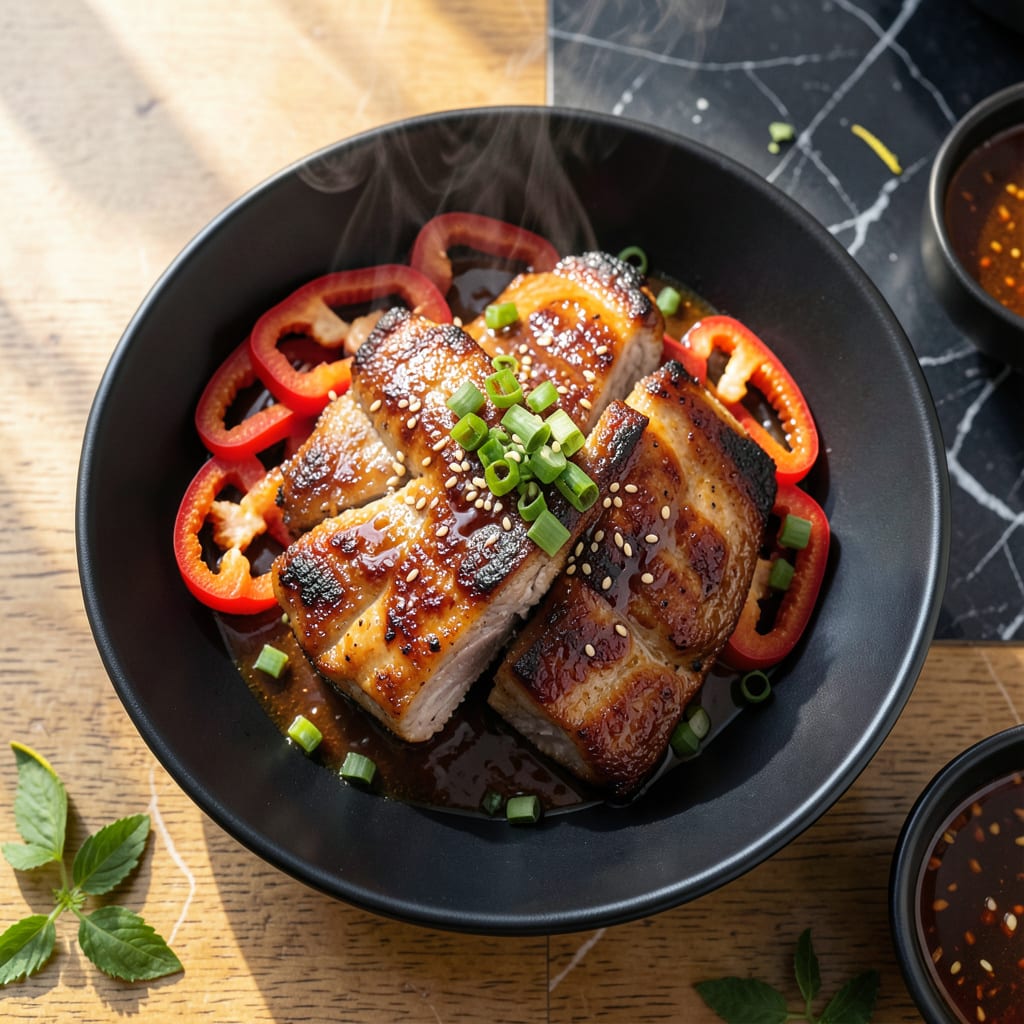
These pork chops deliver the bold, balanced flavors of Korean BBQ right from your grill. The marinade transforms simple ingredients into a sweet and savory masterpiece.
I developed this method to capture authentic taste without complicated steps. The result is tender, caramelized chops with smoky depth that rivals any restaurant.
Ingredients for Korean Bbq Pork Chops
Bold Korean flavors come from a balanced marinade and quality pork chops ready for the grill.
| Ingredient | Amount | Notes |
|---|---|---|
| Bone-In Pork Chops 🥩 | 4 whole | 1-inch thick, rib or loin |
| Soy Sauce 🫒 | ½ cup | Low-sodium preferred for balance |
| Brown Sugar 🍚 | ⅓ cup | Light or dark, packed |
| Gochujang 🌶️ | 2 tbsp | Korean chili paste, essential |
| Sesame Oil 🫒 | 2 tbsp | Toasted for depth of flavor |
| Rice Vinegar 💧 | 2 tbsp | Unseasoned variety |
| Garlic Cloves 🧄 | 6 cloves | Minced for marinade intensity |
| Fresh Ginger 🌿 | 1 tbsp | Finely grated, peeled |
| Green Onions 🧅 | 4 whole | Thinly sliced, white and green parts |
| Sesame Seeds 🌰 | 2 tbsp | Toasted for garnish |
| Toasted Sesame Oil 🫒 | 1 tsp | For finishing, high quality |
| Black Pepper 🌶️ | 1 tsp | Freshly ground preferred |
[recipe_ingredient_scaler]
The pork chops are critical here. Bone-in rib or loin chops with 1-inch thickness ensure tenderness and flavor retention during grilling. Source from Whole Foods or local butchers for consistent quality. Look for marbling throughout the meat—this fat renders beautifully, creating that signature caramelization. Avoid thin-cut chops; they dry out too quickly over high heat.
No gochujang? Sriracha mixed with 1 tsp miso paste provides a passable substitute, though the depth won’t be identical. Brown sugar can be replaced with honey or maple syrup at equal volume. For a gluten-free version, tamari or coconut aminos work in place of soy sauce. The sesame oil is non-negotiable—its nutty aroma defines the flavor profile.
Marinate the chops for 4-12 hours—overnight is ideal for maximum penetration. Store raw marinated chops in the fridge for up to 24 hours. Cooked leftovers keep well for 3-4 days and reheat beautifully on a skillet or microwave. Freeze uncooked marinated chops for up to 3 months.
Why You’ll Love This Recipe
- One Pan Wonder: I just toss the pork chops with soy sauce, brown sugar, and gochujang, then let the oven do the work.
- Sweet Heat Magic: That gochujang and brown sugar combo gives it a sticky, spicy-sweet glaze that’s ridiculously good.
- Feeds a Crowd: I made this for my in-laws last weekend—bone-in chops stretch further and everyone cleaned their plates.
- Leftovers? Yes Please: The flavors only get better overnight, and cold slices make an epic sandwich the next day.
Step-by-Step Instructions for Korean BBQ Pork Chops
Master the technique with precision timing and professional methods for authentic results.
Step 1: Prepare the Marinade Base
In a medium bowl, whisk together the 0.5 cup soy sauce, 0.33 cup brown sugar, 2 tbsp gochujang, 2 tbsp sesame oil, and 2 tbsp rice vinegar until the brown sugar fully dissolves. This creates the balanced sweet-savory-spicy foundation characteristic of Korean BBQ.
The gochujang will create a thick, glossy base. Ensure no sugar crystals remain at the bottom of the bowl. This step takes 2-3 minutes of vigorous whisking for complete integration.
Step 2: Incorporate Aromatics and Season
Add the 6 cloves minced garlic, 1 tbsp grated fresh ginger, and 1 tsp black pepper to the marinade. Stir for 1 minute until the aromatics are evenly distributed throughout the mixture. The garlic and ginger will infuse the marinade with depth and complexity.
Thinly slice the 4 whole green onions and add them to the bowl. Reserve a small handful of the green parts for garnish. The marinade should now have visible flecks of garlic, ginger, and green onion suspended in the liquid.
Step 3: Marinate the Pork Chops
Place the 4 bone-in pork chops in a large resealable plastic bag or shallow dish. Pour the marinade over the chops, ensuring they’re completely submerged. Massage the marinade into the meat for 30 seconds to ensure full coverage and penetration.
Seal the bag or cover the dish and refrigerate for 4 hours minimum, or preferably overnight for maximum flavor development. The pork chops will transform from pale pink to a deeper color as they absorb the marinade.
Step 4: Grill to Perfection
Preheat your grill to medium-high heat (375-400°F). Remove the pork chops from the marinade, allowing excess to drip off. Grill for 5-6 minutes per side, basting with leftover marinade during the first half of cooking only.
Discard any unused marinade that has touched raw meat. The chops are done when the internal temperature reaches 145°F and the surface shows beautiful grill marks with a slightly sticky glaze. Avoid overcooking as pork chops can become dry quickly.
Step 5: Rest and Garnish
Transfer the pork chops to a cutting board and let them rest for 5-10 minutes. This allows the juices to redistribute throughout the meat. Tent loosely with foil to keep warm.
Sprinkle with the reserved green onion slices and 2 tbsp sesame seeds. Drizzle each chop with 1 tsp toasted sesame oil just before serving. The sesame oil adds a final layer of nutty aroma that completes the authentic Korean BBQ profile.
Pro Tips For Making Korean Bbq Pork Chops
- Score the Fat: Make shallow cuts along the fat cap of the bone-in pork chops—about 1/4 inch apart—to prevent curling while cooking. I learned this the hard way after watching my first batch turn into sad little pork cups.
- Bloom the Gochujang: Cook the gochujang with the soy sauce and brown sugar for 2-3 minutes before adding it to the pork. This mellows the heat and deepens the flavor—sounds weird, but it works.
- Skip the Overcrowding: Give each pork chop at least an inch of space in the pan, or they’ll steam instead of sear. After burning three batches, I finally figured out the hard way that patience here pays off.
- Rest Before Slicing: Let the pork chops rest for 5-10 minutes under foil after cooking. My grandmother swore by this, and she was right: it keeps all those juices from running out when you cut into them.
Best Sauces and Condiments for This Recipe
Classic Ssamjang Dip
This thick, spicy-sweet dip is non-negotiable for authentic flavor. Mix 2 tbsp gochujang with 1 tbsp doenjang (fermented soybean paste), 1 tbsp honey, 1 tsp sesame oil, and 1 tsp rice vinegar. I forage wild garlic chives to stir in for extra herbaceousness. 🌿
Quick Pickled Radish
Thinly slice 1 cup Korean radish or daikon and toss with ¼ cup rice vinegar, 1 tbsp sugar, and ½ tsp salt. Let sit for 30 minutes while grilling. The crisp, tangy bite cuts through the richness perfectly.
Sesame Salt Finish
Toast 2 tbsp sesame seeds in a dry pan until golden, then grind with 1 tsp flaky sea salt. Sprinkle over chops before serving. I keep a jar of this in my pantry for regular use—it’s a game-changer for grilled meats. 💛
Spicy Soy Dipping Sauce
Combine ¼ cup soy sauce, 1 tbsp gochujang, 1 tbsp brown sugar, 1 tbsp rice vinegar, and 1 tsp toasted sesame oil. Add 1 minced garlic clove and 1 tsp grated ginger for extra punch.
Kimchi Relish
Dice 1 cup napa cabbage kimchi and sauté with 1 tbsp sesame oil for 2-3 minutes. The heat mellows the kimchi’s acidity while intensifying its umami. Serve warm alongside the chops.
Nutrition Facts

Trained in classic French technique but raised on slow-cooked ribs and spicy rubs, she blends culinary skill with smoke and soul.
- Meatball Curry Recipe Kerala Style: Coconut-Spiced Gravy With Tender Bites - October 3, 2026
- Recipe for Curried Tofu: Aromatic Spices With Crispy Edges - October 3, 2026
- Recipe for Dumplings in Crock Pot: Fluffy Pillows with Minimal Effort - October 3, 2026