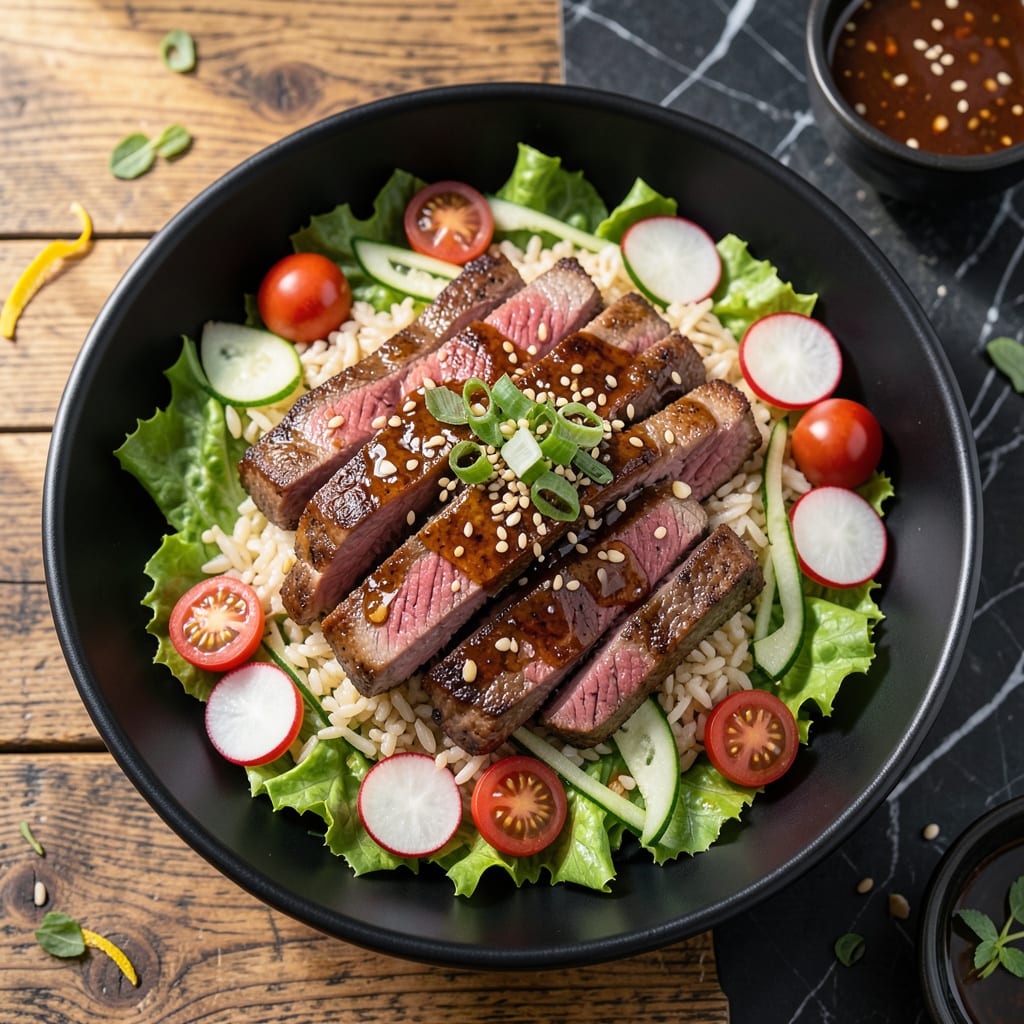
I developed this salad to capture the bold flavors of Korean BBQ in a fresh, vibrant format. The smoky-sweet marinade transforms simple ingredients into something extraordinary.
Each bite delivers tender meat, crisp vegetables, and a dressing that ties everything together. It’s a complete meal that satisfies without feeling heavy.
Ingredients for Korean Bbq Salad
Thinly sliced ribeye, vibrant vegetables, and a smoky-sweet marinade bring Korean BBQ flavors to life.
| Ingredient | Amount | Notes |
|---|---|---|
| Boneless Ribeye Steak 🥩 | 1 ½ lb | Thinly sliced against grain |
| Soy Sauce 🫒 | ½ cup | Low-sodium preferred for balance |
| Brown Sugar 🍚 | ¼ cup | Packed, for caramelization |
| Sesame Oil 🫒 | 2 tbsp | Toasted variety for depth |
| Garlic Cloves 🧄 | 6 cloves | Minced for marinade intensity |
| Fresh Ginger Root 🌿 | 1 tbsp | Peeled and grated |
| Gochujang 🌶️ | 2 tbsp | Korean red pepper paste |
| Rice Vinegar 💧 | 3 tbsp | For dressing acidity |
| Napa Cabbage 🥬 | 4 cups | Thinly shredded for crunch |
| Carrots 🥕 | 2 whole | Julienned for texture contrast |
| Cucumber 🥒 | 1 whole | English variety, thinly sliced |
| Green Onions 🧅 | ½ cup | Thinly sliced for garnish |
| Sesame Seeds 🌾 | 2 tbsp | Toasted for garnish |
| Vegetable Oil 🫒 | 2 tbsp | High smoke point for searing |
| Kosher Salt 🧂 | 1 tsp | Diamond Crystal preferred |
[recipe_ingredient_scaler]
The ribeye is non-negotiable for authentic Korean BBQ flavor and texture. USDA Choice or Prime from Whole Foods or a trusted butcher ensures proper marbling. For the gochujang, Sempio or CJ brands offer consistent heat and depth—found in the Asian aisle at most Kroger locations. Fresh ginger and garlic are essential; pre-minced versions lack the necessary punch for this marinade.
No ribeye? Flank steak or sirloin work well—just slice them paper-thin. Short on gochujang? Miso paste plus a pinch of cayenne gets you close. Gochujang substitutes lack complexity but work in a pinch. The brown sugar can be swapped for honey or maple syrup, though the flavor profile will shift slightly. For the vegetables, romaine or purple cabbage add color and crunch.
Marinated steak keeps 24 hours in the fridge before cooking. The dressing can be made 3 days ahead and stored separately. Leftovers hold 4 days refrigerated—reheat the steak gently to avoid toughness. Toast sesame seeds fresh before serving for maximum aroma.
Why You’ll Love This Recipe
- Minimal Chopping Required: I just slice the ribeye thin and toss it with the marinade—no fancy prep work here.
- Sweet-Savory Addiction: The brown sugar caramelizes with soy sauce and garlic into this sticky, crave-worthy glaze on the steak.
- Meal Prep Hero: I make a big batch on Sunday and it stays ridiculous good for 3 days in the fridge.
- Stretches Far: One ribeye feeds four when sliced thin and bulked up with greens and rice.
Step-by-Step Instructions for Korean BBQ Salad
Master the technique for perfectly balanced bowls with smoky meat and vibrant vegetables.
Step 1: Marinate the Boneless Ribeye Steak
In a large bowl, whisk together the 0.5 cup soy sauce, 0.25 cup brown sugar, 2 tbsp sesame oil, minced 6 cloves garlic cloves, 1 tbsp fresh ginger root, 2 tbsp gochujang, and 1 tsp kosher salt until the sugar dissolves completely. This creates a complex marinade with sweet, spicy, and umami layers.
Add the thinly sliced 1.5 lb boneless ribeye steak to the marinade, ensuring every piece is fully coated. Cover and refrigerate for at least 2 hours (overnight for maximum flavor penetration). The meat will darken as it absorbs the marinade, and the surface should glisten when it’s ready to cook.
Step 2: Sear the Marinated Steak
Heat 2 tbsp vegetable oil in a large skillet over medium-high heat until it shimmers but doesn’t smoke. Remove the steak from the marinade (reserve the marinade) and sear in batches to avoid crowding the pan. Cook for 2-3 minutes per side until deeply caramelized and cooked to medium-rare.
The edges should develop a dark, sticky crust from the sugar in the marinade. Transfer the cooked steak to a cutting board and let it rest for 5 minutes before slicing thinly against the grain. This resting period allows the juices to redistribute for maximum tenderness.
Step 3: Prepare the Fresh Vegetables
While the steak marinates, prepare the vegetables. Thinly shred the 4 cups napa cabbage using a sharp knife or mandoline for consistent texture. Julienne the 2 whole carrots into matchstick-sized pieces for visual appeal and even cooking. Thinly slice the 1 whole cucumber and 0.5 cup green onions.
Combine all vegetables in a large bowl. This base provides the fresh, crunchy contrast to the rich steak. The napa cabbage should be crisp and bright green, while the carrots and cucumber add vibrant color and texture.
Step 4: Assemble the Salad with Dressing
Slice the rested steak thinly and arrange it over the prepared vegetables. Drizzle with the reserved marinade mixed with 3 tbsp rice vinegar for brightness. This transforms the marinade into a tangy, bold dressing that ties all components together.
Sprinkle with 2 tbsp sesame seeds for nutty crunch and visual contrast. Toss gently just before serving to coat everything evenly. The final dish should have a glossy sheen from the dressing and a balance of warm and cool elements.
Pro Tips For Making Korean Bbq Salad
- Slice Against the Grain: After cooking the ribeye, slice it thinly against the grain for a tender bite—I learned this the hard way when my first few attempts turned chewy.
- Bloom the Garlic: Cook the minced garlic in sesame oil for just 30 seconds until fragrant, but don’t let it brown or it’ll turn bitter (yes, even if you’re impatient like me).
- Balance the Marinade: Taste your soy sauce, brown sugar, and sesame oil mix before marinating—if it’s too salty, add a teaspoon of honey to round it out.
- Rest the Steak: Give the ribeye a solid 5-10 minutes under foil after cooking—skipping this makes the juices run all over your salad instead of staying in the meat.
Troubleshooting korean bbq salad
Steak Too Tough
If your ribeye turns out chewy, it likely wasn’t sliced thinly enough against the grain. Use a sharp knife and slice at a 45-degree angle for maximum tenderness. I always freeze the steak for 30 minutes first to firm it up for easier slicing. 💡
Burnt Marinade
Burnt bits on your steak mean the heat was too high. Reduce to medium heat and cook in batches to prevent steaming. Wipe your pan between batches—residual sugar burns quickly. Clean pan = clean flavor.
Dressing Too Thick
If your dressing is syrupy, add 1-2 tbsp water or more rice vinegar to thin it. The reserved marinade thickens as it reduces during cooking. I often add an extra 1 tbsp rice vinegar for perfect drizzle consistency.
Vegetables Soggy
Prevent limp veggies by prepping them right before serving. If you must prep ahead, store vegetables in ice water in the fridge. Drain and pat dry just before assembling. This keeps them crisp for hours.
Weak Flavor
If your salad tastes bland, your marinade time was likely too short. Shoot for at least 4 hours—overnight is ideal. Also check your gochujang brand; Sempio or CJ pack the most punch. 🌶️
Sesame Seeds Not Toasty
Toast your sesame seeds in a dry pan over low heat for 2-3 minutes until golden. Stir constantly—they burn fast. I do this while the steak rests so everything finishes together.
Nutrition Facts

Trained in classic French technique but raised on slow-cooked ribs and spicy rubs, she blends culinary skill with smoke and soul.
- Recipe for Boneless Leg of Lamb Roast in the Oven: Herb-Crusted and Rosy Pink Inside - October 3, 2026
- Meat Loaf Recipe With Beef And Pork: Homestyle Blend With Rich Gravy - October 3, 2026
- Hamburger Patty Recipe No Egg: Juicy Bind With Breadcrumbs and Milk - October 3, 2026