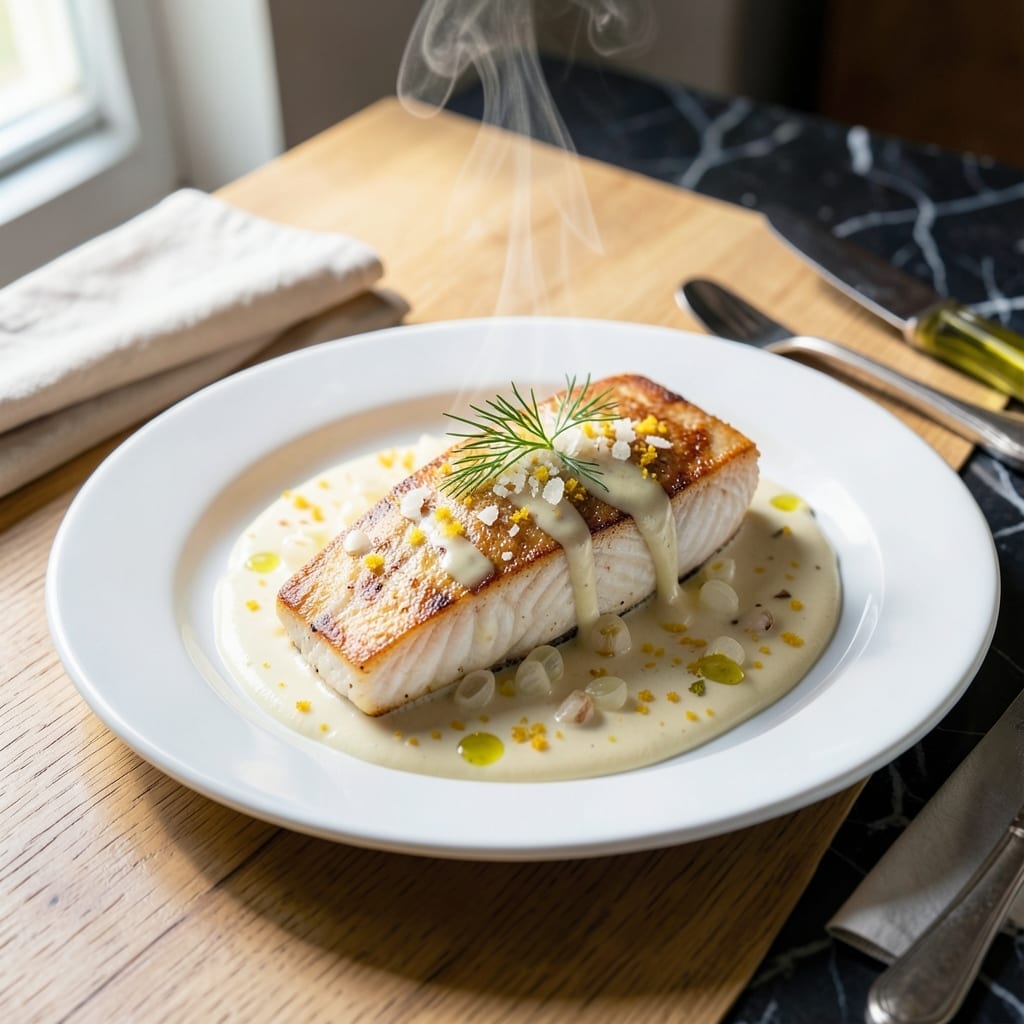
This silky lemon cream sauce transforms any fish dish into restaurant-quality fare with minimal effort.
Bright citrus meets rich cream and nutty parmesan for a balanced emulsion that clings perfectly to delicate fillets. Ready in 10 minutes with simple pantry staples.
Ingredients for Lemon Cream Sauce Recipe for Fish
Ten ingredients transform into a restaurant-quality emulsion for delicate fish fillets.
| Ingredient | Amount | Notes |
|---|---|---|
| Heavy Cream 🥛 | 1 cup | Full-fat for rich texture |
| Fresh Lemon Juice 🍋 | ¼ cup | About 2-3 lemons, freshly squeezed |
| Lemon Zest 🍋 | 1 tbsp | Finely grated for bright flavor |
| Parmesan Cheese 🧀 | ½ cup | Freshly grated from wedge |
| Unsalted Butter 🧈 | 2 tbsp | For silky emulsion base |
| Garlic Cloves 🧄 | 2 cloves | Minced for aromatic depth |
| Shallot 🧅 | 1 whole | Finely diced for subtle sweetness |
| Dijon Mustard 🟡 | 1 tsp | For tangy complexity |
| Kosher Salt 🧂 | ½ tsp | Adjust to taste preference |
| White Pepper ⚪ | ¼ tsp | Freshly ground for clean finish |
[recipe_ingredient_scaler]
The cream is non-negotiable here—full-fat heavy cream from Whole Foods or Organic Valley creates that luxurious, clingy texture. Parmesan must be freshly grated; pre-shredded contains anti-caking agents that prevent smooth melting. For the best citrus impact, Meyer lemons (when in season) offer a sweeter, more floral note than standard Eurekas. Unsalted butter allows precise seasoning control.
No shallots? Substitute with 2 tbsp finely diced white onion. Out of white pepper? Black pepper works, but it’ll add visible specks. Fresh lemon juice is essential—bottled lacks acidity and brightness. For a lighter version, replace half the cream with whole milk (not skim), though the sauce won’t be as velvety. Dijon can be swapped for whole-grain mustard for textural contrast.
This sauce is best used immediately, but keeps 2-3 days refrigerated in an airtight container. Reheat gently over low heat, whisking constantly to prevent separation. For longer storage, freeze without the butter—up to 1 month. Stir in fresh butter when reheating to restore silkiness.
Why You’ll Love This Recipe
- 5-Minute Magic: I melt butter, stir in cream, and finish with lemon zest—done before the fish even finishes cooking.
- Bright & Zesty: That punch of fresh lemon juice cuts through the richness of the cream and parmesan like a dream.
- Fancy Enough for Guests: Honestly, it tastes like a restaurant dish but comes together faster than ordering takeout.
- Leftovers? Yes Please: The sauce thickens up even more the next day, making it perfect for tossing with pasta or drizzling over veggies.
Step-by-Step Instructions for Lemon Cream Sauce for Fish
This refined technique creates a velvety emulsion with balanced acidity and rich depth.
Step 1: Sauté the Aromatics
Heat a heavy saucepan over medium-low heat. Add the 2 tbsp Unsalted Butter and allow it to melt completely, swirling until the foaming subsides. Immediately add the 1 whole Shallot, finely diced, and sweat for 2-3 minutes until translucent but not browned.
Add the 2 cloves Garlic Cloves, minced, and cook for an additional 30 seconds, stirring constantly. The mixture should release a fragrant aroma without any color development. This gentle cooking preserves the delicate flavors while building the sauce’s foundation.
Step 2: Build the Acid Base
Increase heat to medium and pour in the 0.25 cup Fresh Lemon Juice. Stir with a wooden spoon, scraping up any browned bits from the bottom of the pan. The mixture will bubble vigorously as the liquid reduces by about half, which should take 2-3 minutes.
At this point, add the 1 tbsp Lemon Zest and 1 tsp Dijon Mustard, stirring to incorporate. The zest adds bright citrus notes while the mustard provides subtle complexity. Watch for the liquid to thicken slightly and become syrupy.
Step 3: Create the Emulsion
Reduce heat to low and slowly pour in the 1 cup Heavy Cream, whisking constantly to prevent separation. This gradual incorporation is crucial for a stable emulsion. Continue whisking until the mixture is smooth and begins to thicken, about 3-4 minutes.
The sauce should coat the back of a spoon with a velvety texture. Avoid boiling, as this can cause the cream to curdle. The edges may just begin to bubble when it’s ready for the next step.
Step 4: Finish with Cheese and Seasonings
Remove the saucepan from heat and immediately add the 0.5 cup Parmesan Cheese, 0.5 tsp Kosher Salt, and 0.25 tsp White Pepper. Stir until the cheese melts completely and the sauce becomes glossy and smooth.
Taste and adjust seasoning if needed, though the parmesan typically provides sufficient saltiness. The final sauce should have a balanced acidity from the lemon with a rich, creamy mouthfeel. Return to very low heat for 1 minute if needed to achieve the perfect consistency.
Pro Tips For Making Lemon Cream Sauce Recipe For Fish
- Warm Your Cream: Take the heavy cream out of the fridge 10 minutes before cooking—it blends smoother into the sauce and reduces the risk of curdling when it hits the heat.
- Zest First, Juice Later: Always zest the lemon before juicing it (I learned this the hard way after ruining a perfectly good lemon). The oils in the zest are what give the sauce its bright, aromatic punch.
- Low and Slow: Keep the heat at medium-low when adding the cream to the pan—too high and the sauce will split or turn grainy, especially once the parmesan melts in.
- Finish with Butter: Stir in the unsalted butter at the very end, off the heat. It adds a silky richness that ties the acidity and cream together without breaking the sauce.
Serving Suggestions for Leftovers
Plating Styles 🥘
For a casual presentation, drizzle the lemon cream sauce over grilled or pan-seared fish fillets and serve alongside steamed vegetables or a fresh garden salad. For a formal setting, plate the fish on a bed of creamy risotto or mashed potatoes, then artfully swirl the sauce around the dish for an elegant touch. At a buffet, keep the sauce warm in a small chafing dish with a ladle, allowing guests to serve themselves.
Garnishing Techniques ✨
Enhance the dish with a sprinkle of fresh herbs like dill, parsley, or chives for a pop of color and brightness. Add a squeeze of lemon zest or thin lemon slices for a zesty visual appeal. For extra richness, grate a touch of Parmesan cheese over the sauce or drizzle with a thin stream of olive oil. Edible flowers or microgreens can elevate a fine-dining presentation.
Portion Sizes
For individual servings, spoon about 2-3 tablespoons of lemon cream sauce over each fish fillet to avoid overpowering the dish. For family-style servings, prepare a larger batch and place it in a small pitcher or gravy boat on the table, letting everyone add as much as they like. This approach works well for hearty meals with sides like roasted potatoes or asparagus.
Serving Temperature 🌡️
Serve the lemon cream sauce warm but not boiling to preserve its creamy texture. If the sauce has thickened while resting, gently reheat it over low heat, stirring constantly with a whisk to maintain its smooth consistency. Allow the fish to rest for 2-3 minutes after cooking before adding the sauce, ensuring all flavors meld beautifully.
Nutrition Facts

Trained in classic French technique but raised on slow-cooked ribs and spicy rubs, she blends culinary skill with smoke and soul.
- Recipe For Fried Chicken In A Pressure Cooker: Crispy Golden Bites in Half the Time - October 3, 2026
- Recipe For Leftover Fried Fish: Crunchy Leftovers Transformed - October 3, 2026
- Recipe for Crock Pot Swiss Steak: Slow-Cooked Beef With Mushroom Gravy - October 3, 2026