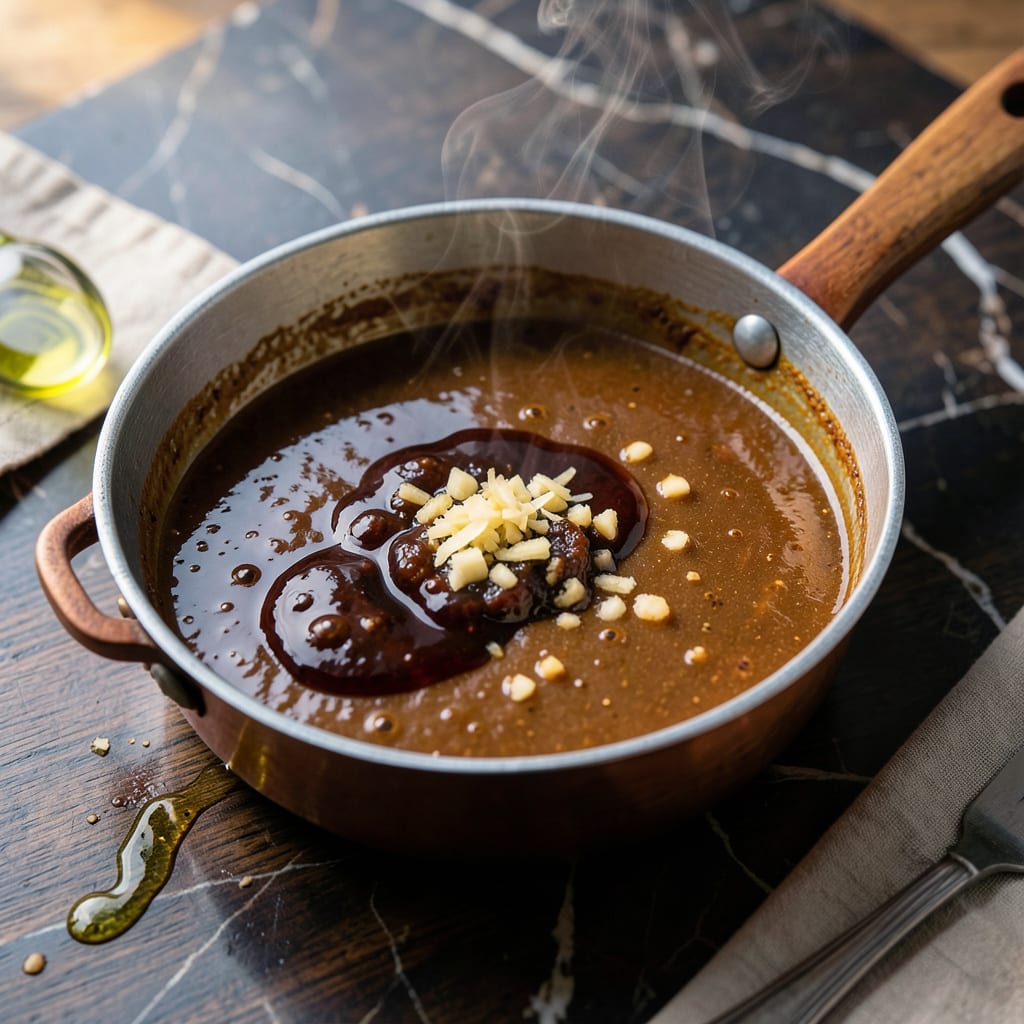
This sauce captures the essence of Mongolian BBQ with its sweet-savory balance and deep umami character. I developed this version to deliver restaurant-quality flavor without the complexity.
It comes together in minutes with pantry staples, creating a versatile glaze perfect for grilling, stir-frying, or dipping. The sauce keeps well, making it a staple for quick meals.
Ingredients for Mongolian Bbq Sauce
Ten simple ingredients create this rich, complex sauce with deep umami and sweet-savory balance.
| Ingredient | Amount | Notes |
|---|---|---|
| Soy Sauce 🫕 | ½ cup | Low-sodium preferred for balance |
| Brown Sugar 🍚 | ½ cup | Packed, light or dark |
| Rice Vinegar 🍶 | ¼ cup | Unseasoned variety essential |
| Hoisin Sauce 🫕 | 2 tbsp | Adds depth to umami profile |
| Garlic Cloves 🧄 | 4 cloves | Minced for even distribution |
| Fresh Ginger 🌿 | 1 tbsp | Finely grated for maximum flavor |
| Sesame Oil 🫒 | 1 tbsp | Toasted for nutty aroma |
| Water 💧 | ¼ cup | To adjust consistency as needed |
| Cornstarch 🌾 | 1 tbsp | Mixed with water for thickening |
| Red Pepper Flakes 🌶️ | ½ tsp | Adjust for preferred heat level |
[recipe_ingredient_scaler]
The hoisin sauce is non-negotiable here—Koon Chun or Lee Kum Kee are my go-tos (find them in the Asian aisle at Kroger or Whole Foods). Soy sauce quality matters too; Kikkoman low-sodium keeps the flavor bright without overpowering saltiness. Fresh ginger and garlic make a huge difference over the jarred stuff (worth the extra minute to peel and grate).
No hoisin? One-third the amount of oyster sauce plus a teaspoon of molasses gets close. Brown sugar can be swapped for coconut sugar or honey (though honey changes the flavor slightly). Rice vinegar is key—apple cider vinegar works in a pinch but has a different tang. For heat, Sriracha or gochujang can replace the red pepper flakes.
This keeps for 2 weeks in the fridge in a sealed jar. The flavors meld and deepen over time. For longer storage, freeze in ice cube trays—perfect portions for stir-fries or glazes. Always give it a stir before using, as the cornstarch may settle.
Why You’ll Love This Recipe
- 5-Minute Mix: I just dump everything in a bowl—soy sauce, brown sugar, rice vinegar, hoisin, garlic—and whisk. No simmering, no fuss.
- Sweet-Savory Balance: The brown sugar caramelizes with the soy and hoisin, while the rice vinegar cuts through with a tangy zip. Honestly, it’s the sauce I crave on everything.
- Endless Uses: I slather it on grilled chicken, toss it with noodles, or use it as a dipping sauce for dumplings. Between us, it’s my meal prep secret.
- Pantry Staples Only: No special trips to the store—just ingredients I always have on hand. I’ll be real: it’s saved me more than once on busy nights.
Step-by-Step Instructions for Mongolian BBQ Sauce
Here’s how I build this sauce to balance sweet, savory, and umami perfectly.
Step 1: Sauté the Aromatics
Heat the sesame oil in a medium saucepan over medium heat. Add the 4 cloves garlic cloves (minced) and 1 tbsp fresh ginger (finely grated). Sauté for 1-2 minutes until fragrant but not browned.
This base layer is crucial—it blooms the flavors of the garlic and ginger, creating a foundation that carries through the entire sauce. Watch the heat carefully; you want to coax out the aromas, not burn them.
Step 2: Combine the Liquid Ingredients
Pour in the 0.5 cup soy sauce, 0.5 cup brown sugar, 0.25 cup rice vinegar, and 2 tbsp hoisin sauce. Stir well to dissolve the brown sugar completely. Bring the mixture to a gentle simmer over medium heat.
The hoisin adds a rich, slightly sweet depth while the rice vinegar provides a subtle tang that balances the sugar. You’ll notice the sauce darken slightly as the sugar melts and the flavors begin to meld.
Step 3: Thicken the Sauce
In a small bowl, whisk together the 1 tbsp cornstarch with the 0.25 cup water until smooth. Slowly pour this slurry into the simmering sauce while stirring constantly to prevent lumps.
Continue cooking for 3-4 minutes until the sauce thickens enough to coat the back of a spoon. The transformation is striking—it goes from a thin liquid to a glossy, velvety glaze that clings beautifully to whatever you’re serving.
Step 4: Finish with Heat and Rest
Remove the sauce from heat and stir in the 0.5 tsp red pepper flakes. The residual heat will bloom their flavor without making the sauce overly spicy. Taste and adjust the heat level if needed—this is where you personalize it.
Let the sauce cool for 10 minutes before using. It’ll thicken slightly more as it cools, reaching the perfect consistency for drizzling or dipping. The flavors also deepen during this rest, making it even more irresistible.
Pro Tips For Making Mongolian Bbq Sauce
- Reduce the Sauce: Let it simmer for 3-4 minutes on medium-low heat until it thickens enough to coat the back of a spoon—I learned this the hard way after ending up with watery sauce the first time.
- Mince the Garlic: Finely mince the garlic cloves instead of just crushing them, so they distribute evenly and cook through without burning.
- Balance the Sweetness: Taste before adding all the brown sugar—hoisin already brings sweetness, and I was skeptical until I tried it, but it prevents an overpowering sugar taste.
- Use Fresh Rice Vinegar: Skip the old bottle at the back of your pantry; fresh rice vinegar adds the bright tang this sauce needs to cut through the richness.
Best Sauces and Condiments for This Dish
Dipping Sauces
This sauce shines as a dipping companion for spring rolls or potstickers. I thin it slightly with 1-2 tbsp water for easier dipping. The sweet-savory balance complements the crispy textures beautifully.
Stir-Fry Booster
Use 2-3 tbsp to finish stir-fried vegetables or proteins. Drizzle it over just before serving to maintain its glossy sheen. I love it with bell peppers and snap peas for a quick weeknight meal.
Grilled Protein Glaze
Brush onto chicken thighs or pork chops during the last 2-3 minutes of grilling. The sugars caramelize beautifully, creating a sticky, flavorful crust. My motorcycle rides often end with a quick grill session using this glaze. 💛
Noodle Toss
Toss 1 cup cooked noodles with 3-4 tbsp sauce for an instant flavor upgrade. Works particularly well with udon or rice noodles. Add green onions and sesame seeds for garnish.
Marinade Base
Combine with 2 tbsp olive oil to create a marinade for meats. Let proteins soak for 30 minutes to 2 hours before cooking. The acidity from the vinegar helps tenderize while the flavors penetrate deep. 🔥
Rice Bowl Drizzle
Drizzle over steamed rice bowls with proteins and vegetables. A little goes a long way—about 1 tbsp per bowl adds the perfect flavor punch without overwhelming the other components.
Nutrition Facts

Trained in classic French technique but raised on slow-cooked ribs and spicy rubs, she blends culinary skill with smoke and soul.
- Recipe for Crock Pot Swiss Steak: Slow-Cooked Beef With Mushroom Gravy - October 3, 2026
- Recipe for Kabsa Rice: Spiced Middle Eastern Feast in One Pot - October 3, 2026
- Hamburger Stir Fry Recipe Healthy: Lean Protein and Veggie-Packed Dinner - October 3, 2026