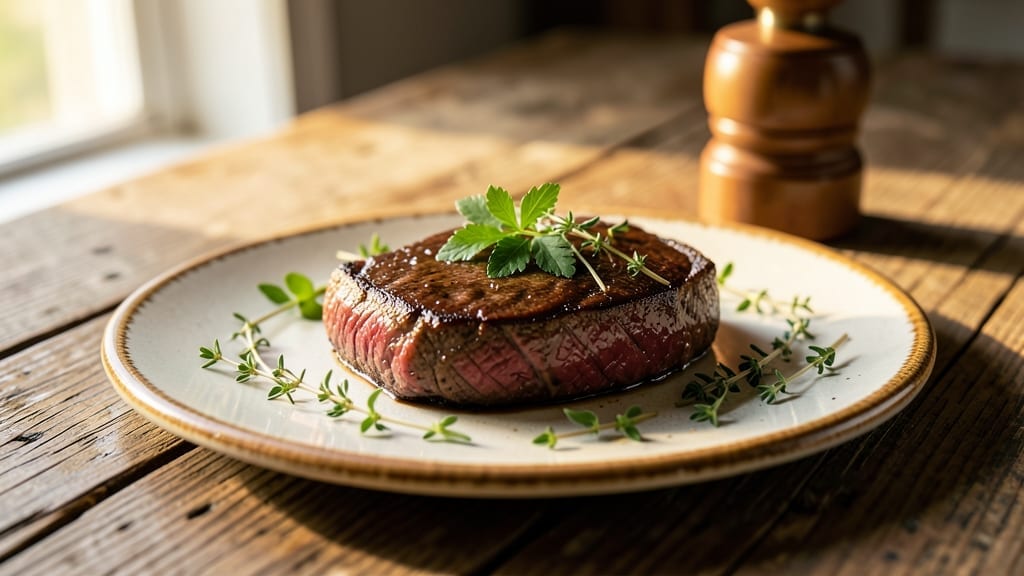
A New York strip steak marinade transforms ordinary steak into restaurant-quality perfection with just 30 minutes of prep. This bold garlic-herb blend cuts through tough fibers while infusing deep, savory flavor that lingers long after the first bite.
I developed it during a particularly busy week when I needed a foolproof way to elevate steak without complicated techniques.
The secret lies in the balance of acidity, aromatics, and herbs—red wine vinegar tenderizes the meat while garlic, rosemary, and thyme build layers of flavor. Olive oil ensures a silky finish, and a touch of brown sugar adds subtle caramelization during cooking.
Unlike store-bought blends, this marinade uses only fresh ingredients for maximum impact.
After marinating for 2-4 hours (or overnight for deeper flavor), your steak will emerge with a rich, aromatic crust and tender interior. The bold garlic-herb notes complement the steak’s natural beefiness without overpowering it.
This marinade works equally well for grilling, pan-searing, or broiling—just pat dry before cooking for the best results.
Perfect for special occasions or weeknight dinners, this marinade turns a simple protein into a showstopper. Let’s get started with the ingredients you likely already have on hand.
Ingredients for new york strip steak marinade
Fresh herbs, bold vinegar, and rich olive oil create this restaurant-worthy steak marinade.
| Ingredient | Amount | Notes |
|---|---|---|
| Extra-Virgin Olive Oil 🫒 | ½ cup | High-quality, fruity variety preferred |
| Red Wine Vinegar 🍷 | ¼ cup | Bold, dry variety for best flavor |
| Garlic Cloves 🧄 | 8 whole | Freshly peeled, roughly chopped |
| Fresh Rosemary 🌿 | ¼ cup | Needles finely chopped, stems removed |
| Fresh Thyme Leaves 🌿 | ¼ cup | Stems removed, leaves only |
| Light Brown Sugar 🍯 | 2 tbsp | Packed lightly for consistency |
| Diamond Crystal Kosher Salt 🧂 | 1 ½ tsp | Fine grain preferred for dissolving |
| Freshly Ground Black Pepper 🌶️ | 1 tsp | Freshly cracked for maximum aroma |
[recipe_ingredient_scaler]
The garlic and herbs are non-negotiable for that deep, aromatic flavor. Fresh rosemary and thyme from the grocery store’s produce section (not dried) make all the difference—look for vibrant, fragrant sprigs. I usually grab mine from Whole Foods or the local farmers market, but the regular supermarket stuff works fine if it’s fresh. For the garlic, elephant garlic adds a sweeter note, but regular cloves work perfectly. The olive oil should be the good stuff—California Extra Virgin brands like Corto or Lucini elevate the marinade without overpowering it. If you’re using a bottle that’s been open for more than 3 months, store it in the fridge to preserve freshness.
No fresh rosemary? Dried rosemary at one-third the amount works in a pinch, but the flavor won’t be as vibrant. Short on thyme? Fresh oregano or marjoram can stand in, though the profile will shift slightly. Running out of red wine vinegar? Balsamic vinegar or apple cider vinegar both work, but adjust the sugar to taste—balsamic might need a touch more sweetness. The brown sugar adds subtle caramelization during cooking, but if you’re avoiding sugar, a pinch of honey works beautifully. For a deeper umami kick, add 1 tsp Worcestershire sauce to the mix. And if you’re feeling adventurous, a dash of smoked paprika adds a smoky dimension that pairs perfectly with New York strip.
This marinade keeps in the fridge for up to 5 days, though it’s best used within 3 days for maximum freshness. Store it in an airtight container with a lid, and shake it well before each use. For longer storage, freeze in ice cube trays—thaw and shake before using. The marinade works best on steak for 2-4 hours, but for deeper flavor, let it work its magic overnight. Just remember to pat the steak dry before cooking—this step is crucial for that perfect crust. And if you have leftovers? Toss them with cooked potatoes or use as a dressing for a bold salad.
Why You’ll Love This Recipe
- No-Fuss Marinade Magic: Honestly, this marinade is the kind of recipe that makes you feel like a pro without any fuss. Just whisk together those ingredients—extra-virgin olive oil, red wine vinegar, and fresh herbs—and you’ve got a marinade that works its magic in under 10 minutes. No fancy techniques, just straightforward steps that get the job done.
- Restaurant-Quality Crust: The garlic and rosemary create that perfect balance of bold and earthy, while the brown sugar caramelizes just right when the steak hits the pan. That crispy edge with the creamy center? Chef’s kiss. It’s the kind of marinade that makes your steak taste like it belongs on a high-end menu.
- Marinade That Works Double Duty: Between using it on the steak and reducing the leftovers for a finishing sauce, this marinade doesn’t go to waste. I’ve used the extra to drizzle over roasted potatoes or even mixed into a quick aioli. It’s the kind of versatile flavor that keeps giving long after the steak is gone.
- Budget-Friendly Luxury: You’d never guess this marinade costs next to nothing—just pantry staples like olive oil, vinegar, and herbs. The high-quality ingredients might seem pricey, but they make such a difference. Plus, a little goes a long way, so you’re not throwing money away. It’s the kind of recipe that feels indulgent without breaking the bank.
Step-by-step instructions for New York strip steak marinade
This marinade transforms ordinary New York strip steaks into restaurant-quality masterpieces.
Prepare the Aromatic Base
In a medium mixing bowl, combine the ½ cup extra-virgin olive oil and ¼ cup red wine vinegar. I like to use a whisk for this step to emulsify the oil and vinegar immediately—they’ll naturally separate at first, but a quick whisk creates a stable base for the marinade. The vinegar’s acidity will tenderize the meat while the oil carries the flavors deep into the fibers.
Here’s the thing—don’t use just any olive oil. The fruity, peppery notes of a high-quality extra-virgin variety will elevate this marinade from good to extraordinary. If your oil smells flat or tastes bitter, it’s time to upgrade your pantry staples. The vinegar should be bold and dry, not sweet or mellow, to cut through the richness of the steak.
Incorporate the Herb and Sugar Components
Add the 8 freshly peeled garlic cloves, ¼ cup finely chopped fresh rosemary, and ¼ cup fresh thyme leaves to the oil-vinegar mixture. I always use a wooden spoon for this—it’s gentle on the herbs and prevents them from bruising. Gently fold everything together until the herbs are evenly distributed throughout the marinade. You’ll notice the garlic immediately starts releasing its aroma, and the rosemary’s piney notes begin to emerge.
Next, sprinkle in the 2 tablespoons light brown sugar and whisk vigorously. The sugar serves two purposes here: it adds a subtle caramelization when the steak cooks, and it helps balance the acidity of the vinegar. Don’t pack the sugar too tightly when measuring—lightly spoon it into the measuring spoon and level it off for consistent results. The sugar should dissolve completely, creating a syrupy consistency that will cling beautifully to the steak.
Season and Emulsify
Add the 1½ teaspoons diamond crystal kosher salt and 1 teaspoon freshly ground black pepper to the marinade. The salt should dissolve completely, while the pepper should remain as visible flecks throughout the mixture. Here’s where it gets interesting—I like to pulse the mixture briefly with an immersion blender at this stage. This creates a more uniform texture without breaking down the herbs too much. If you don’t have an immersion blender, a regular blender works too, but blend just until the salt dissolves and the sugar integrates.
Taste the marinade at this point. It should be tangy from the vinegar, aromatic from the herbs, with a subtle sweetness from the sugar. The salt and pepper should be present but not overpowering. This is your flavor baseline—everything else builds from here. If you find it needs more balance, you can adjust with a pinch more salt or a splash of water, but typically this ratio works perfectly for New York strip steaks.
Marinate the Steaks Properly
Pat your steaks dry with paper towels—this is crucial for maximum flavor penetration. The marinade works best when it can cling directly to the meat surface. Place the steaks in a shallow dish or resealable plastic bag and pour the marinade evenly over them. For best results, I recommend marinating for 4 to 8 hours in the refrigerator. The acid in the vinegar begins working immediately, so don’t exceed this time or you risk making the steak mushy.
Here’s the moment that matters: when you’re ready to cook, remove the steaks from the marinade and let them sit at room temperature for 30 minutes before grilling or searing. This allows the surface to dry slightly, which promotes better browning. Reserve any leftover marinade in the refrigerator for up to 3 days—it makes an excellent finishing sauce when reduced by half on the stovetop.
Pro Tips For Making New York Strip Steak Marinade
- Whisk First, Then Fold: The oil and vinegar will fight you at first—whisk them together until they emulsify into a cloudy, unified base before adding anything else. I learned this the hard way when my marinade split into two layers mid-cook. A quick 10-second burst with the whisk saves you from scraping the bottom of the bowl later.
- Chop Garlic Coarse: Those 8 garlic cloves should stay roughly chopped, not minced into paste. Finely chopped garlic burns faster and loses its punch on the grill. Leave them slightly uneven—it’s the texture that keeps the flavor alive through the sear.
- Salt the Steaks First: Sprinkle the 1½ teaspoons kosher salt directly on the steaks before marinating. This seasoning step isn’t just for flavor—it kickstarts the steak’s natural juices, so when the marinade hits, it clings better and penetrates deeper. Skip this, and you’re missing half the seasoning.
- Save the Leftovers: That leftover marinade? Don’t toss it. Reduce it by half in a saucepan over medium heat—it’ll turn into a glossy, herb-infused glaze perfect for drizzling over the finished steak. Just don’t let it boil dry, or you’ll end up with bitter vinegar sludge.
Storing and reheating your leftovers
Refrigerator Storage Tips
Store your marinade in a clean, airtight glass jar or plastic container with a tight-sealing lid—I prefer Weck jars for their durability. Keep it refrigerated at 40°F or below to maintain freshness.
The marinade will keep for up to 5 days, though I find it tastes best within 3 days for peak flavor. Pickles always supervises my fridge, so I double-check the lid is sealed tight! 😸
Freezing for Later Use
For longer storage, freeze the marinade in ice cube trays—it thaws perfectly for future use. Let the cubes harden completely, then transfer to a ziplock bag labeled with the date.
Each cube makes about 1-2 tablespoons of marinade, perfect for a single steak. Thaw overnight in the fridge before using. This method preserves the fresh herbs’ potency better than bulk freezing.
Reusing Leftover Marinade
Don’t toss leftover marinade! After cooking your steak, reduce it by half on the stovetop to make a bold finishing sauce. Stir in a splash of water or beef broth to thin it slightly, then drizzle over grilled vegetables or roasted potatoes.
I love using it as a dipping sauce for garlic bread—it’s a game-changer for leftovers. Just remember: never reuse raw marinade that touched the meat to avoid foodborne illness.
Prep-Ahead Strategy
Make this marinade a day ahead for your next steak night. The flavors meld beautifully overnight, creating deeper complexity. I like to prep it on Sunday mornings while watching Friends reruns with my coffee.
Store it in the fridge until ready to use—just shake well before applying to steaks. This saves time on busy weeknights when you want restaurant-quality flavor with minimal effort.
Safety First
Always label your marinade containers with the date to track freshness. If it develops an off smell or color after refrigeration, discard it immediately. The vinegar’s acidity helps preserve it, but like all perishable liquids, it won’t last indefinitely.
When in doubt, trust your senses—if it doesn’t look or smell right, it’s time to make a fresh batch. 💡
Nutrition facts
Frequently asked questions
Why does this marinade need olive oil?
The ½ cup extra-virgin olive oil carries the bold flavors deep into the steak fibers while creating a silky finish. High-quality oil adds fruity, peppery notes that elevate the marinade from basic to extraordinary. Skip this step, and you’ll miss out on that luxurious mouthfeel that makes restaurant-quality steak taste so special.
Can I use dried herbs instead of fresh?
You can, but the flavor won’t be as vibrant. Use one-third the amount of dried rosemary and thyme—just 1 tablespoon each instead of the full ¼ cup fresh. The dried version loses some aroma during processing, so fresh herbs always deliver that punchier, more complex flavor profile.
What happens if I marinate the steak too long?
The acid in the red wine vinegar begins tenderizing immediately, but exceeding 8 hours risks making the steak mushy. The 4-8 hour window gives perfect balance—tender enough to melt in your mouth, but still holds its structure. For overnight marinating, try a gentler acid like apple cider vinegar instead.
Why do I need to let the steak sit at room temperature before cooking?
After marinating, patting the steak dry and letting it rest for 30 minutes at room temperature ensures even cooking. This step creates that perfect crust by allowing the surface moisture to evaporate. Skip it, and you’ll end up with steak that steams instead of sears beautifully.
Can I use this marinade for other meats?
This bold blend works beautifully on chicken breasts, pork chops, or even shrimp. For tougher cuts like lamb, double the marinating time to 12 hours for maximum tenderness. Just remember that the acidity will work faster on delicate proteins like fish—limit to 2 hours for those.

Trained in classic French technique but raised on slow-cooked ribs and spicy rubs, she blends culinary skill with smoke and soul.
- Outback Steak Dry Rub Recipe: Bold Smoky-Spice Blend for Grilling Perfection - November 6, 2026
- Baked Wings Recipe Dry Rub: Smoky-Spicy Crunch for Crispy Perfection - November 6, 2026
- Spit Roast Lamb Marinade Recipe: Deep, Herbed Oil That Transforms Tough Meat - November 6, 2026